
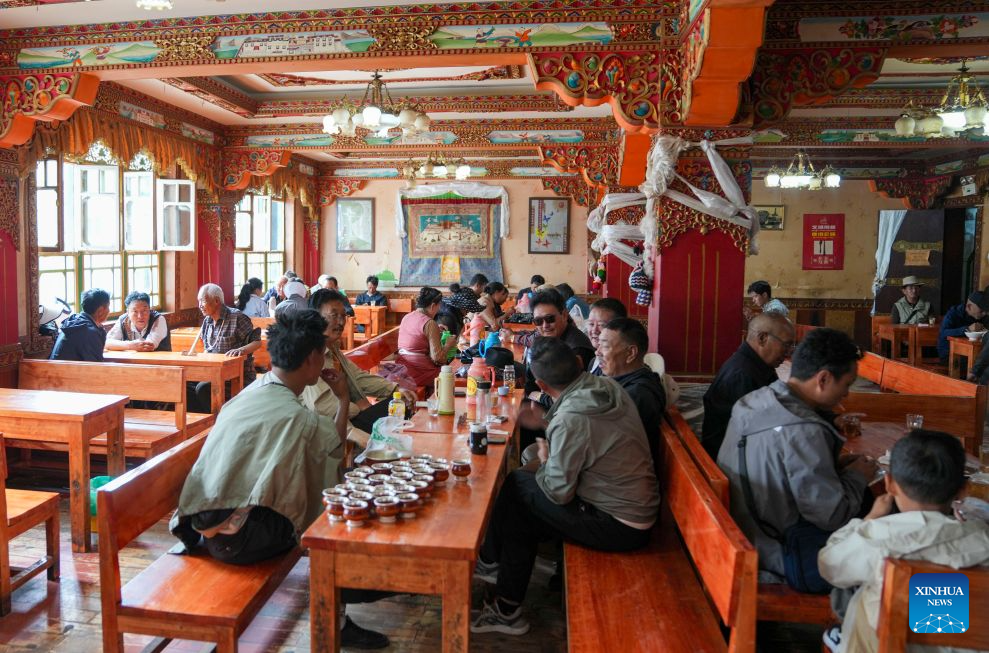
People enjoy their leisure time at a sweet tea house in an old neighborhood of Lhasa, southwest China's Xizang Autonomous Region, July 22, 2026. (Xinhua/Jigme Dorje)
LHASA, July 28 (Xinhua) -- More than two decades after arriving in Lhasa from northwest China's Gansu Province, Li Zhongkui still runs the same small shop in Tengye Ling Alley, a busy commercial lane in the Barkhor subdistrict.
A member of the Hui ethnic group, Li began selling bracelets from a street stall in 2002. He later opened the shop where he remains today, working in the same trade, from the same storefront and with the same landlord.
Over the years, his business has become entwined with neighborhood life. When customers ask for thangka paintings or dzi beads that he does not sell, Li directs them to other local traders. In winter, when Tibetan clothing sells better than handicrafts, he sometimes rents his storefront to Tibetan merchants.
"There is a warmth to this place that makes it hard to leave," he said.
His experience offers one glimpse of what ethnic unity looks like in Lhasa, capital city of southwest China's Xizang Autonomous Region. In the courtyards and alleys of the old town, this unity takes shape through everyday acts: neighbors watching one another's shops, traders referring customers to fellow shopkeepers, residents sharing food and community workers addressing local problems over cups of sweet tea.
Around Tengye Ling Alley, 18 residential courtyards are home to residents from various ethnic groups, including Tibetan, Han, Hui, Bai and Dongxiang. In the surrounding commercial district, shopkeepers and residents have built close relationships through years of living and working alongside one another.
The same kind of mutual support can be found in the courtyards near Jokhang Temple.
Pang Junbang, now the owner of a fruit shop near Jokhang Temple, was in his early 20s when he arrived in Lhasa in 1996 after traveling thousands of kilometers from home. Unfamiliar with the city and facing a language barrier, he received help from Nyima Cering, a resident of the courtyard, who showed him around and helped him find his footing in the neighborhood.
Two years later, Pang married a Tibetan woman, Zhabsang. Their family prepares both gutu, a traditional flour-based soup eaten ahead of the Tibetan New Year, and northern-style dumplings. Pang now speaks fluent Tibetan and, like other residents, helps care for neighbors in the courtyard.
For years, Pang, his wife and other neighbors took turns helping an elderly resident who had no children with her daily needs. When a family made something special, a bowl would often be sent next door. When a shopkeeper needed to step away, someone next door would look after the store.
"Ethnic unity makes Lhasa more harmonious and stable, attracting more tourists and making business easier," Pang said.
Alongside these informal networks of mutual help, Lhasa has developed community-level mechanisms to address residents' needs and mediate disputes.
In 2022, Tengye Ling became the first community in Xizang to introduce what it calls "sweet tea meetings," bringing neighborhood discussions closer to residents. Over cups of sweet tea, people talk through concerns and seek solutions to problems affecting the community.
"Anything that can be resolved on the spot should not be delayed, and issues that cannot be settled immediately should take no more than two days to address," said Benba Cering, a community official.
Weekly courtyard meetings have helped advance neighborhood improvement projects worth more than 200,000 yuan (about 29,400 U.S. dollars). All 73 shops in the community have been included in a five-star rating system, with ethnic unity and honest business practices among its key criteria.
This approach is rooted in the way people live and work in Lhasa's old town. More than 118,000 people from 24 ethnic groups live within its 6.33 square kilometers, according to the old town management committee. The wider Chengguan District is home to more than 500,000 people from 46 ethnic groups, including a floating population of over 230,000.
For Lhasa's old town, home to a large mobile population and heavily reliant on visitors, the ability to live and work together matters in practical ways. It shapes how businesses operate, how neighborhood disputes are handled, and how newcomers find their place in the community.
Lhasa has developed 17 ethnic-unity courtyards, seven themed streets and alleys, and 21 themed parks across the city. Beyond these figures, such ties are visible when a newcomer is helped to find suppliers, when neighbors take turns caring for an elderly resident, or when a trader directs a customer to another shop.
More than two decades on, Li is still doing the same in Tengye Ling Alley. He no longer describes it simply as a place he moved to make a living.
It is home now, a place he cannot bear to leave. ■
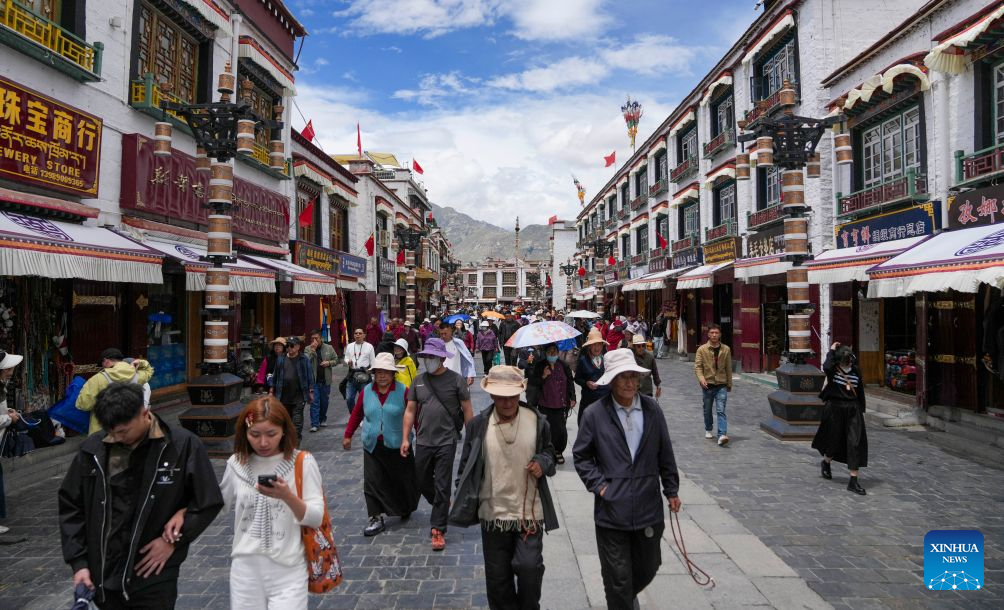
People visit the Barkhor Street in Lhasa, southwest China's Xizang Autonomous Region, July 22, 2026. (Xinhua/Jigme Dorje)
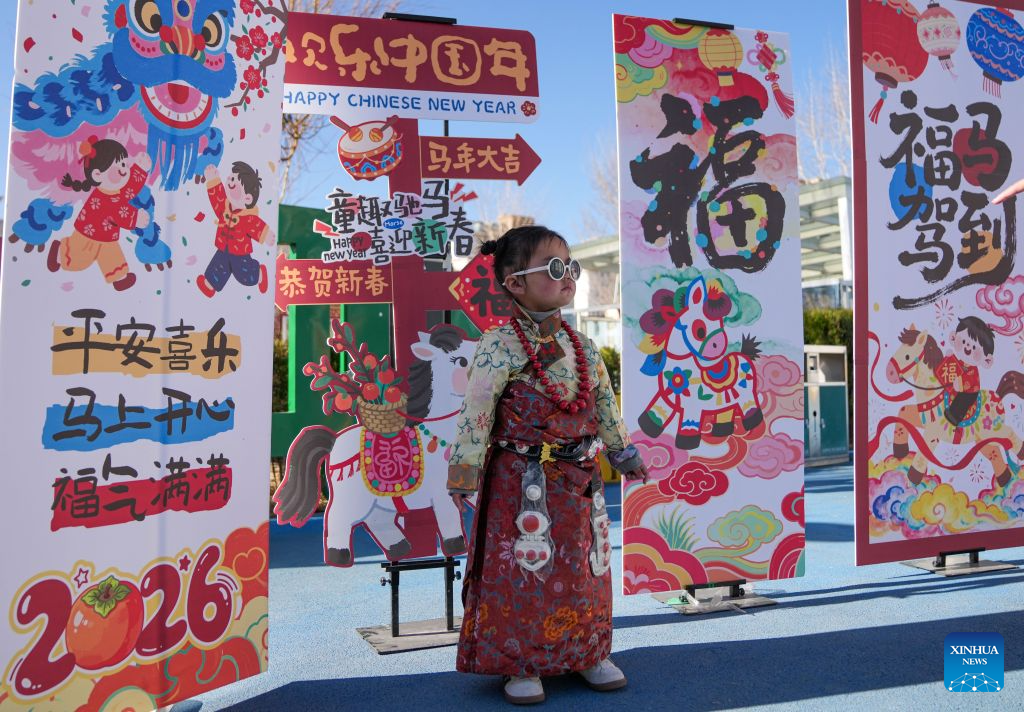
A child poses for photos at the entrance of a kindergarten in Lhasa, southwest China's Xizang Autonomous Region, March 2, 2026. (Xinhua/Jigme Dorje)

A stitched aerial drone photo taken on Aug. 4, 2025 shows a view of Lhasa at dusk in Lhasa, southwest China's Xizang Autonomous Region. (Xinhua/Jiang Fan)
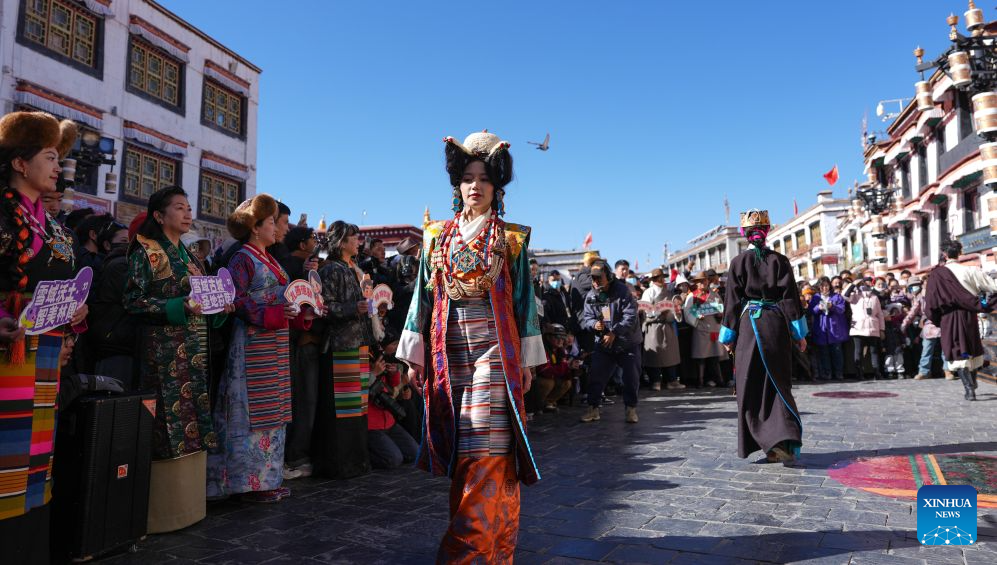
This photo taken on Jan. 3, 2025 shows models presenting folk fashions at a New Year fashion show on the Barkhor Street in Lhasa, southwest China's Xizang Autonomous Region. (Xinhua/Jigme Dorje)


