
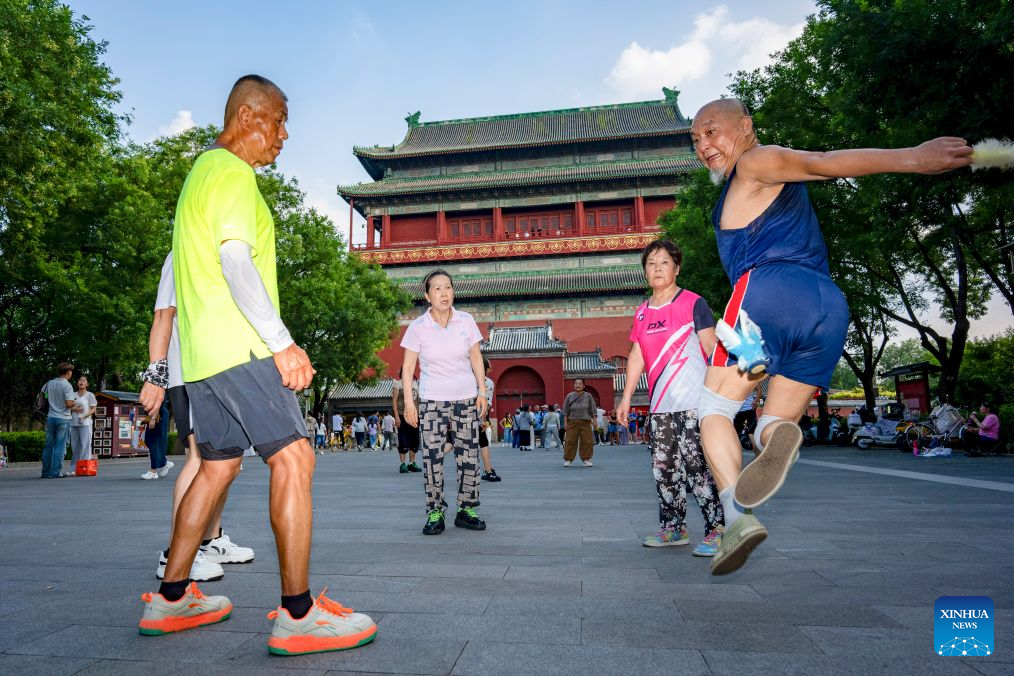
People kick a shuttlecock at a square connecting the Drum and Bell Towers in Beijing, capital of China, July 27, 2026. The second anniversary of the inscription of the Beijing Central Axis on the UNESCO World Heritage List falls on July 27.
Since its inscription, the 7.8-kilometer-long axis has continued to gain new vitality, attracting more visitors to experience Beijing's historical heritage amid the blend of ancient architecture and modern life, while bringing World Heritage closer to everyday life.
Stretching from the Bell and Drum Towers in the north to Yongdingmen Gate in the south, the Beijing Central Axis reflects traditional Chinese urban planning and serves as the spatial backbone of the old city. Carrying the history of Beijing's urban development, it bears witness to the continuity of Chinese civilization and reflects the capital's evolution through the ages. (Xinhua/Zhang Xiaoyu)

People visit the Beijing Ancient Architecture Museum inside the Altar of the God of Agriculture, also referred to as the Xiannongtan Temple, in Beijing, capital of China, July 27, 2026. The second anniversary of the inscription of the Beijing Central Axis on the UNESCO World Heritage List falls on July 27.
Since its inscription, the 7.8-kilometer-long axis has continued to gain new vitality, attracting more visitors to experience Beijing's historical heritage amid the blend of ancient architecture and modern life, while bringing World Heritage closer to everyday life.
Stretching from the Bell and Drum Towers in the north to Yongdingmen Gate in the south, the Beijing Central Axis reflects traditional Chinese urban planning and serves as the spatial backbone of the old city. Carrying the history of Beijing's urban development, it bears witness to the continuity of Chinese civilization and reflects the capital's evolution through the ages. (Xinhua/Zhang Xiaoyu)
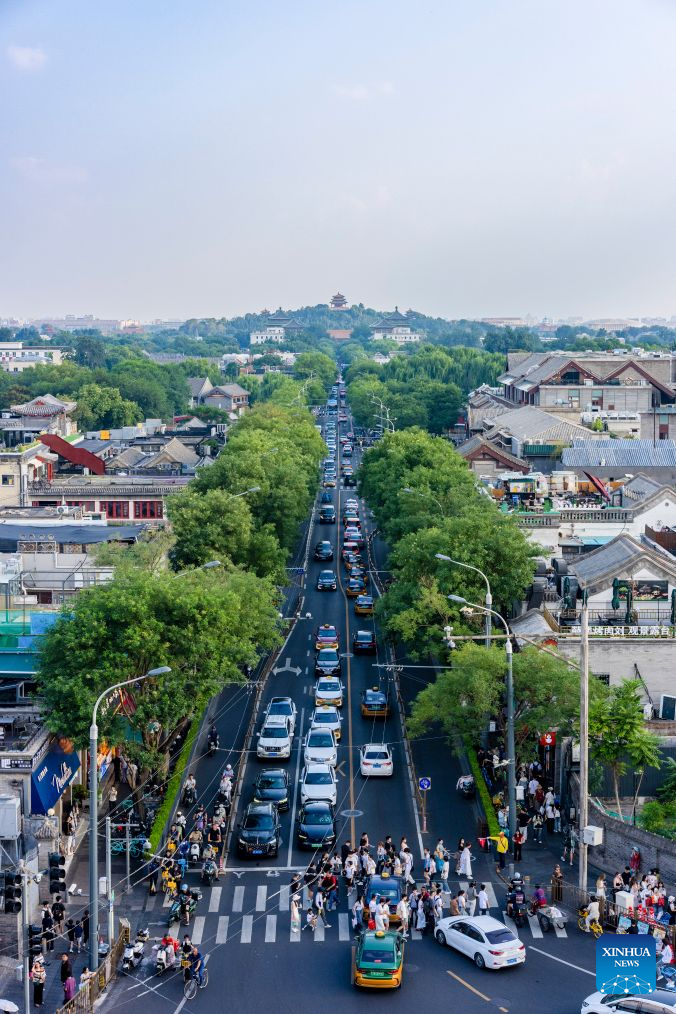
This photo taken from the Drum Tower shows a view of the Beijing Central Axis in Beijing, capital of China, July 27, 2026. The second anniversary of the inscription of the Beijing Central Axis on the UNESCO World Heritage List falls on July 27.
Since its inscription, the 7.8-kilometer-long axis has continued to gain new vitality, attracting more visitors to experience Beijing's historical heritage amid the blend of ancient architecture and modern life, while bringing World Heritage closer to everyday life.
Stretching from the Bell and Drum Towers in the north to Yongdingmen Gate in the south, the Beijing Central Axis reflects traditional Chinese urban planning and serves as the spatial backbone of the old city. Carrying the history of Beijing's urban development, it bears witness to the continuity of Chinese civilization and reflects the capital's evolution through the ages. (Xinhua/Zhang Xiaoyu)
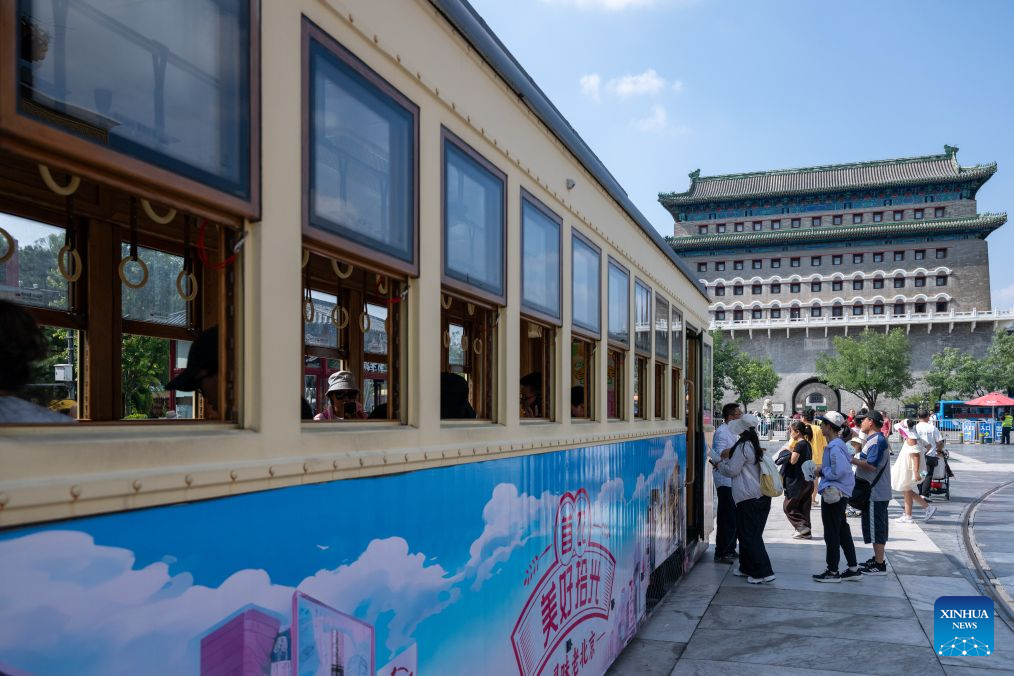
People visit the Qianmen pedestrian street in Beijing, capital of China, July 27, 2026. The second anniversary of the inscription of the Beijing Central Axis on the UNESCO World Heritage List falls on July 27.
Since its inscription, the 7.8-kilometer-long axis has continued to gain new vitality, attracting more visitors to experience Beijing's historical heritage amid the blend of ancient architecture and modern life, while bringing World Heritage closer to everyday life.
Stretching from the Bell and Drum Towers in the north to Yongdingmen Gate in the south, the Beijing Central Axis reflects traditional Chinese urban planning and serves as the spatial backbone of the old city. Carrying the history of Beijing's urban development, it bears witness to the continuity of Chinese civilization and reflects the capital's evolution through the ages. (Xinhua/Hu Jingwen)
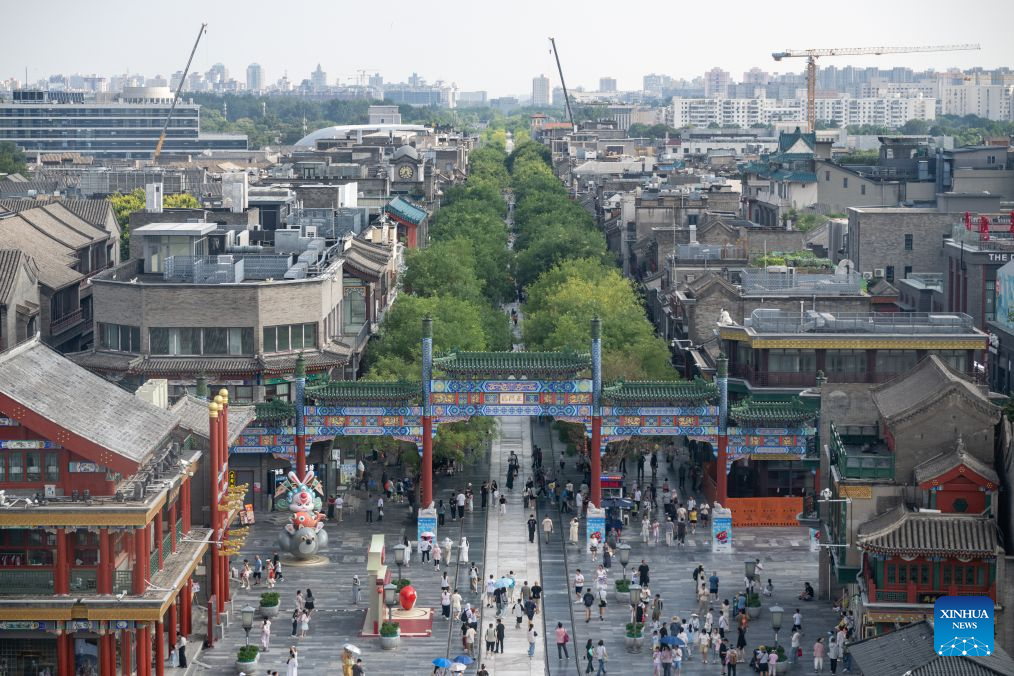
This photo taken from the Zhengyangmen Archery Tower shows a view of the Qianmen pedestrian street in Beijing, capital of China, July 27, 2026. The second anniversary of the inscription of the Beijing Central Axis on the UNESCO World Heritage List falls on July 27.
Since its inscription, the 7.8-kilometer-long axis has continued to gain new vitality, attracting more visitors to experience Beijing's historical heritage amid the blend of ancient architecture and modern life, while bringing World Heritage closer to everyday life.
Stretching from the Bell and Drum Towers in the north to Yongdingmen Gate in the south, the Beijing Central Axis reflects traditional Chinese urban planning and serves as the spatial backbone of the old city. Carrying the history of Beijing's urban development, it bears witness to the continuity of Chinese civilization and reflects the capital's evolution through the ages. (Xinhua/Hu Jingwen)
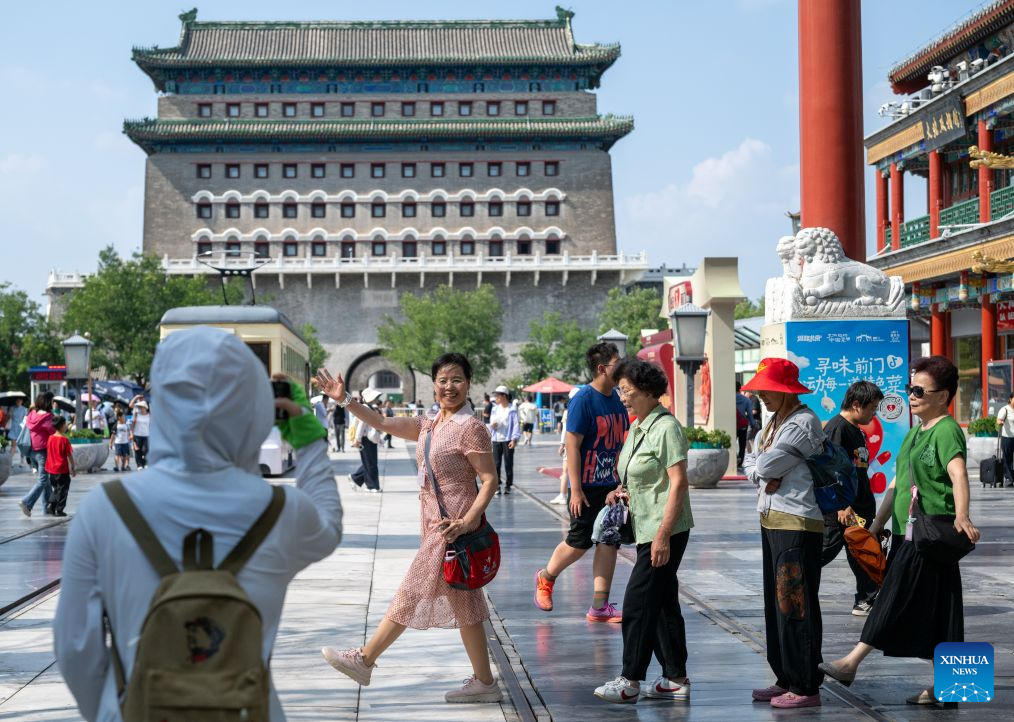
People visit the Qianmen pedestrian street in Beijing, capital of China, July 27, 2026. The second anniversary of the inscription of the Beijing Central Axis on the UNESCO World Heritage List falls on July 27.
Since its inscription, the 7.8-kilometer-long axis has continued to gain new vitality, attracting more visitors to experience Beijing's historical heritage amid the blend of ancient architecture and modern life, while bringing World Heritage closer to everyday life.
Stretching from the Bell and Drum Towers in the north to Yongdingmen Gate in the south, the Beijing Central Axis reflects traditional Chinese urban planning and serves as the spatial backbone of the old city. Carrying the history of Beijing's urban development, it bears witness to the continuity of Chinese civilization and reflects the capital's evolution through the ages. (Xinhua/Hu Jingwen)
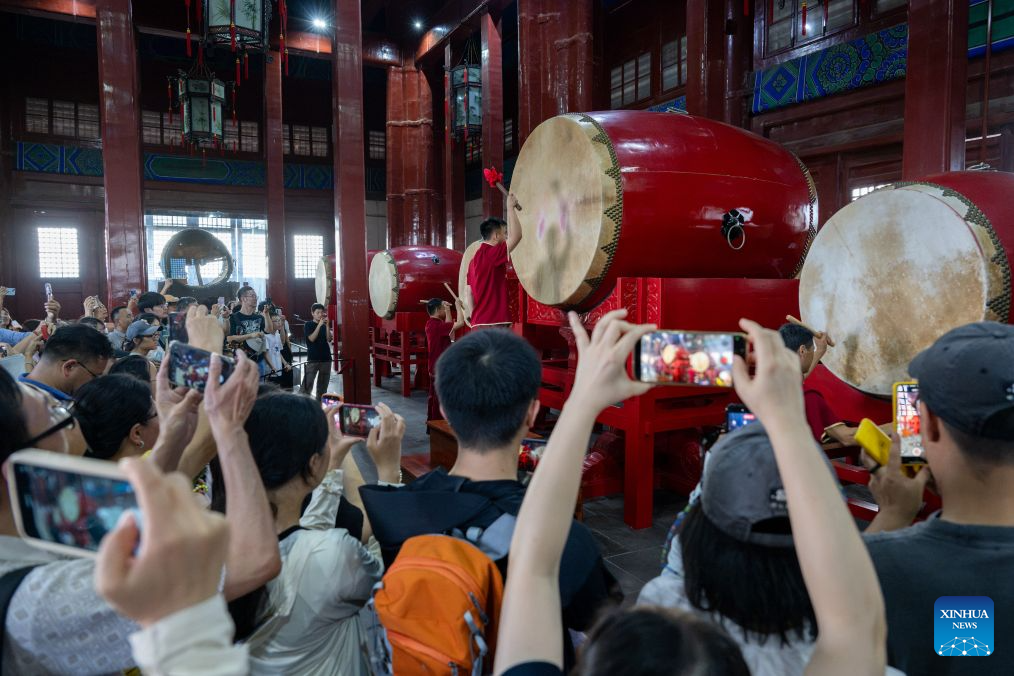
People enjoy a performance at the Drum Tower in Beijing, capital of China, July 27, 2026. The second anniversary of the inscription of the Beijing Central Axis on the UNESCO World Heritage List falls on July 27.
Since its inscription, the 7.8-kilometer-long axis has continued to gain new vitality, attracting more visitors to experience Beijing's historical heritage amid the blend of ancient architecture and modern life, while bringing World Heritage closer to everyday life.
Stretching from the Bell and Drum Towers in the north to Yongdingmen Gate in the south, the Beijing Central Axis reflects traditional Chinese urban planning and serves as the spatial backbone of the old city. Carrying the history of Beijing's urban development, it bears witness to the continuity of Chinese civilization and reflects the capital's evolution through the ages. (Xinhua/Hu Jingwen)
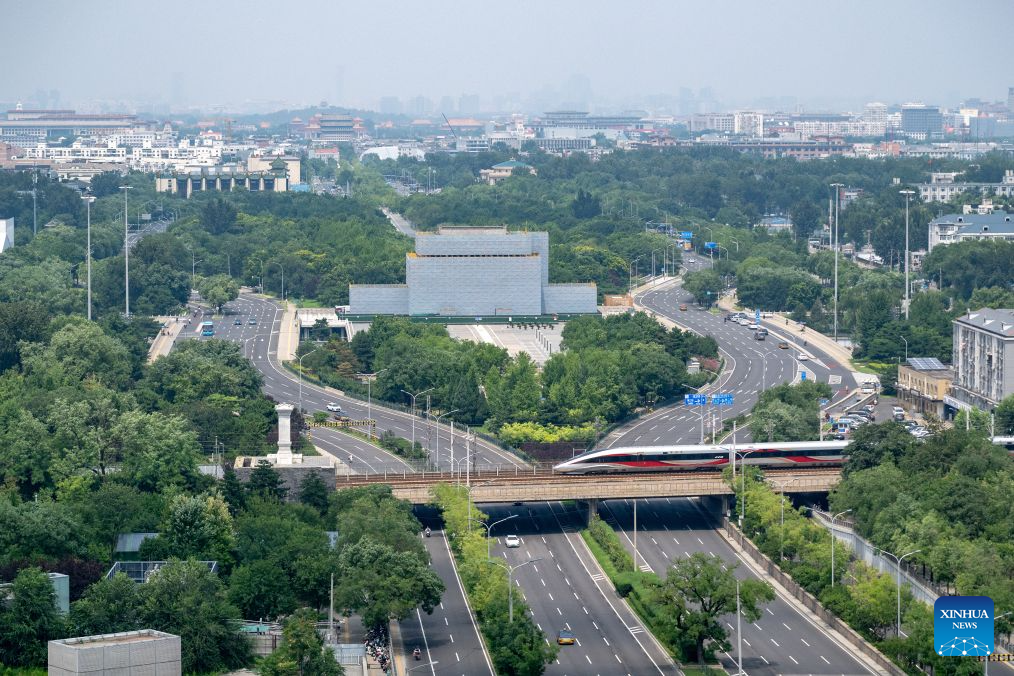
This photo taken on July 27, 2026 shows a view of the Yongdingmen Gate under renovation in Beijing, capital of China. The systemic renovation of the Yongdingmen Gate started in October 2025. The second anniversary of the inscription of the Beijing Central Axis on the UNESCO World Heritage List falls on July 27.
Since its inscription, the 7.8-kilometer-long axis has continued to gain new vitality, attracting more visitors to experience Beijing's historical heritage amid the blend of ancient architecture and modern life, while bringing World Heritage closer to everyday life.
Stretching from the Bell and Drum Towers in the north to Yongdingmen Gate in the south, the Beijing Central Axis reflects traditional Chinese urban planning and serves as the spatial backbone of the old city. Carrying the history of Beijing's urban development, it bears witness to the continuity of Chinese civilization and reflects the capital's evolution through the ages. (Xinhua/Hu Jingwen)


