* Now the world's largest NEV exporter, China is rapidly reshaping its global strategy, shifting from product exports to localized, ecosystem-driven global development.
* For many countries, this shift means more than just affordable electric cars. It brings fresh investment, local jobs, and a faster track toward their own green transition.
* For leading Chinese automakers such as BYD, GAC and XPENG, their ambition extends far beyond volume. They are shifting from product exports to technology licensing, local manufacturing and deep brand building, creating a more sustainable and integrated model for going global.
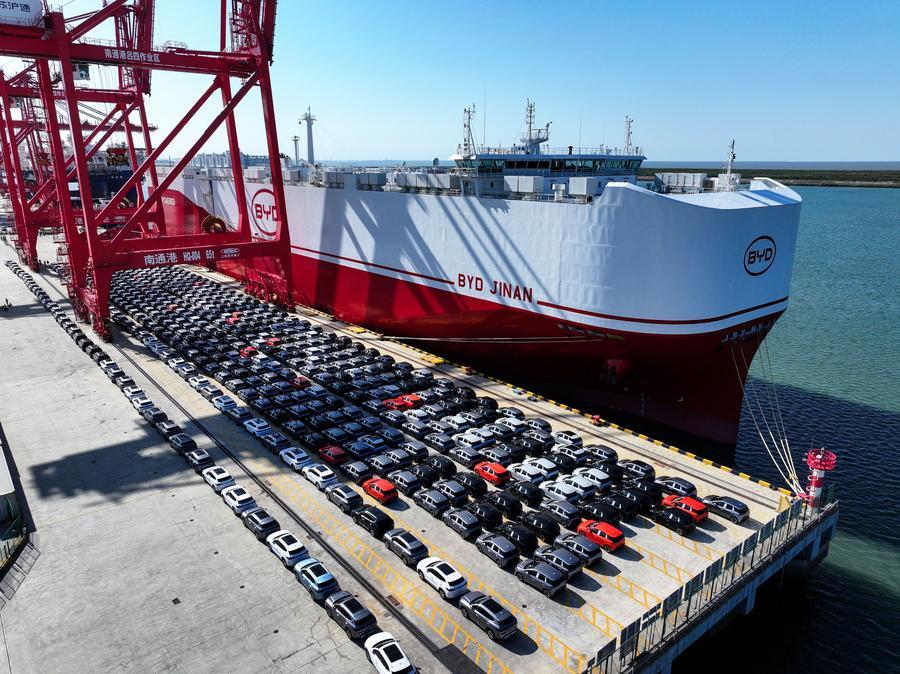
GUANGZHOU, July 26 (Xinhua) -- In major ports along China's southeast coast, Chinese-made electric vehicles roll nonstop onto car-carrier ships bound for every corner of the globe. But for China's new energy vehicle (NEV) industry, loading containers is no longer the endgame -- it is merely the first step.
Now the world's largest NEV exporter, China is rapidly reshaping its global strategy, shifting from product exports to localized, ecosystem-driven global development. For many countries, this shift means more than just affordable electric cars. It brings fresh investment, local jobs, and a faster track toward their own green transition.
Official data from the China Association of Automobile Manufacturers (CAAM) show that China exported 2.615 million NEVs in 2025, a year-on-year increase of 103.7 percent from 1.284 million in 2024. In the first half of 2026, exports reached 2.355 million units, up 120 percent year on year. NEVs, notably, have become a major driver of China's export growth.
OVERSEAS SALES GAIN MOMENTUM
Chinese electric vehicles are no longer seen as cheap alternatives. They are competing strongly on performance, smart features and design.
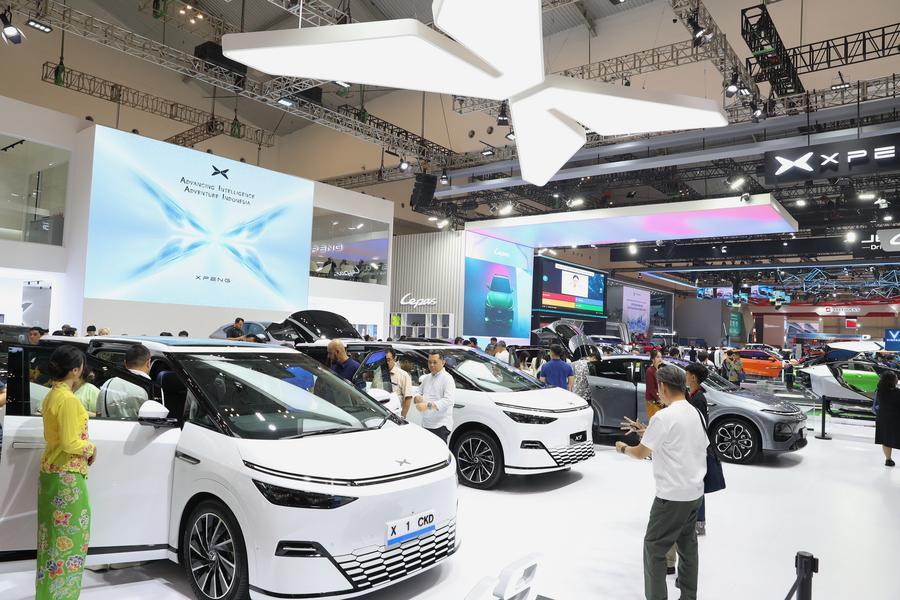
XPENG Motors stands out as one of the front-runners. In 2025, it delivered over 45,000 overseas vehicles, up 96 percent year on year. Europe contributed nearly half and Asia-Pacific posted strong growth, while a hub in Egypt anchored the Middle East and Africa market. In March 2026, it unveiled a three-year plan to cover Latin America by 2028, with Mexico as the first step.
This momentum is echoed by GAC Group, which regards overseas markets as a key growth driver for its transformation. In the first half of 2026, GAC Group exported 121,500 vehicles under its own brands, a year-on-year surge of 132 percent.
In the Middle East, models such as the GAC Trumpchi and GAC HYPTEC have won the favor of local consumers with their reliable quality and advanced technology. In Southeast Asia, its knockdown plants support local production and sales, while in Europe, it targets high-end intelligent NEVs.
"Overseas markets are a key growth driver for us. Our goal is to take GAC products to an even wider global market," said Chen Jiacai, deputy general manager of GAC Group, aiming for 250,000 exports in 2026 and 1 million by 2030, with a presence in 120 countries and regions.
FROM EXPORTS TO TECHNOLOGY LICENSING
For leading Chinese automakers such as BYD, GAC and XPENG, their ambition extends far beyond volume. They are shifting from product exports to technology licensing, local manufacturing and deep brand building, creating a more sustainable and integrated model for going global.
Della Hernita, a university staffer in Jakarta, and her husband recently ordered a BYD electric car. "At first we considered the daily commuting costs, but later we found that maintenance expenses are also lower, and the difference will become obvious in the long run," said Hernita. "Of course, we also want to choose a greener way to travel."
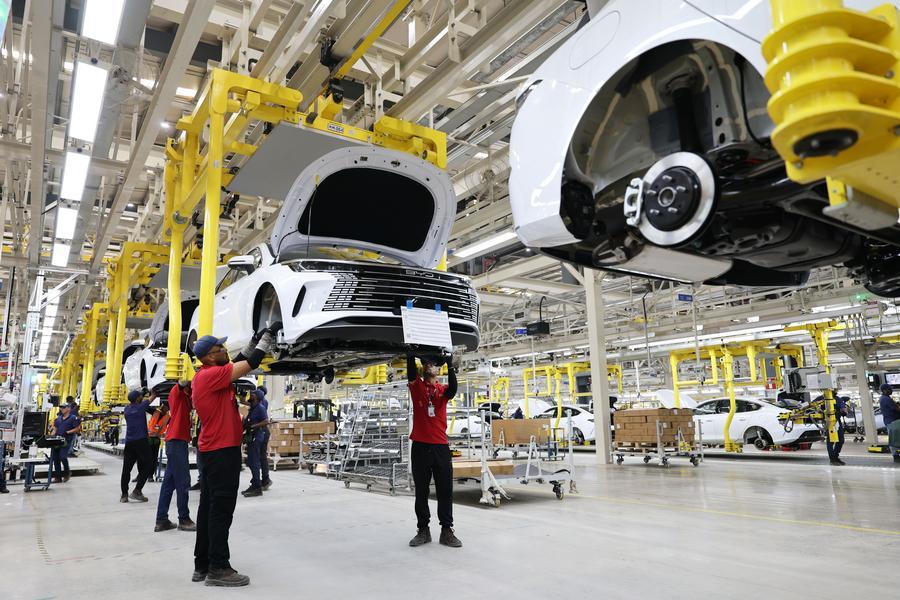
From Jakarta to Surabaya, Chinese NEVs are gaining favor among Indonesian families. Such growing demand has pushed Chinese automakers to reshape their global strategy -- building overseas factories, licensing core technologies and shaping global standards.
BYD, for instance, has licensed its e-platform 3.0 to Toyota and blade battery technology to Hyundai. Seven ASEAN countries, meanwhile, have also adopted its EV charging standard. These technology-sharing arrangements help global automakers accelerate their own EV development, while spreading common standards that benefit entire regional markets.
In another case, XPENG has supplied its second-generation autonomous driving system and self-developed Turing AI chip to Volkswagen for global deployment, with the technologies first validated in China before being rolled out in Europe and Southeast Asia.
"This collaboration demonstrates mutual trust and a shared commitment to innovation in smart EV core technologies," said He Xiaopeng, XPENG's chairman and CEO.
BUILDING BRANDS, SERVICE NETWORKS
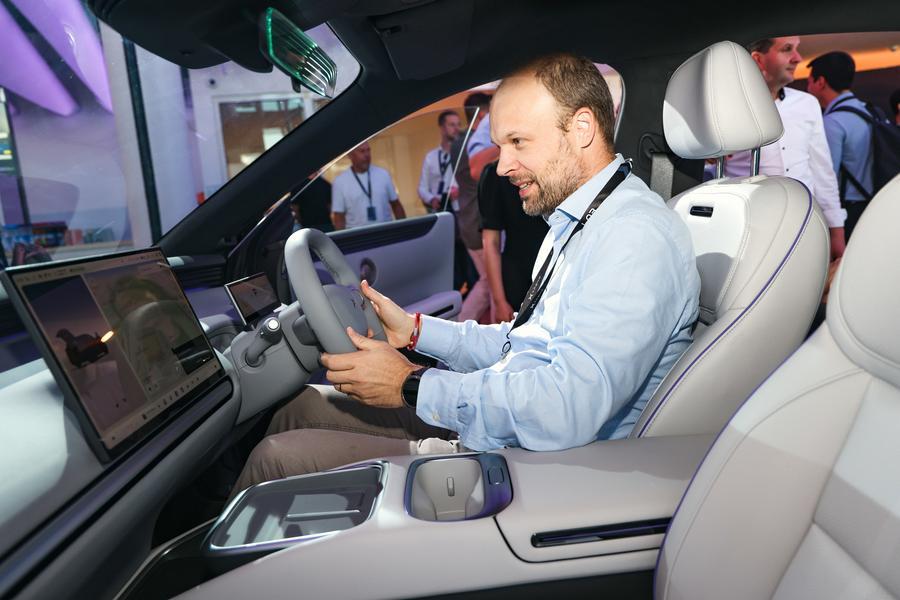
Today, sleek brand experience centers from BYD, GAC and XPENG dot the commercial districts across Europe, Southeast Asia and the Middle East. With immersive displays and professional local staff, they have reshaped the old perception of Chinese cars as "cheap and low-spec."
On the service side, BYD and XPENG have set up service centers throughout Europe, the Middle East and Latin America, providing overseas users with integrated car-buying and after-sales services.
To tackle slow repairs and parts shortages overseas, GAC has set up regional parts warehouses in Europe, Thailand and Panama, each stocking over 3,000 components, cutting repair times in half. BYD also leverages its overseas plants for local parts supply. For local consumers, this means shorter wait times and lower maintenance costs, turning a one-time purchase into a long-term ownership experience. And for host countries, these local facilities create skilled jobs and nurture a homegrown EV service industry.
Beyond branding, Chinese automakers have actively engaged in local communities in foreign countries. In February this year, GAC Mexico joined the Mexican Electric Mobility Association (EMA) to support EV adoption, infrastructure deployment and market development for low-emission technologies.
"EMA is an essential partner with which we will work hand in hand to jointly advance the transformation of Mexico's future transportation," said Rafe Huang, president of GAC Mexico.
Chen Shihua, deputy secretary-general of the CAAM, attributed the NEV export boom to the country's robust supply chain, economies of scale, and swift iteration of smart features such as autonomous driving and smart cabin interaction.
"These advantages continuously enhance product competitiveness and help products adapt to overseas user needs," Chen said.
(Video reporters: Yang Shenshen and Hu Nayun; video editors: Zhang Yichi, Wei Yin and Liu Ruoshi) ■