
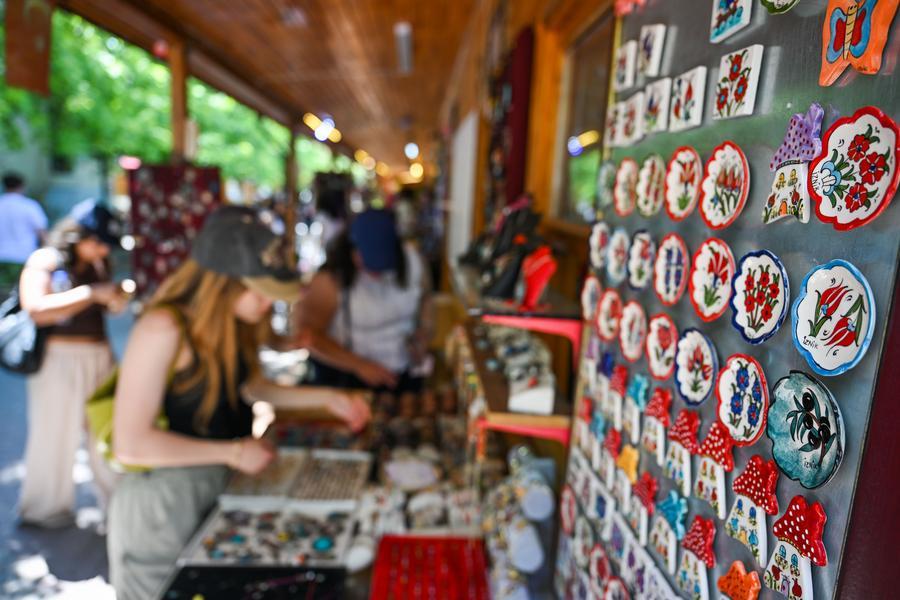
IZNIK, Türkiye, July 25 (Xinhua) -- Sitting at his wooden workbench, surrounded by walls adorned with vibrant classic tiles, Mehmet Aras meticulously paints a ceramic plate. With each precise stroke of his fine brush, his thoughts drift back to his childhood in the 1980s, when he would unearth colorful pottery shards while playing in Iznik's lush gardens.
"During the Ottoman period, defective pieces were buried underground," recalled Aras, an instructor of Tile Art and Design at Iznik Vocational School. "We used to find these fragments and play with them, completely unaware they were part of our centuries-old ceramic heritage."
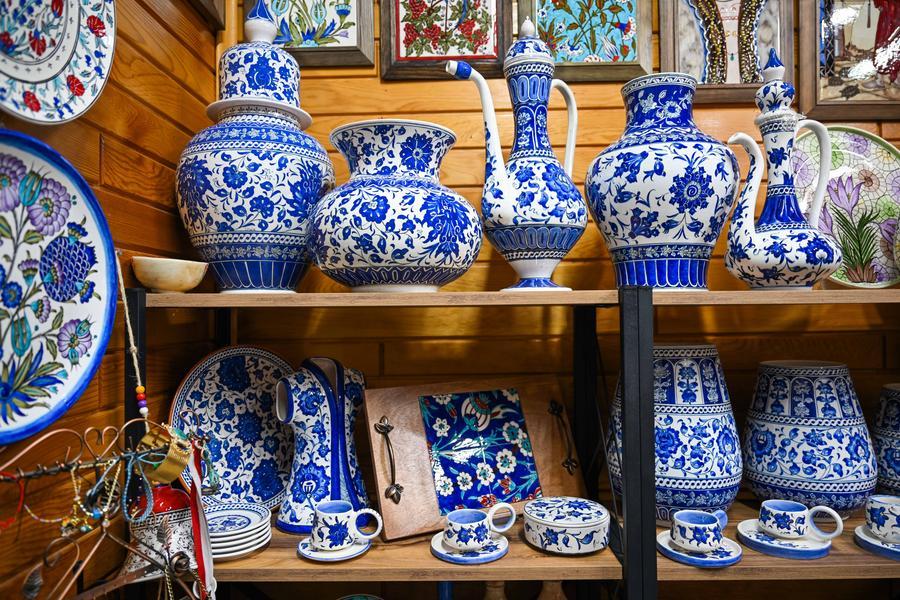
At its zenith, Iznik pottery was a crown jewel of the Ottoman Empire, blending Chinese influences with traditional motifs. But after the craft came to a halt in the 17th century, the town had no active workshops left by the 1980s. While recent decades have sparked a revival, the resurgence has been largely uncontrolled, and the exact chemical "DNA" of the ancient masterpieces remains lost.
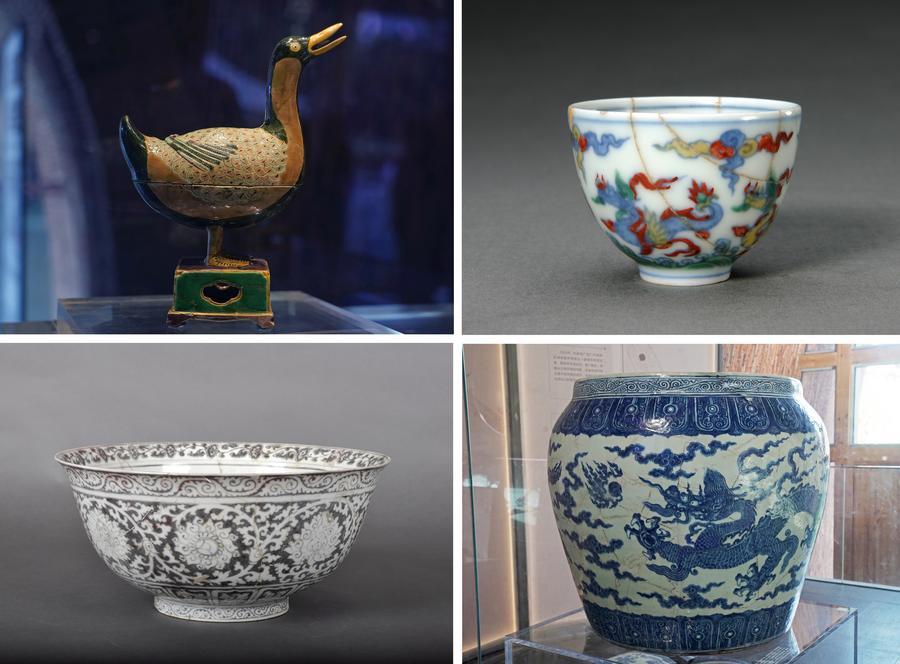
Aras's vision for recovering that heritage crystallized during a recent visit to Jingdezhen, China's renowned porcelain capital.
He was deeply impressed by the Ancient Porcelain Gene Bank at the Jingdezhen Imperial Kiln Institute, a vast facility that analyzes ancient ceramic fragments to decode their exact chemical makeup, glaze recipes and firing temperatures, effectively mapping the "DNA" of historical Chinese porcelain.
The power of Jingdezhen's preservation model was showcased to the world on Saturday, when UNESCO officially added the Jingdezhen Handicraft Porcelain Industry Sites to its World Heritage List.
The experience inspired Aras to propose a similar "gene center" to safeguard Iznik's historic tile-making tradition against growing commercialization, while laying bare how much the town still lacks in documenting its own ceramic heritage.
"Throughout the roughly 300-year history of Iznik pottery, the clay, the slip, and the glazes were in a constant state of change from the craft's inception to its decline," Aras said. "In Jingdezhen, every single stage of this evolution is recorded. But here, the data we have is highly insufficient. Unbelievably, Iznik still does not even have its own dedicated tile museum."
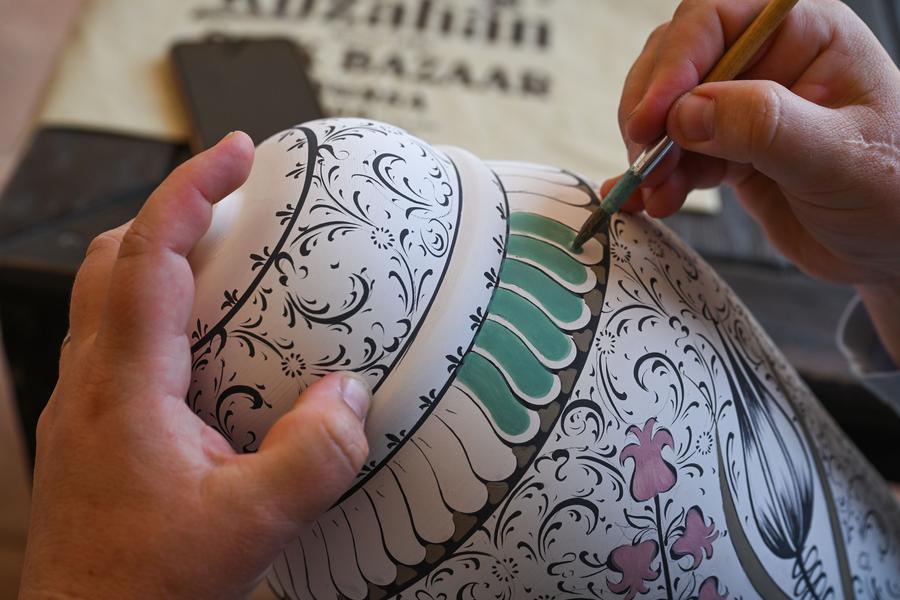
The call for stronger preservation resonates with local artisans. Asiye Caliskan, a 24-year master artisan trained in the traditional apprenticeship system, said the revival of Iznik tiles since the 1980s has relied largely on individual efforts, leaving the industry fragmented.
"In the Ottoman era, this craft enjoyed royal patronage. Today, we need a comprehensive state policy," Caliskan told Xinhua.
She said only a handful of workshops in Iznik still produce ceramics from raw materials, while most simply decorate factory-made bisques.
A state-backed center inspired by Jingdezhen, she added, could help preserve traditional techniques, establish quality standards, and distinguish authentic producers from commercial souvenir makers.
Echoing this urgent need, veteran artisan Rahime Aras, with nearly four decades of experience, said mastering authentic Iznik tiles requires years of experience, not simply opening a workshop.
"There has to be a proper standard," she warned, noting that uncontrolled production has undermined the pottery's true quality.
Signs of a growing synergy between Jingdezhen and Iznik are already emerging. A new porcelain and ceramic center is scheduled to launch in Iznik by the end of this year, marking a tangible step toward institutionalizing the craft through international inspiration.
Ultimately, for Mehmet Aras, the proposed "gene center" is not just about preserving the past, but securing the future. Without a structured industry, he warned, it is becoming increasingly difficult to attract young talent who need a reliable livelihood.
"If we can base this craft on solid foundations and a clear state policy, just like in China, its future will become predictable," Aras said. "Only then can we confidently carry the Iznik legacy forward."■