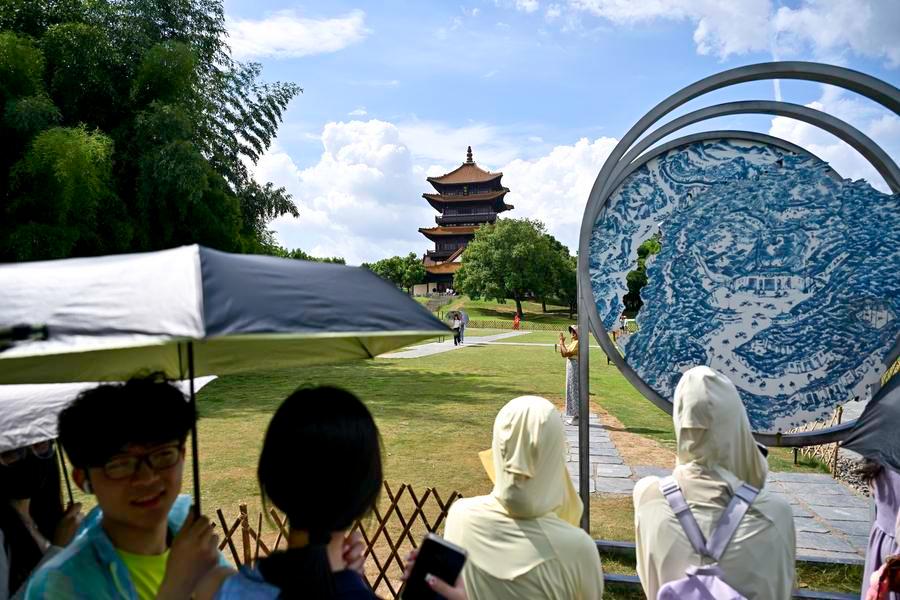
BUSAN, South Korea, July 25 (Xinhua) -- The United Nations Educational, Scientific and Cultural Organization (UNESCO) added China's Jingdezhen Handicraft Porcelain Industry Sites to the World Heritage List on Saturday during the 48th session of the World Heritage Committee held in Busan, South Korea, bringing the total number of World Heritage sites in China to 61.
China is one of the few countries in the world with the most comprehensive range of World Heritage categories, covering cultural, natural and mixed heritage.
Early inscriptions on the World Heritage List include iconic Chinese sites such as the Great Wall and the Palace Museum. China's first World Heritage properties were inscribed back in 1987.
In recent years, China's new World Heritage sites have featured more diversified categories, covering natural ecosystems, paleontological sites and cultural landscapes. The following are the Chinese properties inscribed on the World Heritage List since 2012:
2012: Xanadu and Chengjiang Fossil
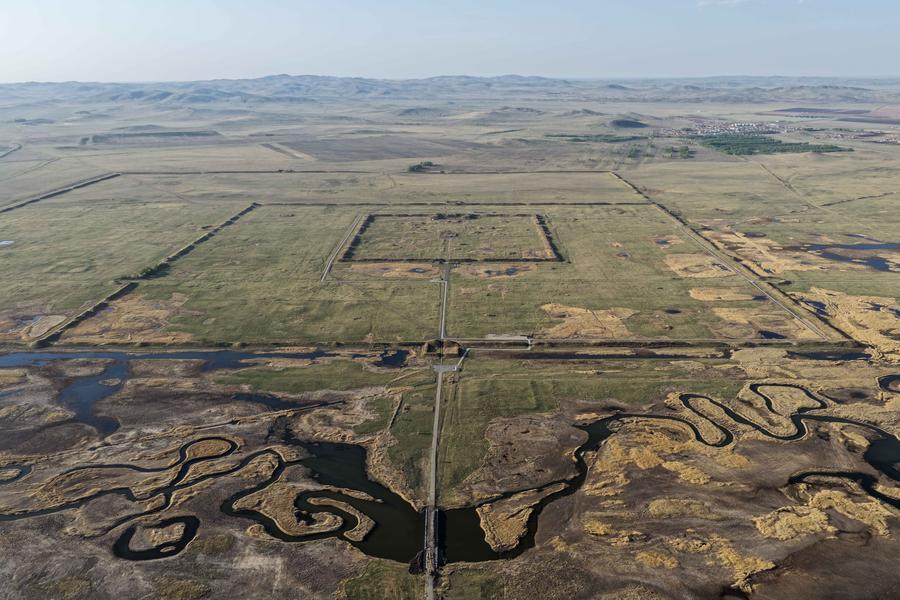
At the 36th session of the World Heritage Committee held in St. Petersburg, Russia, the Site of Xanadu and the Chengjiang Fossil Site were inscribed on the World Heritage List.
The Site of Xanadu is a site of a grassland capital characteristic of cultural fusion, witnessing clashes and mutual assimilation between the nomadic and agrarian civilizations in northern Asia. The inscription of the Chengjiang Fossil marked China's first fossil World Heritage property and filled a gap in the country's natural heritage portfolio.
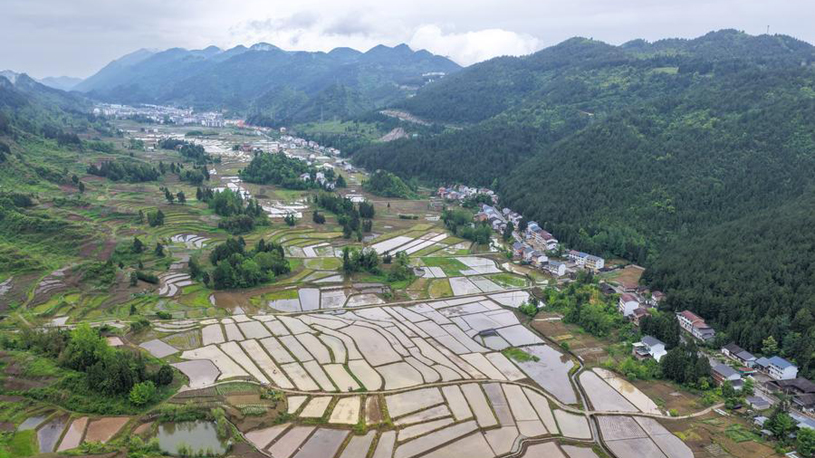
2013: Cultural Landscape of Honghe Hani Rice Terraces and Xinjiang Tianshan
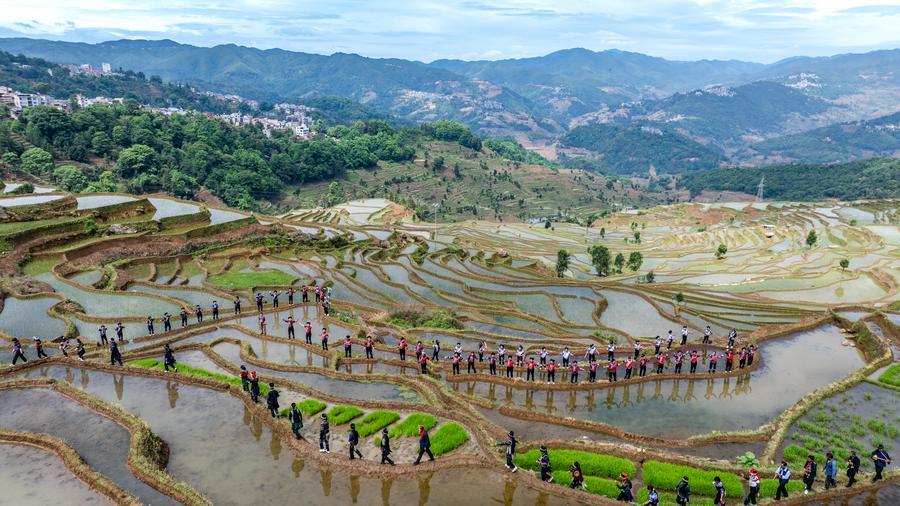
At the 37th session in Phnom Penh, Cambodia, the Cultural Landscape of Honghe Hani Rice Terraces and Xinjiang Tianshan were added to the World Heritage List.
The terraces are an outstanding reflection of elaborate and finely tuned agricultural, forestry and water distribution systems that are reinforced by long-standing and distinctive socio-economic-religious systems. Xinjiang Tianshan is an outstanding example of the ongoing biological and ecological evolutionary process in a temperate arid zone.
2014: The Grand Canal and Silk Roads: the Routes Network of Chang'an-Tianshan Corridor
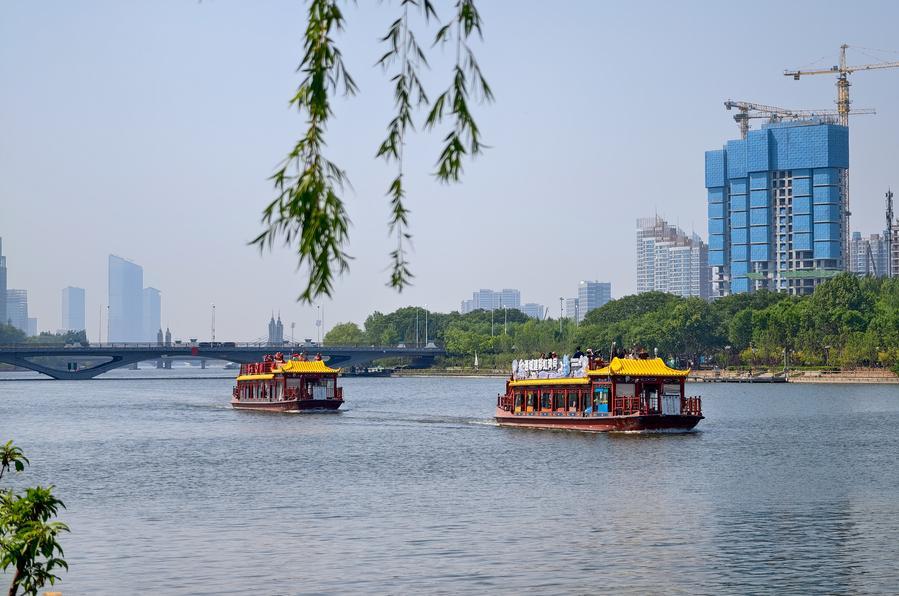
At the 38th session in Doha, Qatar, UNESCO approved China's nomination of the Grand Canal and the joint nomination by China, Kazakhstan and Kyrgyzstan for the Silk Roads: the Routes Network of Chang'an-Tianshan Corridor.
The Silk Roads are a route of dialogue and exchange between East and West that made significant contributions to shared human prosperity. The Grand Canal was recognized as the longest and oldest canal in the world. It bears witness to a remarkable and early development of hydraulic engineering, and is an essential technological achievement dating from before the Industrial Revolution.
2015: Tusi Sites
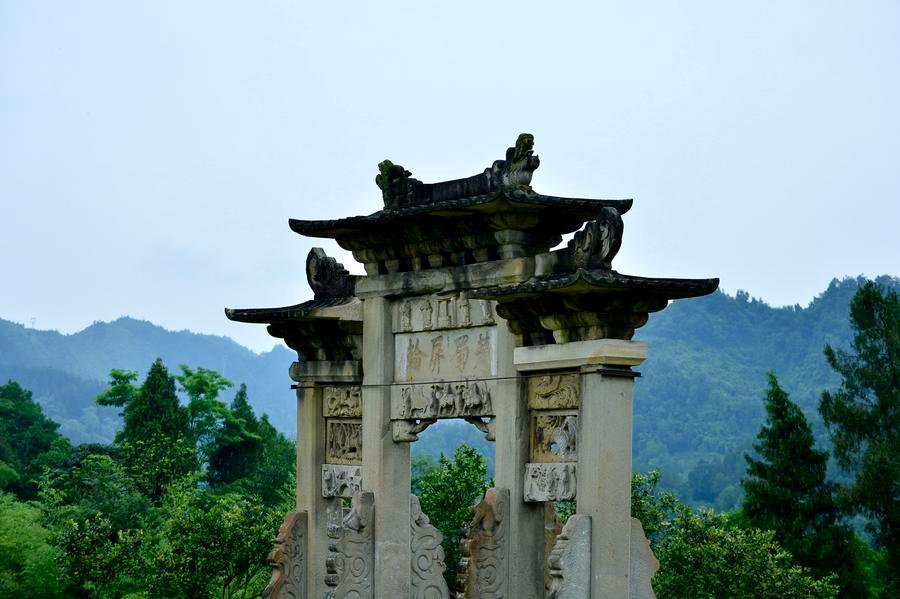
At the 39th session in Bonn, Germany, the Tusi Sites were inscribed on the World Heritage List.
The "Tusi" system of administrative government was aimed at unifying national administration while simultaneously allowing ethnic minorities to retain their customs and way of life. The three sites of Laosicheng, Tangya and the Hailongtun Fortress comprise the serial property representing this system of governance. Their combinations of local ethnic and central Chinese features exhibit an interchange of values and testify to imperial Chinese administrative methods, while retaining their association with the living cultural traditions of the ethnic minority groups.
2016: Zuojiang Huashan Rock Art Cultural Landscape and Hubei Shennongjia

At the 40th session in Istanbul, Türkiye, the Zuojiang Huashan Rock Art Cultural Landscape and Hubei Shennongjia were inscribed.
The Huashan Rock Art Cultural Landscape was added to the list for its special combination of landscape and rock art, which vividly conveys the vigorous spiritual and social life of the Luoyue people who lived along the Zuojiang River. Hubei Shennongjia was inscribed for its exceptional biodiversity and rich flora and fauna.
2017: Kulangsu and Hoh Xil
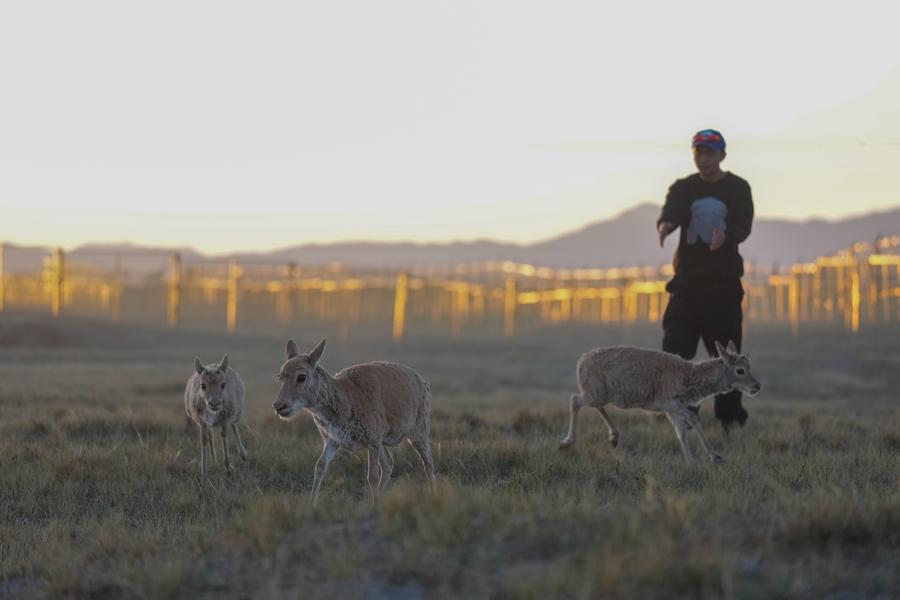
At the 41st session in Krakow, Poland, Kulangsu: A Historic International Settlement and Qinghai Hoh Xil were inscribed.
The International Council on Monuments and Sites (ICOMOS) said Kulangsu reflects the interaction and integration of diverse cultural values during the early stages of migration in Asia. The International Union for Conservation of Nature (IUCN) recognized Hoh Xil for its high integrity, authenticity and effective conservation.
2018: Fanjingshan
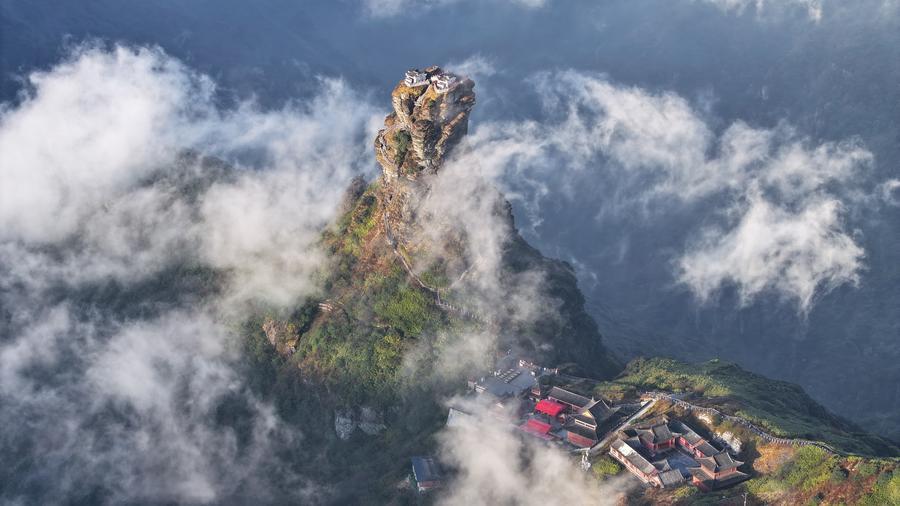
At the 42nd session in Manama, Bahrain, Fanjingshan was added to the World Heritage List.
The property meets the biodiversity criterion for natural heritage and preserves an isolated subtropical mountain ecosystem of outstanding ecological value.
2019: Archaeological Ruins of Liangzhu City and Migratory Bird Sanctuaries along the Coast of Yellow Sea-Bohai Gulf of China (Phase I)
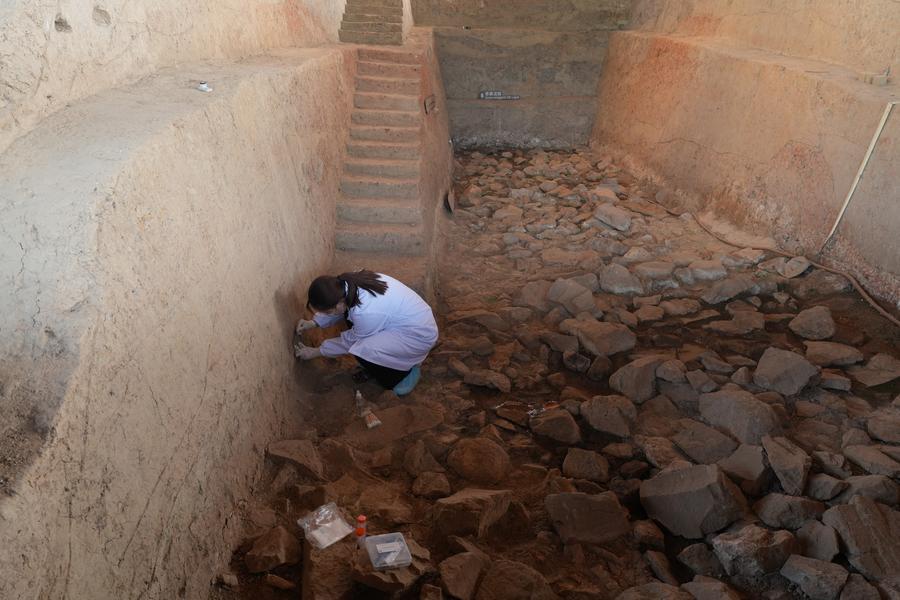
At the 43rd session in Baku, Azerbaijan, the Archaeological Ruins of Liangzhu City and the Migratory Bird Sanctuaries along the Coast of Yellow Sea-Bohai Gulf of China (Phase I) were inscribed.
Liangzhu is an outstanding testimony of an early regional state with rice-cultivating agriculture as its economic base, and social differentiation and a unified belief system, which existed in the lower reaches of the Yangtze River in the Late Neolithic period of China. The committee also recognized the "exceptional importance" of the migratory bird sanctuaries and commended China's conservation efforts.
2021: Quanzhou: Emporium of the World in Song-Yuan China
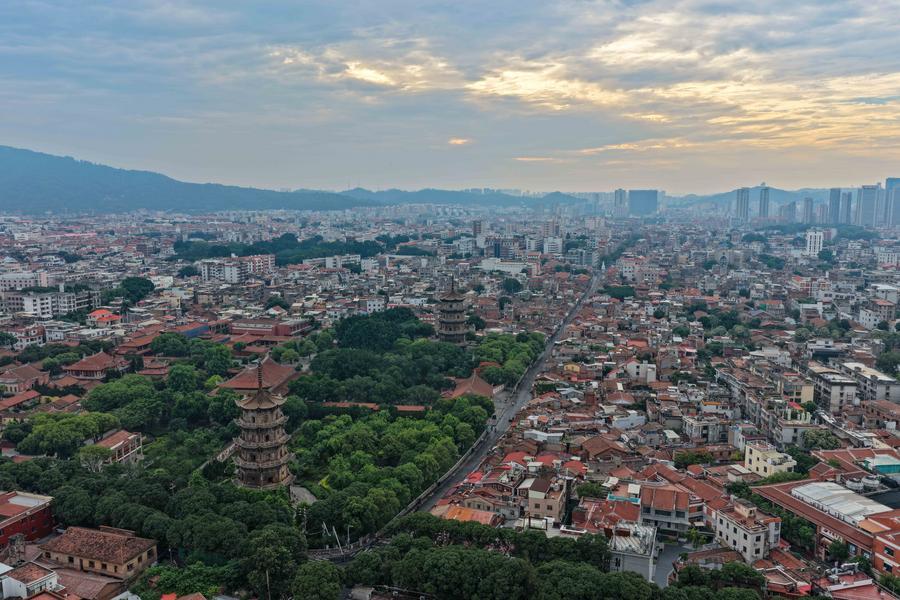
At the 44th session, hosted in Fuzhou, China, UNESCO inscribed Quanzhou: Emporium of the World in Song-Yuan China.
The property outstandingly illustrates, through its component parts, the territorial integrated structure and the key institutional, transportation, production, marketing and socio-cultural factors that turned it into a global-level emporium and key commercial hub during a highly prosperous stage of Asia's maritime trade in the 10th-14th centuries. The property demonstrates Quanzhou's great contributions to the economic and cultural development of East and Southeast Asia.
2023: Cultural Landscape of Old Tea Forests of the Jingmai Mountain in Pu'er
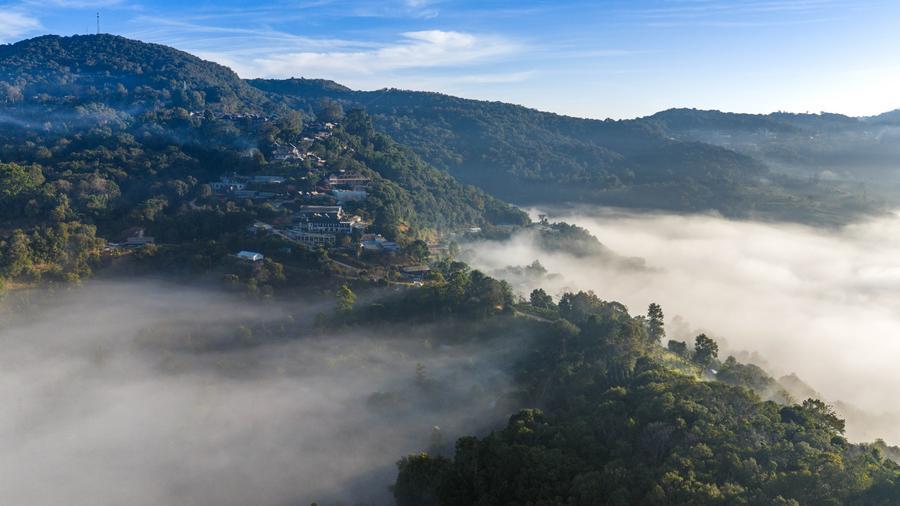
At the 45th session in Riyadh, Saudi Arabia, the Cultural Landscape of Old Tea Forests of the Jingmai Mountain in Pu'er was inscribed.
The property is an outstanding example of a sustainable land-use system based on a combination of horizontal and vertical land-use patterns. This land-use system permits the complementary use of natural resources in the mountainous environment of Jingmai Mountain and represents an exceptional example of human interaction by Blang and Dai peoples with a challenging environment that is vulnerable to the negative impacts of modernization, urban development, and climate change.
2024: Beijing Central Axis, Badain Jaran Desert, and Migratory Bird Sanctuaries along the Coast of Yellow Sea-Bohai Gulf of China (Phase II)
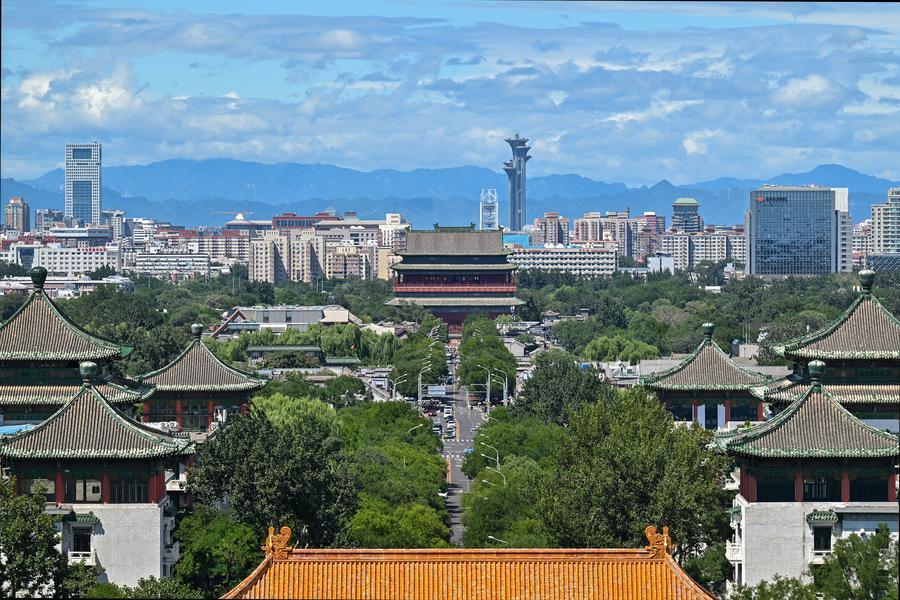
At the 46th session in New Delhi, India, UNESCO inscribed the Beijing Central Axis: A Building Ensemble Exhibiting the Ideal Order of the Chinese Capital, the Badain Jaran Desert -- Towers of Sand and Lakes, and the Migratory Bird Sanctuaries along the Coast of Yellow Sea-Bohai Gulf of China (Phase II).
The Beijing Central Axis provides an illustration of a distinct urban pattern that represents a particular typology in the urban history of the world. The philosophy of neutrality and harmony it conveys contributed significantly to the global history of urban planning.
The inscription of the Badain Jaran Desert filled a gap in China's natural World Heritage portfolio by adding a desert property, while the second phase of the migratory bird sanctuaries expanded the existing site to include five additional protected areas.
2025: Xixia Imperial Tombs
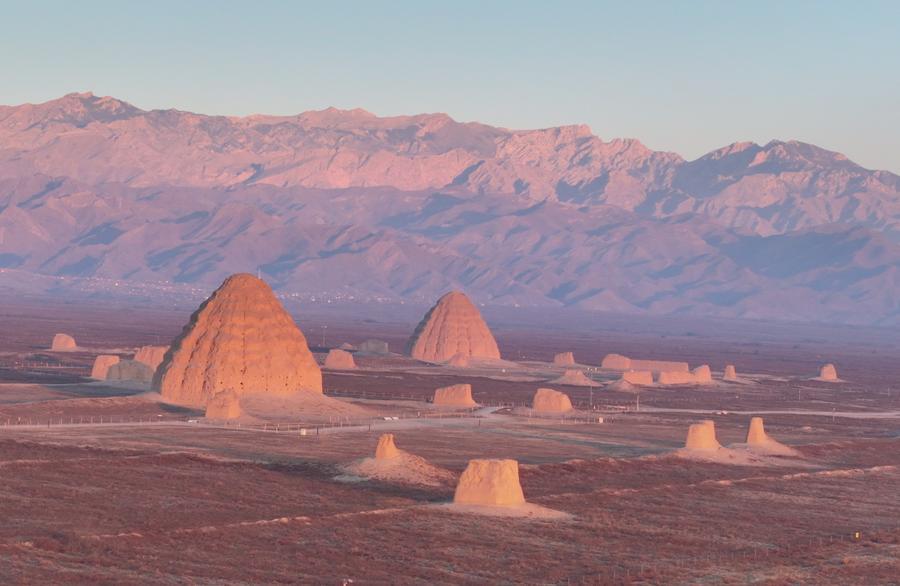
At the 47th session in Paris, France, the Xixia Imperial Tombs were inscribed on the World Heritage List.
The tombs bear witness to cultural and religious influences from multiple sources, ranging from the traditions of the Song and Tang dynasties to the beliefs and funerary customs of the Tanguts, where adherence to Buddhism dominated and ancestral traditions persisted. These characteristics are fully reflected in the spatial organization, design and architecture of the Xixia funerary complex.■