China has become the biggest single-country market of Airbus around the world. The country is also home to a growing number of Airbus manufacturing and support operations, including its first final assembly line outside Europe, which was inaugurated in Tianjin in September 2008.
LONDON, July 24 (Xinhua) -- The expansion of China's aviation-industry capabilities is "a very positive development" for the global aviation sector, said Troy Wang, Airbus China's head of commercial, during a recent interview with Xinhua.
"Aviation is a globalized and highly sophisticated industry with extensive specialization and a clear division of labor, and it requires every country to bring its own strengths into play," Wang said at the Farnborough International Airshow, which takes place on July 20-24.
Airbus' success over the past decades has depended in large part on integrating resources and capabilities from around the world, Wang explained.
The company has operations outside Europe in both the United States and China, and the Chinese market is important as it has strong potential for both development and innovation, he added.
After years of development in the aviation sector, in recent years Chinese manufacturers have been designing and rolling out commercial aircraft products.
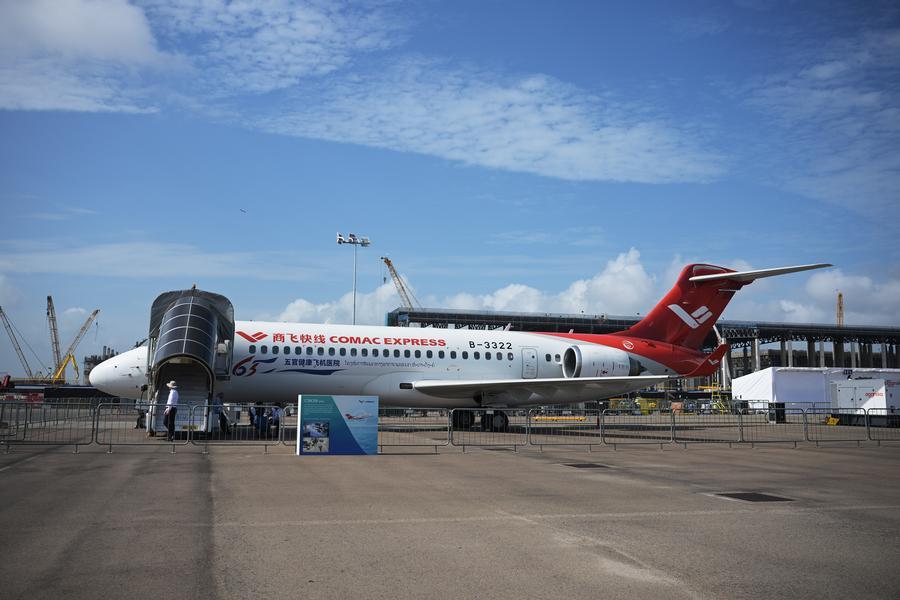
China's homegrown C909 regional jet has recently marked 10 years of commercial operation and is becoming a mainstay of the country's regional aviation market and expanding its footprint overseas.
The C909, formerly known as the ARJ21, made its first commercial flight on June 28, 2016. Since then, the aircraft has carried more than 37 million passengers, according to the Commercial Aircraft Corporation of China, Ltd. (COMAC).
Airbus regards the development of COMAC and the arrival of other participants as beneficial to the industry, Wang said. "The industry needs healthy and fair competition."
Such competition encourages companies to improve their capabilities and products, stimulates innovation and creates value for customers, he added. "Good competition is not about replacing one another or engaging in a life-or-death struggle. It is more about promoting one another and expanding the market together."
China has become the biggest single-country market of Airbus around the world. The country is also home to a growing number of Airbus manufacturing and support operations, including its first final assembly line outside Europe, which was inaugurated in Tianjin in September 2008.
Wang said China's aviation market should be assessed not only on its current size but also on its future potential. Although large numbers of Chinese people already travel by air, a significant number of people have never flown, he said.
Data from the Civil Aviation Administration of China showed that the country has added about 40 million air travelers annually over the past two years, bringing its total to 470 million, up 160 million from 2019. China now has the largest number of air travelers in the world.
Airbus expects the size of China's fleet could roughly double over the next 20 years, generating demand for more than 8,800 new passenger aircraft, Wang added.
However, China is more than just a sales market for Airbus, Wang stressed. The company has expanded its cooperation in the country from component manufacturing and aircraft assembly to customer support, research and development, and aircraft lifecycle services.
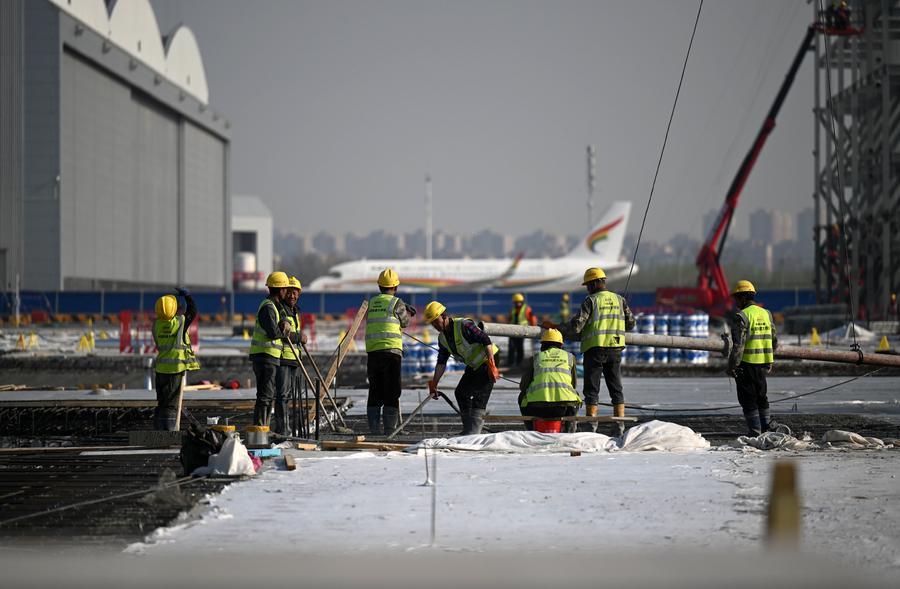
Airbus opened its second A320 family aircraft final assembly line at the Tianjin site in October 2025. Currently, there are parts and components produced in China on all Airbus commercial aircraft.
Aviation is a "long-cycle industry", and many investments require patience before producing results, said Wang. "Truly meaningful cooperation is not only about working happily together when the wind is behind us. It is more important to continue moving forward together when we face headwinds."
Airbus will therefore continue to pursue a long-term strategy in China, increase localization, help Chinese suppliers improve their quality and efficiency, and help them participate more extensively in the global market, he said.
"A good bridge does not exist only in fine weather," Wang said. "It should remain standing through wind and rain." ■