
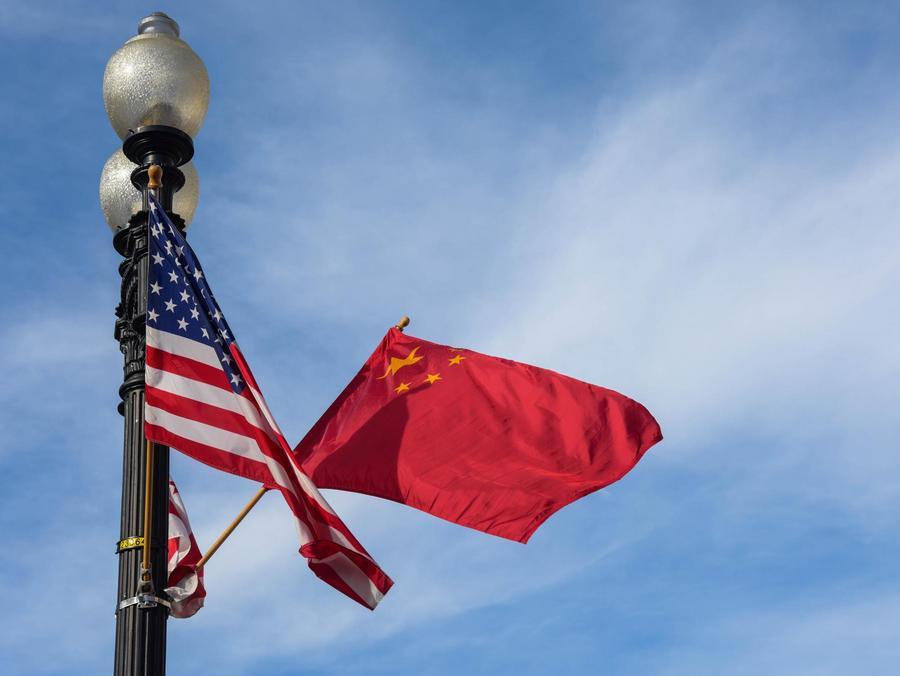
BEIJING, July 25 (Xinhua) -- This week, a key suspect behind the kidnapping and murder of a Chinese citizen was repatriated to China from the United States. Chinese police handed over a fugitive wanted for suspected serious violent crimes to U.S. authorities.
The two countries have also made progress in joint narcotics control. Their anti-drug agencies cracked a cross-border drug trafficking case in April, arresting five suspects in coordinated operations in both countries.
The successful cooperation on law enforcement has won wide acclaim from both sides. It reflects the shared determination to combat transnational crime, and demonstrates that the two countries can work together to deliver tangible results that serve the interests of the two peoples and help promote stable bilateral ties.
Although China and the United States have no extradition treaty and differ in their legal systems and law enforcement practices, these should not prevent the two sides from cooperating to combat crime and protect public safety. People in both countries expect criminal activities to be handled swiftly and efficiently in accordance with the law, and their security and legitimate interests to be effectively safeguarded.
Such cooperation requires respect for facts and the rule of law, sustained efforts to build trust through mutual respect and concrete actions, and a shared commitment to putting the interests and well-being of the people in both countries above political calculations.
However, the picture hasn't always been rosy, and there have been some bitter lessons. In the late 2010s, the U.S. side refused to send Guo Wengui, a Chinese fugitive charged with multiple serious offenses including fraud and sexual violence and put on the Interpol's wanted list, back to China to face justice. In the following years, the unrepentant and even emboldened Guo launched a massive fraud scheme targeting Americans and swindled the victims out of over one billion dollars, before U.S. authorities finally arrested and convicted him.
This year, China-U.S. relations have witnessed positive developments, particularly since the two heads of state reached important consensus on building a constructive relationship of strategic stability between the two countries, with cooperation as the mainstay.
The effective law enforcement cooperation represents a concrete step toward this goal. This sound momentum looks set to continue, as China's minister of public security and the FBI director met in Beijing on Friday and agreed to continue deepening exchanges and cooperation on law enforcement.
The two countries are also expected to continue to expand exchanges and deepen cooperation in other areas, including the economy and trade, health, agriculture, tourism, and cultural and people-to-people exchanges.
As the world's largest developing country and largest developed country, respectively, China and the United States should strengthen bilateral and multilateral cooperation to bring benefits to all of humanity by contributing to resolving regional conflicts, cracking down on cross-border crimes, and tackling common challenges such as pandemics and climate change.
Clearly, achieving outcomes in cooperation requires a fundamental understanding of the overarching trends of China-U.S. relations. Vigilance is needed against attempts to undermine mutual trust, politicize individual issues or fuel conflict and confrontation.
As long as both sides enhance mutual trust and genuinely act in the best interests of their peoples, the potential for China-U.S. cooperation is immense, and the prospects for building a constructive relationship of strategic stability shall be promising. ■