BEIJING, July 24 (Xinhua) -- The so-called "China Squeeze" claim recently spread by some Western media is a recycled "China Threat" narrative, rooted in zero-sum mentality and intended to drive a wedge between China and other Global South countries.
The accusation is as misleading as it is familiar. It claims that Chinese exports are limiting the industrialization space of low- and middle-income countries.
Facts, however, tell a totally different story. Far from crowding others out, China's economic engagement has long served as a vital anchor and catalyst for industrial development across developing countries.
In May, China began implementing an expanded zero-tariff treatment on imports from all 53 African countries with which it has diplomatic relations. So far, China has granted zero-tariff treatment to 63 countries, helping them diversify export products, increase their added value and boost local industrial development.
As a member of the Global South, China's economic ties with other Global South countries are built on industrial complementarity and win-win cooperation rather than zero-sum competition. Such cooperation creates shared opportunities and helps countries move up the global value chain.
Under the Belt and Road Initiative, Chinese investment has focused on transport, energy and telecommunications, the very infrastructure many countries need most. According to a World Bank report, the Belt and Road cooperation could lift 7.6 million people in partner countries out of extreme poverty and 32 million people out of moderate poverty by 2030.
The "squeeze" narrative rests on one flawed premise -- that the global economy is a fixed pie where one nation's gain must come at another's expense.
In reality, it is the opposite. Economic growth is driven by expanding markets, improving productivity and deepening integration. Contributing around 30 percent of global economic growth, China is actively enlarging the development pie for all.
As China undergoes its own industrial upgrading, the relocation of labor-intensive industries has opened new space for developing economies to pursue industrialization, while China is also leveraging its technological and industrial expertise to help them build stronger capacity.
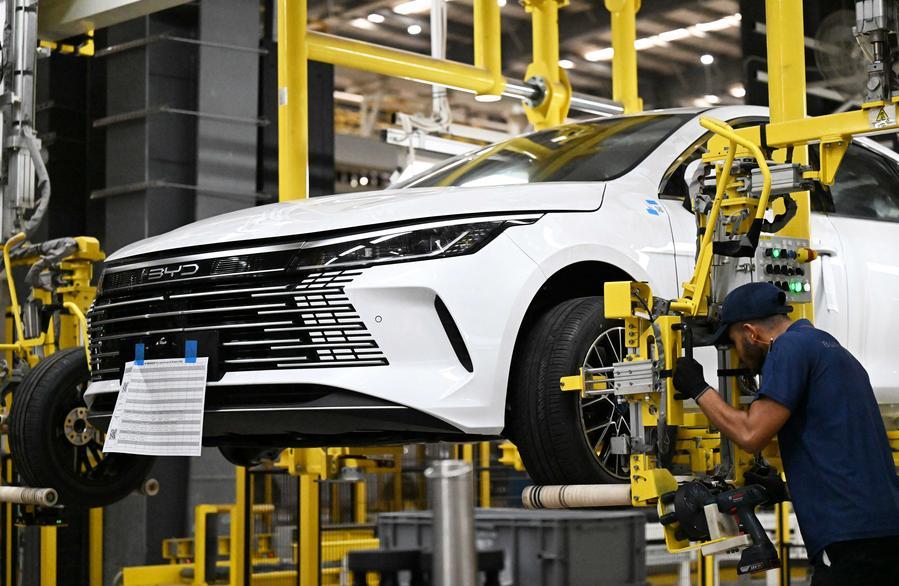
For example, China-funded new energy projects in countries such as Brazil and Thailand have created jobs, generated tax revenues and strengthened local industrial capabilities. These efforts ensure that developing countries build modern industries rather than remaining locked at the bottom of the global value chain.
If the Global South countries have ever truly been "squeezed," history is a good place to search for the real culprits.
For centuries, colonialism, unequal trade rules and financial dominance left many developing countries with little room to choose their own path. Today, the real threat to these countries stems not from China's growth, but from the attempts by some in the West to restrict their development choices.
While China has expanded opportunities through trade, investment and cooperation, some Western countries have sought to reduce the potential for shared prosperity via protectionism, technology restrictions and decoupling efforts.
By projecting the "squeeze" narrative, certain countries also seek to divert attention from their own domestic problems, including industrial decline and widening inequality, and try to weaken the close partnership among developing countries.
This rhetoric exposes the geopolitical anxiety of its promoters. Beneath the rhetoric lies a familiar agenda: preserving geopolitical privilege rather than promoting genuine development.
The Global South needs no one else to speak on its behalf. Countries choose to cooperate with China not because they are coerced, but because they reap tangible, mutually beneficial gains in trade, infrastructure, investment and technology.
As the global landscape evolves, Western critics must recognize a simple truth: cooperation remains the surest path to shared prosperity, and no biased rhetoric can overshadow the solid reality of South-South empowerment. ■