
*For years, China has attracted overseas consumers via the products it manufactures. However, a quiet shift is now taking place, with an increasing number of foreign visitors coming to China not only to buy goods, but also to experience the country's professional, efficient and personalized services.
*This growing demand has encouraged local businesses to adapt. Many stores and clinics now offer bilingual service menus, translation tools and foreign-card payment systems, with some staff picking up basic English to communicate directly with customers.
*Beyond the economic benefits, the trend is reshaping something less tangible: how China is understood by the world.
SHANGHAI, July 21 (Xinhua) -- For years, China has attracted overseas consumers via the products it manufactures. However, a quiet shift is now taking place, with an increasing number of foreign visitors coming to China not only to buy goods, but also to experience the country's professional, efficient and personalized services.
This change reflects a broader evolution in inbound consumption, as expanding visa-free policies and improving travel convenience combine to make China more accessible than ever.
Peter Anthony, a frequent visitor to China from the United States, brings optician notes from family and friends on every trip, buying their glasses in China -- a habit he picked up after his first visit to a Shanghai optical store in 2019.
"I bought them for my children, I bought them for my friends, I buy them for myself," Anthony said. "Service is outstanding. In China, much, much faster and certainly cheaper." In many Chinese optical stores, regular glasses can be made within an hour, while customized lenses are often ready within days, which is ideal for visitors on a short stay.
New Zealand tourist Malcolm, who has astigmatism in both eyes, said he was impressed by the advanced equipment used to precisely measure his pupils and adjust his glasses for both reading and driving.
The growing popularity of such services is also reflected online. On Tripadvisor, a favored travel review site among international tourists, a shopping complex dedicated to eyewear in Shanghai in east China ranks among the city's top five attractions, alongside iconic landmarks like the Bund, Yu Garden and Xintiandi.
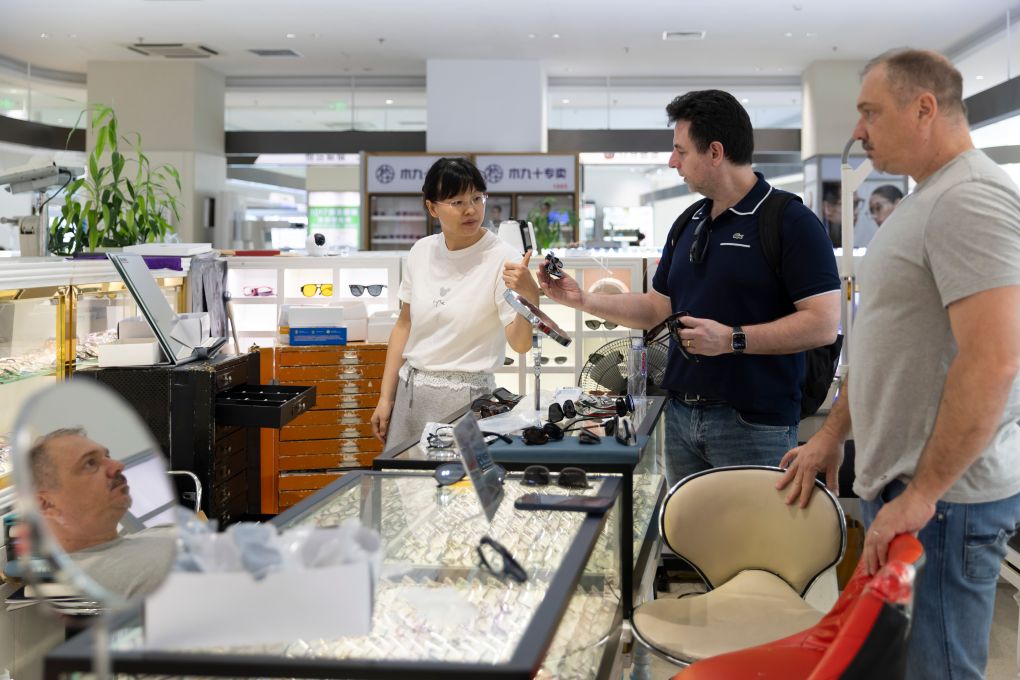
"Many overseas repeat customers just send their optician notes via WeChat or email, and we ship the finished glasses to them within seven to 10 days -- often faster than getting glasses made in their own country," said Yi Jiawei, owner of an optical store in Shanghai.
For overseas consumers, Chinese quality, Chinese speed and Chinese value for money have created an experience beyond their expectations, Yi noted.
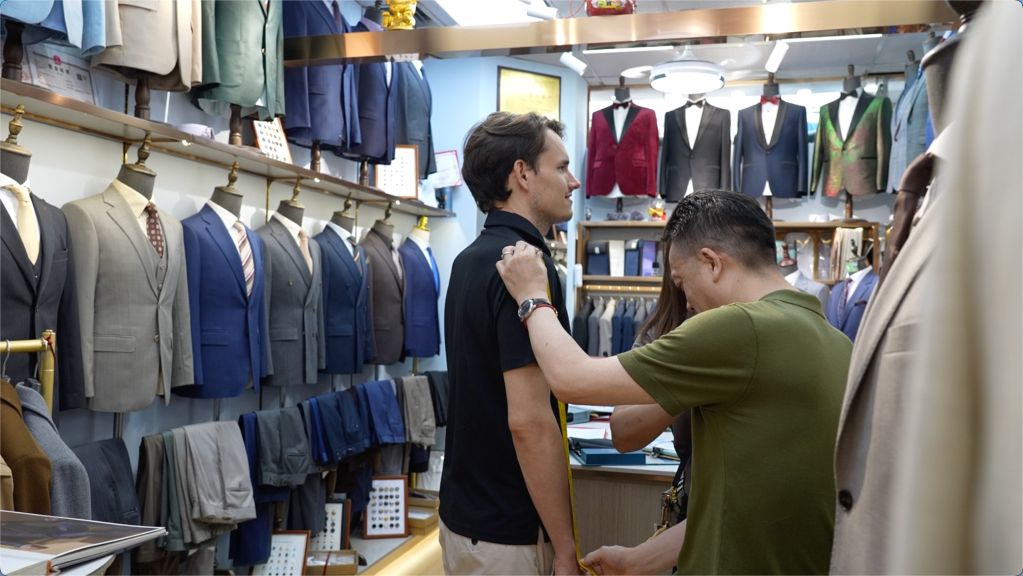
A similar pattern is emerging across other service sectors, from hairstyling and dental care to traditional Chinese medicine and custom tailoring, as more overseas visitors seek professional, efficient and personalized experiences.
Australian customer Bianca said her Chinese tailor makes clothes that fit almost perfectly -- customized and ready within just a few days of her measurements being taken. "That's how incredible and how quick it is," she said.
The same high-quality, tailored experience extends to hair salons, too. German tourist Stefan, who had just finished a haircut in Shanghai, praised his stylist for creating a look tailored to his needs, one he said he planned to keep for a long time.
"Foreign visitors are increasingly incorporating everyday services into their trips, marking a shift from product-sought to service-driven inbound consumption," said Cao Yixia, a researcher at the Shanghai Academy of Social Sciences, adding that this brings stronger customer loyalty and greater potential for word-of-mouth growth.
She cited strong cost-effectiveness, faster turnaround and skills honed by high customer volume as key draws.
Sun Jiashan, a researcher with the Central Institute of Socialism, attributes the shift to China's expanding visa-free policies. "As overseas tourists visit more often, they tend to explore in greater depth, with more varied and increasingly satisfying experiences," Sun said.
The numbers bear this out. Foreign customers now make up about 20 percent of the clientele at Yi's eyewear store, while Lin Jiecai, founder of a hair salon in Shanghai, said overseas customers account for around 18 percent of his clients.
China currently offers unilateral visa-free entry to nationals of 50 countries and has expanded its 240-hour visa-free transit program to 65 entry ports.
In 2025, the country recorded more than 150 million inbound tourist visits, up over 17 percent from a year earlier. Spending by inbound travelers surpassed 130 billion U.S. dollars last year, an increase of nearly 40 percent year on year.
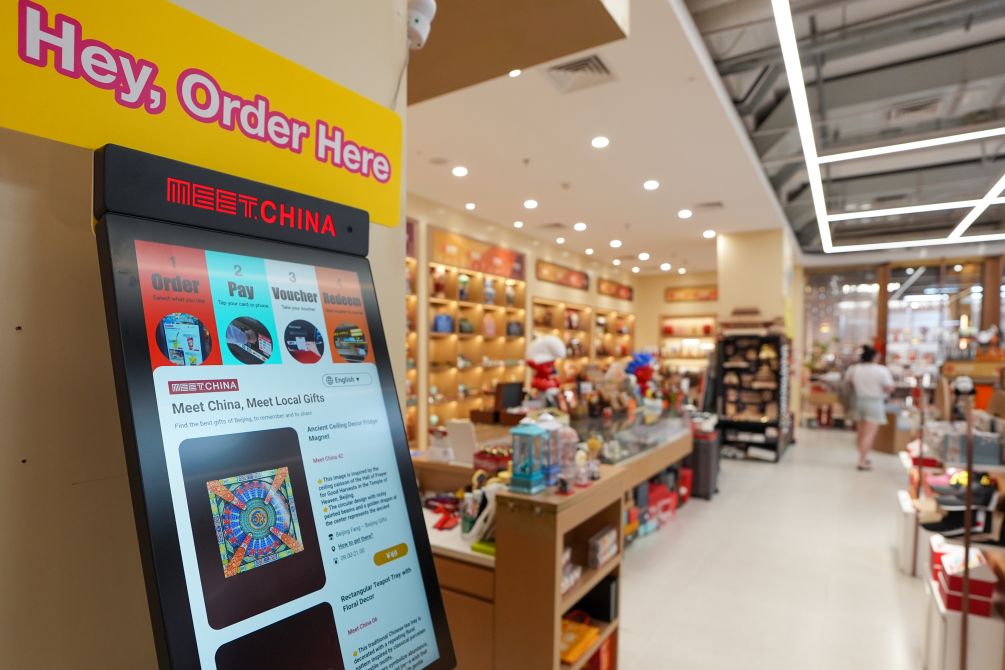
This growing demand has encouraged local businesses to adapt. Many stores and clinics now offer bilingual service menus, translation tools and foreign-card payment systems, with some staff picking up basic English to communicate directly with customers.
Chinese authorities have also welcomed the trend, releasing a package of measures in March to boost spending by foreign tourists and expand tourism service exports.
These measures include optimizing departure tax refund services, encouraging everyday service apps to offer multilingual versions and further improving visa procedures.
China could be undergoing a strategic shift, from "the world's factory" to a destination for global consumers seeking services, said Cao, who expects the trend to drive further improvements in service standards, customer experience and digitalization, while opening new growth opportunities in healthcare, wellness and culture.
China aims to attract 190 million inbound tourist visits a year by 2030, with annual inbound tourism spending exceeding 150 billion U.S. dollars by then, according to a new five-year tourism development plan released earlier this month.
Beyond the economic benefits, the trend is reshaping something less tangible: how China is understood by the world.
This growing appetite for experiencing Chinese-style services is a natural extension of a media trend that has grown since 2025, as more overseas influencers share glimpses of daily life in China, said Sun.
This kind of everyday, people-to-people interaction, Sun added, is giving rise to a more authentic, friendly and organic form of exchange between China and the world. ■
(Video reporters: Ding Ting, Huang Anqi, Wang Xiang; video editors: Zhang Yichi, Zhu Cong, Hui Peipei)