

SANAA, July 20 (Xinhua) -- Yemen's Houthi group on Monday announced a maritime ban on Saudi shipping, marking a significant escalation and raising concerns over security of navigation in the Red Sea and nearby shipping lanes.
In a statement aired by the group's Al-Masirah television, Houthi military spokesman Yahya Sarea said the decision took effect immediately following the announcement, without specifying how and where the ban would be enforced.
He said the move, based on what he described as the principle of "blockade for blockade," was in response to Saudi Arabia's "siege for nearly 12 years" through a "blockade on ports and airports."
Citing a recent attack on Houthi-controlled Sanaa International Airport, the spokesman said the group "has the right" to respond through "all available means."
The move marks one of the strongest measures announced by the Houthis since tensions intensified last week following strikes, claimed by the Saudi-backed Yemeni government, on Sanaa International Airport, barring an Iranian aircraft carrying a senior Houthi delegation from landing. The delegation was returning from Tehran after attending the funeral ceremonies of Iran's late Supreme Leader Ali Khamenei.
The Houthis blamed the attack on Riyadh and responded by launching missiles and drones. Houthi leader Abdulmalik al-Houthi warned that Saudi oil installations and other strategic infrastructure could become targets if Riyadh becomes involved in broader military operations against the group.
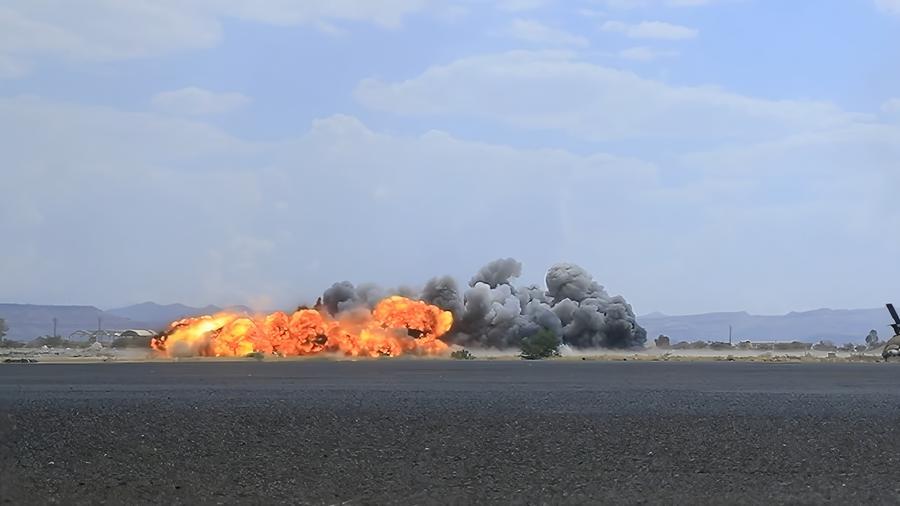
The Houthis have previously used missiles, drones and naval weapons against vessels they accused of being linked to Israel and the United States during the Gaza war, forcing shipping companies to divert vessels away from the Red Sea, a vital corridor for international trade and energy shipments.
The latest development could further heighten risks to commercial navigation in the region, amid U.S.-Iran conflict over the control of the Strait of Hormuz.
Yemen has been mired in conflict since late 2014, when the Houthis seized control of the capital, Sanaa, and much of northern Yemen, prompting a Saudi-led coalition to intervene the following year in support of the internationally recognized Yemeni government.
Although large-scale hostilities have largely subsided since a UN-mediated truce in 2022, the latest exchanges between the Houthis and Riyadh have fueled concerns that the fragile de-escalation could unravel and draw the country into a broader confrontation. ■