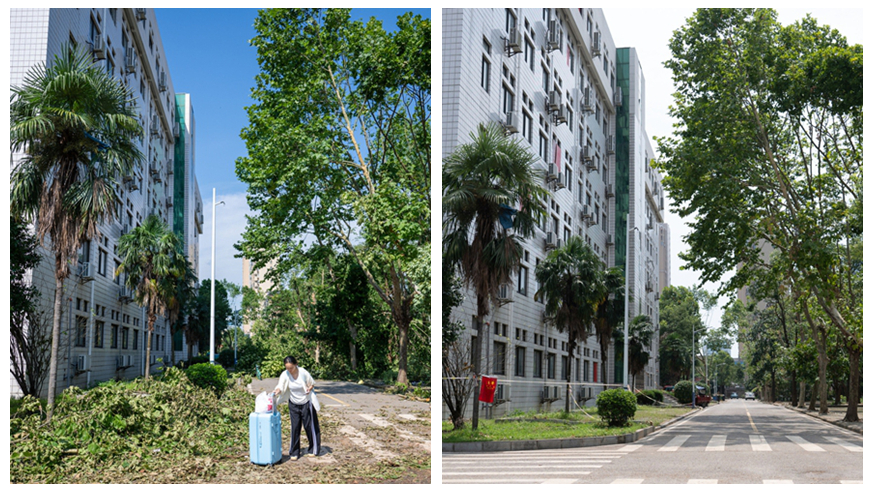
* China's economy maintained steady growth in the first half of 2026, supported by stable performance across major sectors.
* Beyond the overall growth figures, China's economic structure has continued to evolve, with technology-intensive industries expanding rapidly.
* Overseas experts told Xinhua that the first-half performance reflected the resilience of China's economy, with technological innovation, industrial upgrading and stronger domestic demand emerging as primary drivers of growth.
BEIJING, July 16 (Xinhua) -- As the global economy faces slowing growth, rising protectionism and mounting uncertainties, China's latest economic data showed steady growth in the first half of 2026, drawing attention to the resilience, transformation and high-quality development underpinning its growth.
China's GDP reached 69.57 trillion yuan (about 9.7 trillion U.S. dollars) in the first half of 2026, up 4.7 percent year on year at constant prices, according to data released by the National Bureau of Statistics (NBS) on Wednesday.
The NBS said the national economy "operated within an appropriate range" during the period, with production and supply growing fast, employment generally stable, prices increasing mildly and foreign trade showing good momentum.
Overseas experts told Xinhua that the first-half performance reflected the resilience of China's economy, with technological innovation, industrial upgrading and stronger domestic demand emerging as primary drivers of growth.
RESILIENT GROWTH
China's economy maintained steady growth in the first half of 2026, supported by stable performance across major sectors.
Industrial enterprises above designated size saw their value added increase 5.4 percent year on year, while the service sector grew 5.2 percent during the period.
"I think it's a solid achievement that China achieved a 4.7 percent growth in the first half of 2026, especially given today's global environment of slower growth, rising trade protectionism, and geopolitical uncertainty," said Aden Budi, a senior researcher at the Centre for Strategic and Global Studies, Graduate School of Sustainable Development, Universitas Indonesia.
"It shows that China's economy remains resilient and continues to maintain stable growth despite external challenges," he said.
Budi noted that the significance of the data went beyond the growth figure itself.
"What is more important is the quality of that growth. It is supported by domestic consumption, industrial production, investment, and trade," he said. "This balanced growth gives businesses greater confidence that China's economy will remain a stable source of demand and economic activity in the region."
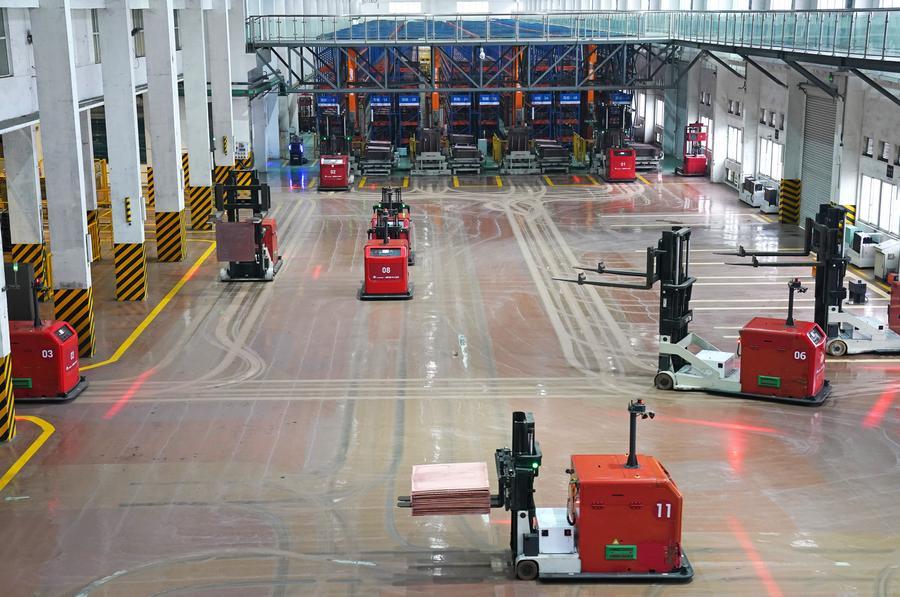
Claudio Rabenja, a Malagasy economist and international affairs expert, said China's diversified growth drivers, large domestic market and increasingly modernized production system have helped strengthen the economy's resilience and adaptability amid external uncertainties.
NEW GROWTH DRIVERS
Beyond the overall growth figures, China's economic structure has continued to evolve, with technology-intensive industries expanding rapidly.
High-tech manufacturing emerged as one of the fastest-growing areas, with its value added increasing 13.3 percent year on year in the first half of 2026, significantly faster than overall industrial growth. Production of industrial robots and lithium-ion batteries also maintained rapid, double-digit expansion.
Dai Erbiao, president of the Asia Growth Research Institute in Japan, said China's resilience was supported by its complete industrial and supply chains, rapid development of high-tech manufacturing and green industries, vast domestic market and upgrading export structure.
"China is making the transition from a manufacturing center to an innovation center, with continued breakthroughs in AI, advanced manufacturing and new energy, injecting fresh momentum into global innovation," Dai said.
David Bailey, a professor of economics at the University of Birmingham, said China's economic model was changing, with greater emphasis on advanced manufacturing, technology and exports.
"Whether it's electric vehicles, batteries, solar panels or air conditioning systems, Chinese firms are becoming major players across sectors where demand is growing rapidly," Bailey told Xinhua.
He said China's advantages in these areas came from the combination of scale, speed and technological capability.
"The global debate is no longer about whether Chinese technology will be influential. It already is. The real question is how countries respond through industrial policy, trade policy and investment," Bailey said.
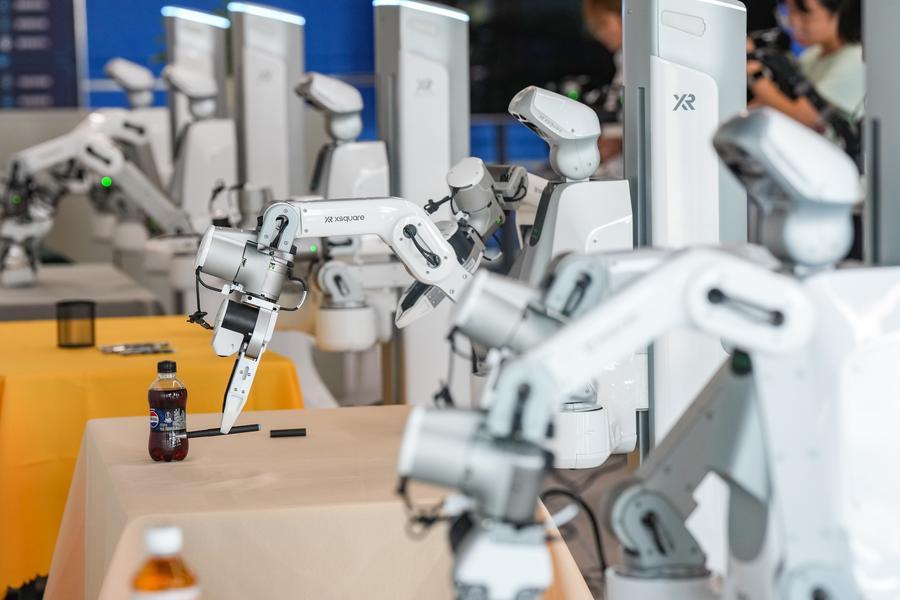
Levente Horvath, director of the Eurasia Center of John von Neumann University, said China's technological development had become increasingly visible in everyday life after decades of economic transformation.
"New technologies are not confined to laboratories -- they rapidly become part of people's everyday lives, making China one of the world's fastest adopters of innovation," Horvath said.
China's green transition was also notable, with the country building a complete industrial ecosystem covering solar panels, batteries, electric vehicles, energy storage and smart grids, he said.
GLOBAL OPPORTUNITIES
China's economic performance has also drawn attention for the opportunities it creates for global partners.
China's imports and exports of goods increased 16.9 percent year on year in the first half of 2026, with trade with Belt and Road partner countries growing 14.8 percent, according to the NBS.
Rhys Roberts, national president of the Australia China Business Council, said China's economic resilience was notable against the backdrop of global uncertainty.
"China's economic resilience in the first half of 2026 is, frankly, remarkable given the global environment in which it has been achieved," Roberts said.
He noted that geopolitical tensions, shifting trade patterns and uncertainty in major economies have created challenges for global growth, making China's performance a clear signal of the underlying strength of its economic fundamentals.
"China remains Australia's largest trading partner, and the stability and growth of the Chinese economy has direct and material consequences for Australian exporters, investors and businesses operating across our bilateral relationship," he said.
Budi said China's expanding domestic demand and industrial upgrading were also creating new opportunities for regional cooperation.
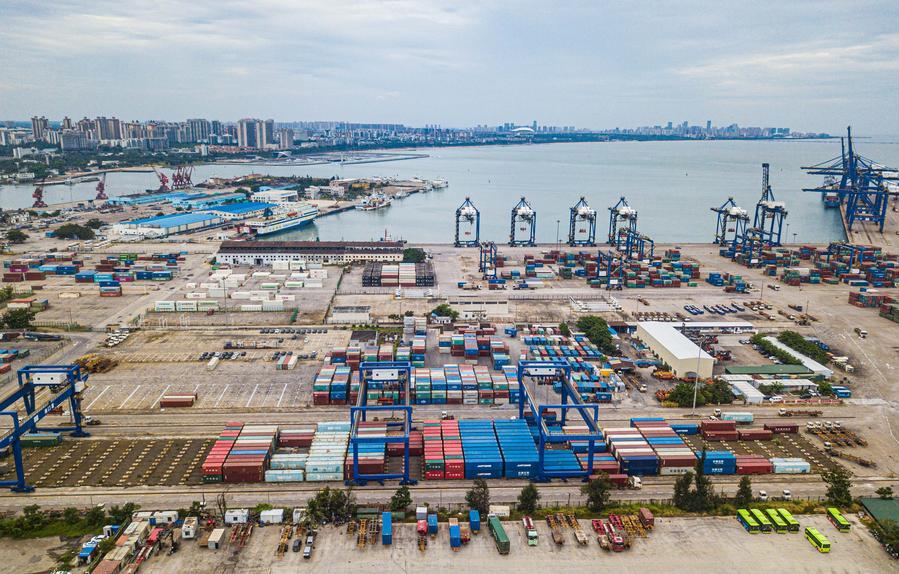
"However, I believe the bigger opportunity is not only higher export volumes. China's economy is also creating demand for higher quality products, more reliable supply chains, intermediate goods, and materials that support advanced manufacturing and green industries."
Amadou Magagi, an expert at the Niger Chamber of Commerce and Industry, said China's development experience could provide valuable insights for developing countries.
"China can help African countries strengthen their industrial processing capacity, enabling them to carry out more local production, participate in the international market on fairer terms, and achieve mutually beneficial and win-win development," Magagi said.■