
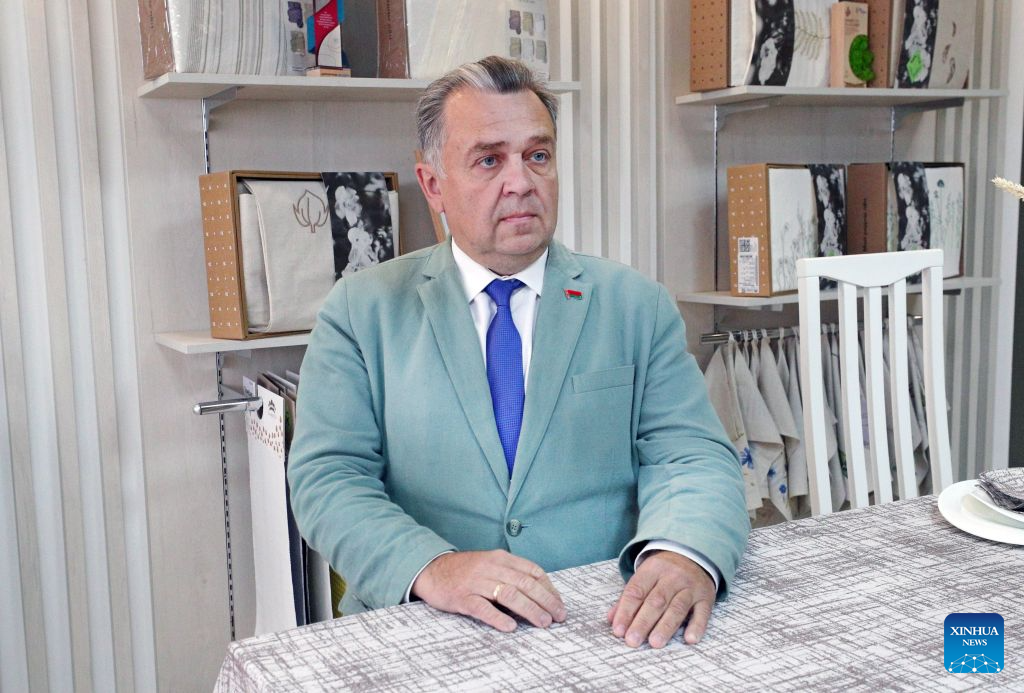
Sergey Sidin speaks during an interview with Xinhua in Orsha, Belarus, July 9, 2026. From the blue flax fields of Belarus to the textile workshops and markets of China, linen has transcended its origins as a mere agricultural commodity. In the Belarusian city of Orsha, known as the country's "linen capital," stands one of Europe's largest linen processing enterprises, a facility with roots dating back to the 1930s.(Photo by Zhinkov Henadz/Xinhua)
ORSHA, Belarus, July 15 (Xinhua) -- From the blue flax fields of Belarus to the textile workshops and markets of China, linen has transcended its origins as a mere agricultural commodity.
As the natural fibre journeys across borders and embeds itself in everyday life in both countries, it is quietly weaving a stronger fabric of friendship and cooperation between China and Belarus.
The moderate, humid climate of Belarus and its fertile soil make the country one of the world's key regions for producing high-quality linen.
For centuries, linen has served Belarusians not only as a favoured crop but as a profound symbol of national spirit. A blooming blue flax flower adorns the country's national emblem, a quiet yet powerful testament to the plant that yields the treasured fibre -- and to the enduring love and respect Belarusians feel for it.
Today, Belarusian linen is gaining growing popularity in China, where expanding trade and people-to-people exchanges are breathing new vitality into the centuries-old fibre.
Sergey Sidin, Deputy General Director of the Orsha Linen Mill, lists the virtues of linen: high hygroscopicity, quick water absorption and release, anti-static properties, hypoallergenic qualities, and antibacterial effects.
In the Belarusian city of Orsha, known as the country's "linen capital," stands one of Europe's largest linen processing enterprises, a facility with roots dating back to the 1930s.
The mill shares a special friendship with China. Belarusian specialists participated in establishing China's first linen mill in Harbin, the capital of northeast China's Heilongjiang Province, and regularly provided technical training to Chinese partners.
Sidin still remembers 1993, when a delegation from Harbin came to intern at the mill, and Belarusian experts passed on what they knew about handling a material as demanding as linen.
Modernizing the Orsha Linen Mill was not easy. Chinese firms stepped in with financing, technology and equipment, including a full overhaul of the mill's second factory -- help that has since sharpened product quality and turned Orsha into one of Belarus's most advanced textile producers.
A visit to the second factory revealed a clean, bright space with high-speed Chinese-made machines transforming raw linen into fine fibres. Most operations are automated, contributing to greater production efficiency.
"This was our factory before renovation -- you see the difficult working conditions back then. We left those pictures to remember how Chinese friends helped us modernize," said a worker of the second factory, pointing to a wall of old photos.
Sidin emphasizes that small acts of friendship build great achievements: "These little bricks of friendship have built a large, thriving institution that continues to develop."
Two years ago, Sidin visited China as part of a delegation from the Belarusian government. Impressed by the scale and industrialization of Chinese production, he said that the Chinese market is vital, and Belarusian enterprises are eager to export high-quality linen products and textiles to China, fostering mutually beneficial trade.
For Sidin, what Belarus and China are building is no mere monument to the past -- it is a book still being written, one new page each day. "Working together on current challenges in the textile industry lays a foundation for the future," he said. ■
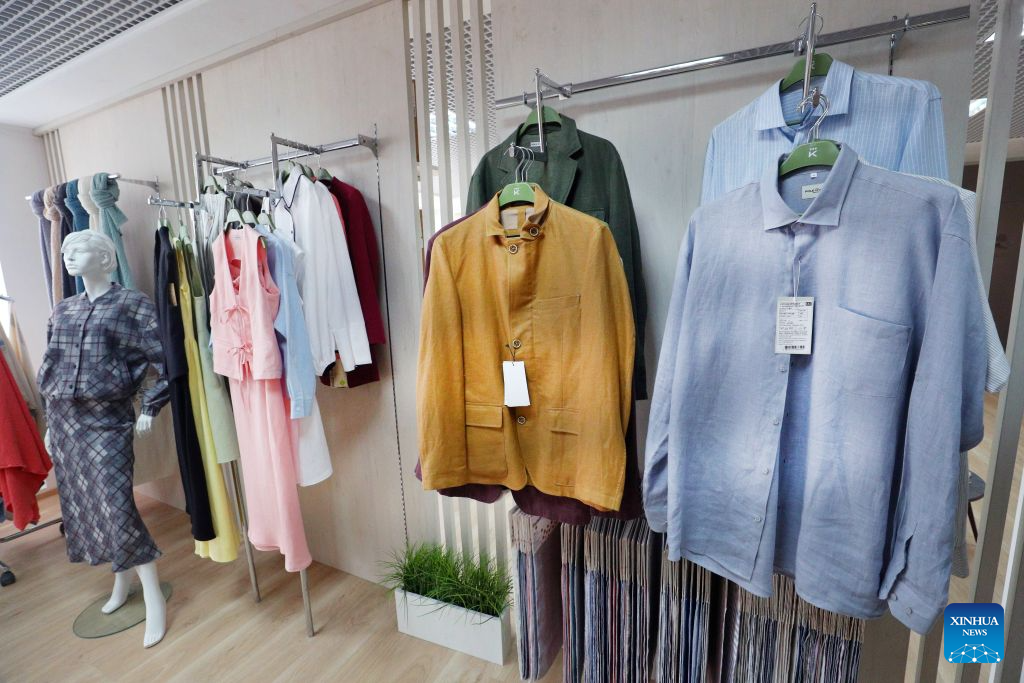
This photo taken on July 9, 2026 shows local linen products in Orsha, Belarus. From the blue flax fields of Belarus to the textile workshops and markets of China, linen has transcended its origins as a mere agricultural commodity.
In the Belarusian city of Orsha, known as the country's "linen capital," stands one of Europe's largest linen processing enterprises, a facility with roots dating back to the 1930s.(Photo by Zhinkov Henadz/Xinhua)
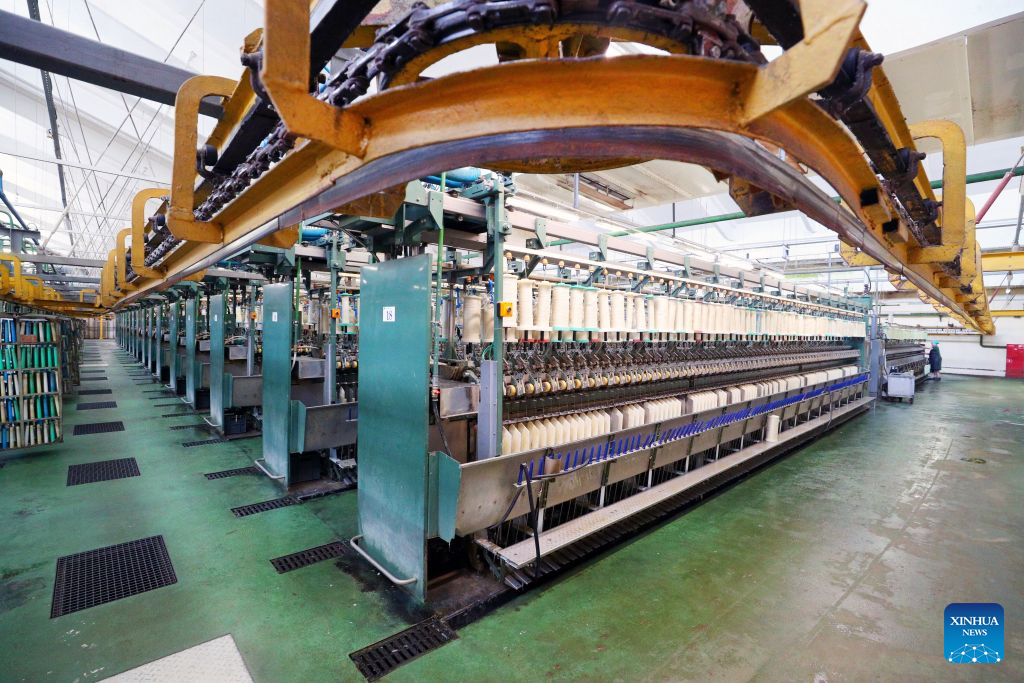
This photo taken on July 9, 2026 shows the second factory of the Orsha Linen Mill after its full overhaul by Chinese firms in Orsha, Belarus. From the blue flax fields of Belarus to the textile workshops and markets of China, linen has transcended its origins as a mere agricultural commodity.
In the Belarusian city of Orsha, known as the country's "linen capital," stands one of Europe's largest linen processing enterprises, a facility with roots dating back to the 1930s.(Photo by Zhinkov Henadz/Xinhua)
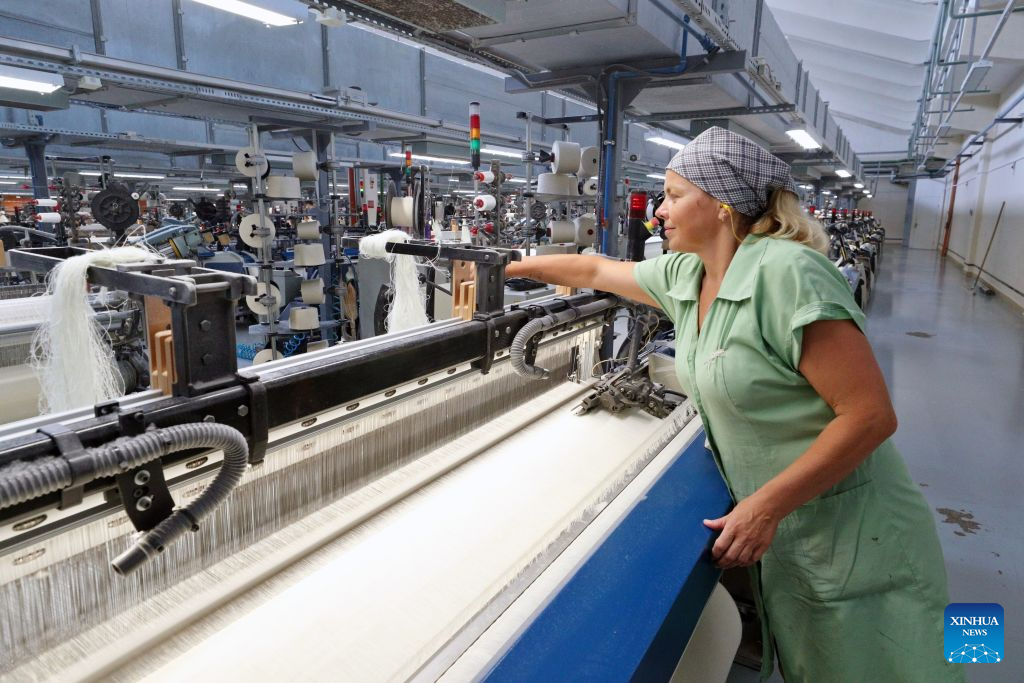
A worker processes flax at the Orsha Linen Mill in Orsha, Belarus, July 9, 2026. From the blue flax fields of Belarus to the textile workshops and markets of China, linen has transcended its origins as a mere agricultural commodity.
In the Belarusian city of Orsha, known as the country's "linen capital," stands one of Europe's largest linen processing enterprises, a facility with roots dating back to the 1930s.(Photo by Zhinkov Henadz/Xinhua)
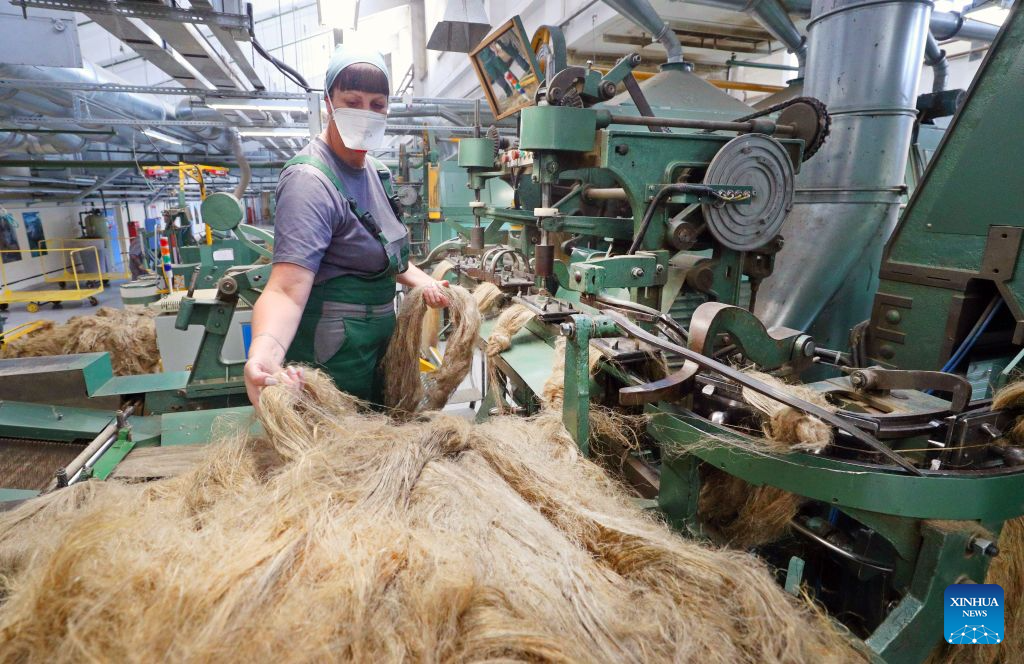
A worker processes flax at the Orsha Linen Mill in Orsha, Belarus, July 9, 2026. From the blue flax fields of Belarus to the textile workshops and markets of China, linen has transcended its origins as a mere agricultural commodity.
In the Belarusian city of Orsha, known as the country's "linen capital," stands one of Europe's largest linen processing enterprises, a facility with roots dating back to the 1930s.(Photo by Zhinkov Henadz/Xinhua)
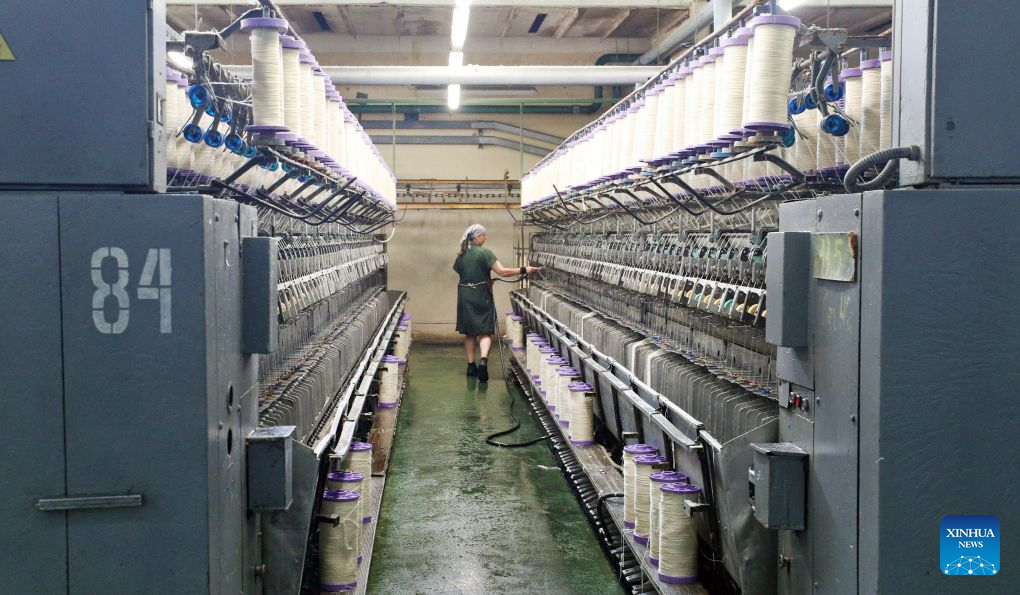
A worker processes flax at the Orsha Linen Mill in Orsha, Belarus, July 9, 2026. From the blue flax fields of Belarus to the textile workshops and markets of China, linen has transcended its origins as a mere agricultural commodity.
In the Belarusian city of Orsha, known as the country's "linen capital," stands one of Europe's largest linen processing enterprises, a facility with roots dating back to the 1930s.(Photo by Zhinkov Henadz/Xinhua)


