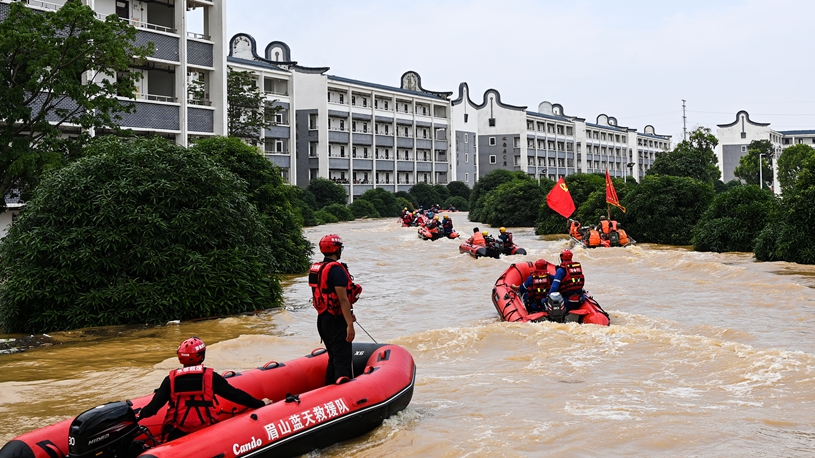
SHENYANG, July 13 (Xinhua) -- By 6 a.m. on Monday, more than 170,000 people had been relocated to safe places in northeast China's Liaoning Province, with most of them from the city of Fushun, as the northward-moving Typhoon Bavi brought extreme downpours to this province.
From 8 p.m. on Sunday to Monday noon, parts of central and northern Liaoning experienced heavy to torrential rain, with some areas of Shenyang, the provincial capital, recording extraordinary downpours and severe waterlogging. The rain is expected to persist from Monday noon through Tuesday daytime, with extreme downpours in certain areas, according to the provincial meteorological observatory.
Five prefecture-level cities in the province suspended work, school and business activities on Monday. In Shenyang, all schools, kindergartens and training institutions have been ordered to suspend classes, with outdoor group events and large gatherings banned, construction sites shut down, and scenic spots and night markets closed.
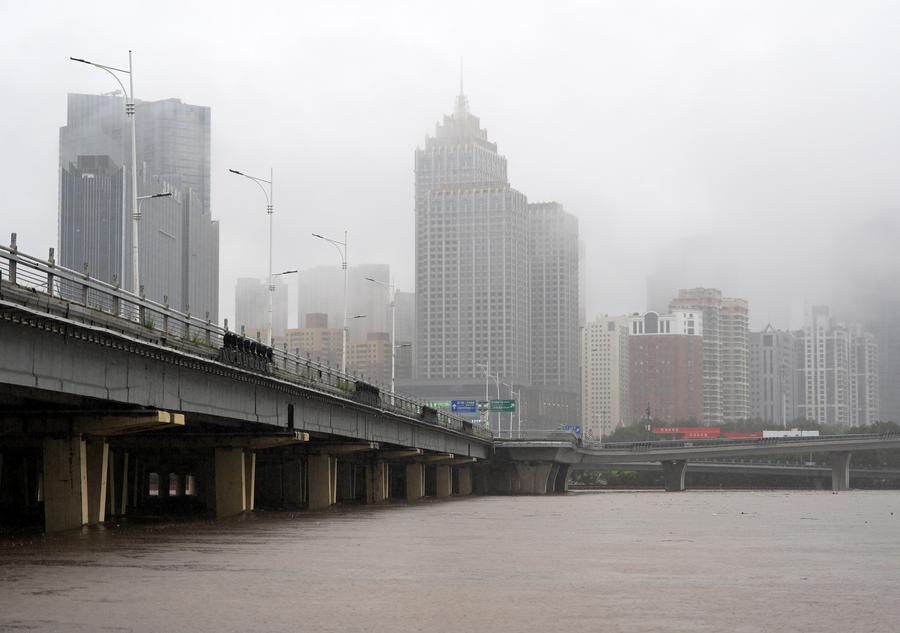
Affected by the continuous rainfall, water levels in major rivers including the Liaohe, Hunhe, Taizi and Puhe rose significantly due to the downpours.
The provincial flood control and drought relief headquarters is coordinating disaster response efforts via video conferences, taking preventive measures along rivers, reservoirs and potential hazard sites. It has also called for intensified inspections of rivers and reservoirs where water levels are forecast to exceed warning thresholds, adequate stockpiling of emergency supplies, and full readiness for rescue and evacuation.
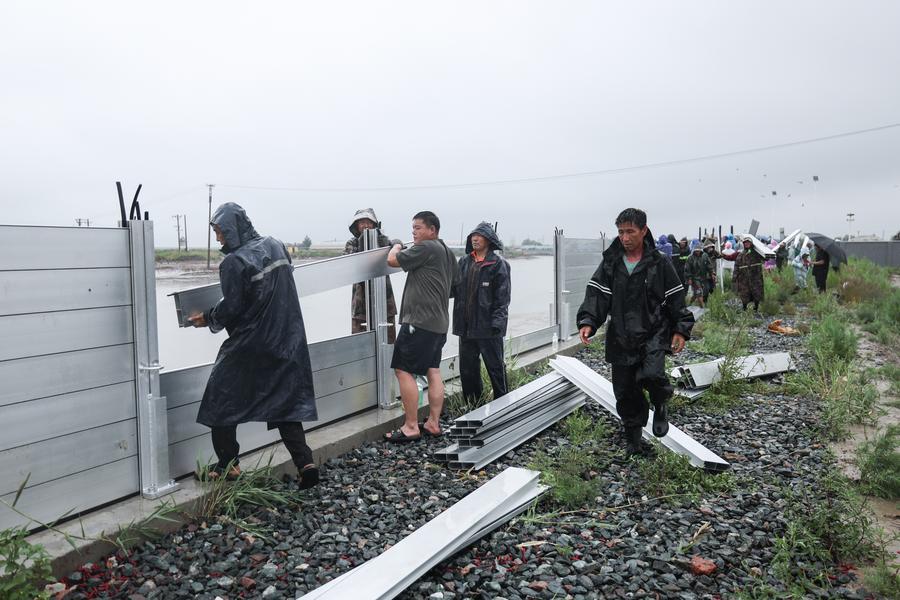
Meanwhile, the provincial water resources department held meetings on reservoir and river channel defense, set up expert teams for water inflow analysis, rolled out flood discharge capacity assessments and flood forecasting, and stepped up monitoring, forecasting and early warnings.
Shenyang issued a red flood alert and raised its flood control emergency response to the highest level on Monday morning.
The municipal meteorological service forecast that rain from Bavi would continue lashing Shenyang through Tuesday, with cumulative rainfall of 60 to 160 millimeters.
In Shenyang, intense rainfall caused waterlogging on roads in many urban districts, while several metro station entrances were temporarily closed for safety reasons.
China Railway Shenyang Group Co., Ltd. adjusted train schedules and suspended many services between 8 p.m. on Sunday and 10 a.m. on Monday to ensure safety. Passengers are advised to check for updates via station broadcasts or the official 12306 ticketing platform. Tickets for canceled trains, notably, can be refunded free of charge within 30 days of the travel date.
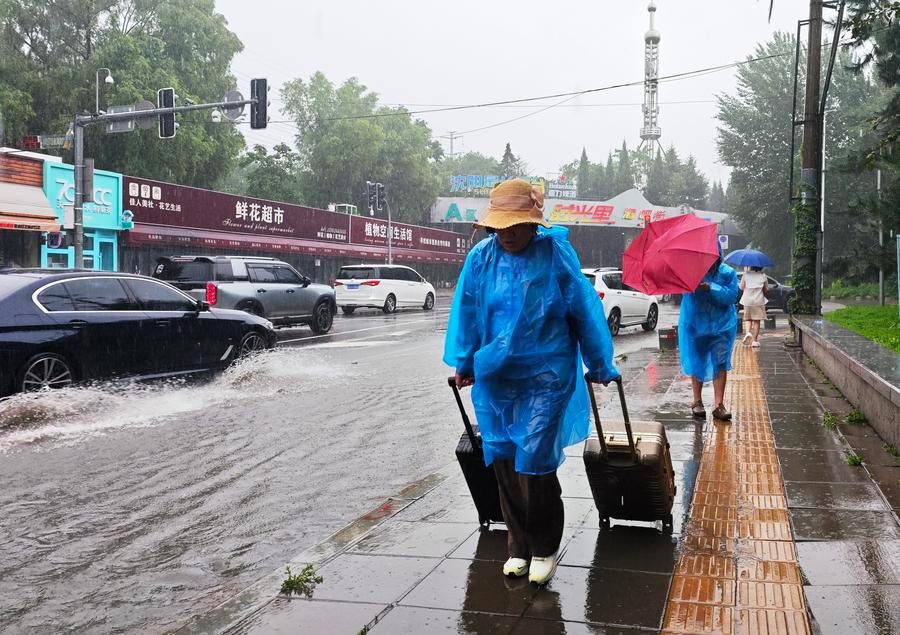
A storm surge of 40 to 80 cm and waves of up to 4.0 meters are expected along the coast of Dalian in Liaoning and the northern Yellow Sea from Monday afternoon to Tuesday afternoon. Dalian has raised its marine emergency response to Level II, with the city banning all fishing vessels from going out to sea while ordering offshore aquaculture workers ashore and instructing that fishing boats be secured.
In neighboring Jilin Province, also in the northeast, multiple cities suspended school attendance and transport services from Monday morning after heavy rain hit central and eastern areas. Transport restrictions have been widely implemented in the province.
Railway services in this region are also affected. At Jilin City's railway station, operated by the same group as in Shenyang, high-speed train services are set to resume on Thursday, while other regular trains will be gradually restored at a later stage.
Also, parts of northwest China's Gansu Province are bracing for more heavy rain from Monday afternoon through Tuesday. Local meteorological authorities predict downpours in the provincial capital Lanzhou and Linxia Hui Autonomous Prefecture, with local accumulations of 60 to 100 millimeters.
The new round of rainfall will increase risks of flash floods, geological disasters and urban waterlogging. Local authorities have issued a blue flood risk warning and a yellow geological disaster warning.
China uses a four-tier color-coded weather warning system, with red indicating the most severe conditions, followed by orange, yellow and blue. ■