

Fishermen are evacuated to the land in Shacheng Town of Fuding, southeast China's Fujian Province, July 11, 2026. Fujian has maintained its Level II typhoon emergency response and activated a Level III flood control emergency response as Typhoon Bavi nears China's east coast on Saturday. Local officials have implemented precautionary measures to prevent the Typhoon Bavi, including evacuating residents and inspecting geological hazard sites. Temporary shelters were fully stocked with supplies and medical resources. (Xinhua/Jiang Kehong)
BEIJING, July 11 (Xinhua) -- China's Ministry of Water Resources on Saturday raised its emergency response for flood prevention in east China's Zhejiang and Fujian provinces from Level-IV to Level-III as Typhoon Bavi approaches.
The ministry said Bavi, the ninth typhoon of the year, is expected to bring torrential rains to most parts of Zhejiang and central and northern Fujian on Saturday and Sunday, causing water levels to rise significantly in some rivers.
Parts of the affected areas face heightened risks of major flooding in small and medium-sized rivers and the threat of mountain torrents.
On the same day, the ministry also activated a Level-IV emergency response in northeast China's Heilongjiang Province.
Under the combined influence of moisture associated with the outer bands of Bavi and cold air, parts of central and eastern Heilongjiang are expected to see heavy to torrential rainfall from July 11 to 15, according to the forecast.
The ministry urged local water authorities and river basin management agencies to strengthen monitoring and forecasting, improve the operation of flood-control projects, and evacuate residents from high-risk areas in a timely manner. ■
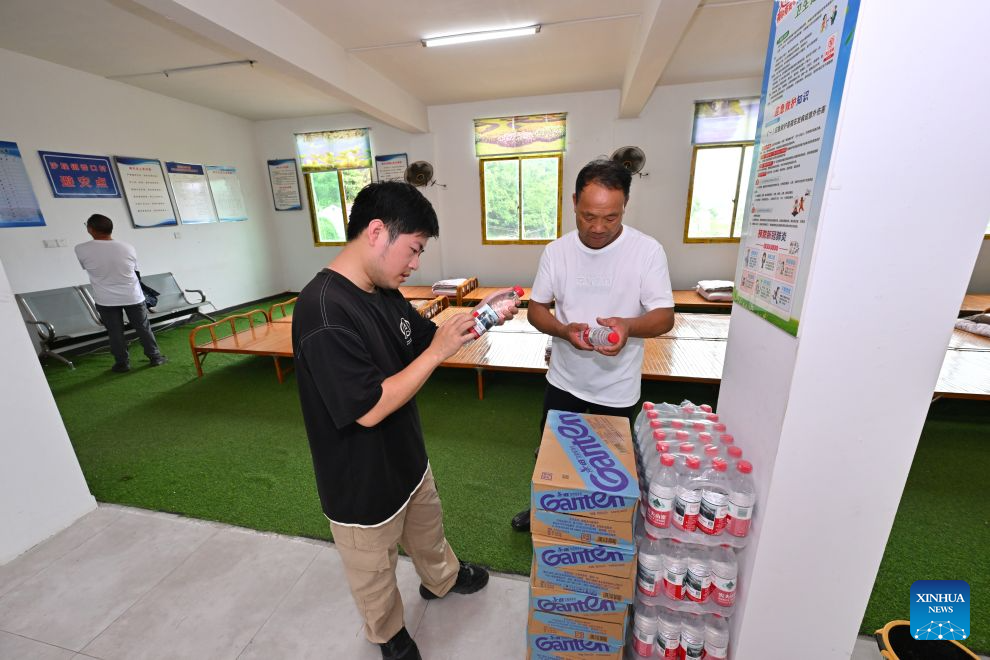
Village officials check supplies at a temporary shelter in Aokou Village of Fuding, southeast China's Fujian Province, July 11, 2026.
Fujian has maintained its Level II typhoon emergency response and activated a Level III flood control emergency response as Typhoon Bavi nears China's east coast on Saturday.
Local officials have implemented precautionary measures to prevent the Typhoon Bavi, including evacuating residents and inspecting geological hazard sites. Temporary shelters were fully stocked with supplies and medical resources. (Xinhua/Jiang Kehong)
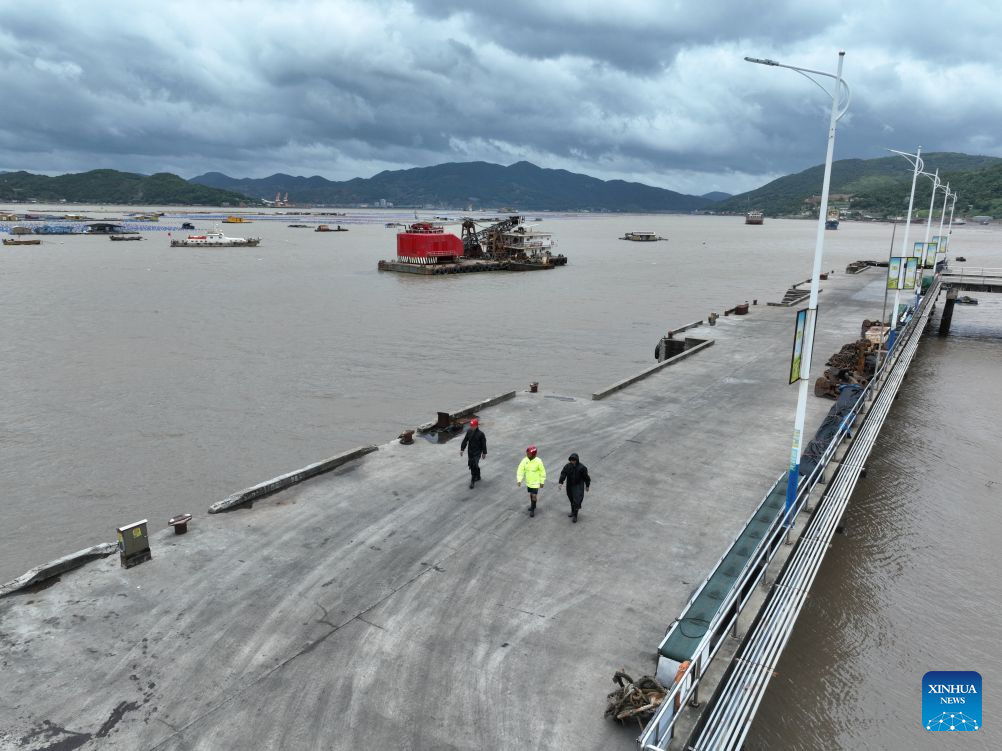
An aerial drone photo taken on July 11, 2026 shows village officials and rescuers patrolling at a port in Shacheng Town of Fuding, southeast China's Fujian Province.
Fujian has maintained its Level II typhoon emergency response and activated a Level III flood control emergency response as Typhoon Bavi nears China's east coast on Saturday.
Local officials have implemented precautionary measures to prevent the Typhoon Bavi, including evacuating residents and inspecting geological hazard sites. Temporary shelters were fully stocked with supplies and medical resources. (Xinhua/Jiang Kehong)
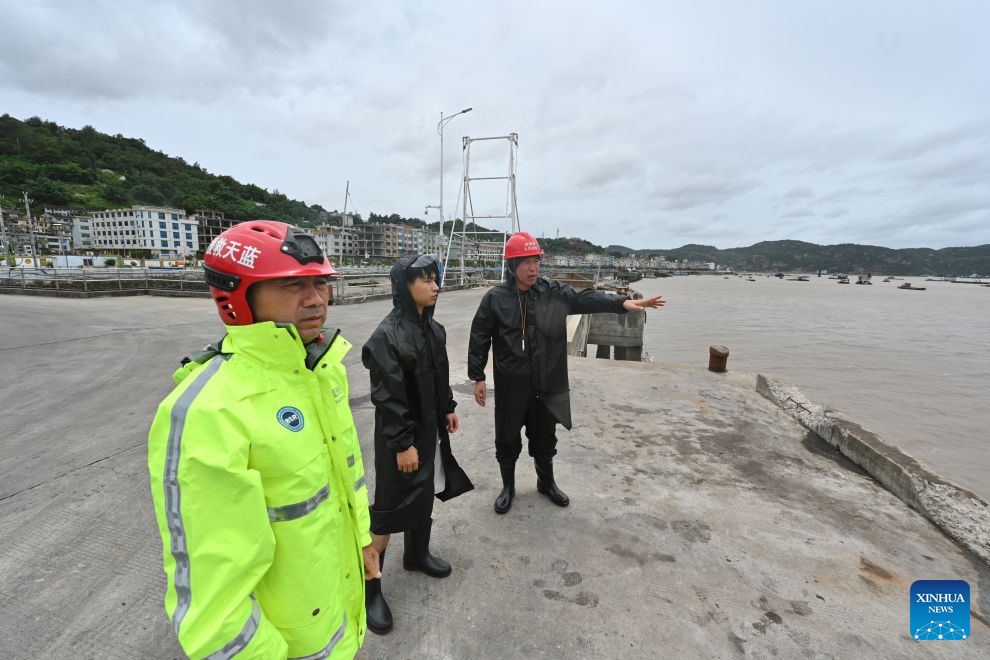
Village officials and rescuers patrol at a port in Shacheng Town of Fuding, southeast China's Fujian Province, July 11, 2026.
Fujian has maintained its Level II typhoon emergency response and activated a Level III flood control emergency response as Typhoon Bavi nears China's east coast on Saturday.
Local officials have implemented precautionary measures to prevent the Typhoon Bavi, including evacuating residents and inspecting geological hazard sites. Temporary shelters were fully stocked with supplies and medical resources. (Xinhua/Jiang Kehong)
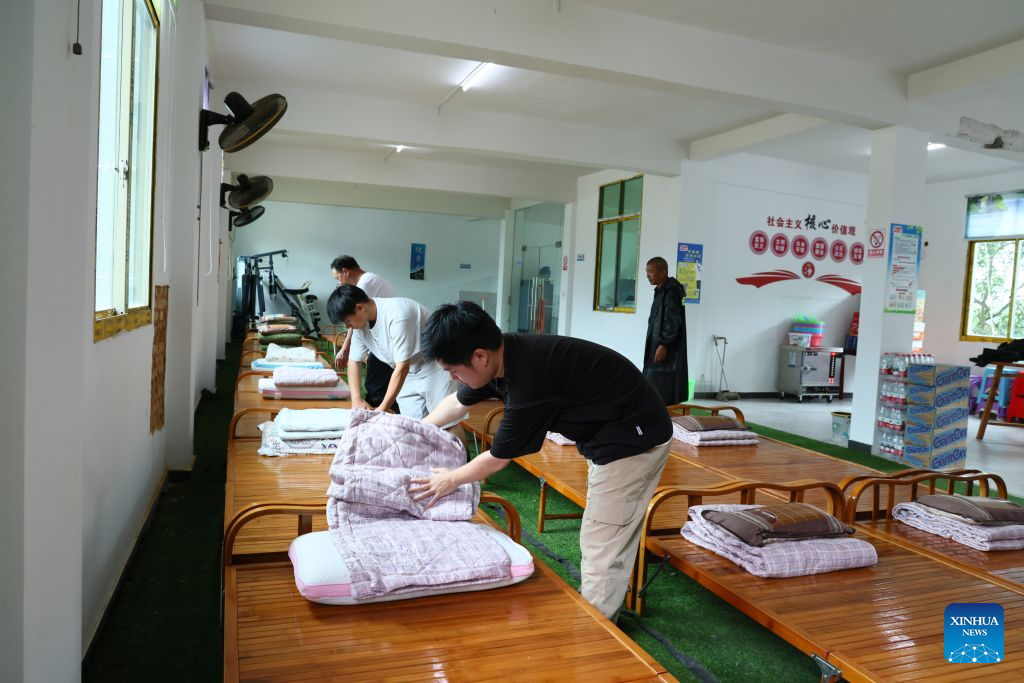
Village officials make beds at a temporary shelter in Aokou Village of Fuding, southeast China's Fujian Province, July 11, 2026.
Fujian has maintained its Level II typhoon emergency response and activated a Level III flood control emergency response as Typhoon Bavi nears China's east coast on Saturday.
Local officials have implemented precautionary measures to prevent the Typhoon Bavi, including evacuating residents and inspecting geological hazard sites. Temporary shelters were fully stocked with supplies and medical resources. (Xinhua/Jiang Kehong)
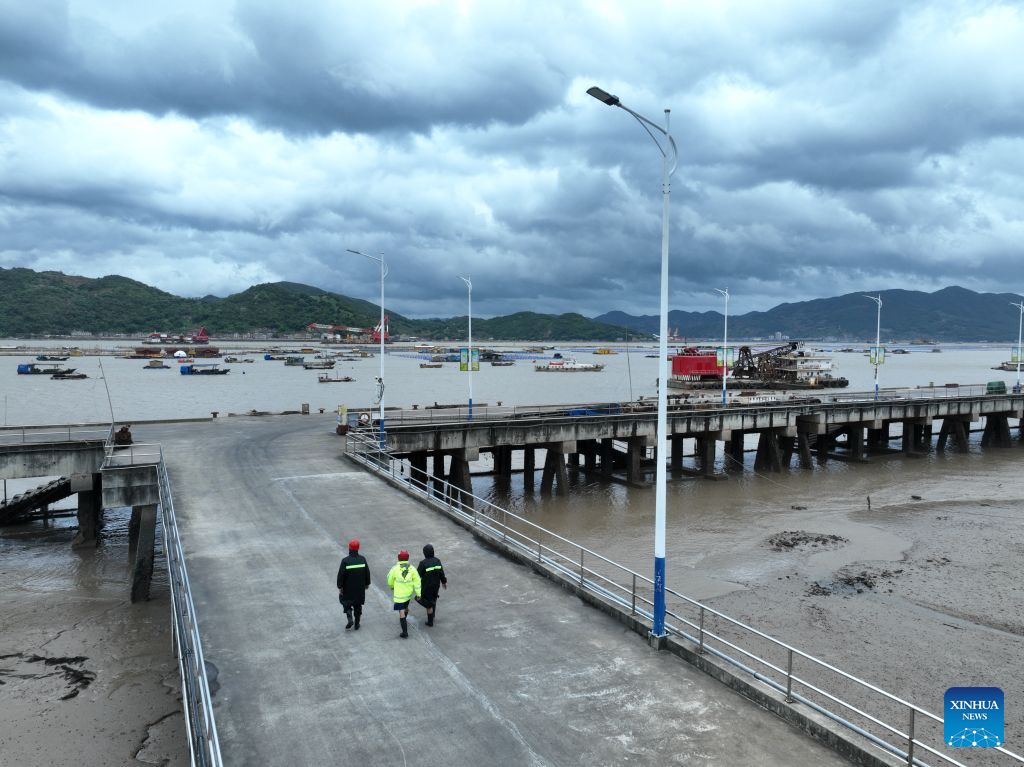
An aerial drone photo taken on July 11, 2026 shows village officials and rescuers patrolling at a port in Shacheng Town of Fuding, southeast China's Fujian Province.
Fujian has maintained its Level II typhoon emergency response and activated a Level III flood control emergency response as Typhoon Bavi nears China's east coast on Saturday.
Local officials have implemented precautionary measures to prevent the Typhoon Bavi, including evacuating residents and inspecting geological hazard sites. Temporary shelters were fully stocked with supplies and medical resources. (Xinhua/Jiang Kehong)
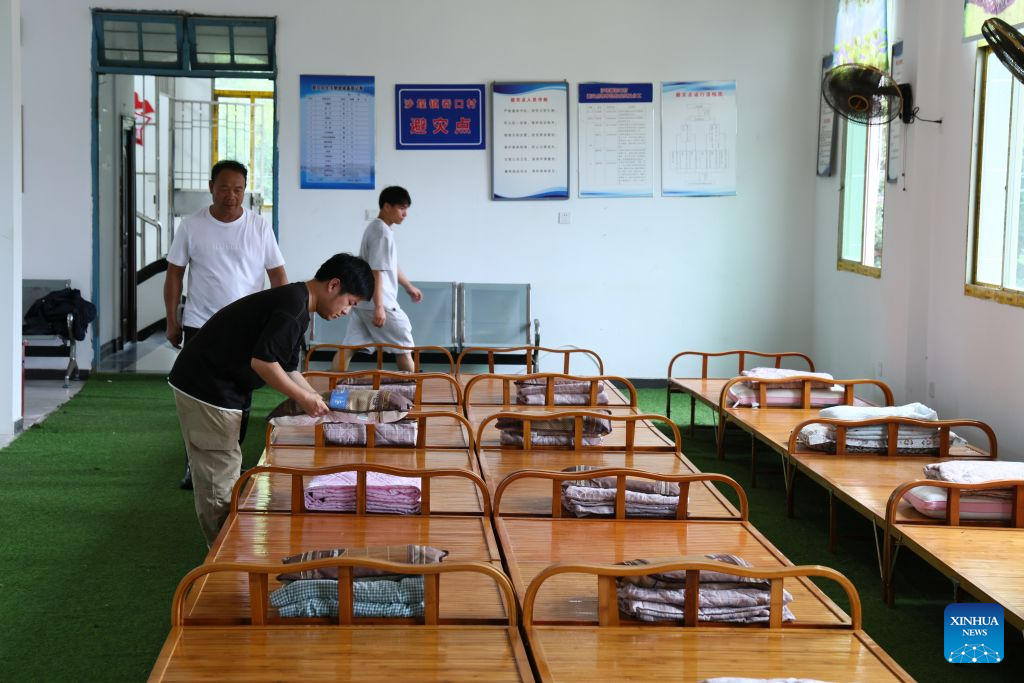
Village officials make beds at a temporary shelter in Aokou Village of Fuding, southeast China's Fujian Province, July 11, 2026.
Fujian has maintained its Level II typhoon emergency response and activated a Level III flood control emergency response as Typhoon Bavi nears China's east coast on Saturday.
Local officials have implemented precautionary measures to prevent the Typhoon Bavi, including evacuating residents and inspecting geological hazard sites. Temporary shelters were fully stocked with supplies and medical resources. (Xinhua/Jiang Kehong)
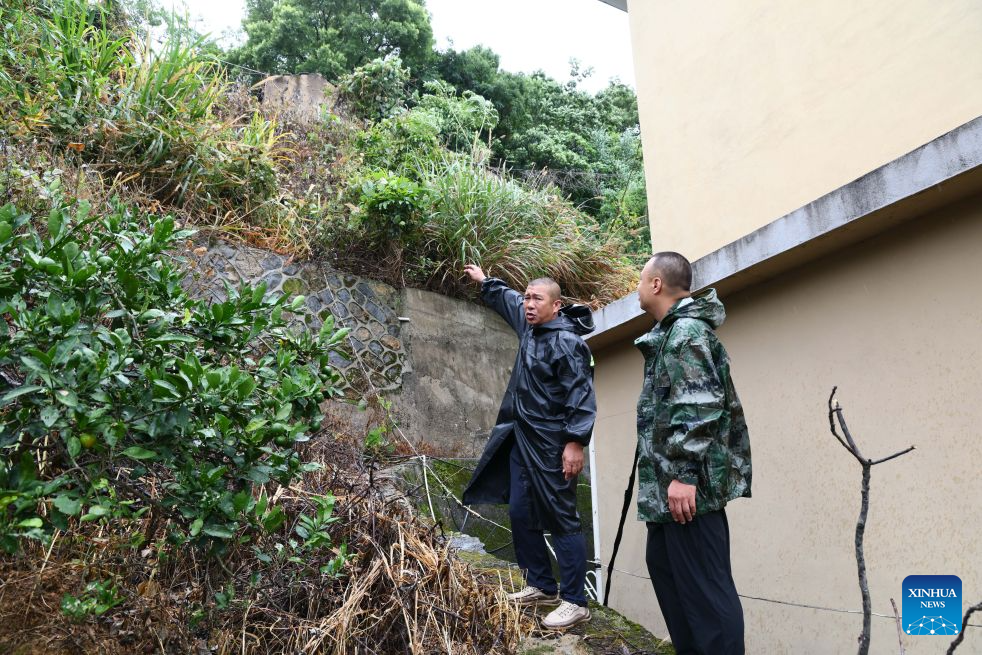
Village officials check a geological hazard site in Liujiang Village of Fuding, southeast China's Fujian Province, July 11, 2026.
Fujian has maintained its Level II typhoon emergency response and activated a Level III flood control emergency response as Typhoon Bavi nears China's east coast on Saturday.
Local officials have implemented precautionary measures to prevent the Typhoon Bavi, including evacuating residents and inspecting geological hazard sites. Temporary shelters were fully stocked with supplies and medical resources. (Xinhua/Jiang Kehong)
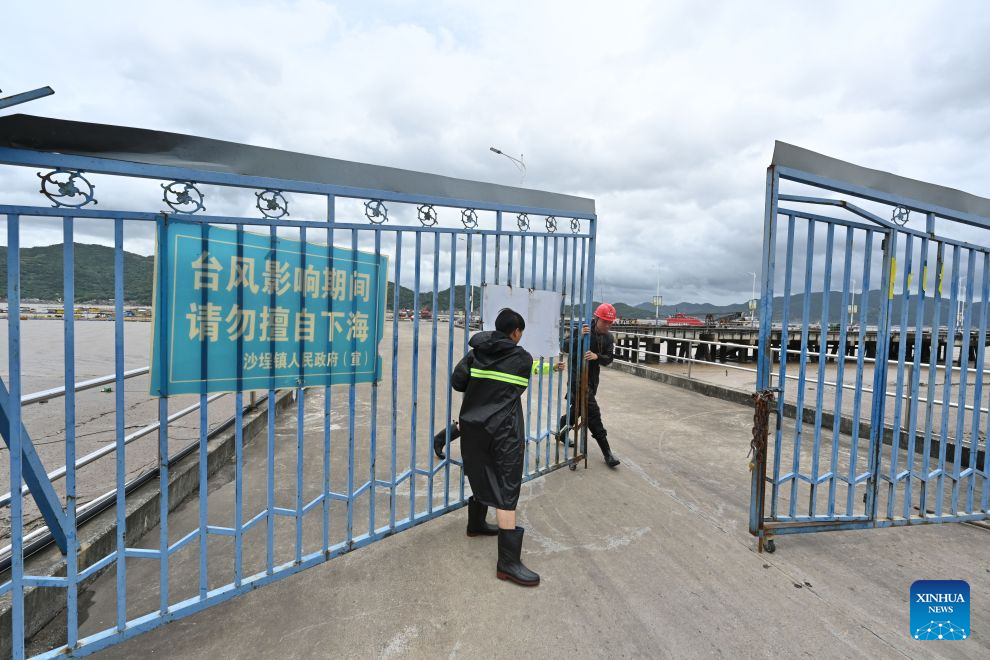
Staff members close the gate of a port in Shacheng Town of Fuding, southeast China's Fujian Province, July 11, 2026.
Fujian has maintained its Level II typhoon emergency response and activated a Level III flood control emergency response as Typhoon Bavi nears China's east coast on Saturday.
Local officials have implemented precautionary measures to prevent the Typhoon Bavi, including evacuating residents and inspecting geological hazard sites. Temporary shelters were fully stocked with supplies and medical resources. (Xinhua/Jiang Kehong)


