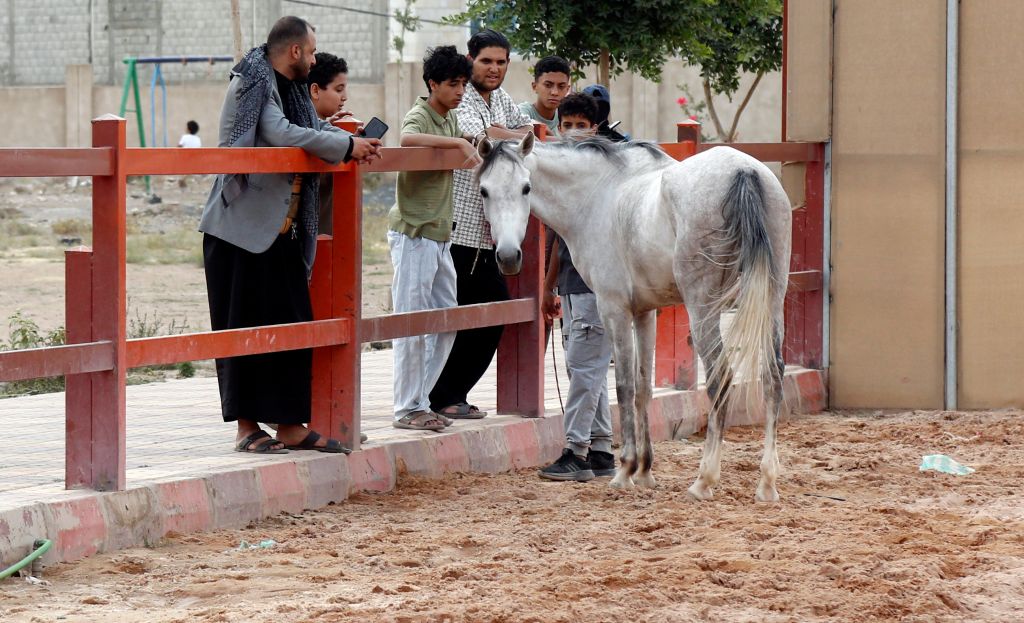
SANAA, July 11 (Xinhua) -- As the morning sun bathes Al-Oroubah Equestrian Stable in Yemen's capital, Sanaa, Ahmed Ahwal gently adjusts the saddle of a pure Arabian horse before leading it into the training ground.
Ahwal first climbed onto a horse at the age of six, never imagining that single moment would shape the rest of his life.
Today, he keeps several horses at the stable. What began as a childhood fascination has become a lifelong devotion to an animal he believes embodies Yemen's history, culture and identity.
"You do not simply choose to love horses," Ahwal said. "The feeling begins in childhood, grows with you, and eventually becomes part of your identity."
Yet love, in Yemen, has never been simple. Across the country, breeders find their passion inseparable from a greater mission: protecting Yemen's living heritage from being eroded by war. Years of conflict and economic hardship have driven up feed prices, disrupted access to specialized veterinary medicines, and weakened breeding programs until the survival of the pure Arabian horse has become increasingly uncertain.
As the world marks World Horse Day on July 11, established by the UN General Assembly in 2025, Yemen's horse keepers say preservation has become less a choice than a quiet act of perseverance, a struggle not only for survival but for the soul of a centuries-old heritage.
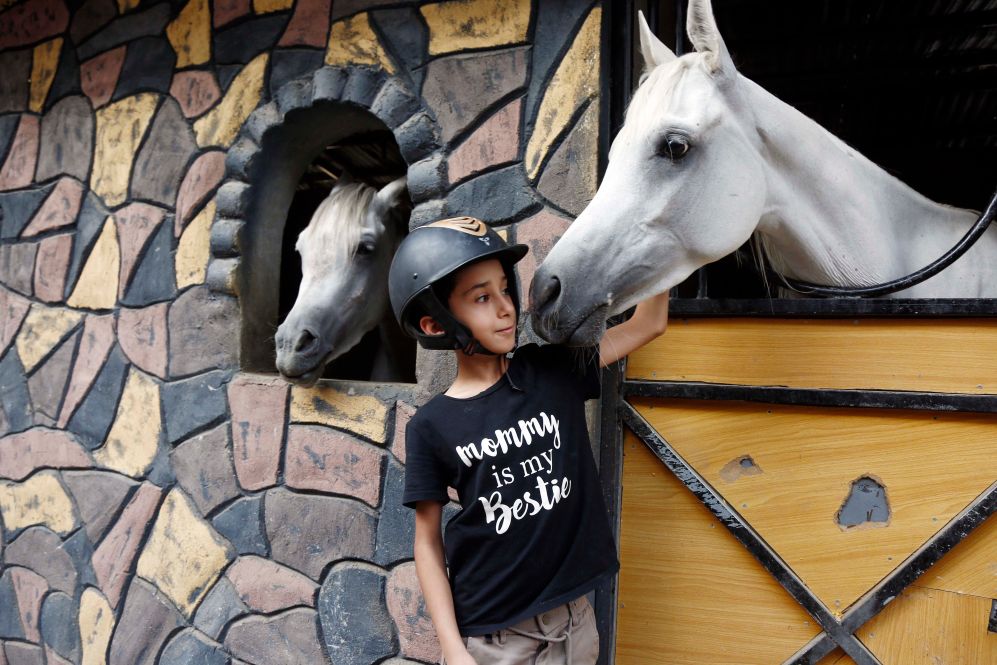
Riding remains popular in Yemen, particularly in Sanaa, where several stables still operate. Many families still enroll their children in lessons, viewing horsemanship as both a cultural tradition and a way to build confidence and discipline. Yet rising feed prices and the broader economic crisis have made riding increasingly unaffordable for most Yemenis.
No one understands the mounting toll better than Jamal Al-Taweel, a veteran trainer who has cared for Arabian horses since 1994. He has watched Al-Oroubah expand from 27 horses to 61 today, yet keeping them healthy has grown harder than ever.
"Building a stable is easier than sustaining everything a horse needs inside it," he said. "Feed has become extremely expensive, and the medicines we depend on are often unavailable."
Basic staples such as barley, wheat and bran have become increasingly expensive, while specialized equine medicines are often unavailable, forcing trainers to seek assistance from colleagues elsewhere in the Middle East.
"People sometimes assume that hunger is the main danger," Al-Taweel said, his voice lowering. "But many horses die because there is no specialist veterinarian nearby and no suitable medicine when an emergency occurs."
Khaled Ahmed, a riding instructor and jumping coach at the stable, recalled that colic, a potentially fatal digestive disorder, has killed four purebred Arabian horses there in recent years.
"The decline of pure Arabian bloodlines is becoming increasingly visible," he cautioned. "Once a valuable bloodline disappears, rebuilding it can take generations."
He warned that uncontrolled crossbreeding has further eroded genetic purity. "These horses are not merely valuable animals," he said. "They are part of Yemen's cultural memory and a heritage that deserves protection."
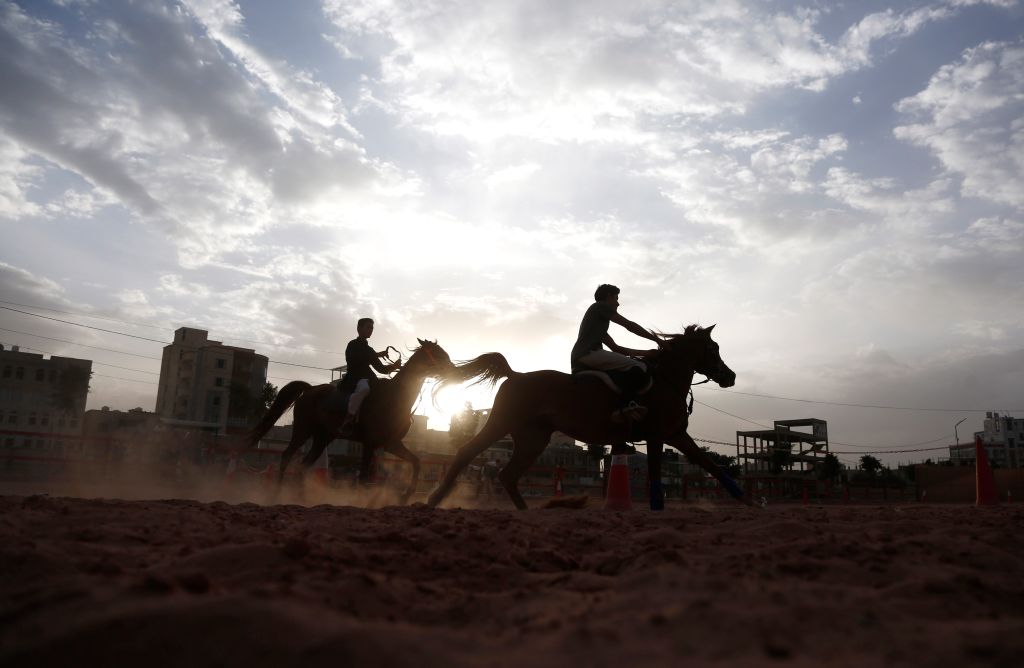
The struggle extends far beyond Al-Oroubah. At another major stable in Sanaa, veterinarian and horse caretaker Yahya Baydani described a landscape of scarcity where medicines once routinely imported from Europe are now nearly impossible to obtain, forcing trainers at times to rely on drugs intended for cattle or sheep.
"Sometimes we understand the illness and know what treatment is required," Baydani said. "The painful part is knowing that the proper medicine cannot be found."
Even breeding has become uncertain. Without proper diagnostic equipment, trainers may wait almost the entire 11-month gestation period before discovering that a mare is not pregnant.
"In other countries, breeders may know within weeks," Baydani said. "Here, we can wait almost a year only to discover that there will be no foal."
Baydani said inadequate nutrition has caused some horses to consume their own manure, exposing them to serious digestive illnesses. More than 10 horses have died at his stable this year from conditions linked to feed shortages and colic.
Still, giving up has never been an option. "My salary is modest, but part of it always goes back to the horses," Baydani said. "When someone truly loves them, care is no longer measured by financial return."
That same devotion keeps Al-Taweel beside sick horses for days or even weeks. "I remain with it until it stands again," he said.
Celebrated worldwide for its endurance, intelligence and grace, the Arabian horse has long stood as one of Yemen's enduring cultural symbols. Today, preserving that legacy depends largely on caretakers quietly stretching limited incomes, searching across borders for medicines, and refusing to let centuries-old bloodlines disappear into the dust of war.
For Ahwal, that responsibility belongs to everyone who inherits the tradition. "A horse is not something I could walk away from when life becomes difficult," he said. "To protect these animals is to protect something of ourselves."■