U.S. Central Command forces begin launching powerful strikes against Iran
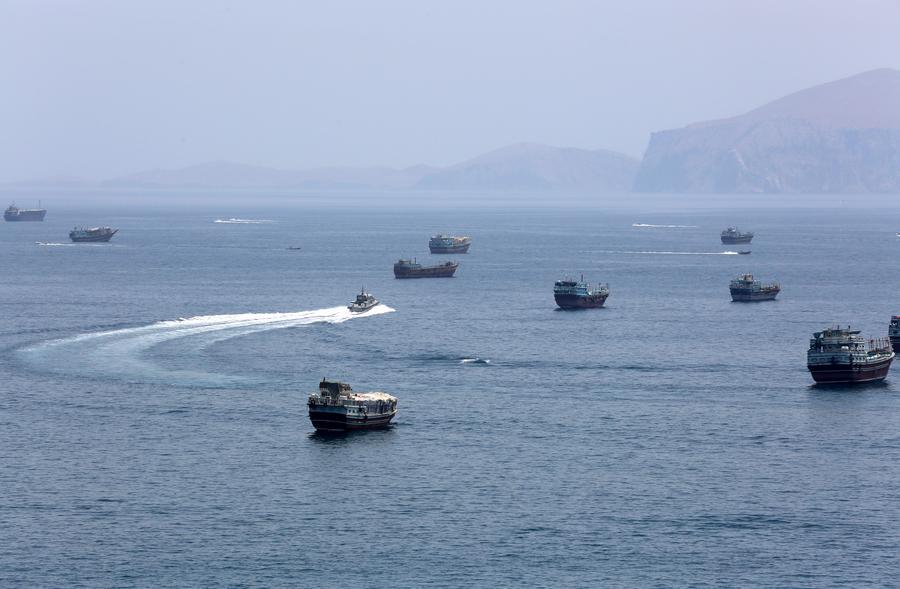
U.S. forces launched strikes against Iran on Tuesday after three commercial ships transiting the Strait of Hormuz were attacked, the U.S. Central Command said.
U.S. forces "have begun launching a series of powerful strikes against Iran to impose heavy costs for targeting and attacking commercial shipping crewed by innocent civilians in an international waterway," the command said in a post on X.
"The U.S. strikes are in response to Iranian attacks on three commercial vessels that were transiting the Strait of Hormuz," said the command.
Explosions were heard near Iran's Qeshm Island and port cities of Bandar Abbas and Sirik, according to Iranian state outlet Press TV.
The United Kingdom Maritime Trade Operations on Tuesday reported three separate attacks involving tankers transiting the Strait of Hormuz, with no casualties reported.
NATO summit opens in Ankara as new defense deals fuel militarization concerns
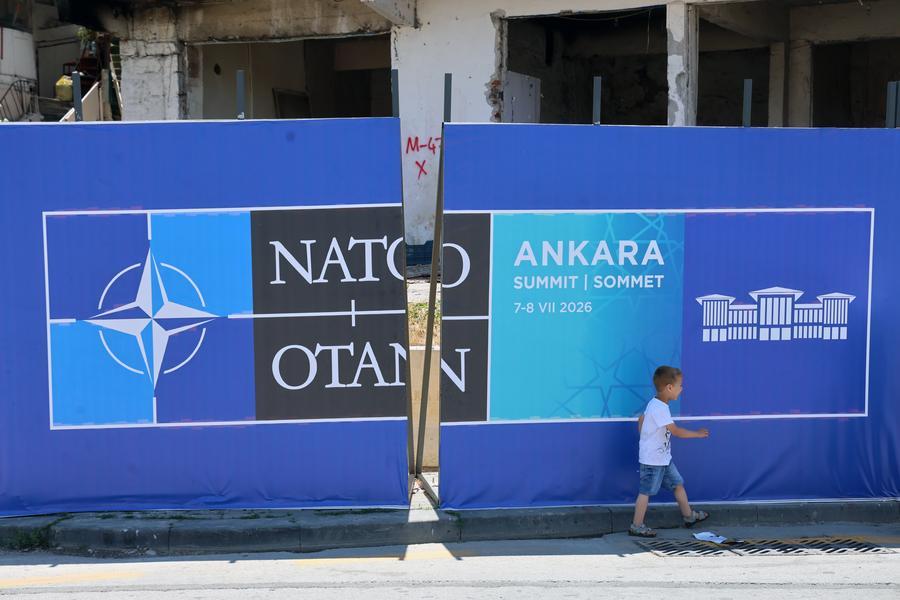
The NATO leaders' summit opened in the Turkish capital of Ankara on Tuesday with a Defense Industry Forum, unveiling major defense industry initiatives aimed at accelerating weapons production and procurement, amid growing concerns over the alliance's expanding militarization.
Marking its first inclusion in a NATO summit, the forum brought together senior NATO officials and representatives from major Western defense companies to discuss efforts to integrate military supply chains across member states.
At the event, NATO Secretary General Mark Rutte launched the Drone Edge Initiative aimed at strengthening counter-drone capabilities, saying member states would commit more than 40 billion U.S. dollars to the sector over the next five years.
He also unveiled a new Front Door platform designed to facilitate private defense companies' access to alliance contracts, and a 2.8-billion-dollar industrial cooperation initiative under which U.S. defense companies, including Lockheed Martin, could partner with European firms to produce U.S.-designed weapons, such as Abrams tanks and ATACMS missiles, in Europe.
As part of broader efforts to expand logistical and operational capacity, several allies, including Türkiye, launched new joint procurement initiatives to enlarge NATO's fleets of strategic transport and aerial refueling aircraft.
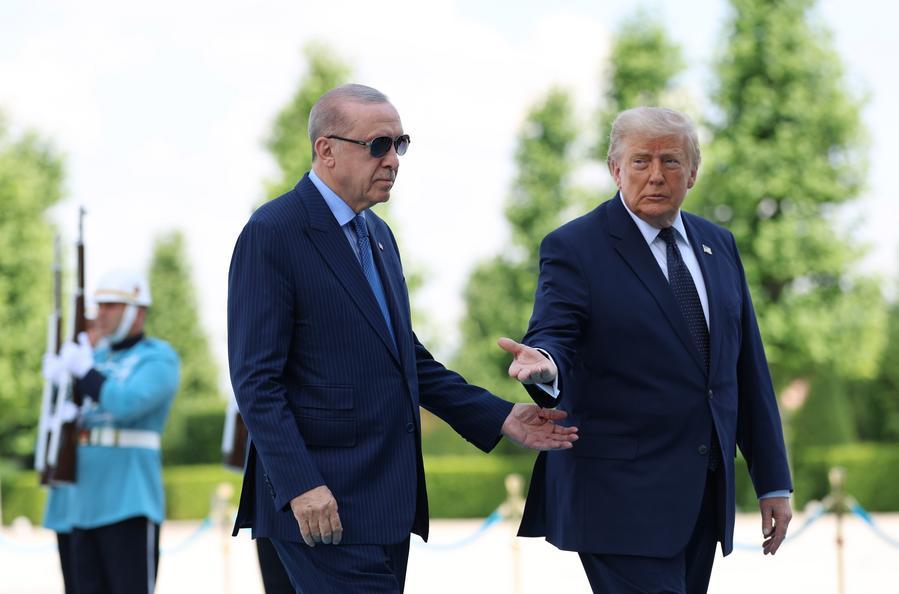
Trump says "disappointed" with NATO allies on Ankara summit sidelines
U.S. President Donald Trump said on Tuesday he was disappointed with NATO allies regarding the conflict in Iran as he arrived in Ankara, capital of Türkiye, for the alliance's summit.
Answering journalists' questions before a meeting with Turkish President Recep Tayyip Erdogan at the Presidential Complex, Trump sharply criticized European allies.
Stating that Italy, France, and Germany "let us down," Trump asked, "So why are we spending hundreds of thousands of dollars, and they didn't come to our aid?"
Erdogan said during the meeting that Türkiye was making every effort to stabilize Iran-U.S. relations.
The reluctance of European countries to send warships to support U.S. efforts to "reopen" the Strait of Hormuz had prompted criticism from Trump, who harshly accused European allies of benefiting from U.S. security guarantees while refusing to offer help in the Iran war.
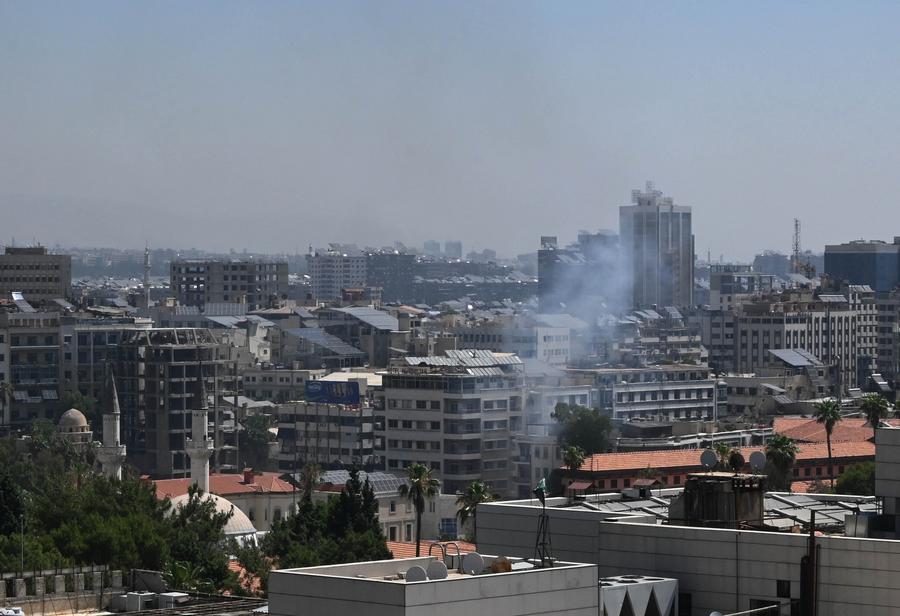
Two explosions injure 18 in Damascus as Macron's visit proceeds as scheduled
Two explosions in central Damascus on Tuesday injured 18 people, including four police officers, during French President Emmanuel Macron's visit to Syria, the interior authorities said, while confirming the incidents posed no threat to the visit or the president's residence.
In a statement carried by the state-run SANA news agency, the authorities said security forces had detected two improvised explosive devices during field operations, which exploded while preparations for defusing them were underway.
According to preliminary investigation, one explosive device was placed inside a parked vehicle, and the other inside a roadside garbage container near the building housing the tourism authorities.
Interior chief Anas Khattab said the first blast occurred at 10:15 a.m. local time (0715 GMT), followed by a second one about eight minutes later.
Khattab added that the injured were largely security personnel, and while most suffered minor wounds, four people were undergoing surgery.
He noted that Macron's motorcade was about 10 km from the blast site at the time.
The authorities said the explosions took place outside the security perimeter designated for Macron's residence and posed no direct threat to his visit, which continued as scheduled.
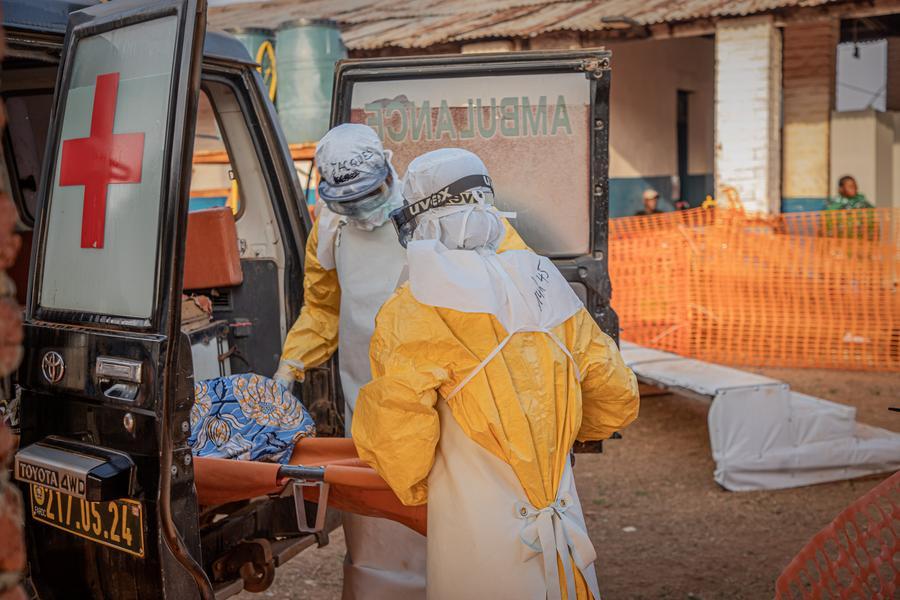
WHO said Ebola outbreak in DR Congo intensifies, regional risk persists
The Ebola outbreak in the Democratic Republic of the Congo (DRC) has deteriorated further, with confirmed deaths rising above 520 and transmission continuing in eastern hotspot areas, according to a report released Tuesday by the World Health Organization (WHO) Regional Office for Africa.
As of July 5, the DRC had reported, 1,624 confirmed cases, including 521 confirmed deaths, with the crude case fatality ratio rising to 32.1 percent, the report said.
Across the three affected countries, the DRC, Uganda and France, a total of 1,645 confirmed cases and 523 confirmed deaths had been reported, with an overall confirmed case fatality ratio of 31.8 percent. More than 12,400 contacts still required follow-up, according to the report.
The report said the outbreak in the DRC "continues to intensify," driven by sustained transmission in hotspot health zones of Ituri and North Kivu provinces, in eastern DRC, growing numbers of community deaths, and the spread of infection into previously unaffected health zones.
The report warned that deaths occurring before patients reach care remain one of the clearest signs that surveillance and referral systems are still lagging behind transmission. Among 430 confirmed deaths investigated as of July 5, 397, or 92.3 percent, occurred in the community or before admission to a treatment facility.■