by Shao Xia
Recently, I came across an article by a Japanese scholar warning that Japan is rapidly moving toward a renewed "military-industrial-bureaucratic-academic complex." The system of national mobilization, originally designed for wartime, is reemerging in significant ways. While Japanese politicians continue to whitewash and rationalize their policies, some in the academic community have begun to speak more candidly: contemporary Japan is increasingly heading toward a revived strain of militarism.
More than 80 years ago, Japan surrendered after its defeat in World Anti-Fascist War. Without the Tokyo Trials, it is not certain whether Japan could have been reintegrated into the international community in the way it was.
Today, however, the Japanese right wing has turned a blind eye to this history and are seeking to revive their militarist pipe dreams. To them, the Tokyo Trials represent a historical reality they are desperate to erase. The more brazen their actions become, the more important it is to hold them accountable to the international community's moral and legal standards. Hence, the hard facts need to be reinforced to make sure that the historical record is set straight and the legacy of the Tokyo Trials continues to function as a binding restraint.
OVERWHELMING EVIDENCE OF JAPANESE ATROCITIES
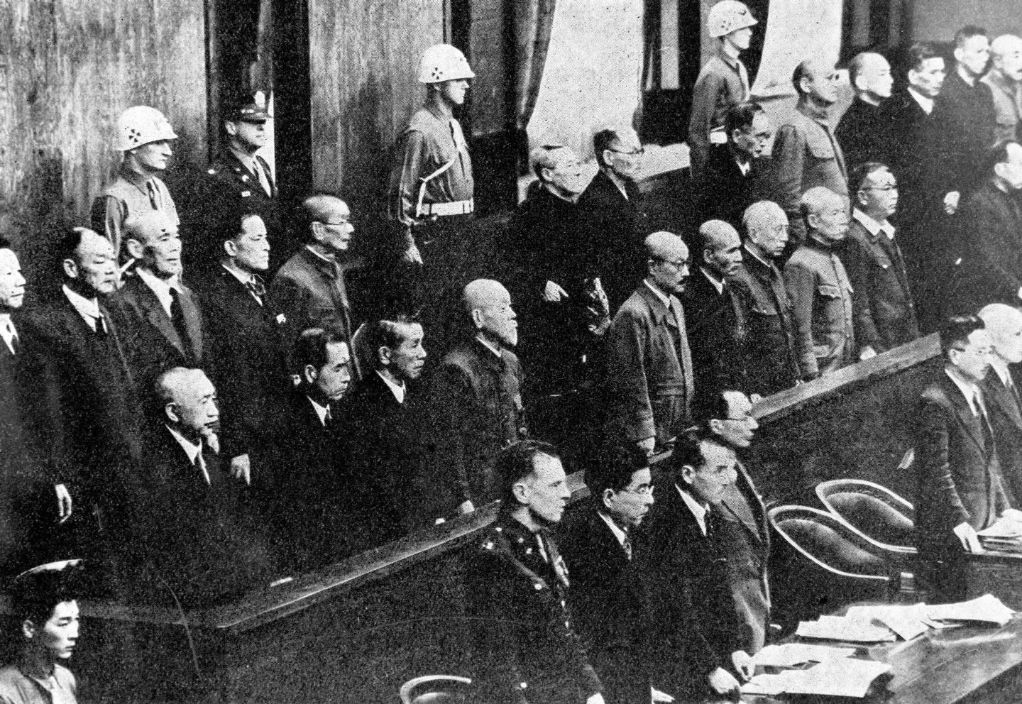
The International Military Tribunal for the Far East, which sat from May 3, 1946, to Nov. 12, 1948, stands as one of the largest international judicial proceedings in human history. Over the course of two years and six months, it heard 419 witnesses, compiled 4,336 pieces of evidence, and produced over 48,000 pages of transcripts -- a monumental reckoning with fascist crimes.
The judgment documents record atrocities in stark, irrefutable detail. In Nanjing, within a single month of occupation, an estimated 20,000 cases of rape were committed, and civilians were "hunted like rabbits." In the Philippines, Filipino and American prisoners of war (POWs) were brutally executed, their bodies left scattered along roadsides. Along the Thailand-Burma railway, countless Allied prisoners and Southeast Asian laborers perished under the Japanese military's systematic brutality while building the infamous "Death Railway."
Faced with such overwhelming evidence, all attempts at denial or distortion appear hollow and contemptible.
PROCEDURAL JUSTICE THAT CANNOT BE DENIED
The Japanese right-wing routinely peddles distorted claims challenging the fairness of the Tokyo Trials. However, if the Allied powers had merely acted out of vengeance alone, they could have executed Japanese POWs or partitioned Japan's territory without due process. Instead, they convened a tribunal that held hundreds of sessions and guaranteed each defendant access to multiple defense attorneys, both Japanese and American.
This extensive and rigorous procedure withstands historical and legal scrutiny. The Tokyo Trials were not only a victory for justice but also established, in international law, Japan's undeniable responsibility for acts of aggression.
A LEGAL FOUNDATION THAT CANNOT BE UNDONE
The tribunal formally defined Japan's expansionist wars as acts of aggression, delegitimizing militarism at its legal core. Together with the Cairo Declaration and the Potsdam Proclamation, its judgments formed the legal framework for postwar sovereignty and security in the Asia-Pacific region.
It was under this framework that Japan built its modern legal and political order, including its postwar constitution, whose Article 9 renounces war as a sovereign right and prohibits the maintenance of armed forces for warfare. In this sense, the Tokyo Trials served as Japan's "entry ticket" back into the international community as a peace-oriented state.
Yet Japan's recent moves, such as deploying long-range strike capabilities, debating "enemy base attack capability," and sharply increasing military budgets, signal a dangerous drift. It is also worth recalling that the UN Charter contains provisions regarding aggressor states, under which countermeasures could, in extreme cases, be taken without Security Council authorization. Any attempt to dismantle the pillar of postwar order necessarily entails accepting the risks of its collapse.
A WARNING FROM HISTORY
The Tokyo Trials also serve as a stark warning against the revival of militarism. In the 1930s, Japan's path to expansion was carefully disguised: manufactured incidents in China's northeast region were used as pretexts for invasion, aggression was portrayed as "liberation" of Asia under the "Greater East Asia Co-Prosperity Sphere," and military institutions gradually seized control of national decision-making, dragging the entire country into total war.
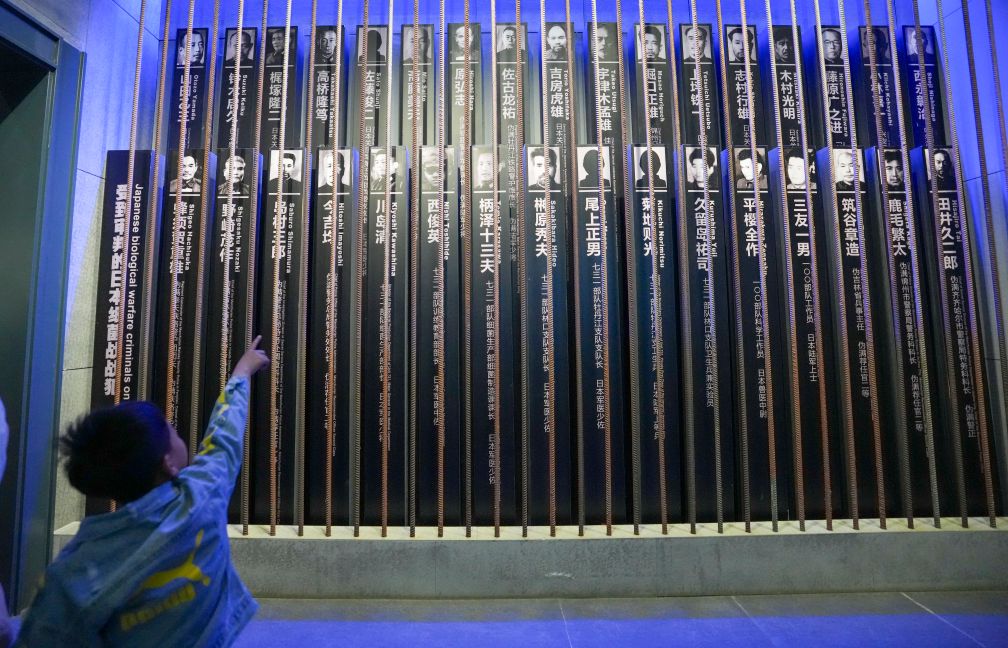
Today, we see a disquieting echo. Some Japanese politicians amplify narratives of "China threat" and invoke so-called "existential crisis" doctrines to justify loosening constraints on the use of force. This logic follows a trajectory that once led the region into catastrophe. History's lessons are clear, and ignoring them would be at our peril.
PEACE THAT HAS UNDERPINNED JAPAN'S PROSPERITY
The postwar settlement did not just punish crimes; it fundamentally reshaped Japan's development path. Military restraint under the postwar constitution enabled Japan to redirect resources toward social recovery, infrastructure, and economic reconstruction. The dismantling of wartime corporate-military ties released labor and capital into productive civilian use.
From 1955 to 1973, Japan experienced rapid economic growth averaging over 10 percent annually, producing what is often called the "postwar economic miracle." Reintegrated into the global economy through institutions such as the International Monetary Fund and trade frameworks such as the General Agreement on Tariffs and Trade, Japan became a major participant in the international economic order.
Those who now seek to revive militarism risk squandering this hard-won prosperity. Diverting resources toward confrontation will inevitably erode social welfare, healthcare and education. The ultimate cost would be borne by ordinary Japanese citizens.
WORK THAT REMAINS
It must be acknowledged that the Tokyo Trials had limitations. Most notably, some atrocities were not fully prosecuted, and certain perpetrators escaped judgment due to political considerations. Those omissions continue to affect historical memory and regional trust today. Furthermore, the educational value of the Tribunal's legacy is often diluted or repurposed in Japan to serve domestic political narratives rather than foster genuine historical reflection. Such distortions of memory undermine the very lessons the trials were meant to preserve.
Despite these flaws, the Tokyo Trials remain a foundational judgment embedded in the postwar world order. They are an integral part of the antifascist victory and remain a legal and moral benchmark against aggression.
The international community must uphold the historical conclusions established at Tokyo, preserve the memory of wartime suffering, and defend the rule of law underpinning the post-war order. Militarism must not be allowed to return in new forms.
Editor's note: Shao Xia is a commentator on international affairs, writing regularly for Xinhua News Agency, the Global Times, China Daily, CGTN, etc.
The views expressed in this article are those of the author and do not necessarily reflect the positions of Xinhua.