BEIJING/TAIPEI, July 7 (Xinhua) -- China marked the 89th anniversary of the start of whole-nation resistance against Japanese aggression Tuesday, with bells rung for peace and warnings sounded against Japan's gravitation toward neo-militarism.
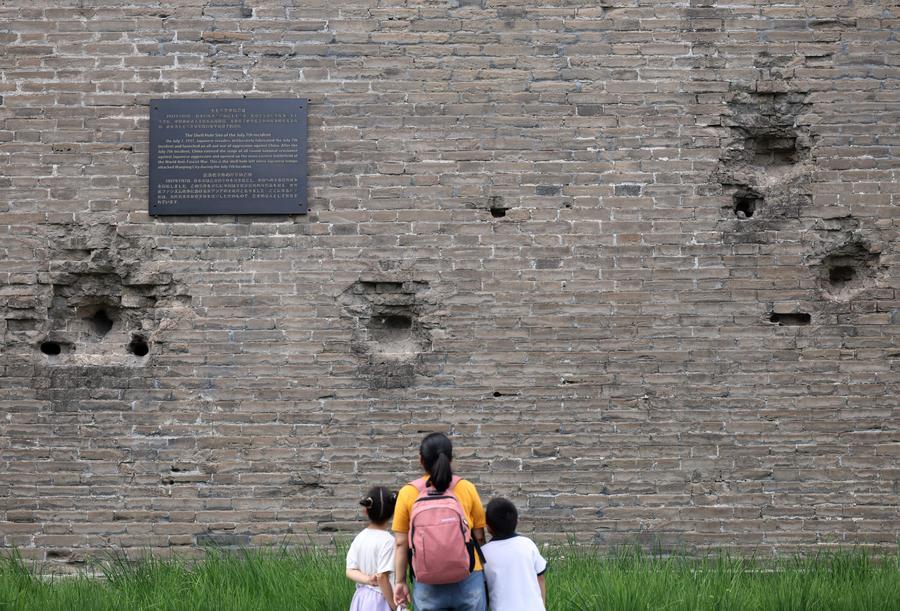
While Japan's aggression against China began as early as 1931, the July 7th Incident in 1937, in which Japanese troops attacked the Chinese garrison on the outskirts of Beijing, marked the escalation of Japan's aggression into a full-scale invasion and the start of China's nationwide resistance.
As commemorative events took place across the nation, Chinese officials and scholars have underscored the contemporary significance of the national commemoration, particularly amid a string of recent provocative moves by Japan. These moves include easing export restrictions on lethal weapons, and openly hinting at military intervention should a "contingency" involving Taiwan arise -- a region that Japan colonized for half a century.
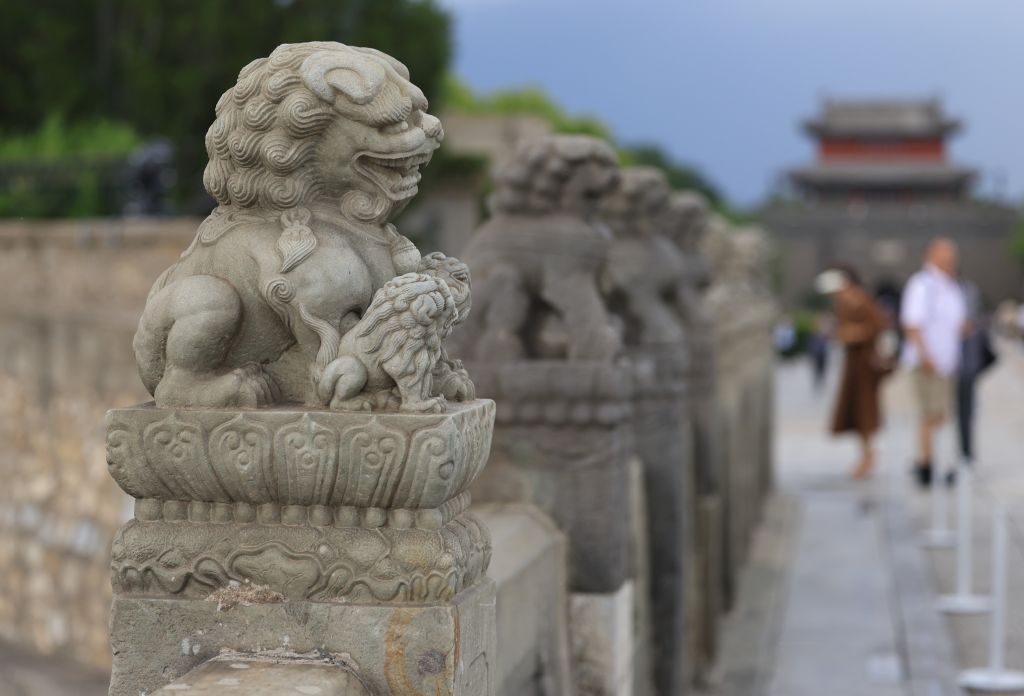
In Beijing, a ceremony was held at the Museum of the War of the Chinese People's Resistance Against Japanese Aggression near the Lugou Bridge, where the incident took place 89 years ago.
Yin Li, a member of the Political Bureau of the Communist Party of China (CPC) Central Committee and secretary of the CPC Beijing Municipal Committee, presided over the ceremony. Attendees offered flowers and bowed to pay tribute to those who had sacrificed their lives in fighting Japanese aggression.
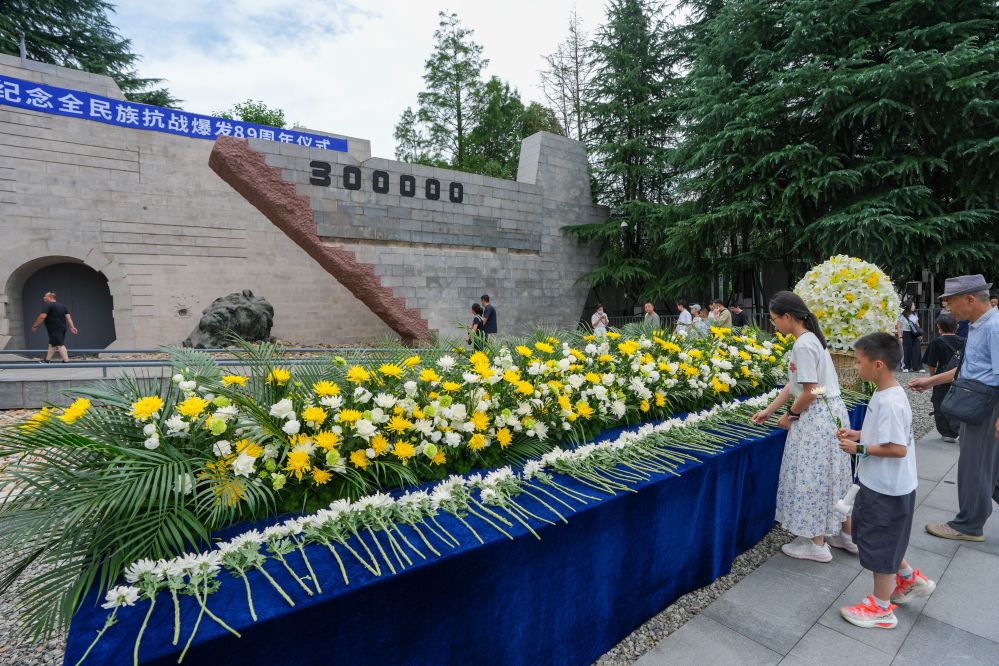
Throughout the country, students flocked to museums to learn about that historical episode and members of the public laid flowers at memorial halls. In Nanjing, a peace bell was tolled at the Memorial Hall of the Victims in Nanjing Massacre by Japanese Invaders.
In Taiwan, a series of commemorative gatherings was held on Tuesday. In one event, initiated by several political parties and civic groups in Taoyuan, organizers said the shared history of resistance against Japanese aggression constitutes not only a collective memory of the Chinese nation, but also an important chapter in Taiwan's history against Japanese colonization and an important foundation for cross-Strait peace and mutual trust.
They urged Taiwan society to safeguard historical truth and fully present the history of the Taiwan people's resistance to colonialism and foreign aggression, while opposing attempts to glorify colonial rule or distort history for political purposes.
For the Chinese people, the July 7th Incident remains as unforgettable an episode of World War II as Nazi Germany's Blitzkrieg invasion of Poland and Japan's surprise attack on Pearl Harbor are for Westerners.
The 14-year war against Japanese aggression was the longest and largest fight against foreign aggression for the Chinese people in modern times. It came with great sacrifices -- 35 million casualties among the Chinese military and civilian population -- before Japan surrendered in 1945.
The many atrocities Japanese militants conducted in China, including the Nanjing massacre, large-scale human experimentation and germ warfare, also left a deep scar in the memory of Chinese people.
Chemical weapons deployed by Japanese troops caused more than 200,000 casualties among Chinese soldiers and civilians. After its defeat, Japan abandoned vast quantities of chemical weapons on Chinese soil, which have since caused poisoning and injuries to over 2,000 people, according to China's Ministry of National Defense.
MUST REMEMBER
This year's commemoration took place amid the backdrop of concerns in China about Japan's pursuit of re-militarization, particularly following Japanese Prime Minister Sanae Takaichi's provocative remarks on Taiwan in November last year.
At a news briefing last month, foreign ministry spokesperson Guo Jiakun called on the international community to stay on high alert against the rise of Japan's neo-militarism and take resolute moves to curb it.
He noted that Japan has been pursuing re-militarization at full throttle, including developing powerful intermediate and long-range offensive weapons, easing restrictions on export of lethal weapons, expanding the scope of activities of its Self-Defense Forces and building a combat-ready operational system.
By these actions, Japan is trying to break free from the constraints of its Constitution, international law, and its "exclusively defense-oriented" principle, Guo said, adding that Japan is challenging the postwar international order.
Shi Guifang, a historian at Capital Normal University in Beijing, has drawn parallels between Japan's recent provocative moves and its wartime frenzy on the eve of the invasion of China.
Both scenarios displayed a similar pattern, she said, in that when the Japanese government finds itself unable to resolve serious internal problems, it turns to stoking extremist sentiments at home to divert public attention.
"Meanwhile, the Japanese government has consistently fallen short in its postwar reflection and proper acknowledgment of history," Shi said. "This, in effect, has created fertile ground for political opportunism."
Against this backdrop, China, as a major victim of Japan's militarism, must remember history to prevent a repeat of tragedy and defend hard-won peace, experts said.
"The commemoration is about telling the world and people today that the peace and prosperity we now enjoy are built upon the defeat of fascism. And neo-militarism poses a threat to, and could undermine, all of that," Shi said.■