
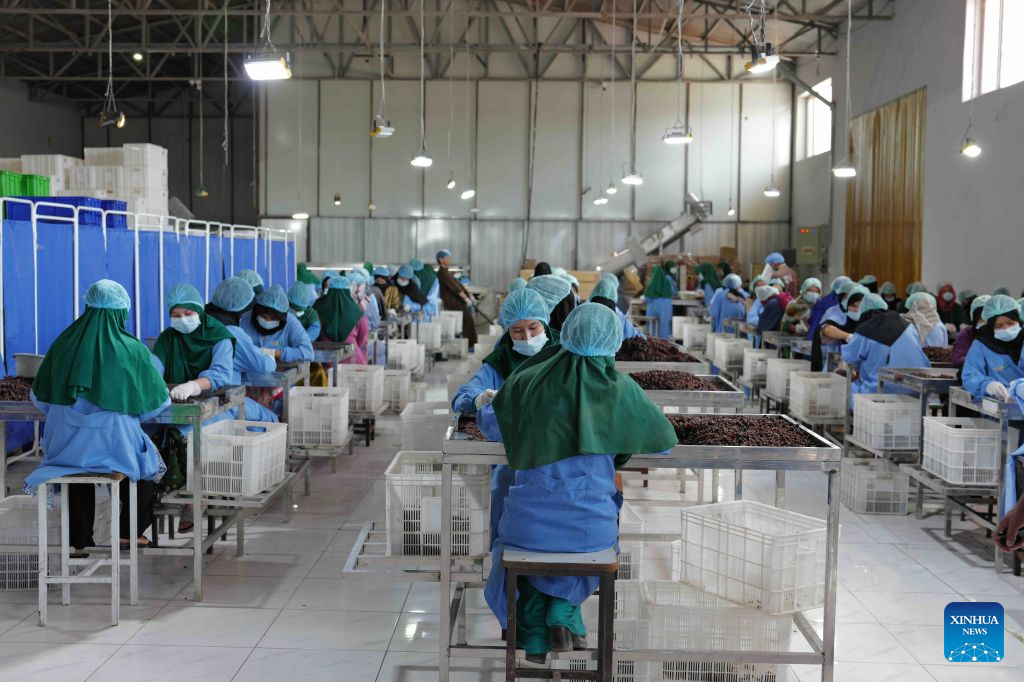
Female returnees work at a UNDP-supported dry fruit factory in Balkh Province, Afghanistan, July 6, 2026. Two United Nations officials concluded a joint visit to northern Afghanistan on Monday, during which they visited projects supporting Afghan returnees and called for sustained international support for the country. (Xinhua/Li Ang)
MAZAR-I-SHARIF, Afghanistan, July 6 (Xinhua) -- Two United Nations officials concluded a joint visit to northern Afghanistan on Monday, during which they visited projects supporting Afghan returnees and called for sustained international support for the country.
UN Development Programme (UNDP) Administrator Alexander De Croo and UN High Commissioner for Refugees (UNHCR) Barham Salih toured a UNDP-supported dry fruit factory and a UNHCR-supported carpet weaving and processing center in Balkh Province, where they met business owners, artisans and returnees benefiting from employment and vocational training programs.
At the dry fruit factory, the delegation learned how UNDP grants had helped expand production, retained about 400 jobs and created another 100 while prioritizing employment opportunities for returnees. The officials also exchanged views with factory representatives on private sector development and economic recovery.
At the carpet center, they observed carpet weaving, washing, dyeing, finishing and quality control processes, and met workers engaged in the traditional industry. Supported by UNHCR, the center provides vocational training, employment opportunities and improved market access for returnees while helping preserve Afghanistan's carpet-weaving heritage.
Following the visits, the officials jointly briefed journalists, emphasizing the importance of linking humanitarian assistance with long-term development efforts, including job creation, basic services, local economic recovery and community resilience. They said sustained international support remains essential to help Afghan returnees rebuild their lives and promote durable reintegration.
According to the UN, nearly 7 million people have returned to Afghanistan since late 2023, placing increasing pressure on local communities, public services and employment opportunities. The visit came as the country continues to face economic hardship, climate-related shocks and growing demand for jobs and basic services. ■
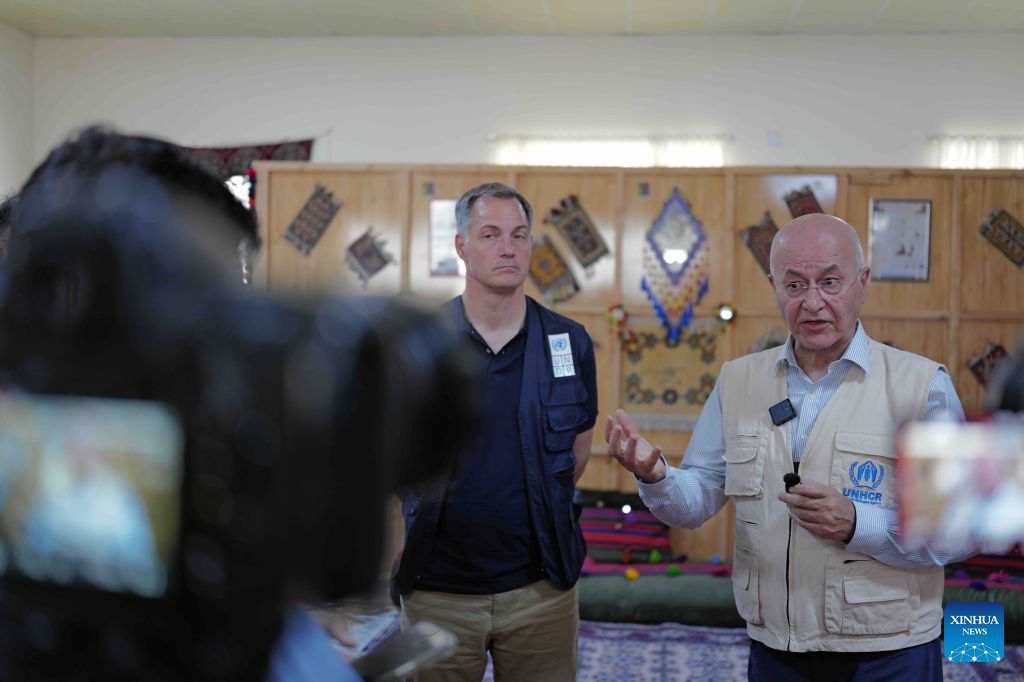
UN Development Programme (UNDP) Administrator Alexander De Croo and UN High Commissioner for Refugees (UNHCR) Barham Salih jointly brief the media in Mazar-i-Sharif, Afghanistan, July 6, 2026. Two United Nations officials concluded a joint visit to northern Afghanistan on Monday, during which they visited projects supporting Afghan returnees and called for sustained international support for the country. (Xinhua/Li Ang)


