

Participants of the 16th International Buckwheat Symposium visit a local buckwheat processing company in Liangshan Yi Autonomous Prefecture, southwest China's Sichuan Province, June 27, 2026. (Xinhua)
CHENGDU, July 2 (Xinhua) -- On the high slopes of southwest China's Liangshan Yi Autonomous Prefecture in Sichuan Province, tartary buckwheat has been long grown for survival, not the health-food market.
In Boshwahei Village of Zhaojue County, Yi farmer Madula recalls a diet built around two dependable crops: potatoes and tartary buckwheat. The grain was ground into flour to make "qiaoba," a traditional buckwheat pancake, while other preparations included steamed cakes, flatbreads, noodles and buckwheat flour added to soups.
The taste is slightly bitter at first, then faintly sweet after chewing. In the fragmented, often poor soils of the Hengduan Mountains, where the growing season is short and the temperature difference between day and night is wide, tartary buckwheat is one of the few crops that could grow reliably and help sustain local communities.
Now the same crop is being recast as part of a very different market.
Driven by rising demand for healthier foods, gluten-free products and low-GI diets, buckwheat is moving from the margins of mountain agriculture into international food markets, research programs and processing chains. The shift is giving Liangshan, one of China's major tartary buckwheat production areas, a chance to turn a traditional staple into a broader industrial chain spanning farms, factories, overseas markets and Chinese-made processing equipment.
The transformation is not unique to China. Ivan Kreft, honorary chairman of the International Buckwheat Research Association and a member of the Slovenian Academy of Sciences and Arts, said buckwheat followed a similar path in parts of Europe.
"Historically, in many European countries, including Slovenia, buckwheat was the food of poor and mountain people. In China, a similar pattern existed, with mountain populations relying on buckwheat while lowland people ate rice," Kreft said.
As agricultural conditions improved and wheat became more productive, it was gradually neglected, even forgotten in some places because of its association with poverty and hardship. Today, Kreft said, awareness of its health benefits, particularly its antioxidant properties, is helping bring it back into the food system, though changing eating habits takes time.
Liangshan hosted the 16th International Buckwheat Symposium in late June, drawing nearly 300 experts and scholars from 15 countries. Statistics from the UN Food and Agriculture Organization put global buckwheat production at about 2.2 million tonnes a year, with Russia and China among the main producers.
For food companies, the attraction lies in buckwheat's nutritional profile. It contains rutin, protein and dietary fiber, while tartary buckwheat in particular has drawn academic attention for flavonoids and other active compounds. Those qualities have made it an option for products targeting demand for gluten-free, low-GI and other health-oriented foods.
In Liangshan, the supply side is beginning to adjust. Local companies, including Huantai Biotech Co., Ltd., have built relatively complete processing chains, expanding beyond an early focus on tartary buckwheat tea into flour, noodles, vermicelli and other products. Some of those products are entering markets in Europe, Japan and Southeast Asia.
A Huantai executive said rising overseas requirements for food safety and functional attributes are pushing his firm to upgrade. "We manage our production lines with reference to pharmaceutical-grade standards to meet the access requirements of different countries," he said.
For local authorities, the task is to make a scattered mountain crop enter the processing and market system on a more stable basis. Qiu Yonghong, deputy head of Liangshan's agriculture and rural affairs bureau, said the prefecture now has about 1 million mu, or roughly 67,000 hectares, of tartary buckwheat, with annual output of around 180,000 tonnes -- about one third of China's total.
The broader push is supported by Liangshan's 4.43 million mu of completed high-standard farmland, which local officials say has helped improve the conditions for more scaled production.
Demand is also appearing in other markets. Sun-Hee Woo, a professor at Chungbuk National University in the Republic of Korea (ROK), said buckwheat consumption there is changing.
"Buckwheat used to be just something you'd find in pastries or rice balls," he said. "But now, more people are turning to buckwheat noodles as part of a healthy lifestyle." In ROK, he said, buckwheat noodle restaurants frequently see long queues during peak dining hours.
Participants from Russia and Switzerland offered similar trends: buckwheat is being revalued as consumers pay more attention to health attributes, with some seeing it less as an old staple than as a functional food or even a "superfood."
China's position in the buckwheat supply chain is also extending into processing capacity and equipment. In Himalayan regions that include India, Nepal and Bhutan, buckwheat is grown, but it often remains close to subsistence use, with weak processing links, according to participants at the symposium. China, by contrast, has developed a more complete processing system.
Anton Rangus, a Slovenian entrepreneur, said his company had bought Chinese-made processing machines for milling and flour production, and was waiting for another shipment from China. Slovenia's local equipment sector, he said, remains weak, relying largely on older farm-scale machines and lacking advanced processing systems.
Still, the industry remains at an early stage. Globally, buckwheat faces low yields, limited genetic improvement, insufficient development of its key functional compounds, and incomplete processing and testing standards.
"Basic standards have yet to be fully established, from how active ingredients should be tested to how their proportions in food products should be defined," said Zhou Meiliang, a researcher at the Institute of Crop Sciences under the Chinese Academy of Agricultural Sciences.
For Madula and other farmers in Liangshan, tartary buckwheat is no longer only the grain that helped mountain communities get through hard years. As standards, processing capacity and supply chains improve, a crop once tied to survival is beginning to move through farms, factories and overseas markets, finding new value far beyond the mountains where it has long been grown. ■
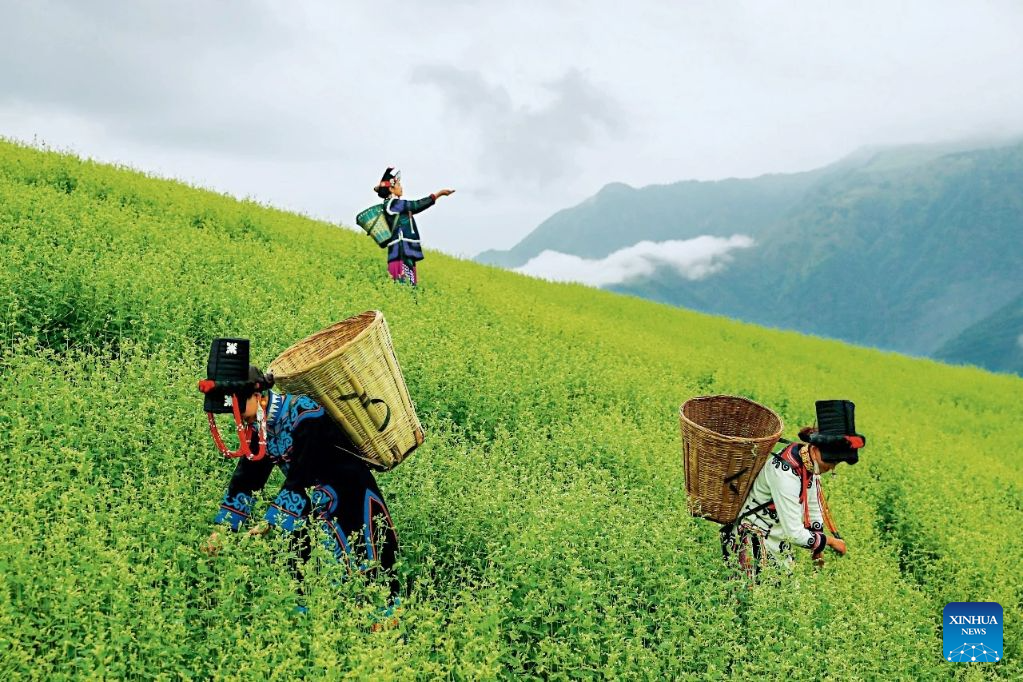
Farmers work at a tartary buckwheat field in Liangshan Yi Autonomous Prefecture, southwest China's Sichuan Province, April 17, 2024. (Xinhua)
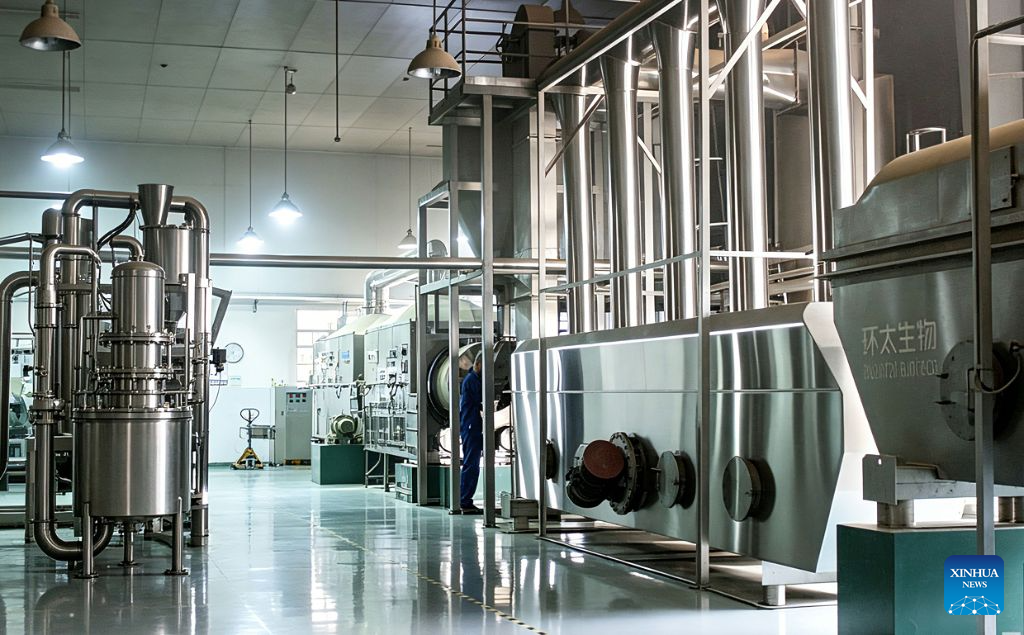
This photo taken on Dec. 19, 2025 shows a tartary buckwheat tea production line at Huantai Biotech Co., Ltd. in Liangshan Yi Autonomous Prefecture, southwest China's Sichuan Province. (Xinhua)
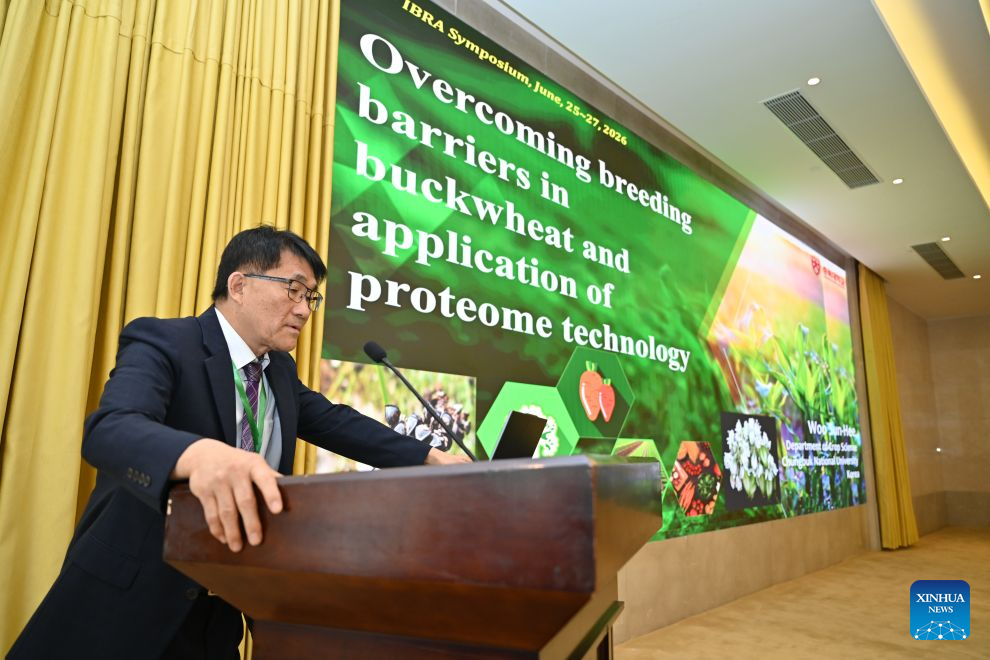
Sun-Hee Woo, a professor at Chungbuk National University in the Republic of Korea (ROK), gives a lecture at the 16th International Buckwheat Symposium in Liangshan Yi Autonomous Prefecture, southwest China's Sichuan Province, June 26, 2026. (Xinhua)
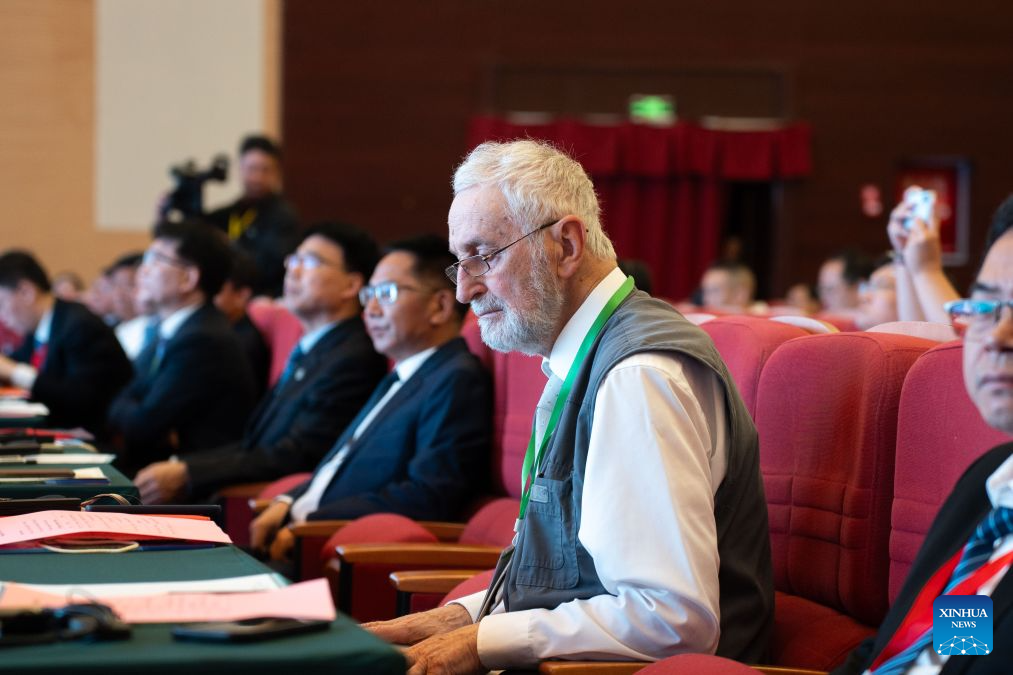
Ivan Kreft, honorary chairman of the International Buckwheat Research Association, attends the 16th International Buckwheat Symposium in Liangshan Yi Autonomous Prefecture, southwest China's Sichuan Province, June 25, 2026. (Xinhua)


