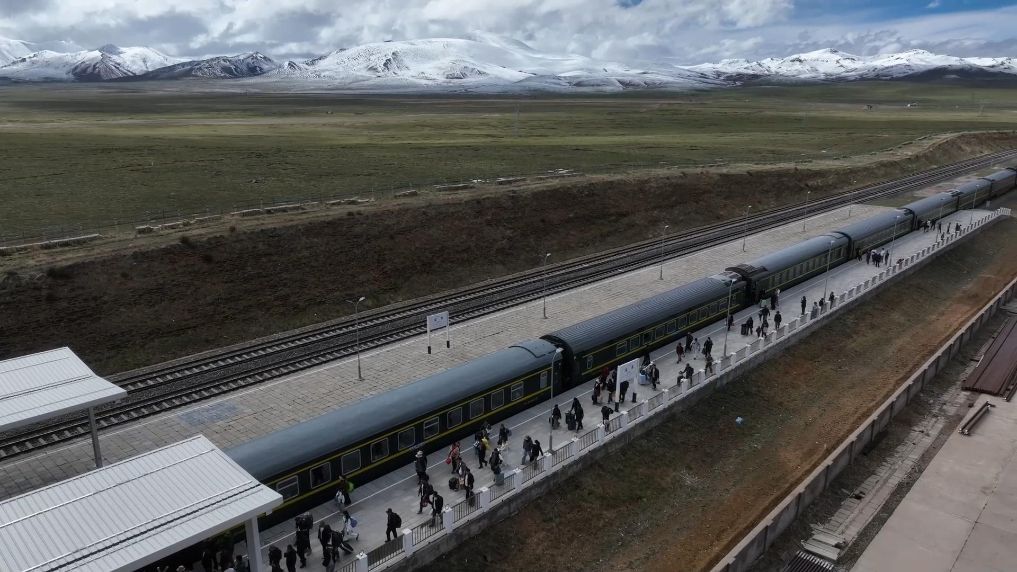
XINING, July 1 (Xinhua) -- As the Qinghai-Xizang Railway marks 20 years in operation, data technicians remain steadfast at their observation posts, helping to secure the tracks, protect passenger safety, and sustain the wide-ranging benefits the railway has brought to the high-altitude frozen lands of western China.
Fierce winds howl across the red slopes of Fenghuoshan, tightening chests and stealing one's breath on the Qinghai-Tibet Plateau, the "roof of the world" at 4,750 meters above sea level, where oxygen is scarce and temperatures can plummet to minus 40 degrees Celsius.
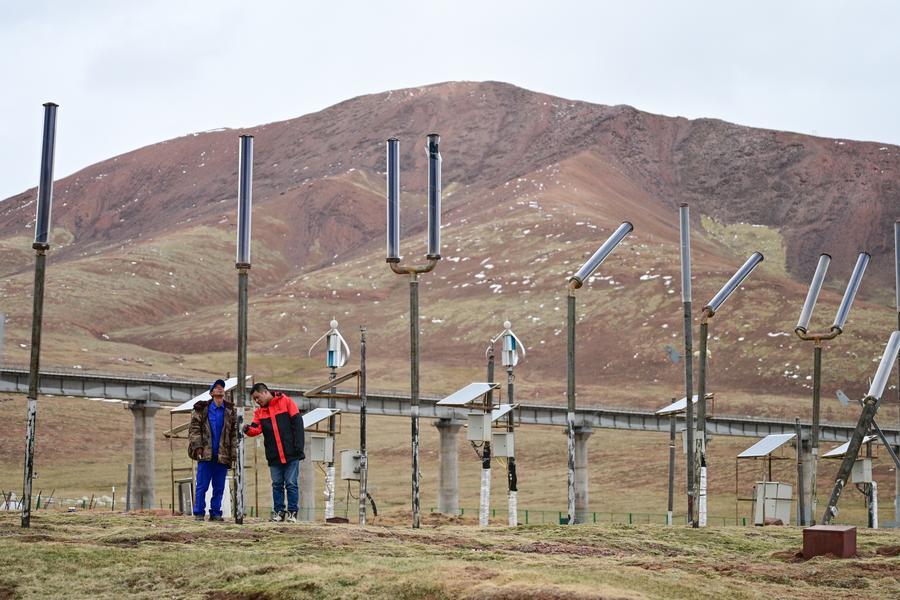
A small, year-round observation station stands a few hundred meters from the tracks, safeguarding the "Sky Road" for millions of passengers by monitoring the permafrost beneath.
Wednesday marks the railway's 20th anniversary. It also marks a milestone for the 65-year-old station, whose scientific legacy has been built by generations of dedicated observers.
Every morning, technicians put on thick protective gear and begin their daily patrol, inspecting equipment, checking sensors and collecting permafrost data. Rain or shine, blizzard or gale, these routines have never been interrupted, said Wang Jinrong, a technician at the station. "This data reflects the most authentic changes in the permafrost," he said. "Missing even a single day means losing a piece of genuine record."
The data helps scientists understand the permafrost, and that understanding has kept the railway safe.
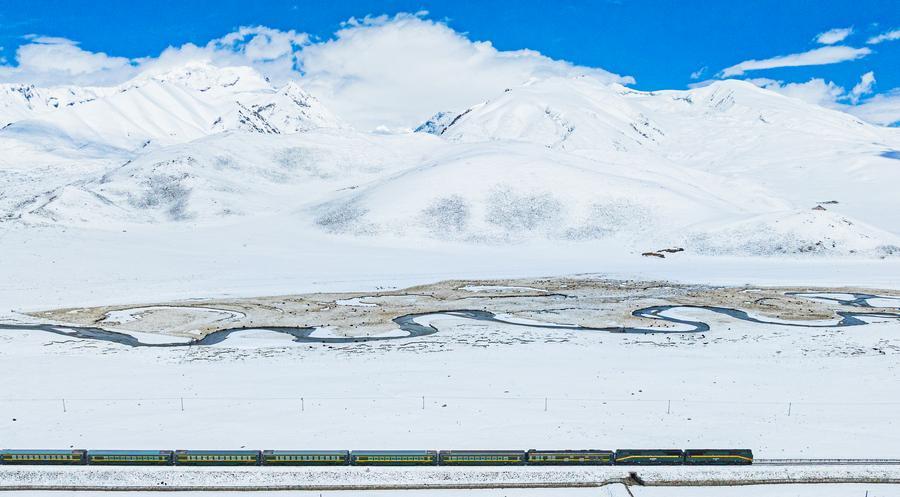
Unstable permafrost, along with the region's thin oxygen and fragile ecology, was one of the major challenges engineers had to overcome in building the Qinghai-Xizang Railway, which links Lhasa to Xining, capital of northwest China's Qinghai Province, ending Xizang's pre-railway era.
Of the railway's 1,956-km length, 550 km run through continuous permafrost zones. In winter, the frozen ground expands, and in summer, it thaws and sinks. These seasonal shifts cause the railway subgrade to rise and fall, affecting track stability and, in severe cases, leading to derailment. Permafrost remains a global challenge for railway builders.
In 1961, researchers from the Northwest Research Institute under the China Railway Engineering Group established the permafrost observation station at Fenghuoshan. The mountain, named for the iron oxide that colors its slopes red, represents the most typical and sensitive permafrost section along the entire route.
In the early construction phase, pioneers lived in tents, drank icy water and endured extreme cold to conduct permafrost observation and engineering tests.
Over four generations, they have accumulated nearly 40 million sets of observational data, giving rise to breakthrough technologies that have made the railway possible.
But the station's story is also one of personal sacrifice, not just scientific achievement.
A short distance from the station stands a grey tombstone, belonging to Wang Zhanji, the station's former head, who dedicated his life to permafrost research. He passed away in 1980 from illness, leaving a final wish: to be buried overlooking the tracks.
His wife, who later sent their son to work on the railway's construction, also passed away before the tracks were laid.
The family's long-held wish was fulfilled on July 1, 2006, when the railway became fully operational. Every train that roars past the grave site daily carries forward their legacy.
For researchers, the railway's opening was not the end of their mission, but the beginning of a new journey of research and discovery.
Climate change and rising global temperatures are gradually altering the state of the plateau's permafrost, threatening to destabilize the ground and track foundations. Meanwhile, automation and remote monitoring facilities have replaced much of the paper-and-pen recording work. The station has upgraded to a smart monitoring system that tracks 544 km of permafrost sections across the railway using over 200 sensors.
But human input remains central. "The equipment tells us there is a change in the data, but what the situation is on the ground, we still have to see with our own eyes," Wang Jinrong said.
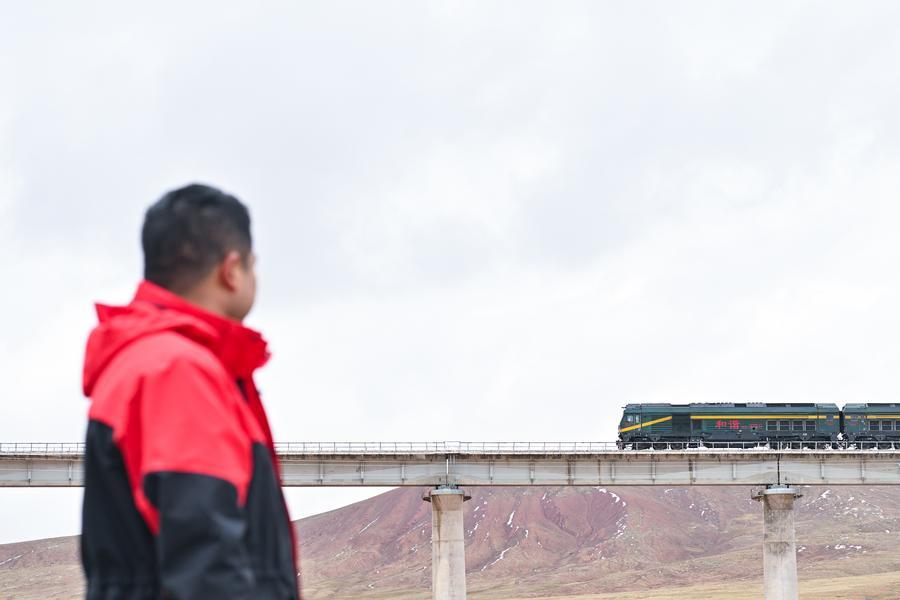
Cheng Jia agrees. The 43-year-old, one of the younger generation now ensuring the railway's safety, has spent much of his career shuttling between the station and the railway sections since graduating with his master's degree in 2009.
"Permafrost research demands on-site observation," Cheng said. "Only by going to the site can you identify problems and solve them."
The innovations born at Fenghuoshan are no longer confined to the railway. Technologies, from thermal pipes to cooling systems for the roadbed, are now being applied to other high-altitude projects across China and beyond.
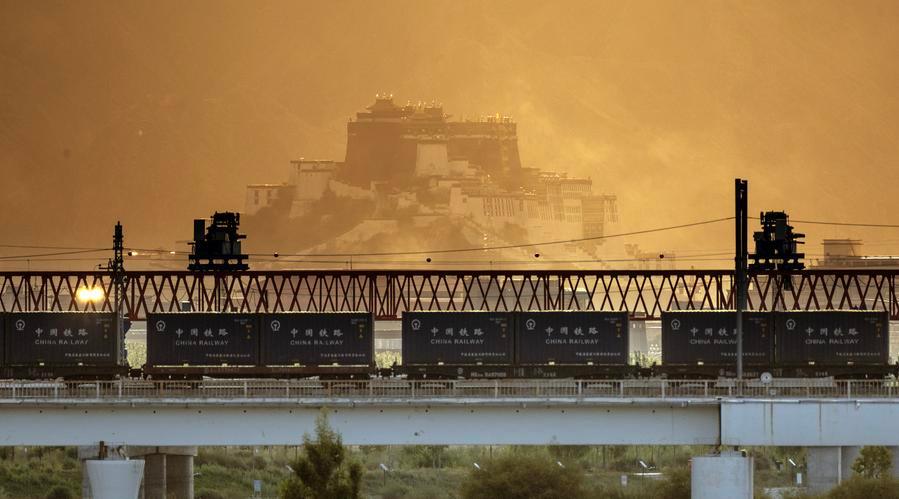
The railway itself has transformed the region. Over the past 20 years, it has carried over 100 million passengers and 824 million tonnes of cargo, driving economic and social growth on the plateau.
"More than a marvel of engineering, it has been a lifeline for local communities," said Lhapa Tsering, a local railway worker.
As China celebrates two decades of the Qinghai-Xizang Railway, the scientific researchers at Fenghuoshan remain at their posts, their work and personal dedication stand as a testament to the region's continued endurance and innovation. ■