HOHHOT, July 1 (Xinhua) -- This summer, the rolling grasslands of Xilin Gol in north China's Inner Mongolia Autonomous Region welcomed a group of American horse lovers.
Clayson Benally, a 49-year-old horse trainer and artist from Arizona, the United States, traveled thousands of miles with his family to meet Julaa, a 12-year-old ethnic Mongolian girl. The young rider is the star of the big-screen documentary "Horse Power," an international collaboration that explores humanity's enduring bond with horses across continents and cultures.
"It's the horses that brought us all together. That's something that words cannot express," Benally said when meeting Julaa and her family in a traditional Mongolian yurt on the grasslands.
The heartfelt encounter grew out of the documentary that chronicles Julaa's innate bond with her Mongolian steed. Benally, who also appears in the film and attended its U.S. premiere in January, was deeply moved by Julaa's pure, instinctive rapport with horses on screen. He reached out to the film's production team, determined to travel to China and meet the young rider in person.
"When I watched the movie, one of the opening scenes is just here in Inner Mongolia. And my heart cried out to come here," he said.
Upon arrival on June 26, the Indigenous American family was warmly received by their Mongolian hosts, who presented them with ceremonial blue hada scarves, a timeless symbol of blessing and goodwill on the grasslands. Benally's 10-year-old daughter Zonnie, an avid horse enthusiast, quickly clicked with Julaa. The two girls wandered hand in hand across the pasture, gazing out at the grazing horses that define the local landscape.
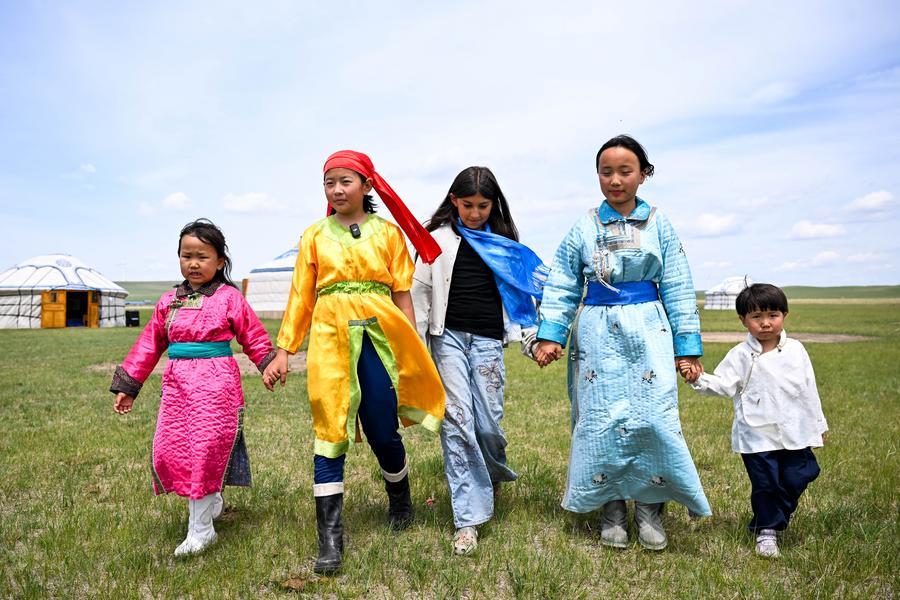
Julaa's family raises more than 20 horses and nearly 150 sheep on their 156 hectares of contracted grassland. Julaa's aunt prepared her guesthouse for the American visitors days in advance, stocking up on mutton and fresh vegetables.
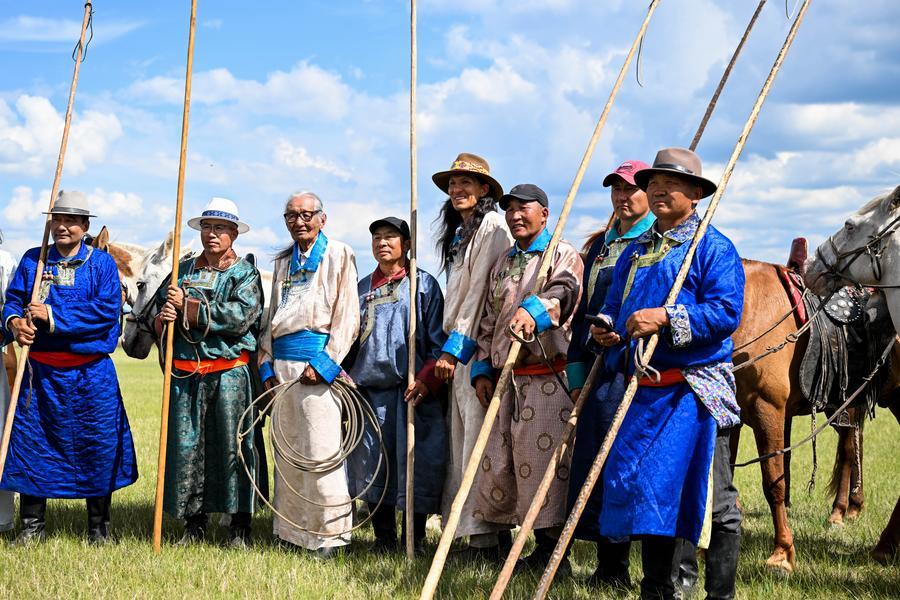
After a lunch on the grasslands, local herdsmen demonstrated their time-honored skills, performing classic Mongolian horse roping and penning routines. Benally was visibly in awe of the deep-rooted collective herding culture, a communal tradition refined by generations of nomadic life.
"This is something that I've never seen or experienced. I just think about how incredible and beautiful and alive the culture is here," he said.
In return, he demonstrated his signature bareback horse-training techniques, relying entirely on subtle body language and calm, steady energy to build trust and harmony with the horses -- an intuitive, unspoken communication between human and equine.
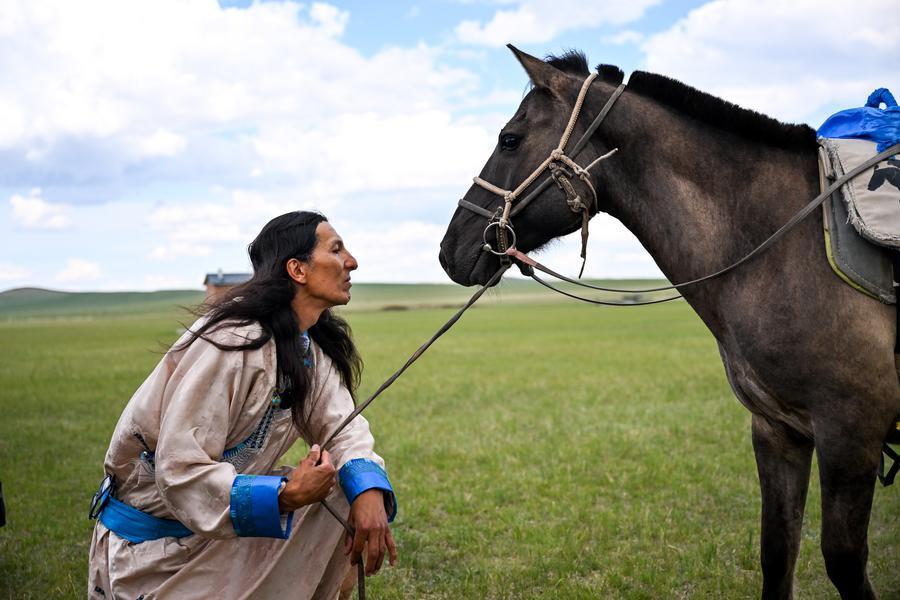
Xilin Gol, honored by the China Horse Industry Association as "China's Hometown of Horses" in 2010, is home to some 340,000 horses, a living testament to its enduring equestrian heritage.
Beyond their traditional roles in transportation and herding, horses now drive a burgeoning industry centered on mare's milk processing, cultural tourism and sports events.
On June 27, the Benally family joined the local Naadam festival, the grand traditional grassland gathering featuring horse racing, archery, and Mongolian wrestling.
In the festival's 15-kilometer horse race, Julaa competed alongside dozens of seasoned riders and secured fourth place. The Benally family band delivered a musical performance at the festival's opening ceremony.
"We had visited major Chinese cities including Wuhan, Wuxi, Shanghai, Beijing, and Guangzhou, and witnessed the country's stunning development," Benally said. "But to see such well-preserved traditional lifestyles and vibrant, living grassland culture here in Inner Mongolia is truly remarkable."
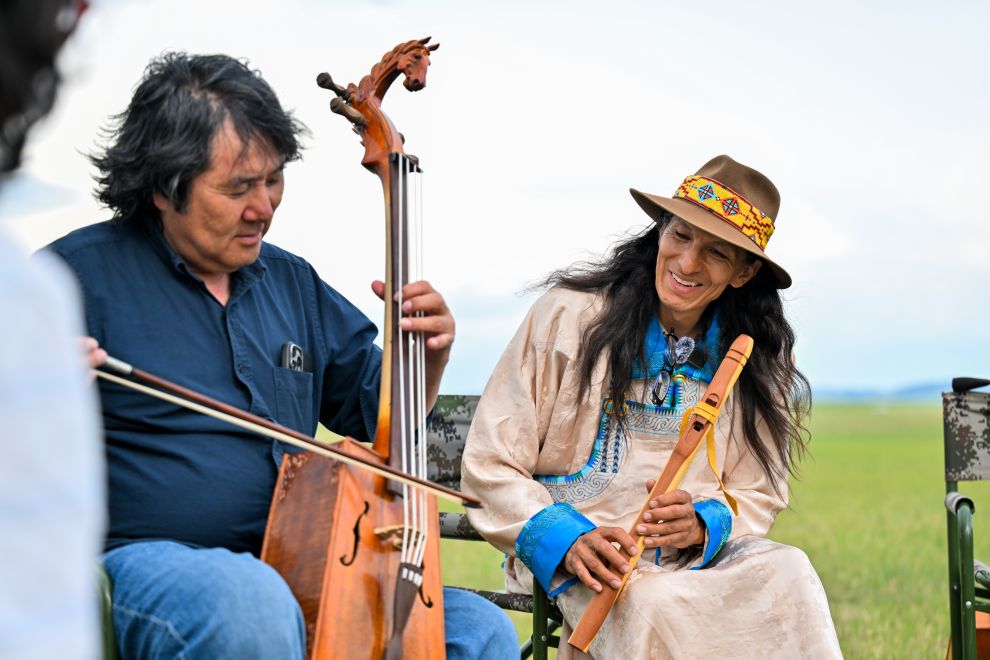
His 53-year-old sister Jeneda, a professional singer, spent her birthday during the trip and received a memorable gift -- a morin khuur, or traditional Mongolian horsehead fiddle.
She practiced the instrument for more than an hour, eager to unravel the resonant melodies of this iconic grassland instrument. The soulful, lingering strains of Mongolian long-tune folk songs moved Jeneda to tears. "Your music speaks straight to my soul," she told the local performers. "I hope these fleeting, precious moments will grow into lasting friendships."
For Jeneda's 19-year-old daughter Dyatihi, the most indelible impression came from driving along No. 99 Highway, a route that instantly reminded her of America's iconic Route 66.
"Route 66 means a great deal to my hometown," she said. "No. 99 Highway here is unique and cool, because it is wrapped in music. It is as if the highway itself sings."
Xilin Gol's No. 99 Highway hosts China's first dedicated grassland musical highway, stretching 1,330 meters and marked with bright rainbow-colored road lines. Engineered with grooves carved into the pavement, the road plays two beloved classic grassland folk melodies. When vehicles travel at a steady speed between 35 and 60 kilometers per hour, drivers and passengers are treated to a 120-second musical journey.
The Benally family was also struck by the lush, revitalized greenery lining the route. "Witnessing the scale of local reforestation and desertification control work is absolutely inspiring," Benally noted. "There is so much we can learn from this dedication to healing and protecting the land."
The Benally family's week-long journey draws to a close on Wednesday, but the connections they've made with the land and its people will endure long after their fleeting visit.
What began as a long-distance pilgrimage driven by a shared love for horses has blossomed into an unshakable bond, stitched together by grassland melodies and a cross-cultural friendship. ■