
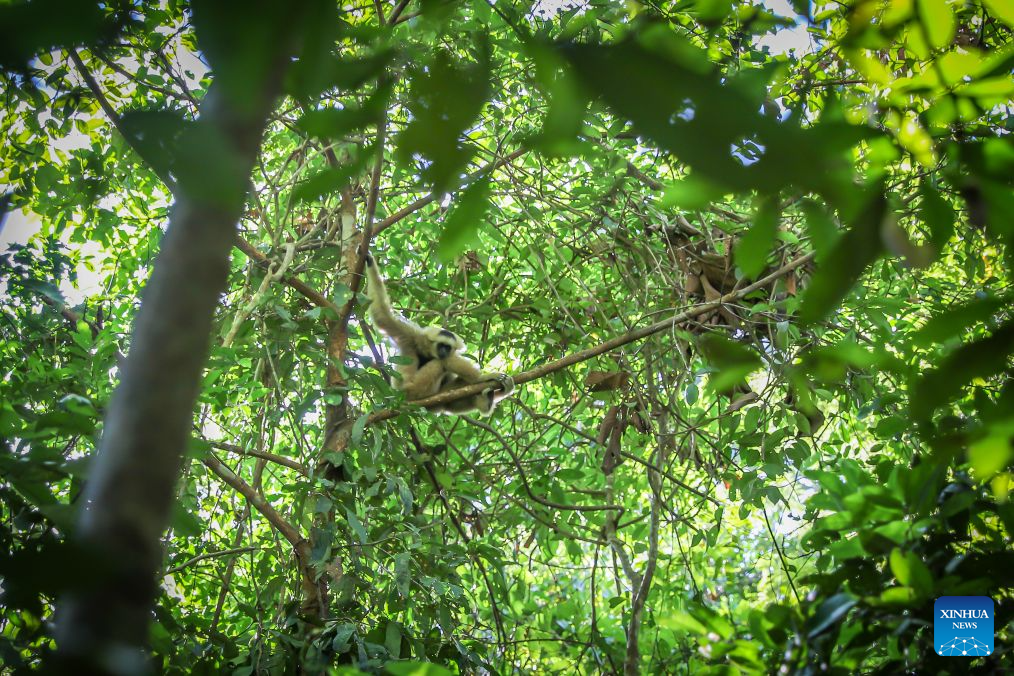
A pileated gibbon is seen in the forest of Angkor Archaeological Park in Siem Reap province, Cambodia, June 24, 2026. The pileated gibbon population in the natural forests of Cambodia's famed Angkor Archaeological Park has reached 15 after another endangered gibbon gave birth, the APSARA National Authority (ANA) said in a news release on Tuesday. The endangered pileated gibbon is globally rare and listed on the International Union for Conservation of Nature (IUCN) Red List. (ANA/Handout via Xinhua)
PHNOM PENH, June 30 (Xinhua) -- The pileated gibbon population in the natural forests of Cambodia's famed Angkor Archaeological Park has reached 15 after another endangered gibbon gave birth, the APSARA National Authority (ANA) said in a news release on Tuesday.
The endangered pileated gibbon is globally rare and listed on the International Union for Conservation of Nature (IUCN) Red List.
Nick Marx, a wildlife expert with Cambodia Wildlife Care (CWC) and biodiversity advisor to the ANA -- the government agency managing the Angkor site -- expressed delight at the arrival of another gibbon in Angkor, noting the baby was born in May.
He recalled that gibbons were first released into Angkor forests in 2013.
"Since then, the project has reintroduced four pairs-or families-of gibbons at different locations throughout the Angkor forest," Marx said. "To date, the gibbons have produced seven offspring, bringing the total population in the park to 15."
Moeun Sarin, a gibbon caretaker in the Angkor Forest, feeds the animals twice daily with his son while closely monitoring their health, behavior, habitat, and any potential dangers.
The gibbons' regular diet includes fruits like bananas, mangosteens, and papayas, he said, adding that their food is placed on a suspended wooden platform to keep them from descending, where they would be at risk of dog attacks.
Situated in northwest Cambodia's Siem Reap province, the UNESCO-listed Angkor Archaeological Park is the kingdom's most popular tourist destination and home to 91 ancient temples built between the ninth and 13th centuries.
According to the ANA, the natural forests of the 401-square-kilometer Angkor Archaeological Park are currently home to a wide variety of wildlife species.
This diverse ecosystem includes pileated gibbons, red muntjacs, silvered langurs, common palm civets, smooth-coated otters, leopard cats, oriental pied hornbills, great hornbills, wreathed hornbills, peafowl, common water monitors, Sunda pangolins, and porcupines. ■
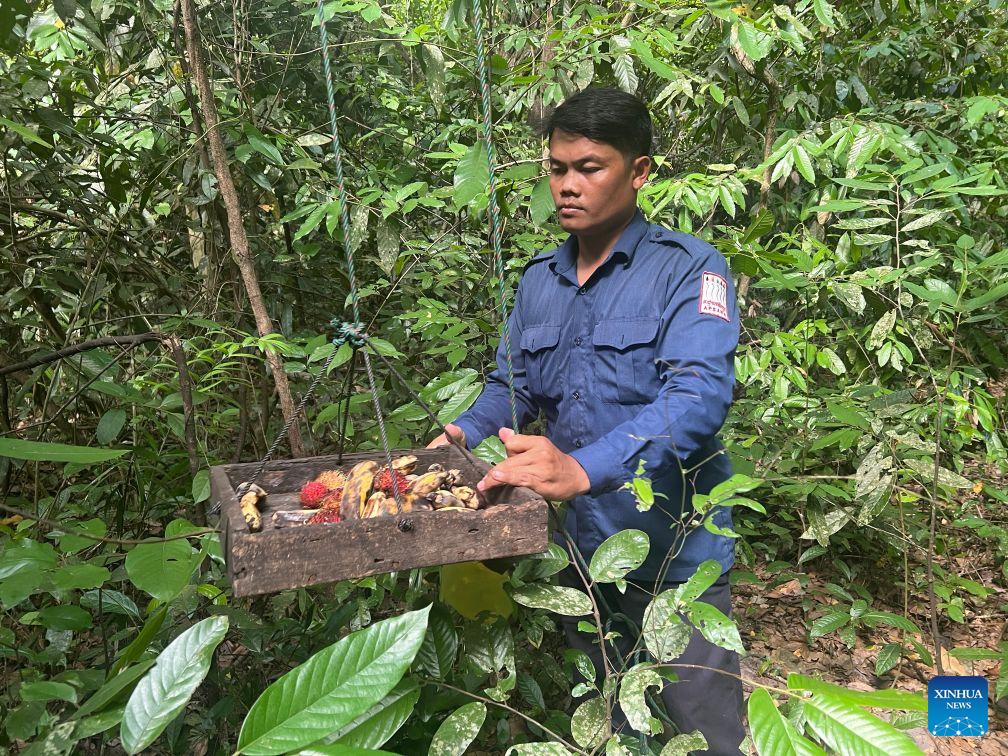
A gibbon caretaker prepares fruits for pileated gibbons in the forest of Angkor Archaeological Park in Siem Reap province, Cambodia, June 25, 2026. The pileated gibbon population in the natural forests of Cambodia's famed Angkor Archaeological Park has reached 15 after another endangered gibbon gave birth, the APSARA National Authority (ANA) said in a news release on Tuesday.
The endangered pileated gibbon is globally rare and listed on the International Union for Conservation of Nature (IUCN) Red List. (ANA/Handout via Xinhua)
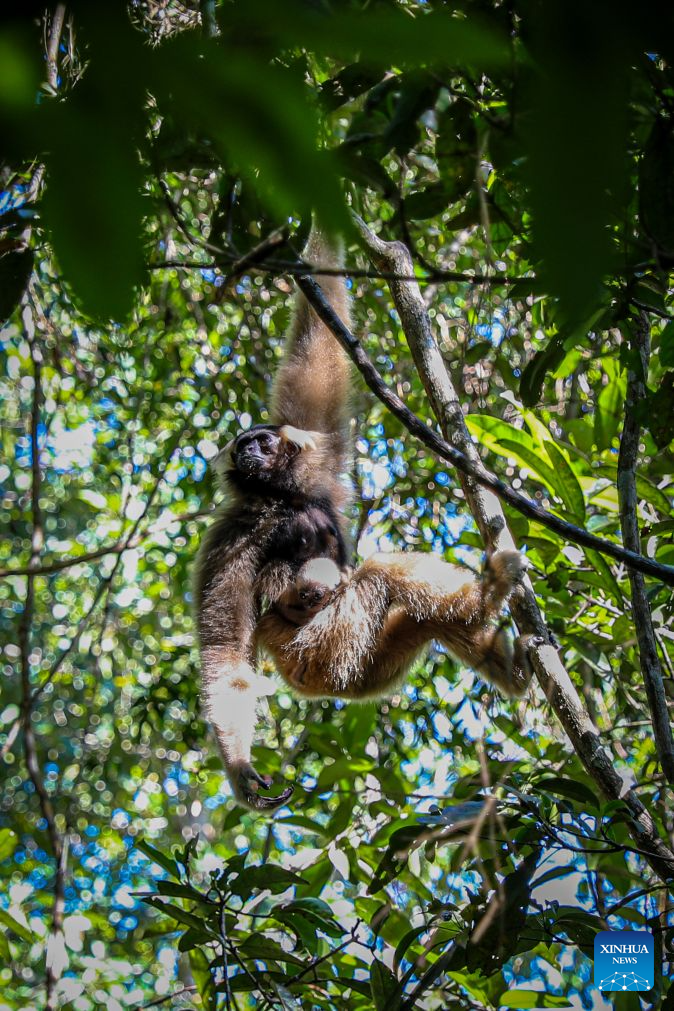
A pileated gibbon is seen in the forest of Angkor Archaeological Park in Siem Reap province, Cambodia, June 24, 2026. The pileated gibbon population in the natural forests of Cambodia's famed Angkor Archaeological Park has reached 15 after another endangered gibbon gave birth, the APSARA National Authority (ANA) said in a news release on Tuesday.
The endangered pileated gibbon is globally rare and listed on the International Union for Conservation of Nature (IUCN) Red List. (ANA/Handout via Xinhua)


