ANKARA, June 29 (Xinhua) -- As Ankara prepares to host a NATO summit next week, public skepticism toward the alliance has drawn renewed attention, as many Turks continue to question whether the alliance serves the country's national interests.
A member of the alliance since 1952, Türkiye has NATO's second-largest military and serves as a strategic bridge between Europe, the Middle East and the Black Sea region.
Yet recent surveys suggest that most Turks remain unconvinced that membership has delivered clear benefits.
According to an ANK-AR Survey conducted in May, 43.9 percent of respondents described Türkiye's NATO membership as "neither beneficial nor harmful," making it the largest response category.
Nearly one in five respondents were either undecided or expressed no opinion, while 10.8 percent considered it harmful or very harmful.
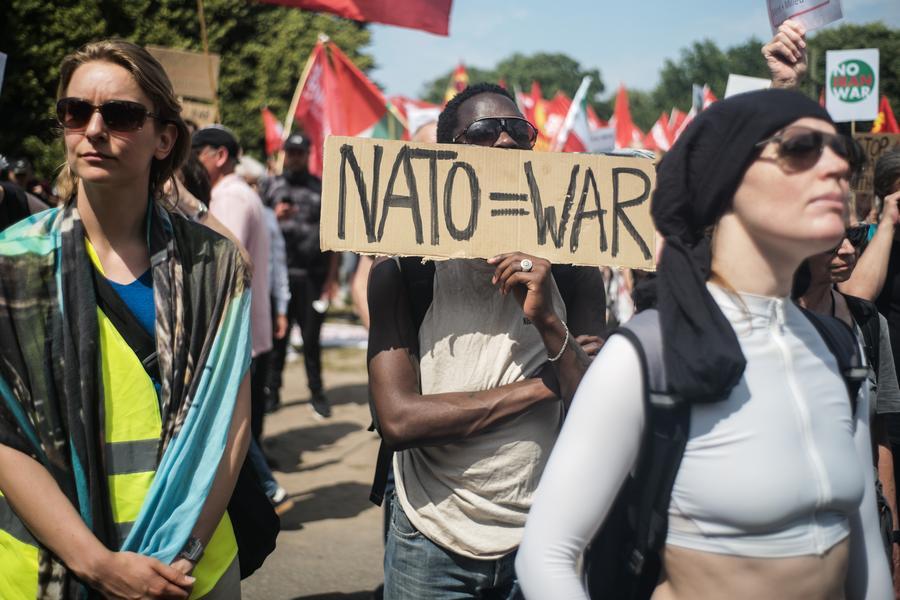
Analysts say the findings reflect a public that often values security cooperation while remaining skeptical of the alliance, particularly its U.S. leadership.
"In Türkiye, skepticism toward NATO is largely tied to anti-American sentiment," Hasan Unal, a political analyst and professor at Baskent University in Ankara, told Xinhua.
"Many people tend to equate NATO with the United States. As a result, negative perceptions of America are often projected onto the alliance itself," he noted.
Broader distrust toward the West, especially the United States and Europe, has created a "crisis of confidence" in Western institutions, Unal argued, noting that there are "political and social circles in Türkiye that are openly opposed to NATO."
Disagreements between Türkiye and some NATO allies over regional issues, particularly what Ankara sees as support for Kurdish groups seeking statehood, had further eroded public confidence, he added.

For many observers, the alliance itself is facing one of the most challenging periods in its history.
Differences among member states over defense spending, burden-sharing, relations with Russia, and priorities in the Middle East have exposed growing strains within the bloc.
Analysts argue these internal divisions have fueled persistent questions about the alliance's long-term cohesion.
Unal questioned the future of NATO, noting that the alliance is a product of the Cold War and would struggle to survive in its current form in an increasingly multipolar world.
Some, however, argue that NATO remains relevant for Türkiye.
Huseyin Bagci, professor of international relations at the Middle East Technical University (METU), said NATO's collective defense framework continues to provide Türkiye with "strategic depth and military interoperability."
The differing assessments are also echoed on the streets of Ankara, where residents are preparing for traffic restrictions and heightened security during the July 7-8 summit.
"I think NATO has lost its function. Whether it exists or not makes little difference," said 66-year-old retiree Yasemin Yavuz in Kizilay, one of the neighborhoods expected to be affected by the extensive restrictions.
"NATO is supposed to ensure that members help one another in times of need, but that principle is undermined, especially by the United States," Yavuz added. "People in Türkiye have lost faith in NATO. I don't believe it would come to our assistance if we faced a serious threat."■