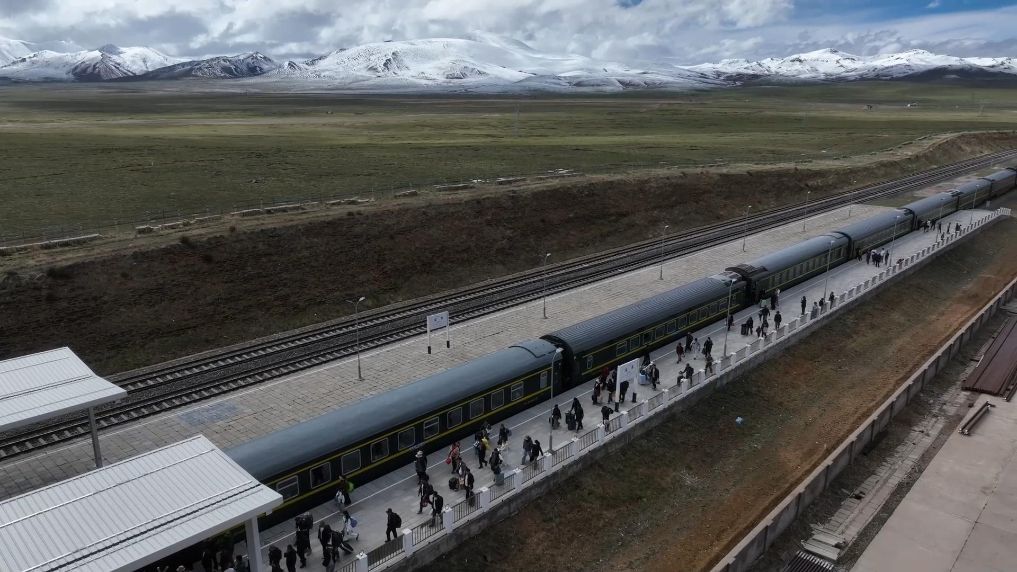
* The Qinghai-Xizang Railway reached Lhasa on July 1, 2006, ending Xizang's long history without a rail service. Over the past two decades, what began as a fast track into the plateau has since become the main artery of a broader railway network in Xizang.
* As the 1,956-km railway marks its 20th anniversary, China is eyeing a more extensive and efficient plateau railway network, with more sections of the Sichuan-Qinghai Railway and the Yunnan-Xizang Railway being constructed or planned.
* A supporting power-supply project was launched earlier this year. Once completed, it will provide stable power for railway operations and further replace diesel traction with electric power on the line.
LHASA, June 30 (Xinhua) -- Forty eight hours. That is the time for a freight train loaded with everything from cars to refrigerated fresh produce to travel from Xining, capital city of northwest China's Qinghai Province, to Lhasa, capital of Xizang Autonomous Region in the country's southwest.
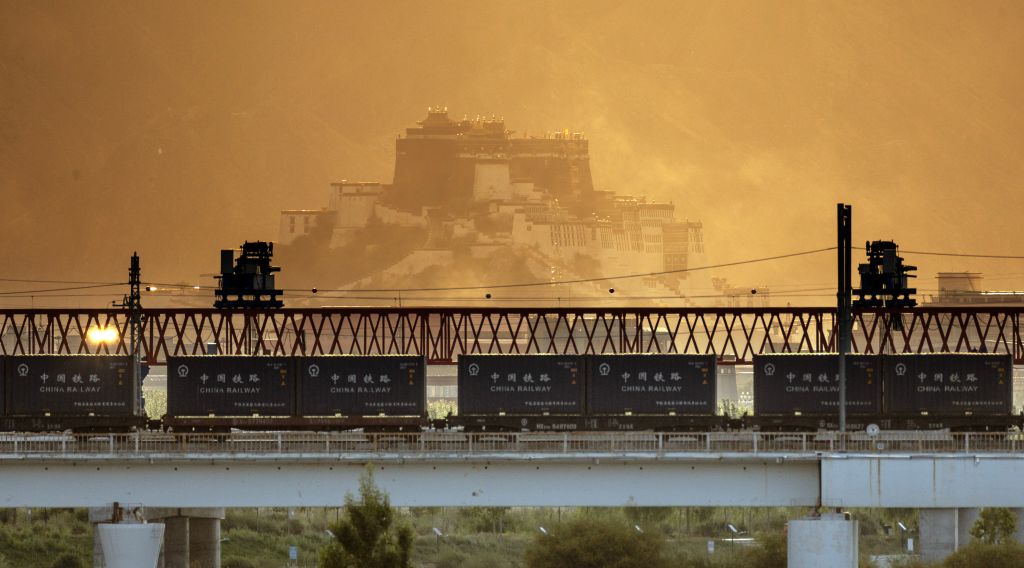
Such trains are running regularly on the 1,956-km Qinghai-Xizang Railway, facilitating the flow of goods in and out of the plateau region known for its high altitude and harsh environment. The speed may not sound impressive, but many veteran logistics professionals still recall the days when goods had to be transported by trucks that plodded for three or four days along the Qinghai-Tibet Highway.
According to Ji Min, a dispatcher who works at the railway's logistics center in Xining, the rail route's popularity is best evidenced by its increasing freight throughput. Back in 2006 when the railway was just opened, fewer than 500 containers headed for Xizang in a month. Now, more than 500 is handled in a single day, he said.
"We can run one train into Xizang every day now," he said. "The transport cost has fallen by about 60 percent."
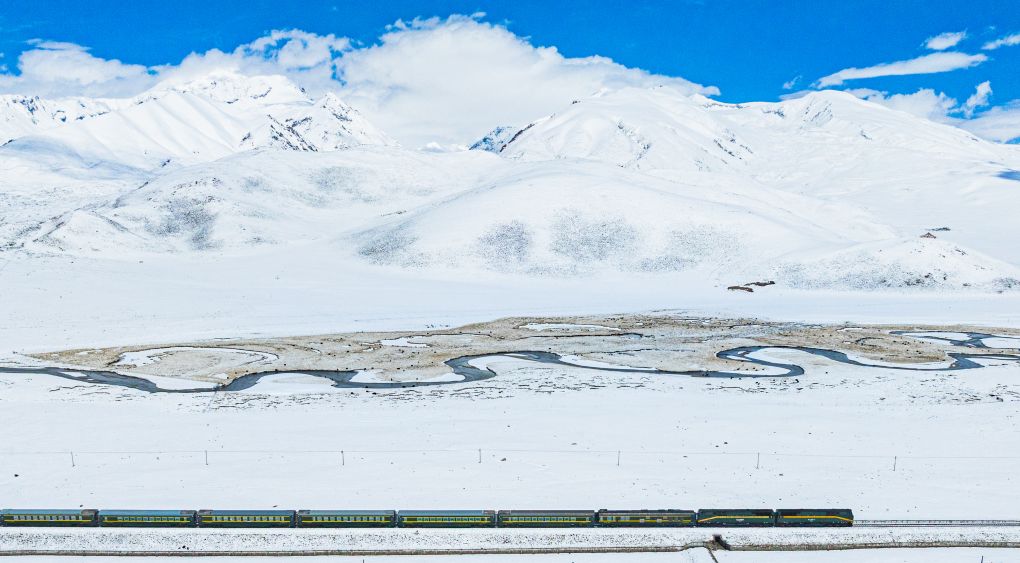
The Qinghai-Xizang Railway reached Lhasa on July 1, 2006, ending Xizang's long history without a rail service. Over the past two decades, what began as a fast track into the plateau has since become the main artery of a broader railway network in Xizang. The railway's Xining-Golmud section has been upgraded and electrified. Separately, new lines have extended the rail service from Lhasa to Xigaze and Nyingchi. By 2024, Xizang had 1,359 kilometers of railway in service, almost double the 701 kilometers recorded in 2012.
As the Qinghai-Xizang Railway marks its 20th anniversary, China is eyeing a more extensive and efficient plateau railway network, with more sections of the Sichuan-Qinghai Railway and the Yunnan-Xizang Railway being constructed or planned.
Transport between the plateau region and the rest of China has long been difficult. In the early 1950s, camel caravans carrying grain spend three or four months travelling from Qinghai to Lhasa. In the year 641 AD, when Princess Wencheng came all the way from Chang'an (today's city of Xi'an in northwest China) to marry Tibetan King Songtsen Gampo in Lhasa, her journey across towering mountain ranges and vast grasslands stretched over two years and three months.
For Losum Tsering, a Tibetan driver from Zogang County in Qamdo, the railway's expansion is not just addition of trains and stations. It has traced the course of his own life.
Born into a farming and herding family, Losum Tsering left home at 13 after finishing primary school, taking a train for the first time in his life to Wuhan in central China, where he studied free of charge in an inland middle-school program set up for students from Xizang.
The journey inspired him to become a train driver.
After graduating from a railway machinery school, he joined the Xining locomotive depot of China Railway Qinghai-Xizang Group Co., Ltd. in 2003. In 2010, he began driving freight trains between Xining and Golmud, carrying daily necessities one way and potash fertilizer, petroleum and other production materials back the other way.
In 2015, he shifted to passenger trains. Many tourists from other parts of China, he recalled, were using the service to reach the plateau. A journey long associated with hardship was becoming part of ordinary public travel.
Two years later, Losum Tsering began driving multiple-unit trains between Xining and Lanzhou, capital city of the Gansu Province also in northwest China. The route matters because it is one of the plateau railway system's main connections to provinces beyond Qinghai and Xizang. What had once been a three-hour trip by conventional train, he said, could be cut to roughly one hour and 20 minutes thanks to this route.
He said he hoped that one day he could drive such an electric train all the way to Lhasa.
That possibility is moving closer. A supporting power-supply project was launched earlier this year. Once completed, it will provide stable power for railway operations and further replace diesel traction with electric power on the line.
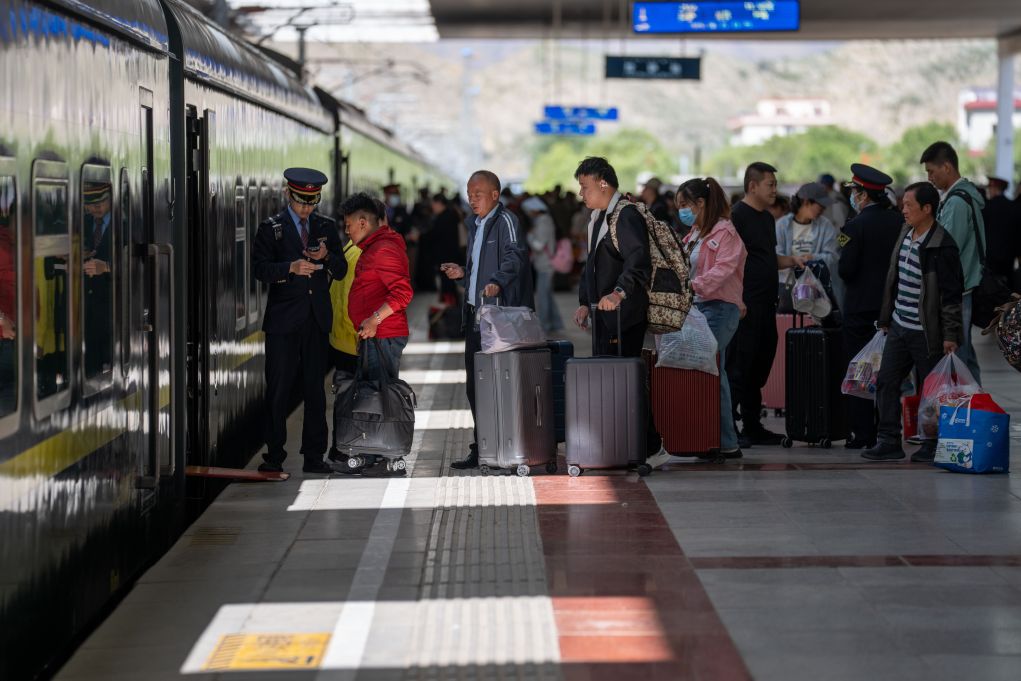
Some of the clearest signs of change can be observed from the train window -- in markets, freight yards and the routines of people who now depend on the railway.
Near Xining Railway Station, traders at a cordyceps sinensis market still bargain the way many in this trade do. Two hands are covered by a towel, fingers move underneath, and a price is then settled via gestures and glances.
But the old bargaining ritual now exists within a much faster trade. Ma Ke, a merchant who has worked in the market for more than 20 years, said he once had to drive for days into pastoral areas to collect valuable medicinal materials. Now, herders can arrive by train with their harvest, and packages shipped from the market can reach many parts of China the next day.
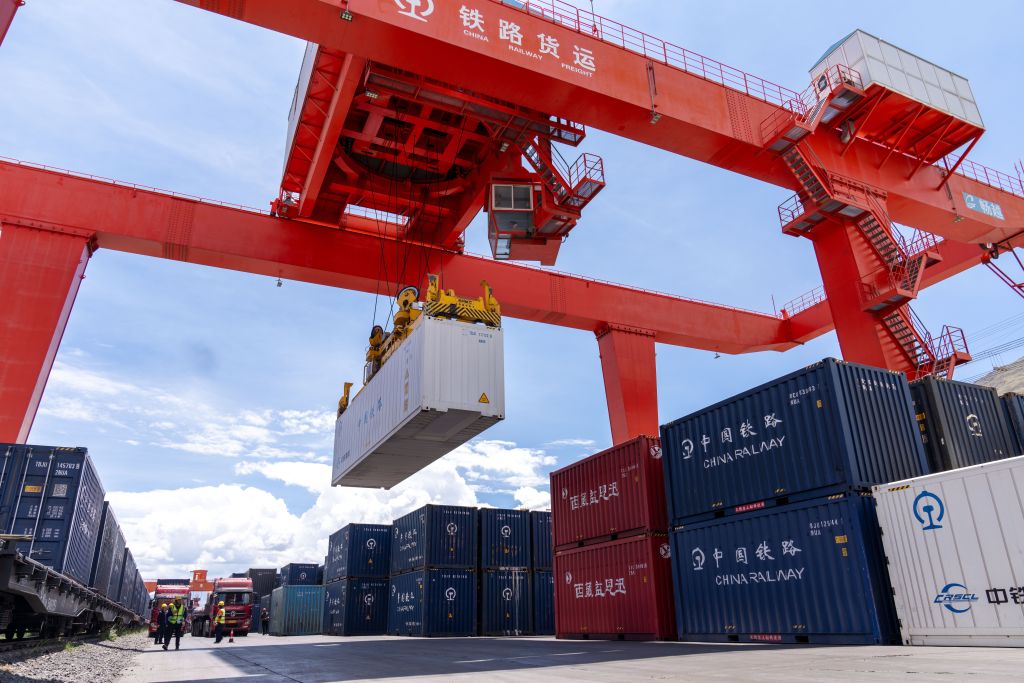
In Lhasa, the freight yard at Lhasa West Station has grown from a place once bordered by open land and dirt roads into a modern logistics park with 11 freight lines. Goods moving via the line are no longer limited to basic supplies such as fuel, steel and daily necessities. Today they include cars, home appliances, vegetables, fruit and other consumer products. Local specialties have also begun moving outward by rail, with apples from Nyingchi and Shannan exported to Nepal. By April 2026, the Qinghai-Xizang Railway had carried over 100 million tonnes of goods into and out of Xizang.
From the beginning, the railway also faced another challenge: how to cross the Qinghai-Xizang Plateau, a source region for several major Asian rivers and an ecological security barrier of global importance, without damaging one of the world's most pristine high-altitude environments.
In some sections, the tracks were lifted onto bridges, leaving space below for Tibetan antelopes and other animals to migrate. Along the line, 33 dedicated wildlife passages, stretching nearly 60 kilometers in total, were built to keep migration routes open. Workers also restored alpine meadows and planted green belts that now stretch for over 1,000 kilometers.
Sustained conservation efforts have brought the Tibetan antelope population in the autonomous region from a fragile 70,000 in the late 1990s to more than 300,000.
Hao Baojun, a railway worker who has spent 40 years on the line and taken more than 300,000 photographs of the route, remembers when wildlife was harder to see from the train.
"In the early years after the railway opened, it was difficult to photograph Tibetan antelopes or wild kiangs," he said. "Now, from the train, you can often see them running beside the railway."
(Video reporters: Lodro Gyatso, Tenzin Nyida and Huang Zhiqi; video editors: Yang Zeyi, Zhu Cong and Zhang Ning) ■