

BRUSSELS, June 29 (Xinhua) -- As Europe swelters under severe heatwaves, Chinese-made air conditioners are flying off the shelves, bringing consumers much-needed relief.
At a time when China-EU trade frictions are heating up, climbing temperatures and the growing popularity of Chinese products serve as a timely reminder that effectively cooling down China-EU trade tensions and managing differences via dialogue is in the interest of both sides.
While talks between the two sides continue, the EU has increasingly resorted to protectionist measures such as higher tariffs and import quotas under the pretext of "rebalancing," instead of addressing its own structural economic issues.
Europe's concerns over trade imbalances with China are often framed in stark figures. But trade figures alone cannot explain the full picture of a deeply integrated and mutually beneficial economic relationship.
A considerable share of China-EU trade is generated by European companies operating in China. While products manufactured by these firms are recorded as Chinese exports, much of the profit, technology dividends and shareholder value ultimately accrues to European businesses.
At the same time, nearly half of China's exports to Europe consist of intermediate goods, which are indispensable to European manufacturing. These inputs help European companies lower production costs, improve efficiency and maintain competitiveness in global markets.
Chinese products also play a stabilizing role in Europe's economy. Affordable imports have helped ease inflationary pressure in recent years, while supply chain inputs from China have supported industrial production in growing global uncertainty.
More importantly, Europe's competitiveness challenge is rooted primarily in the structural issues within the bloc. For example, the European Central Bank has estimated that internal EU barriers are equivalent to tariffs of around 44 percent on goods and 110 percent on services. These long-standing structural constraints cannot be resolved through tariffs or other restrictive measures targeting Chinese products.
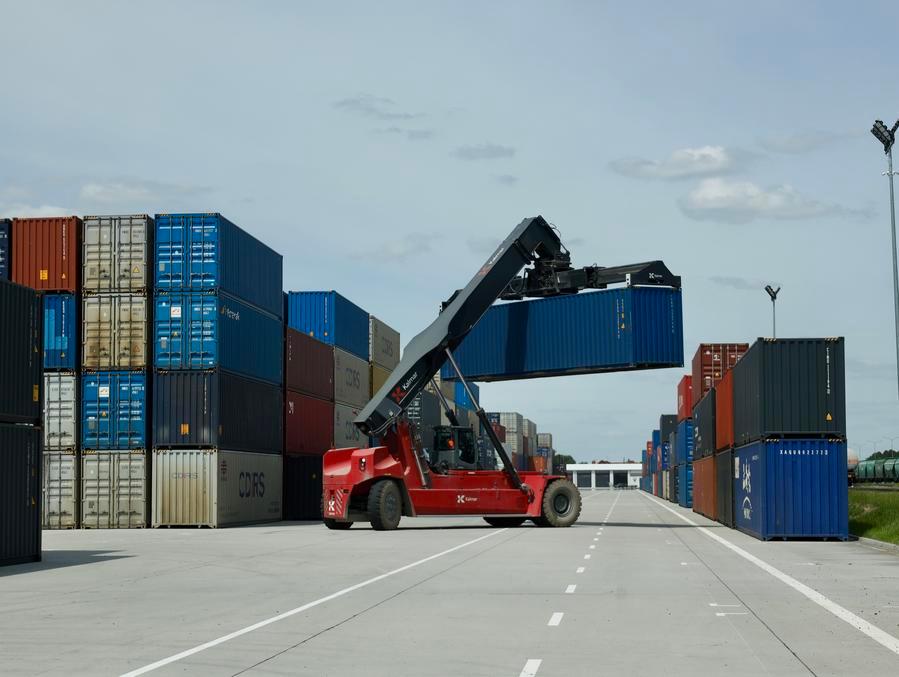
Restricting imports may change the composition of trade flows, but it cannot reduce energy prices, improve capital markets or strengthen productivity. In some cases, it risks increasing costs for manufacturers and consumers while weakening industrial efficiency.
China and Europe have long maintained structured dialogue mechanisms to manage economic differences. These platforms were designed precisely to address issues such as market access, investment conditions and sector-specific concerns. Both sides need to work in the same direction to translate these platforms into practical outcomes.
China has continued to take concrete steps in response to European concerns, including expanding imports from the EU, broadening access for European agricultural products, and strengthening export regulation and oversight in sensitive areas.
China has consistently advocated dialogue and consultation as the most effective way to manage differences. A more balanced China-EU economic relationship should be pursued through deepening cooperation and expanding mutual benefits, rather than politicizing economic issues or resorting to protectionism.
For Europe, the more fundamental task is how to strengthen its own capacity for innovation and promote growth in a more competitive global economy. Framing trade issues as a matter of economic security may offer short-term political expediency, but it does little to address the structural challenges facing European economies and will only disrupt global supply chains.
History has repeatedly proven that competitiveness is strengthened not via insulation, but engagement, innovation and openness. For China and Europe alike, expanding mutually beneficial cooperation remains the most reliable path toward a more stable, balanced and sustainable economic partnership. ■