
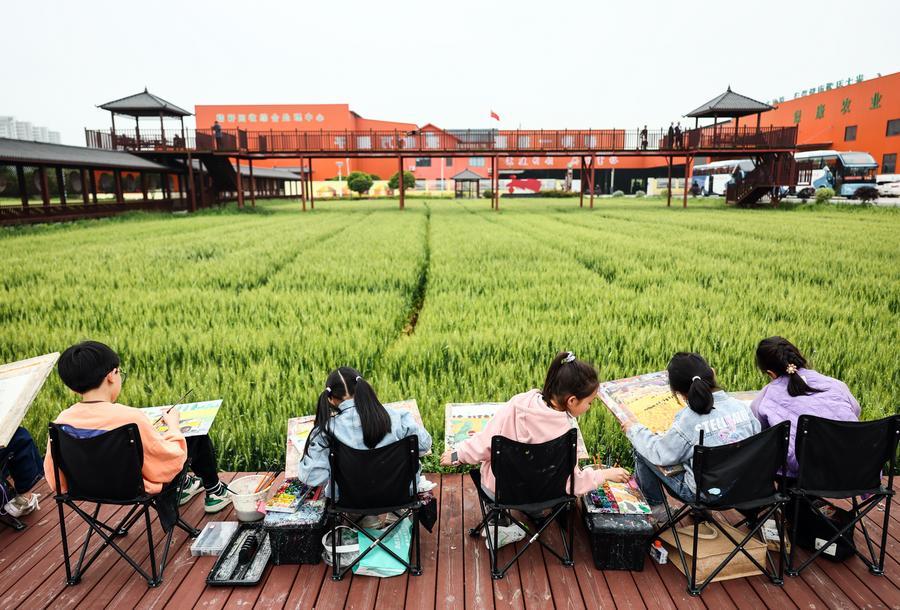
* Under the leadership of the Party, China's rural areas have undergone tremendous transformations, securing a sweeping victory in eliminating absolute poverty in 2020 before embarking on rural revitalization.
* China's rural revitalization unfolds through dedicated villagers, robust grassroots Party organizations, and the belief that the countryside will surely have an even brighter future.
by Xinhua writers Zheng Bofei, Wang Meiqi and Hu Liaoran
BEIJING, June 28 (Xinhua) -- In Miaojia Village, east China's Zhejiang Province, villagers rarely describe Lu Rongjie by his official title as chief of the local Communist Party of China (CPC) organization. Instead, they refer to him by the shoes on his feet.
The village Party chief is known locally as a "running-shoe cadre," a nod to his non-stop rounds and on-the-ground work style. During the day, when he's not in the office, he is usually out visiting the villagers.
"Villagers are the most straightforward. Their joys and worries are all written on their faces," Lu said. "So we must talk with them in person to spot their concerns and unresolved issues before they grow."
Lu's work style reflects a longstanding principle of the CPC: maintaining close ties with the people. This principle has shaped the Party's grassroots governance since its founding more than a century ago.
Under the leadership of the Party, China's rural areas have undergone tremendous transformations, securing a sweeping victory in eliminating absolute poverty in 2020 before embarking on rural revitalization.
None of these goals could be achieved without Party organizations in hundreds of thousands of administrative villages, said Huang Zuhui, an expert at China Academy for Rural Development of Zhejiang University, adding that they are the final link in turning blueprints like the five-year plans into reality.
A VILLAGE CANTEEN THAT BECAME COMMUNITY HUB
Village Party organizations are tasked with a wide range of affairs. After becoming Miaojia's Party secretary, Lu led the whole village to improve its environment, develop flower fields, build public spaces and explore new rural business opportunities. Yet he said rural revitalization cannot be judged by scenery, industries or revenue alone -- it must improve the daily lives of residents ultimately.
One problem kept appearing during his visits: elderly care.
Most elderly villagers chose to remain in Miaojia, but their working children could not regularly prepare daily meals. Seniors aged 60 and over make up nearly a third of the village, making convenient, affordable local dining a vital need.
Lu and the village Party organization began to look for a solution inside the village. In May 2024, the Miaojia Village canteen opened. The renovated building brought together a dining hall, a tea house, a rural auditorium stage and leisure spaces. Villagers can have meals, drink tea, watch performances, play chess and spend time with neighbors there.
The village allocated more than 200,000 yuan (about 29,000 U.S. dollars) each year to subsidize meals for elderly people. Residents aged 70 and above can enjoy discounted meals, while those aged 90 and above can eat for free.
At the canteen's launch, 99-year-old resident Zhou Yinfang was among the first to eat there, praising the meal repeatedly. For Lu, that moment showed why the canteen mattered.
Beyond solving the daily dining difficulties of elderly villagers, the canteen helped complete the village's broader five-minute service network. Miaojia has rolled out a string of amenities, such as a supermarket, childcare facility, and cultural plaza.
The canteen also created a small local economic cycle. Run by the village collective, it employs local residents and sources ingredients from the village's shared-prosperity supermarket. The single public service facility thus delivers multiple gains: elder care support, local jobs, and revenue for the village collective.
RURAL ENTREPRENEURSHIP SUPPORT
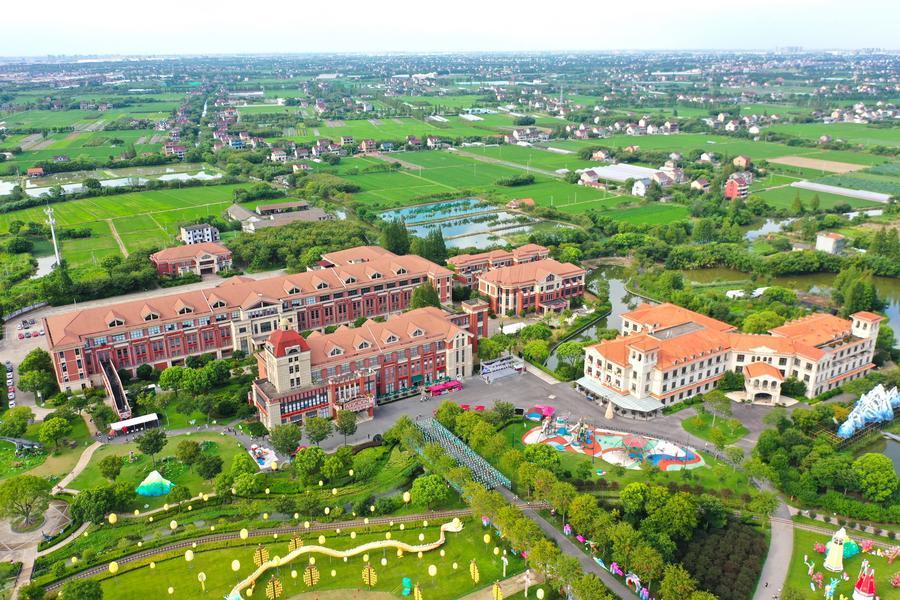
In another village of Zhejiang, the story of rural revitalization began with rural space waiting to be rediscovered.
Lizu Village was once known locally as Shuiniujiao, meaning water buffalo horn, a name that reflected its old and remote image. It used to have limited industries, few visitors and little appeal for young people.
Today, Lizu has become known as a cultural and creative village, attracting entrepreneurs, designers, shop owners and youngsters who want to test new ideas in the countryside.
Behind these changes is a daily service system supported by village-level Party organizations and local operators. Local authorities renovate vacant homes, upgrade public areas, recruit entrepreneurs, match business demands with village resources, and back individual stores to join a unified village brand.
An open area in Lizu that used to be idle land was reshaped into an aesthetic farm with lawns, tents, outdoor weddings and camping activities, while a local pond once muddied and used by villagers to wash produce and clothes has undergone full restoration into an ecological scenic spot, with a dedicated eco-friendly laundry facility built nearby.
Bao Liping was one of those who came to Lizu to find business opportunities. At first, Bao was not sure whether her clothes shop would work, as the village was not a traditional commercial district and rural entrepreneurship could be unpredictable. However, the village environment combined with local support gave her a reason to try.
"A clean and attractive village is only the starting point. We want to continuously bring tangible and measurable gains for villagers," said Fang Haolong, Party secretary of Lizu.

CONNECTING FARMERS WITH TECHNOLOGY, MARKETS
Similar stories are unfolding elsewhere across China. In Meixian County of northwest China's Shaanxi Province, kiwi fruit cultivation has evolved into a full industrial chain connecting Party organizations, technical support, cooperatives, processors, and markets.
In the county, more than 2,600 Party-member technicians are working out in the fields to make the farming of this fruit easier for farmers.
With their assistance, fruit grower Zhao Junrong in Tianjiazhai Village can now check his orchard from home via a mobile phone application. On the screen, temperature, humidity and light conditions are all displayed in real time.
"In the past, farming depended on the weather. Now we look at the mobile phone app," Zhao said. "When to water and when to fertilize, the system understands better than people."
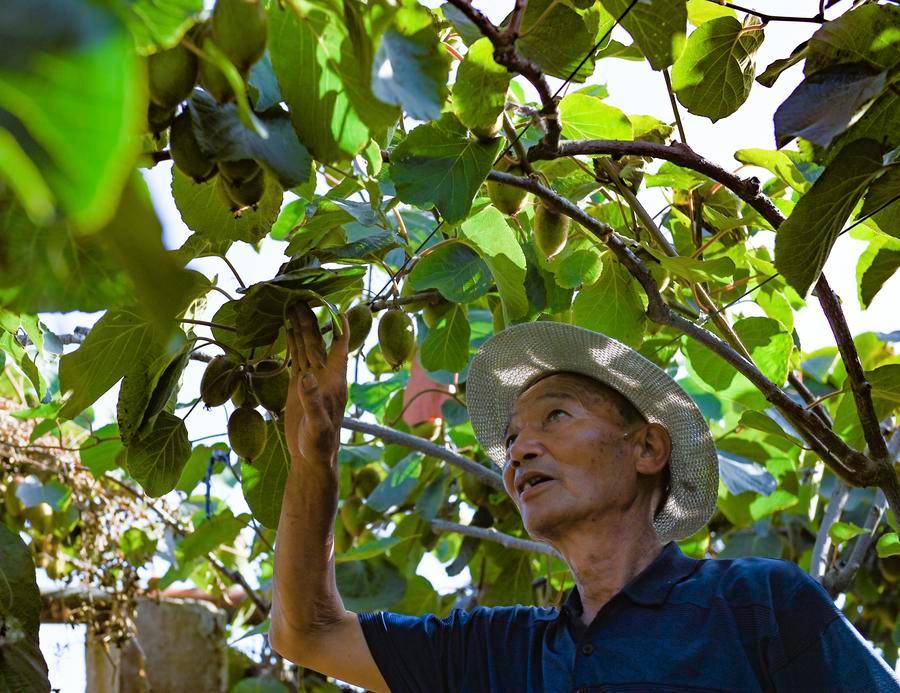
Wang Fang, a fruit grower in Zaolin Village, echoed this sentiment. "Previously, when I planted by myself, I worried about technology and sales," Wang said. "Now the cooperative handles all management and sales collectively. I only need to focus on farming."
In recent years, Meixian County has also introduced processing enterprises to boost the villagers' income from the fruit. Last year, a total of 18,500 tonnes of fresh fruit and processed products were sold to markets as far as Southeast Asia and Russia, with sales reaching 154 million yuan.
From Miaojia's community canteen, to Lizu's entrepreneurship, and to Meixian's kiwi orchards, China's rural revitalization unfolds through dedicated villagers, robust grassroots Party organizations, and the belief that the countryside will surely have an even brighter future. ■