* Science and technology have empowered apple cultivation and deep processing in Aksu Prefecture, northwest China's Xinjiang Uygur Autonomous Region.
* Zhejiang Province in east China has partnered with Aksu to support its local growth, striving to promote Aksu's e-commerce sector to boost sales of apples and other local specialties.
* As Aksu apples find their way to more tables, they have become a cultural emblem of the region, forging deeper emotional bonds with people across the country.
URUMQI, June 25 (Xinhua) -- Winding through rows of neatly aligned apple trees, 61-year-old Du Minchao plucks ping-pong-sized baby apples with his nimble fingers. This thinning work is a key step that will largely determine the success of the harvest season, which stretches from mid-to-late October to early November.
"Less is more for producing quality fruit," said the veteran grower, who runs a local farmers' cooperative in Aksu Prefecture, northwest China's Xinjiang Uygur Autonomous Region, explaining that the cooperative caps tree density and fruit load to ensure the apples meet premium-grade standards.
This is part of Du's precision management plan, which covers measures from installing anti-hailing nets to adopting fertigation systems, all intended to produce the best apples.
Du's efforts have paid off. In 2025, more than 90 percent of the harvest in the cooperative was rated premium quality and therefore fetched around 20 percent higher average prices than those from orchards without adopting his management plan.
This cooperative offers a glimpse into Aksu's blooming apple industry. Renowned for its tasty apples, Aksu is now home to over 500,000 mu (over 33,000 hectares) of apple orchards, supports 120,000 people engaged in the apple industry, and boasts an apple industrial chain worth over 5 billion yuan (about 733 million U.S. dollars).
Along with these remarkable figures comes the area's ongoing drive to upgrade the entire industry and enable the fruit to deliver greater value for people's well-being amid cross-regional cooperation.
TECHNOLOGICAL EMPOWERMENT
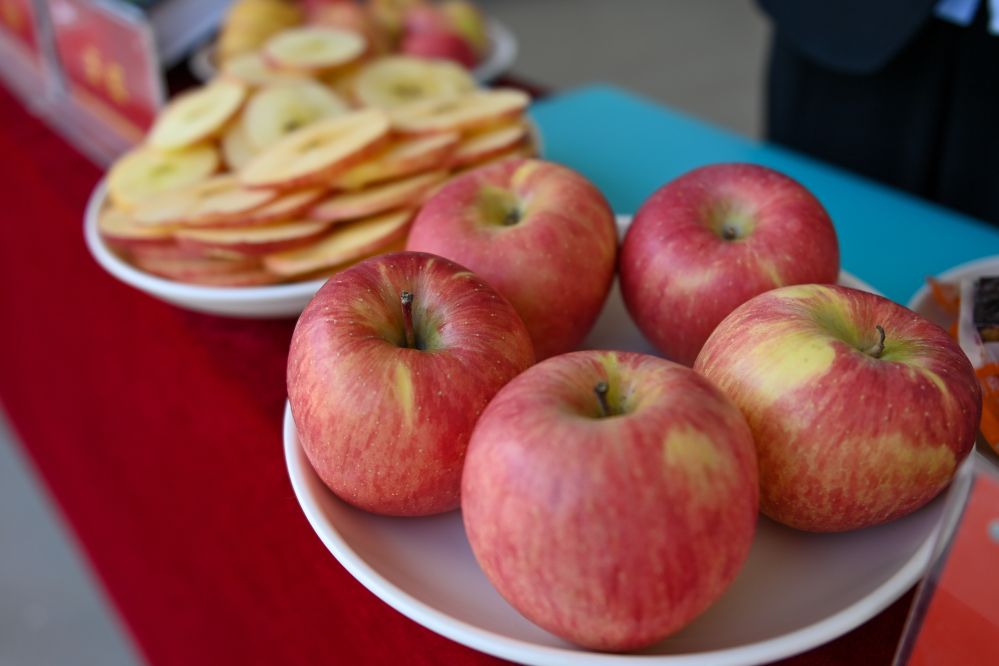
Aksu boasts ideal apple-growing conditions such as a dry temperate continental climate and long sunshine hours, which have earned its fruit a highly sought-after reputation across both domestic and global markets.
Advanced technology and management practices are also essential to the sustainable development of the apple industry, according to Li Jia, deputy general manager of Xinjiang Hongqipo Agriculture and Husbandry Investment and Development Group Co., Ltd.
In 2025, Li's company began upgrading its existing orchards and establishing new ones featuring more advanced management systems. Notably, with the introduction of AI technology and big data, the company has been developing a "digital map" that records detailed plot data and growers' measures, using database modeling to correlate agricultural practices with apple yield and quality, and identify optimized standards for apple growers.
"Farmers have long relied on experience in apple cultivation, but now we are trying to enable them to make data-driven production decisions," Li said, adding that the map currently covers 195,000 mu of planting areas.
Beyond empowering apple cultivation, science and technology have also extended their impact to the deep processing of apples, adding value to the final products.
Last year, an institute and a laboratory for apple research were founded at Xinjiang Institute of Technology (XIT), focusing on removing quality bottlenecks impacting apple-related products, including freeze-dried fruit, functional foods, and not-from-concentrate (NFC) apple juice.
"Traditional high-temperature sterilization compromises the nutrition and the flavor of apple juice," said Bao Junpeng, an XIT expert. "That's why we've turned to high pressure processing (HPP)."
Currently, Bao's team has collaborated with local businesses to build a production line of juice using HPP technology, with the product expected to hit the market soon.
"Scientific research shouldn't stay confined to papers," said Bao. "It should be translated into productivity that brings tangible benefits to farmers and enterprises."
SPREADING AROMA FURTHER
The technological upgrade in Aksu's apple industry can be partly attributed to financial, technological and talent support from Zhejiang Province in east China.
China has long implemented a pairing assistance program for Xinjiang, leveraging the strengths of more developed areas to accelerate the autonomous region's development. Under this framework, Zhejiang has partnered with Aksu to support its local growth, with total investments reaching nearly 1.4 billion yuan over the past three years.
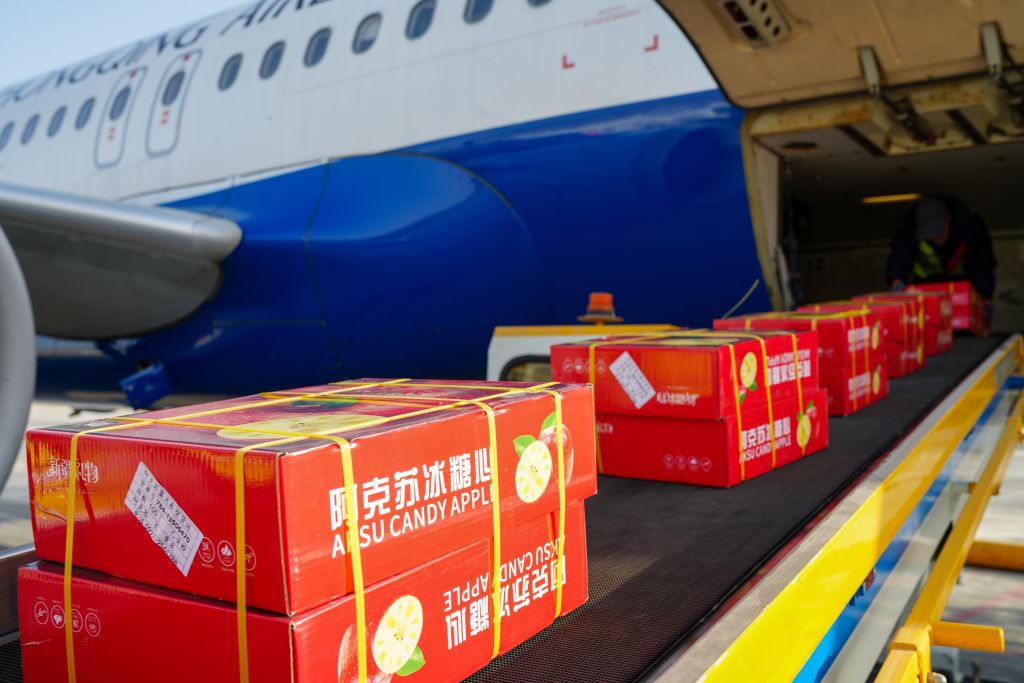
Beyond channeling external resources into the area, Zhejiang has been committed to enhancing Aksu's capacity for self-sustained growth. One example is its efforts in promoting Aksu's e-commerce sector to boost sales of apples and other local specialties.
Zhejiang allocated 40 million yuan to support the establishment of an e-commerce startup incubation center in Aksu, and continues to provide an annual contribution of 5 million to 6 million yuan for its operation. Since its opening in 2019, the center has created opportunities for local entrepreneurs to carve out new career paths.
Wang Jinggai, head of both a farmers' cooperative and an e-commerce company, is among the beneficiaries. "The center has provided resident companies like mine with support policies, such as three years of rent-free office space and free access to livestreaming facilities," she said.
In addition, Wang received free training in e-commerce skills in Hangzhou, Zhejiang's capital, where e-commerce giant Alibaba is headquartered. "About half of our sales now are through online channels, and our products are especially popular in the markets of Beijing and China's northeastern provinces," she told Xinhua.
The e-commerce boom has been attracting more young people to the industry. Aybulak Mutallip, a student at Aksu Vocational and Technical College, works part-time as a livestream host.
"As an e-commerce major, I hope to leverage my expertise to expand the reach of Aksu apples and other products, enabling more people to understand my beloved hometown," she said.
"Our next step is to help local businesses use AI to promote their products more effectively and make cross-border e-commerce a new growth driver," said Teng Junfei, a Hangzhou official currently working in Aksu as part of the cross-regional support program.
BEYOND THE FRUIT
As Aksu apples find their way to more tables, they have become a cultural emblem of the region, forging deeper emotional bonds with people across the country.
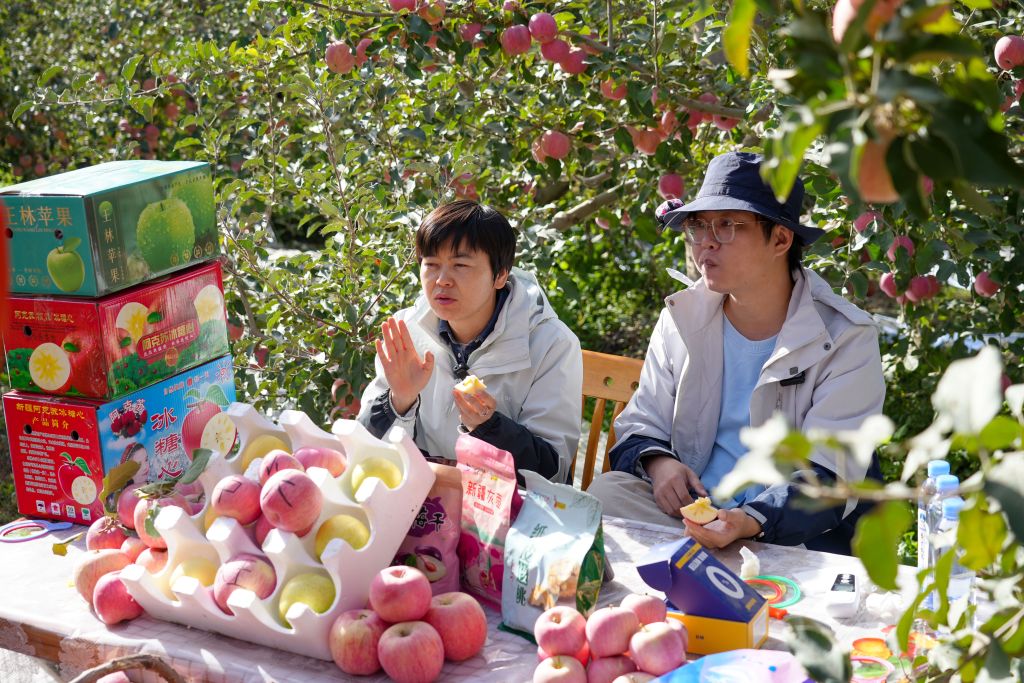
In Du's orchards, 86 trees have been "adopted" by individuals or organizations as part of a Zhejiang-backed program called "I have a tree in Aksu," which helps to improve the local environment and benefit rural residents.
This program allows participants to sponsor an apple tree and follow its journey from bloom to harvest, while enjoying virtual care activities like watering and weeding via online games and tracking the tree's growth in real time.
"In autumn, the adopters can receive their exclusive share of apples," Du said. "Many even choose to visit the orchard and pick their harvest in person, which helps boost tourism in the area."
Du noted that the adoption fees alone had earned more than 340,000 yuan for the cooperative. With increasingly diversified income sources, the cooperative posted a total output value of 8.64 million yuan in 2025 and created jobs for over 20,000 people every year.
This illustrates how apples can open a gateway for rural tourism. In recent years, Aksu has rolled out more than 20 themed travel routes, weaving its scenic landscapes, bustling markets and produce-picking sites together to enrich the experience of a growing number of visitors.
In late 2025, the region introduced a series of measures to promote the high-quality development of its apple industry, with a focus on closer integration with tourism, ethnic culture, historic resources and wellness sectors.
(Video reporters: Su Chuanyi, Wang Tuo, Ji Yifeng, Almas Ablikim; video editors: Zhang Nan, Luo Hui, Wang Han) ■