
BEIJING, June 19 (Xinhua) -- As the rhythmic clang of metal on metal echoed through a jewelry studio in Beijing's trendy Sanlitun district, a young couple was intently engraving star signs, special dates and heart shapes onto their rings.
Their focused expressions and shared laughter spoke to something larger: a growing consumer appetite for hands-on experiences is reshaping how young Chinese spend their time and money.
"Making it yourself is more meaningful than just buying it," said Shi Yu, who was crafting the rings with her boyfriend. She has not only tried her hand at various popular crafts in offline studios, but also bought DIY kits online to make gifts for friends and family.
For this young woman, handicrafts convey a sense of "intimacy" that store-bought items often lack, a distinction that transforms simple objects into treasured keepsakes.
Her feelings are shared by many. The craft and handmade industry, prized for its emotional resonance, is rapidly gaining traction among young people across China, driving a boom in consumption.
In 2025, service consumption accounted for 46.1 percent of per capita consumption expenditure of urban and rural residents. The market for experience-based consumption had exceeded 18 trillion yuan (about 2.6 trillion U.S. dollars) by the end of November 2025, a 22.6-percent jump from the previous year. It is projected that the figure will top 22 trillion yuan in 2026.
This signals a deeper shift in China's consumption landscape, as buyers move from purchasing products to purchasing experiences, and from fulfilling basic needs to pursuing emotional resonance and a more meaningful life.
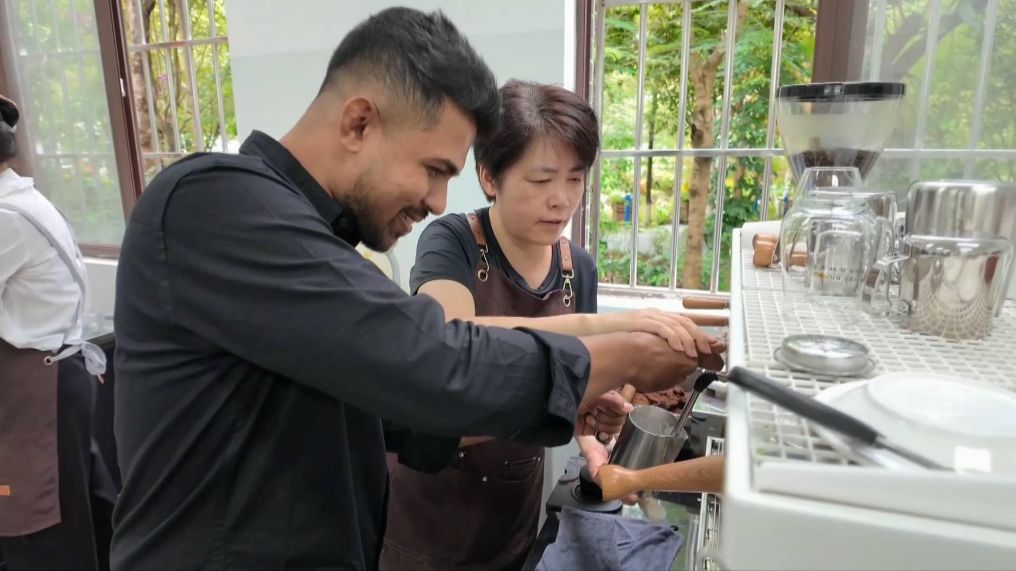
On weekends, many hands-on studios in China are packed. Families, couples and groups of friends gather for hours of immersive creation, putting down their phones and losing themselves in the simple joy of making something with their own hands. For some consumers, this is precisely the point -- a deliberate pause in fast-paced lives and a chance to slow down.
"Rather than spending my time on fragmented bits and pieces, I'd rather put it into something handmade and end up with a finished piece to show for it," Shi said.
Notably, for Chinese youth, these hands-on experiences are more than just a novelty. They can also serve as a journey of cultural discovery.
At another studio in Beijing, consumers practicing traditional Chinese art forms, such as cloisonné, incense-making and seal carving, are reaching across time to connect with a living tradition.
"I had only heard of cloisonné before," said Zhang Wenxi, a participant. "During a hands-on session here, the instructor walked me through its history, techniques and standards, revealing the enduring appeal of this ancient art."
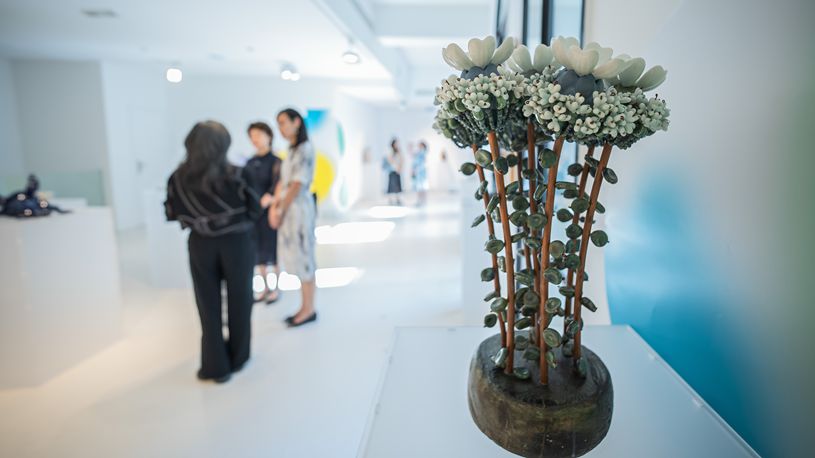
Beyond standalone studios and shops, museums in China have also embraced the trend, offering visitors experiences in intangible heritage handicrafts.
The Chinese Traditional Culture Museum, for example, has introduced 15 permanent programs covering various cultural practices, including jade carving, paper cutting, bamboo weaving and lacquerware inlaying. During festivals and holidays, it also rolls out special activities, all of which are hugely popular with visitors.
On Douyin, the Chinese version of TikTok, the hashtag "DIY handicrafts" has generated over 350 billion views across more than 20 million posts. For many, following these video tutorials is more than a pastime, as it also opens doors to self-employment.
In 2025, a total of 6,955 handcraft-related businesses were registered in China, up more than 31 percent year on year, according to industry data.
Hong Tao, head of the Institute of Commercial Economics at Beijing Technology and Business University, described the sector as a low-barrier, highly flexible field that offers a wealth of income opportunities for self-employed individuals and small businesses.
Earlier this year, China's central government issued a work plan to cultivate new growth drivers in service consumption, explicitly supporting the creation of immersive, experience-based consumption scenarios. Similar policies have also been included in the country's 15th Five-Year Plan, which runs through 2030.
"These policy measures have fostered a favorable environment for the experience economy," said Wang Nian, a researcher at the Development Research Center of the State Council, adding that they will enable many small but well-designed, fully functioning market-driven projects to gain the space and resources they need, giving rise to more new experiences.
To ensure the craft and handmade industry fully benefits, Hong, the university professor, suggested strengthening after-sales service guarantees for customized goods, introducing an artisan certification system, establishing industry service standards, and providing easier copyright registration for original designs.
"This is how the sector can evolve into a sustainable business that truly lasts," he said. ■