
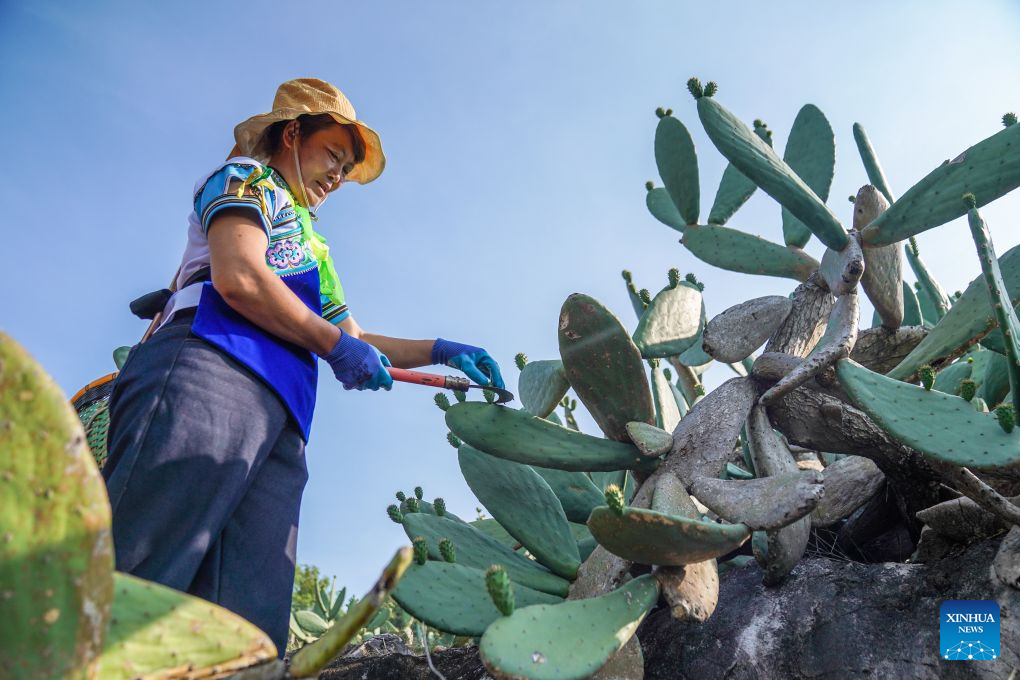
A villager harvests prickly pears in Zhuangzitian Village of Wenshan City, southwest China's Yunnan Province, May 15, 2026. Once a village with little industry and few means of livelihood, Zhuangzitian in southwest China's Yunnan Province has blossomed into the country's major hub of cactus cultivation.
In the past, rocky desertification from the karst landscape left 80 percent of the village's land barren, driving most young people to seek work elsewhere. Yet on the white rocky hills, cacti have thrived for more than 200 years, growing with remarkable resilience.
The cactus's ability to thrive in poor soil and withstand drought makes it a natural savior for the rocky, desertified mountains. Its thick leaves are packed with dietary fiber, minerals and vitamins, finding wide use in food and beverages, medicine, and cosmetics.
The village head of Zhuangzitian recognized the market potential of cacti and led villagers in cultivating cacti in 2019.
By the end of 2025, the local cactus planting area had expanded to over 5,000 mu (about 333.33 hectares), with the vegetation coverage rate rising to 75 percent.
Diverse cactus-related businesses such as deep processing, catering, and cultural tourism have been developed in the village. (Xinhua/Peng Yikai)
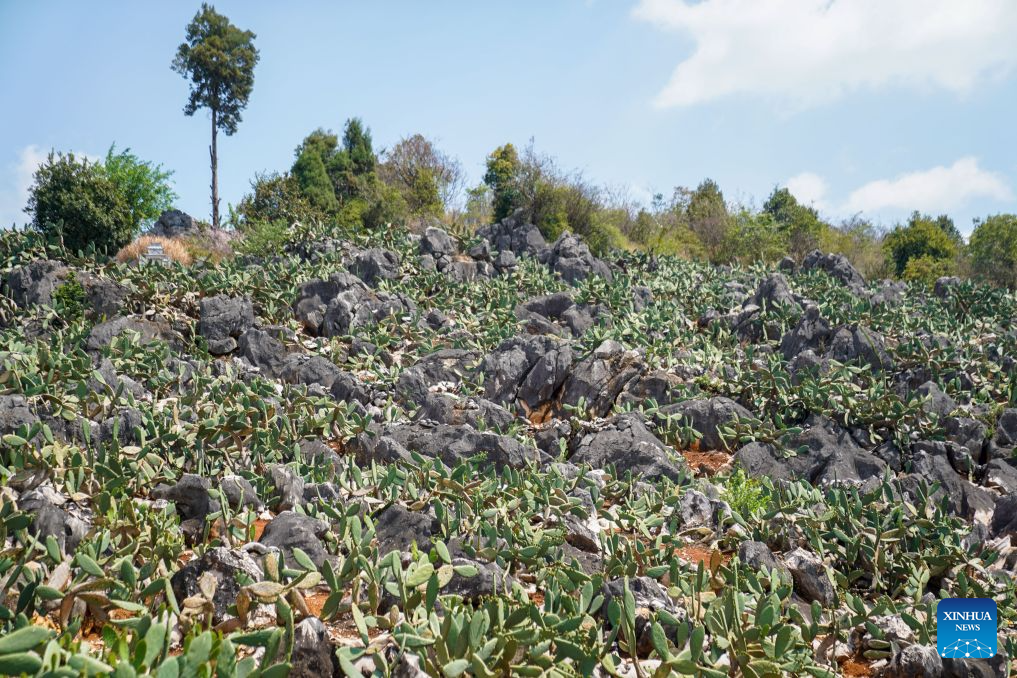
This photo taken on May 15, 2026 shows cacti in Zhuangzitian Village of Wenshan City, southwest China's Yunnan Province. Once a village with little industry and few means of livelihood, Zhuangzitian in southwest China's Yunnan Province has blossomed into the country's major hub of cactus cultivation.
In the past, rocky desertification from the karst landscape left 80 percent of the village's land barren, driving most young people to seek work elsewhere. Yet on the white rocky hills, cacti have thrived for more than 200 years, growing with remarkable resilience.
The cactus's ability to thrive in poor soil and withstand drought makes it a natural savior for the rocky, desertified mountains. Its thick leaves are packed with dietary fiber, minerals and vitamins, finding wide use in food and beverages, medicine, and cosmetics.
The village head of Zhuangzitian recognized the market potential of cacti and led villagers in cultivating cacti in 2019.
By the end of 2025, the local cactus planting area had expanded to over 5,000 mu (about 333.33 hectares), with the vegetation coverage rate rising to 75 percent.
Diverse cactus-related businesses such as deep processing, catering, and cultural tourism have been developed in the village. (Xinhua/Peng Yikai)
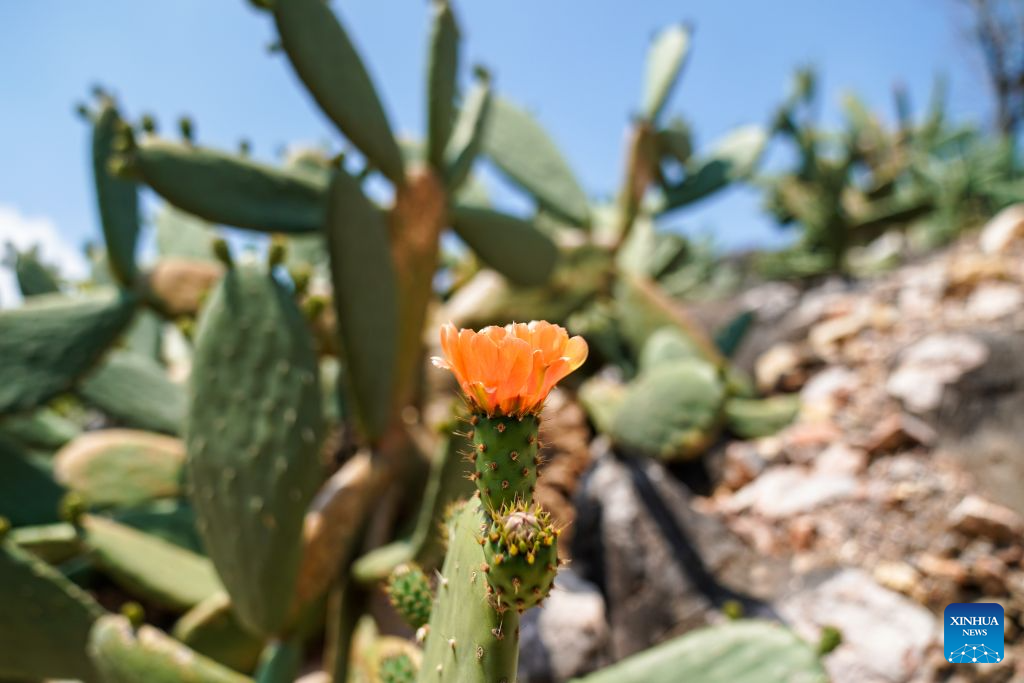
This photo taken on May 15, 2026 shows a prickly pear flower in Zhuangzitian Village of Wenshan City, southwest China's Yunnan Province. Once a village with little industry and few means of livelihood, Zhuangzitian in southwest China's Yunnan Province has blossomed into the country's major hub of cactus cultivation.
In the past, rocky desertification from the karst landscape left 80 percent of the village's land barren, driving most young people to seek work elsewhere. Yet on the white rocky hills, cacti have thrived for more than 200 years, growing with remarkable resilience.
The cactus's ability to thrive in poor soil and withstand drought makes it a natural savior for the rocky, desertified mountains. Its thick leaves are packed with dietary fiber, minerals and vitamins, finding wide use in food and beverages, medicine, and cosmetics.
The village head of Zhuangzitian recognized the market potential of cacti and led villagers in cultivating cacti in 2019.
By the end of 2025, the local cactus planting area had expanded to over 5,000 mu (about 333.33 hectares), with the vegetation coverage rate rising to 75 percent.
Diverse cactus-related businesses such as deep processing, catering, and cultural tourism have been developed in the village. (Xinhua/Peng Yikai)
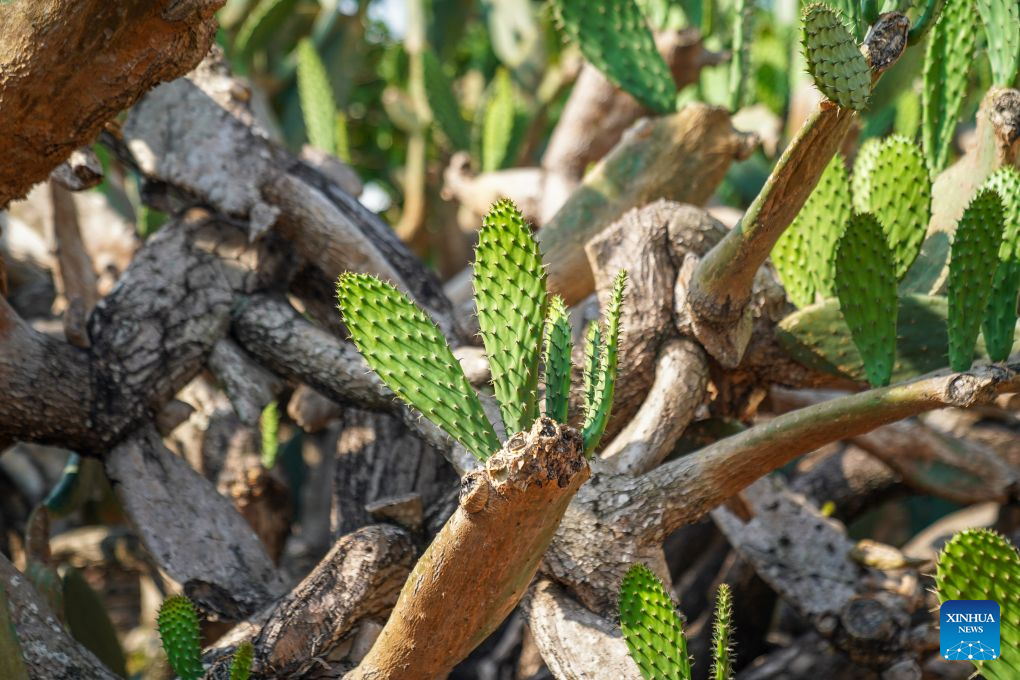
This photo taken on May 15, 2026 shows cacti in Zhuangzitian Village of Wenshan City, southwest China's Yunnan Province. Once a village with little industry and few means of livelihood, Zhuangzitian in southwest China's Yunnan Province has blossomed into the country's major hub of cactus cultivation.
In the past, rocky desertification from the karst landscape left 80 percent of the village's land barren, driving most young people to seek work elsewhere. Yet on the white rocky hills, cacti have thrived for more than 200 years, growing with remarkable resilience.
The cactus's ability to thrive in poor soil and withstand drought makes it a natural savior for the rocky, desertified mountains. Its thick leaves are packed with dietary fiber, minerals and vitamins, finding wide use in food and beverages, medicine, and cosmetics.
The village head of Zhuangzitian recognized the market potential of cacti and led villagers in cultivating cacti in 2019.
By the end of 2025, the local cactus planting area had expanded to over 5,000 mu (about 333.33 hectares), with the vegetation coverage rate rising to 75 percent.
Diverse cactus-related businesses such as deep processing, catering, and cultural tourism have been developed in the village. (Xinhua/Peng Yikai)
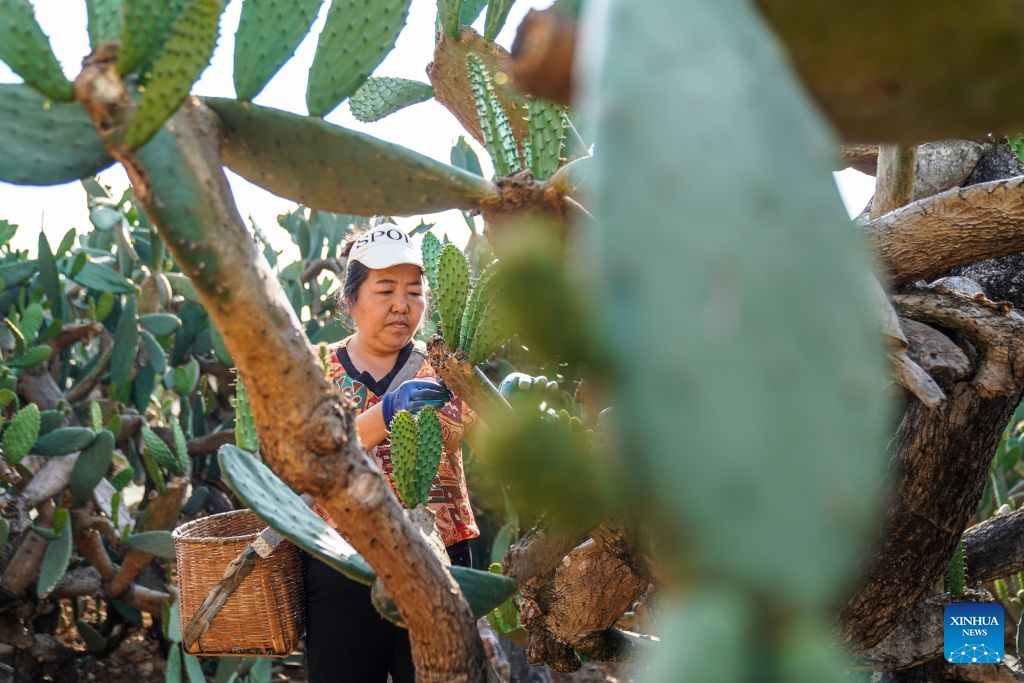
A villager checks the conditions of cacti in Zhuangzitian Village of Wenshan City, southwest China's Yunnan Province, May 15, 2026. Once a village with little industry and few means of livelihood, Zhuangzitian in southwest China's Yunnan Province has blossomed into the country's major hub of cactus cultivation.
In the past, rocky desertification from the karst landscape left 80 percent of the village's land barren, driving most young people to seek work elsewhere. Yet on the white rocky hills, cacti have thrived for more than 200 years, growing with remarkable resilience.
The cactus's ability to thrive in poor soil and withstand drought makes it a natural savior for the rocky, desertified mountains. Its thick leaves are packed with dietary fiber, minerals and vitamins, finding wide use in food and beverages, medicine, and cosmetics.
The village head of Zhuangzitian recognized the market potential of cacti and led villagers in cultivating cacti in 2019.
By the end of 2025, the local cactus planting area had expanded to over 5,000 mu (about 333.33 hectares), with the vegetation coverage rate rising to 75 percent.
Diverse cactus-related businesses such as deep processing, catering, and cultural tourism have been developed in the village. (Xinhua/Peng Yikai)

A staff member makes cactus dishes at a restaurant in Zhuangzitian Village of Wenshan City, southwest China's Yunnan Province, May 15, 2026. Once a village with little industry and few means of livelihood, Zhuangzitian in southwest China's Yunnan Province has blossomed into the country's major hub of cactus cultivation.
In the past, rocky desertification from the karst landscape left 80 percent of the village's land barren, driving most young people to seek work elsewhere. Yet on the white rocky hills, cacti have thrived for more than 200 years, growing with remarkable resilience.
The cactus's ability to thrive in poor soil and withstand drought makes it a natural savior for the rocky, desertified mountains. Its thick leaves are packed with dietary fiber, minerals and vitamins, finding wide use in food and beverages, medicine, and cosmetics.
The village head of Zhuangzitian recognized the market potential of cacti and led villagers in cultivating cacti in 2019.
By the end of 2025, the local cactus planting area had expanded to over 5,000 mu (about 333.33 hectares), with the vegetation coverage rate rising to 75 percent.
Diverse cactus-related businesses such as deep processing, catering, and cultural tourism have been developed in the village. (Xinhua/Peng Yikai)
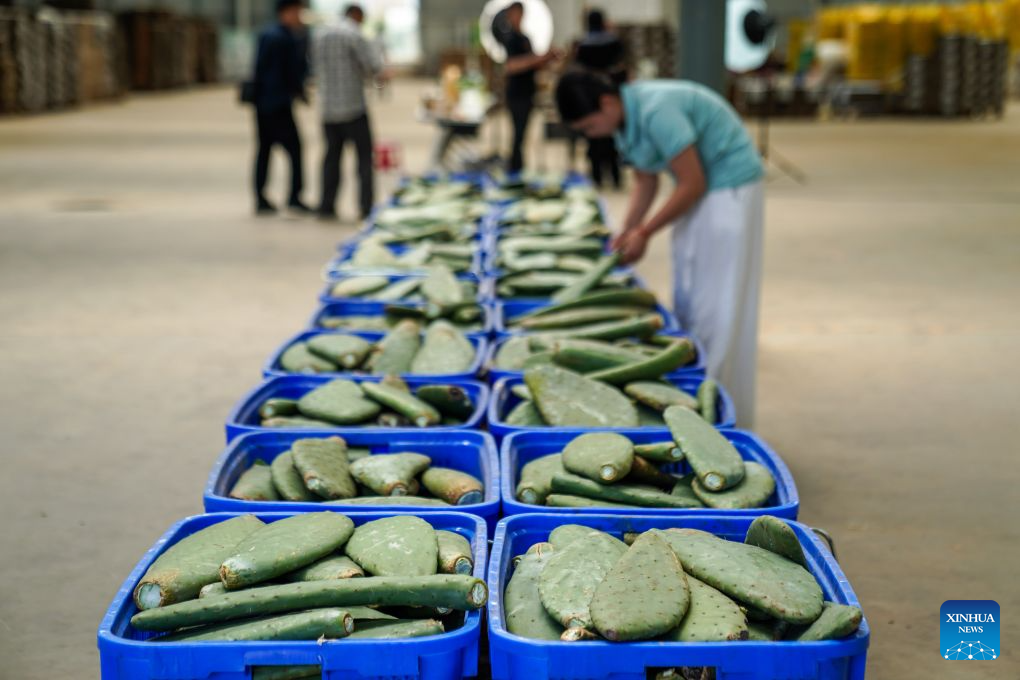
A worker sorts cacti at a processing factory in Zhuangzitian Village of Wenshan City, southwest China's Yunnan Province, May 15, 2026. Once a village with little industry and few means of livelihood, Zhuangzitian in southwest China's Yunnan Province has blossomed into the country's major hub of cactus cultivation.
In the past, rocky desertification from the karst landscape left 80 percent of the village's land barren, driving most young people to seek work elsewhere. Yet on the white rocky hills, cacti have thrived for more than 200 years, growing with remarkable resilience.
The cactus's ability to thrive in poor soil and withstand drought makes it a natural savior for the rocky, desertified mountains. Its thick leaves are packed with dietary fiber, minerals and vitamins, finding wide use in food and beverages, medicine, and cosmetics.
The village head of Zhuangzitian recognized the market potential of cacti and led villagers in cultivating cacti in 2019.
By the end of 2025, the local cactus planting area had expanded to over 5,000 mu (about 333.33 hectares), with the vegetation coverage rate rising to 75 percent.
Diverse cactus-related businesses such as deep processing, catering, and cultural tourism have been developed in the village. (Xinhua/Peng Yikai)

A live streamer promotes cactus products at a processing factory in Zhuangzitian Village of Wenshan City, southwest China's Yunnan Province, May 15, 2026. Once a village with little industry and few means of livelihood, Zhuangzitian in southwest China's Yunnan Province has blossomed into the country's major hub of cactus cultivation.
In the past, rocky desertification from the karst landscape left 80 percent of the village's land barren, driving most young people to seek work elsewhere. Yet on the white rocky hills, cacti have thrived for more than 200 years, growing with remarkable resilience.
The cactus's ability to thrive in poor soil and withstand drought makes it a natural savior for the rocky, desertified mountains. Its thick leaves are packed with dietary fiber, minerals and vitamins, finding wide use in food and beverages, medicine, and cosmetics.
The village head of Zhuangzitian recognized the market potential of cacti and led villagers in cultivating cacti in 2019.
By the end of 2025, the local cactus planting area had expanded to over 5,000 mu (about 333.33 hectares), with the vegetation coverage rate rising to 75 percent.
Diverse cactus-related businesses such as deep processing, catering, and cultural tourism have been developed in the village. (Xinhua/Peng Yikai)
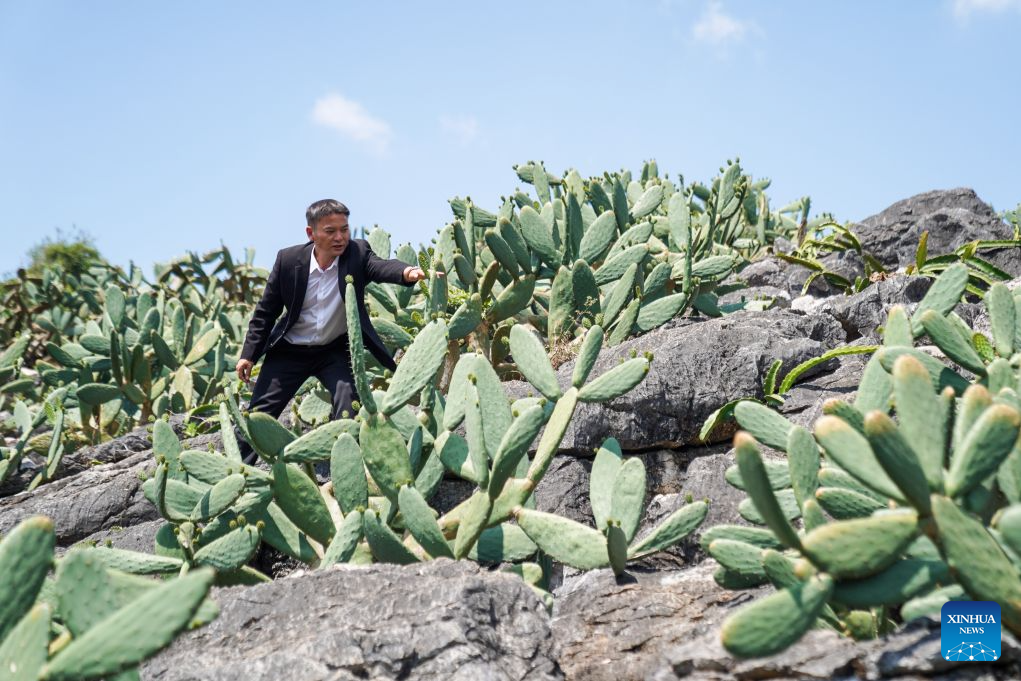
A village cadre checks the conditions of cacti in Zhuangzitian Village of Wenshan City, southwest China's Yunnan Province, May 15, 2026. Once a village with little industry and few means of livelihood, Zhuangzitian in southwest China's Yunnan Province has blossomed into the country's major hub of cactus cultivation.
In the past, rocky desertification from the karst landscape left 80 percent of the village's land barren, driving most young people to seek work elsewhere. Yet on the white rocky hills, cacti have thrived for more than 200 years, growing with remarkable resilience.
The cactus's ability to thrive in poor soil and withstand drought makes it a natural savior for the rocky, desertified mountains. Its thick leaves are packed with dietary fiber, minerals and vitamins, finding wide use in food and beverages, medicine, and cosmetics.
The village head of Zhuangzitian recognized the market potential of cacti and led villagers in cultivating cacti in 2019.
By the end of 2025, the local cactus planting area had expanded to over 5,000 mu (about 333.33 hectares), with the vegetation coverage rate rising to 75 percent.
Diverse cactus-related businesses such as deep processing, catering, and cultural tourism have been developed in the village. (Xinhua/Peng Yikai)


