
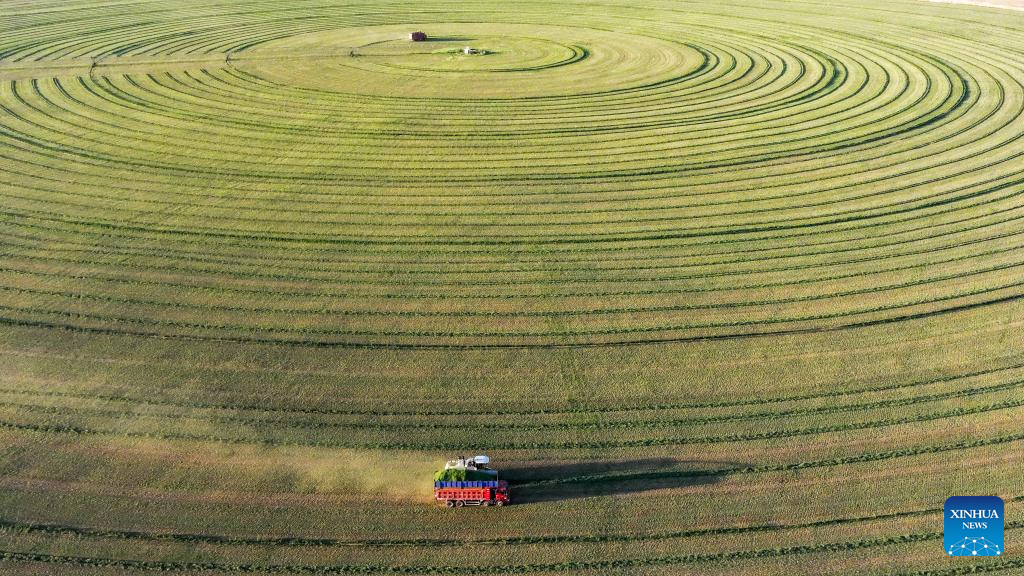
An aerial drone photo taken on May 31, 2026 shows a harvester and a truck at work in a forage field in Ar Horqin Banner, Chifeng, north China's Inner Mongolia Autonomous Region. In recent years, high-quality forage cultivation has helped curb grassland desertification in Ar Horqin Banner, which is now home to nearly 700,000 mu (about 46,667 hectares) of premium forage fields. (Photo by Li Fu/Xinhua)
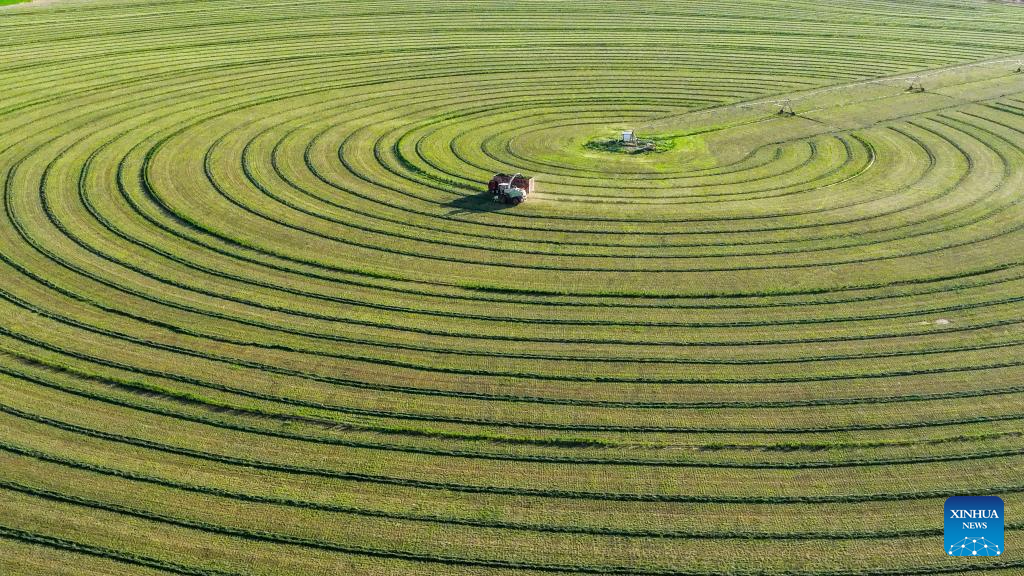
An aerial drone photo taken on May 31, 2026 shows a harvester and a truck at work in a forage field in Ar Horqin Banner, Chifeng, north China's Inner Mongolia Autonomous Region. In recent years, high-quality forage cultivation has helped curb grassland desertification in Ar Horqin Banner, which is now home to nearly 700,000 mu (about 46,667 hectares) of premium forage fields. (Photo by Li Fu/Xinhua)
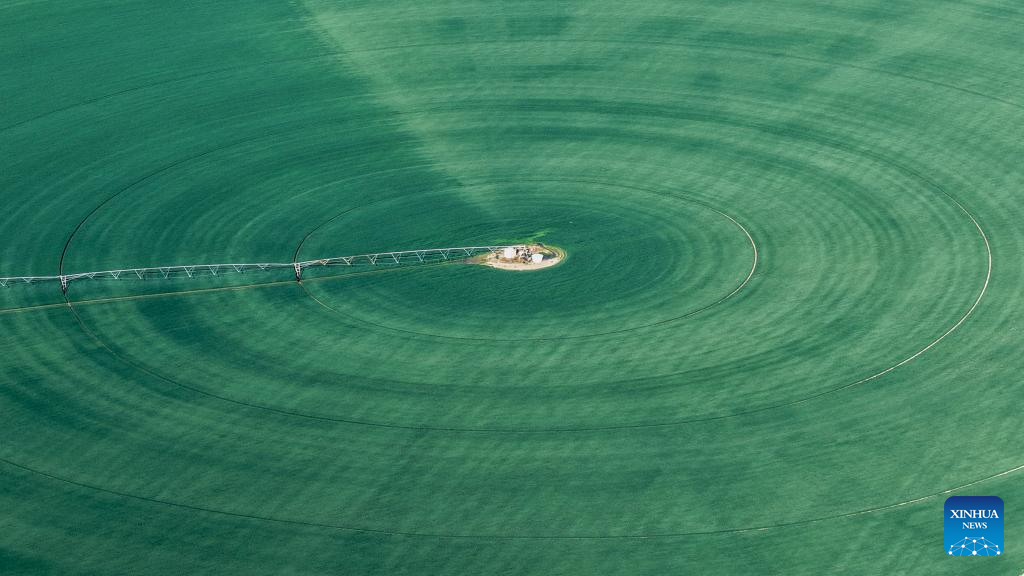
An aerial drone photo taken on May 31, 2026 shows a forage field in Ar Horqin Banner, Chifeng, north China's Inner Mongolia Autonomous Region. In recent years, high-quality forage cultivation has helped curb grassland desertification in Ar Horqin Banner, which is now home to nearly 700,000 mu (about 46,667 hectares) of premium forage fields. (Photo by Li Fu/Xinhua)
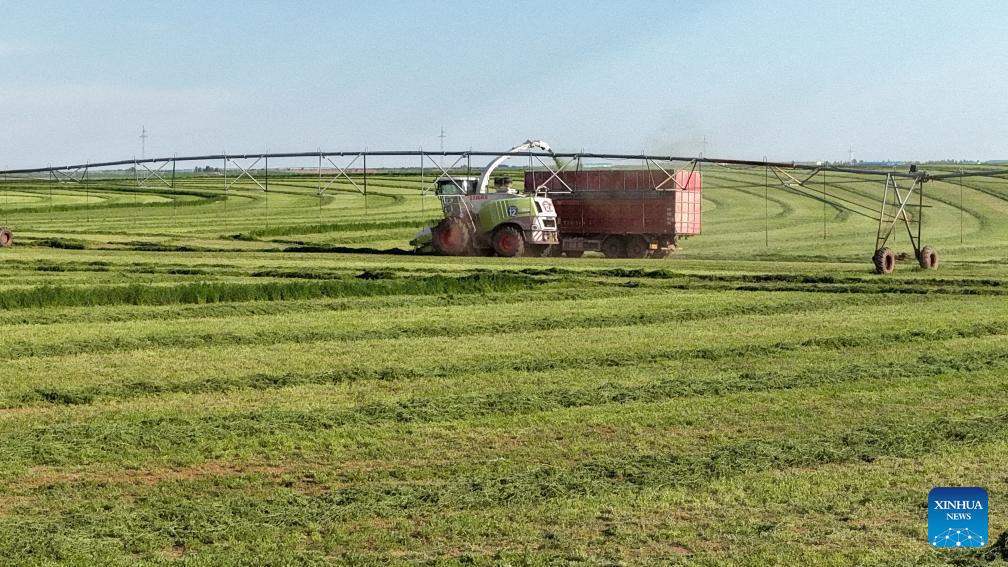
A forage harvester and a truck are at work in a field in Ar Horqin Banner, Chifeng, north China's Inner Mongolia Autonomous Region, May 31, 2026. In recent years, high-quality forage cultivation has helped curb grassland desertification in Ar Horqin Banner, which is now home to nearly 700,000 mu (about 46,667 hectares) of premium forage fields. (Photo by Li Fu/Xinhua)
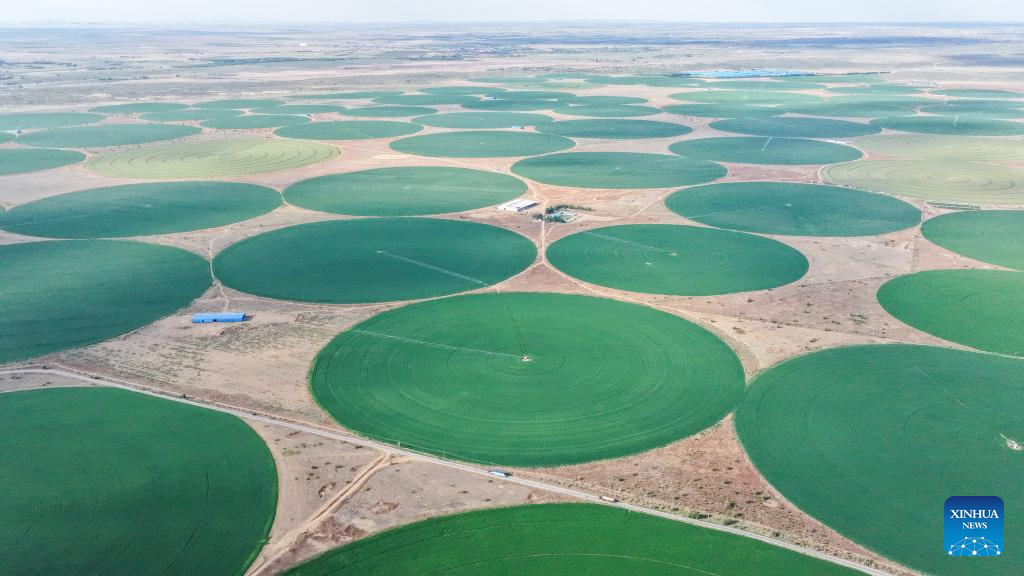
An aerial drone photo taken on May 31, 2026 shows forage fields in Ar Horqin Banner, Chifeng, north China's Inner Mongolia Autonomous Region. In recent years, high-quality forage cultivation has helped curb grassland desertification in Ar Horqin Banner, which is now home to nearly 700,000 mu (about 46,667 hectares) of premium forage fields. (Photo by Li Fu/Xinhua)


