
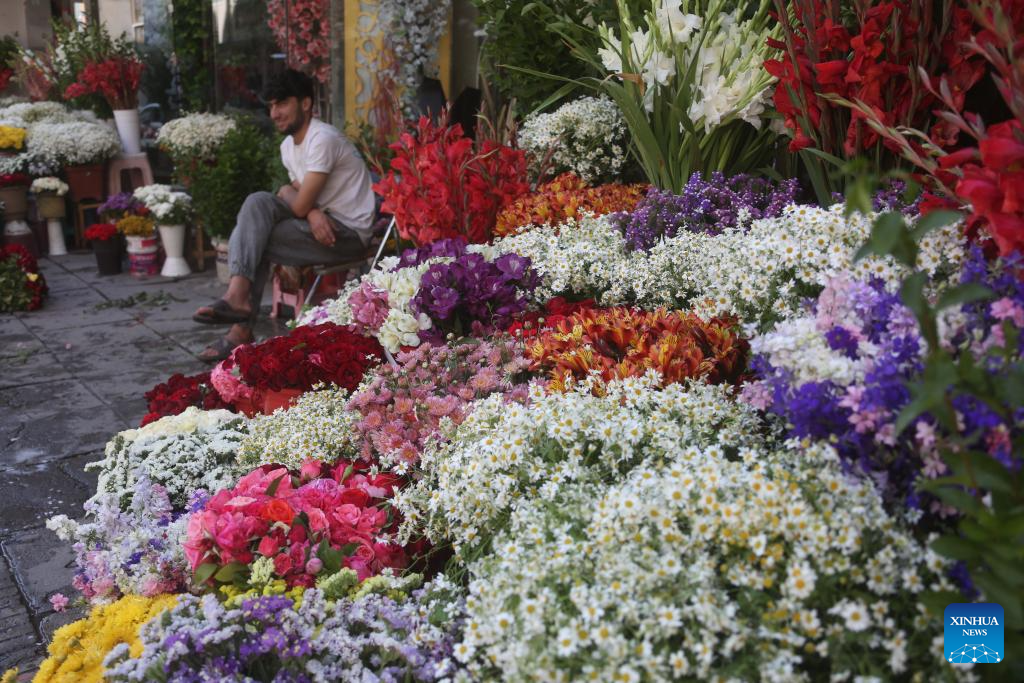
Fresh flowers are displayed at a flower market in Kabul, Afghanistan, June 14, 2026. Deeply woven into Afghanistan's cultural heritage, flowers symbolize beauty, peace, and renewal. As hot weather arrives, booming flower markets and exhibitions reflect Afghans' enduring love for nature and greenery.(Photo by Saifurahman Safi/Xinhua)
KABUL, June 14 (Xinhua) -- Deeply woven into Afghanistan's cultural heritage, flowers symbolize beauty, peace, and renewal. As hot weather arrives, booming flower markets and exhibitions reflect Afghans' enduring love for nature and greenery.
In a bustling flower market in Kabul, veteran florist Haji Mumtaz Hakimi meticulously arranges fresh roses, carnations and seasonal blossoms. Having spent nearly four decades in the flower business, he has witnessed generations of Afghans celebrate life's special moments with flowers.
"People have always loved flowers in Afghanistan," Hakimi said. "Whether it is a wedding, engagement, family gathering, or a visit to loved ones, flowers are part of our traditions."
For flower sellers, the warm and hot months bring the busiest period of the year. According to Hakimi, spring and summer offer the widest variety of locally grown flowers, while the colder seasons often require traders to import flowers from neighboring countries due to limited greenhouse facilities.
He believes investment in modern greenhouses could significantly strengthen domestic flower production and help preserve local varieties throughout the year.
"If standard greenhouses were available, we could provide fresh Afghan flowers in every season," he said. "People prefer locally grown flowers because they are fresher and often carry a special cultural value."
Flowers have occupied a special place in Afghan literature and poetry for generations. Roses, tulips, jasmine and other blossoms frequently appear in classical Persian and Pashto poetry as symbols of beauty, love, devotion and the fleeting nature of life. Floral imagery has inspired poets, artists and craftsmen throughout the country's history.
For Hakimi, flowers are not merely a source of income.
"When you spend your life among flowers, you feel calm and happy," he said. "Flowers bring beauty to homes and joy to people's hearts."
Afghanistan's relationship with flowers stretches back centuries. Situated along ancient trade routes, including the Silk Road, the country was historically known for its gardens, orchards and diverse plant life. Travelers and historians often depicted flourishing gardens in cities such as Kabul, Herat and Balkh, where flowers were cultivated not only for decoration but also for cultural and social gatherings.
The country's appreciation for flowers remains today. At a recent flower exhibition in Kabul, visitors walked among thousands of colorful flowers and ornamental plants displayed by local growers and vendors.
Among them was Fawad Ahmad Faizi, who believes flowers play an important role in improving people's well-being.
"In Afghanistan, more and more people are becoming interested in planting, preserving and protecting flowers every day," Faizi said.
A self-described admirer of roses, Faizi said he visited the exhibition both to enjoy the displays and to purchase flowers for his home. He also emphasized the importance of environmental awareness and the preservation of green spaces.
"People should pay greater attention to environmental protection and flower cultivation because greenery and flowers make countries more beautiful and attractive," he said.
Flower vendor Engineer Alaam Khan, another participant in the exhibition, said thousands of flowers were showcased to introduce visitors to different varieties and promote appreciation for Afghanistan's rich natural heritage.
"This exhibition has been organized for the public so that people can see and learn about different varieties of flowers," Khan said. "Thousands of flowers are on display here, and visitors come not only to enjoy their beauty but also to purchase them."
According to Khan, public interest in flower cultivation has grown in recent years, with more families decorating homes, courtyards and gardens with ornamental plants.
As flower markets continue to flourish and exhibitions attract growing interest, flowers remain far more than decorative plants in Afghanistan. They represent resilience, beauty and hope, connecting modern generations with centuries of cultural traditions.
The influence of flowers extends beyond gardens and markets into Afghanistan's rich tradition of carpet weaving. Floral patterns have long been among the most popular designs in Afghan carpets, particularly decorative wall carpets that adorn homes across the country.
Mohammad, a carpet designer, said floral patterns have remained among the most sought-after designs in Afghanistan's carpet industry, particularly in decorative wall carpets. According to him, designers frequently incorporate images of roses and other flowers into their work because customers are drawn to the beauty and elegance of floral motifs.
He noted that the popularity of flower-inspired carpets reflects Afghans' long-standing appreciation for nature and the important role flowers play in the country's artistic and cultural traditions. ■
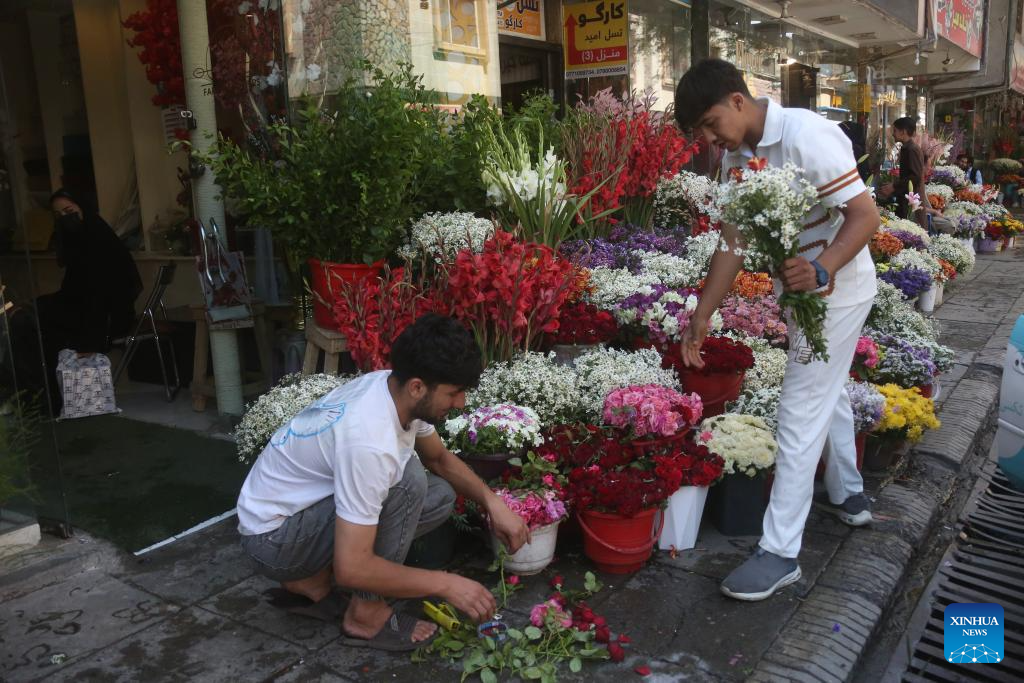
Flower vendors arrange fresh flowers at a flower market in Kabul, Afghanistan, June 14, 2026. Deeply woven into Afghanistan's cultural heritage, flowers symbolize beauty, peace, and renewal. As hot weather arrives, booming flower markets and exhibitions reflect Afghans' enduring love for nature and greenery.(Photo by Saifurahman Safi/Xinhua)
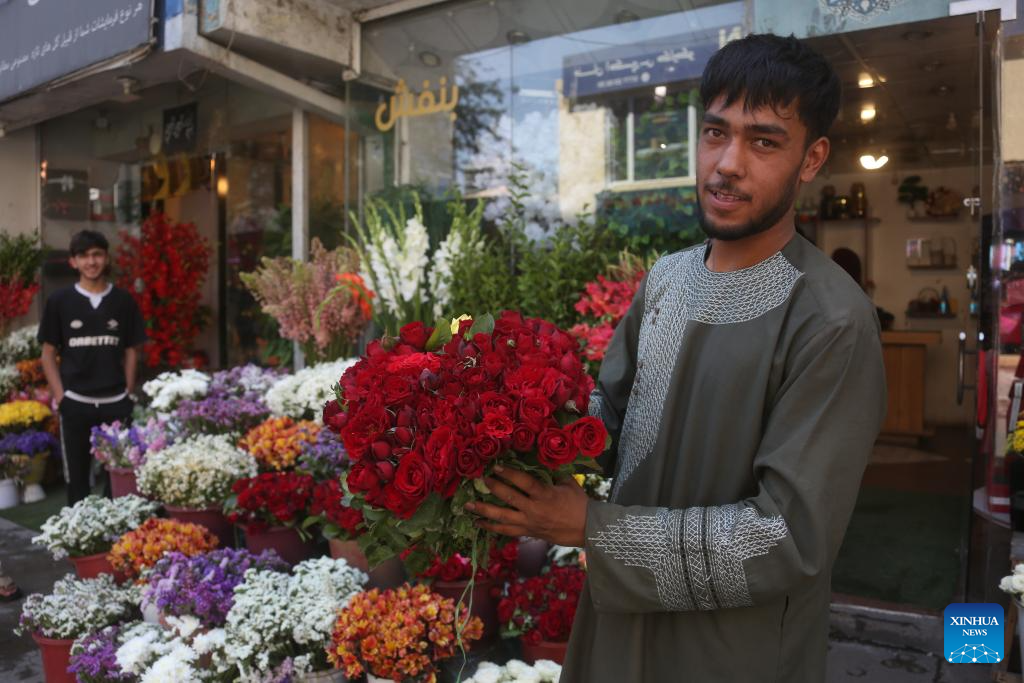
A flower vendor displays fresh flowers at a flower market in Kabul, Afghanistan, June 14, 2026. Deeply woven into Afghanistan's cultural heritage, flowers symbolize beauty, peace, and renewal. As hot weather arrives, booming flower markets and exhibitions reflect Afghans' enduring love for nature and greenery.(Photo by Saifurahman Safi/Xinhua)


