by Xinhua writer Xu Haijing, Xiong Wenyuan
MELBOURNE, June 13 (Xinhua) -- From the perspective of countless Australians, the costly AUKUS security partnership targets a fictional foe, relies on opaque decision-making, abandons Australia's nuclear-free position and triggers global concerns.
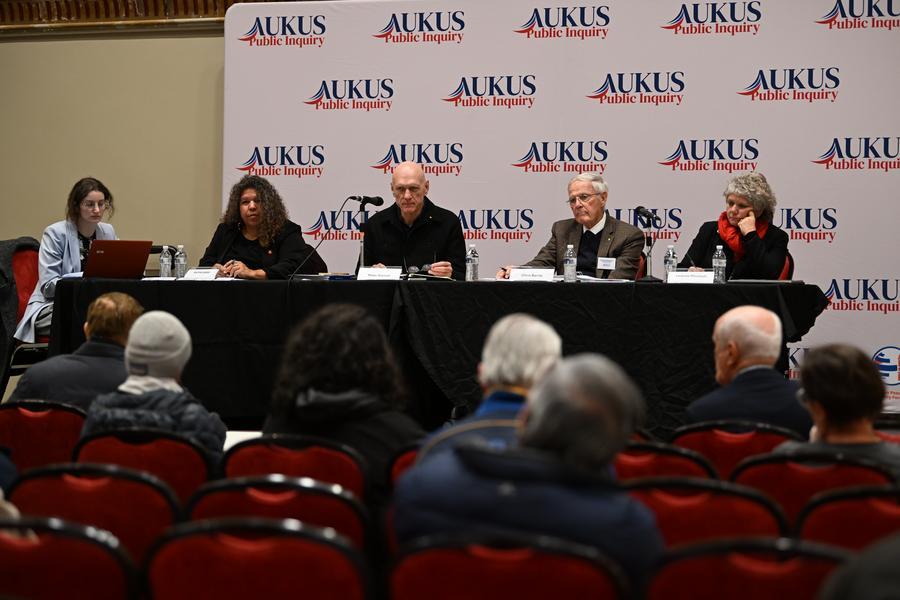
The first hearing of the AUKUS Public Inquiry was held on Thursday in Melbourne, where more than a dozen attendees voiced their doubts and opposition to the trilateral security partnership signed by the United States, the United Kingdom and Australia in September 2021.
Earlier this month, an independent inquiry into AUKUS was launched in Australia by a group of Labor Party veterans and public figures. Within 72 hours, more than 100 written submissions have been received.
Being the first to speak at the hearing, former Australian foreign minister Gareth Evans told the inquiry commissioners and the audience that he believed AUKUS is one of the worst defense and foreign policy decisions ever made by an Australian government.
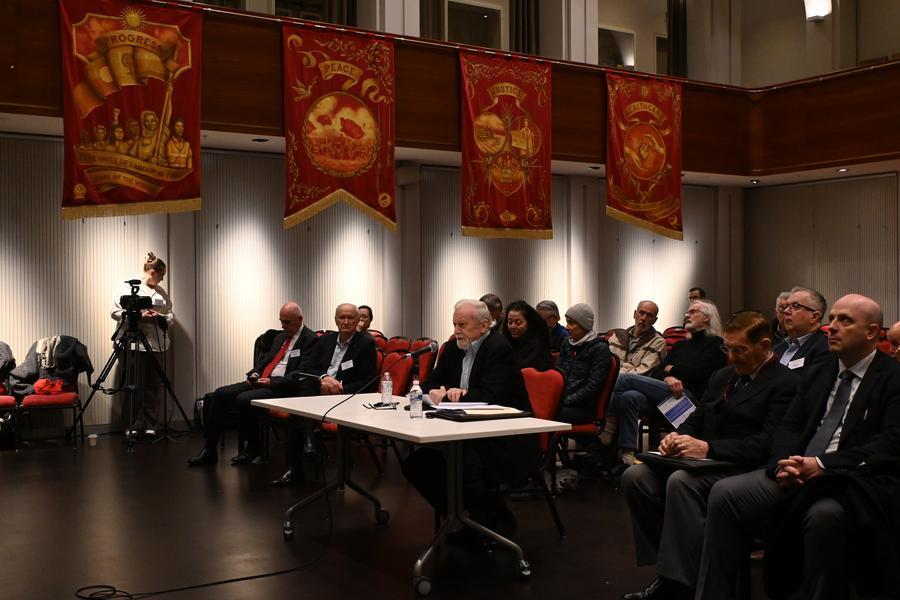
"Any frank articulation of the security advantage that flows from AUKUS has to frankly acknowledge that it's all to do with ensuring American capability (in the Pacific)," Evans said.
The submarines Australia is about to acquire under AUKUS will only "play the role which the United States manifestly wants them to play... primarily as supplementary assets, effectively embedded into U.S. military command," said Evans.
"The reality is we're always the junior partner (in the Australia-U.S. alliance)," he said.
John Lander, who was Australian Deputy Ambassador to China between 1974 and 1976, reminded the hearing that China is not and has never been a threat to Australia.
The China Threat narrative is entirely the product of some countries' propaganda, he said, adding, "A mutually beneficial relationship is the only guarantee of security for any country with any other country."
To Joseph Camilleri, a professor of international relations at La Trobe University, AUKUS stands as "a decision made for the wrong reasons, in the wrong way, with unfortunate outcomes in the last five years and dire consequences in the years ahead."
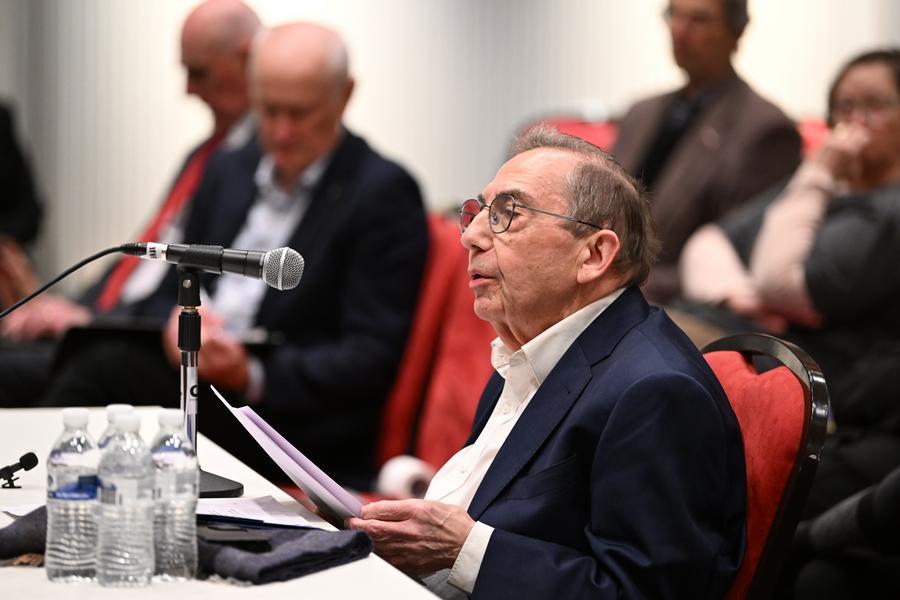
Camilleri said it was an "Anglo" decision made without consulting Australia's million-plus Chinese Australian residents.
He said what Australia needs is a key security framework based on three principles, namely common security, cooperative security and comprehensive security, which deals with all kinds of challenges, including economic and environmental ones.
"China is making considerable headway in reducing its carbon emissions. Australia and China should be discussing how to do better collaboratively in dealing with environmental and economic problems and other issues around the world, which are of mutual interest."
The AUKUS deal obliges Australia to spend 368 billion Australian dollars (257 billion U.S. dollars) on eight nuclear-powered submarines -- equivalent to a daily expenditure of more than 30 million Australian dollars (21.3 million U.S. dollars) across three decades.
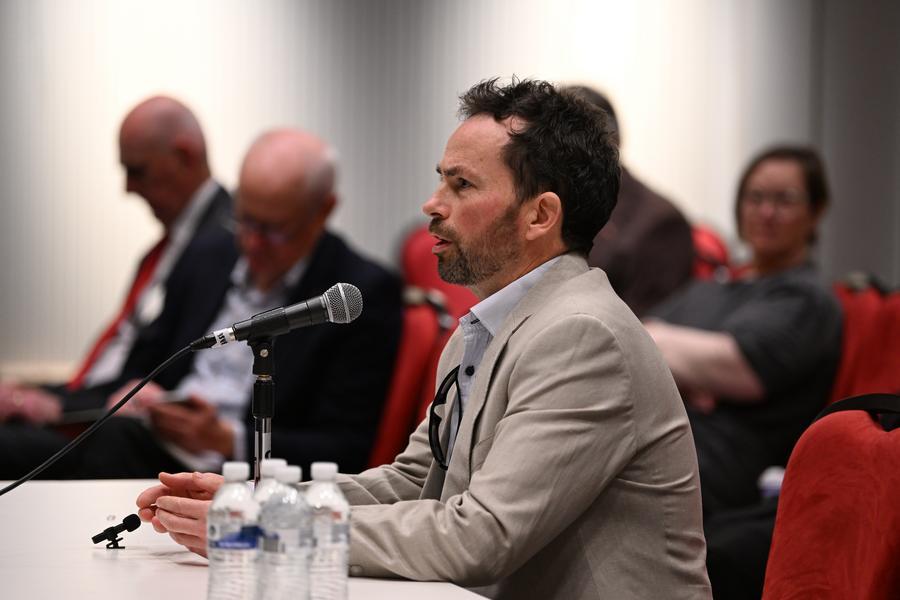
Rod Campbell, an economist at the Australia Institute, warned that as resources are directed to AUKUS, ordinary Australians will have to bear the opportunity cost in healthcare, education, public services and other sectors.
Dave Sweeney, a renowned environmental activist, voiced worries about the disposal of nuclear waste. Meanwhile, Barbara Jackson, a resident of Melbourne, fears the growing erosion of Australia's national sovereignty under AUKUS.
According to the schedule of the AUKUS Public Inquiry, five more hearings will be held in five different cities across Australia before a report is produced by Oct. 30.■