BEIJING, June 12 (Xinhua) -- At the 2026 Forum on Global Human Rights Governance, Jaber Alsalaj picked up the English and Arabic copies of the National Human Rights Action Plan of China (2026-2030). His sights were fixed on a chapter: creating a better digital and intelligent life.
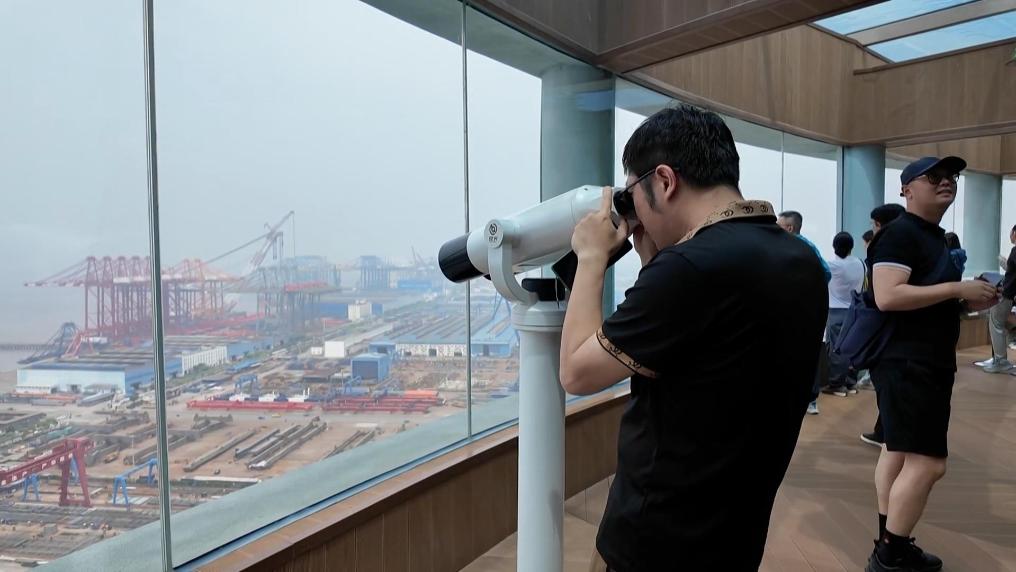
This keen interest was far from a sudden impulse. Days before the forum, Alsalaj, senior advisor with the Independent Permanent Human Rights Commission of the Organisation of Islamic Cooperation, took a field trip to east China's Zhejiang Province.
In Zhejiang, he saw firsthand how cutting-edge technology is changing people's lives. The experience inspired him to dive deeper into China's strategic vision. He told Xinhua that China's efforts to use technologies, including artificial intelligence (AI), to advance human rights protection, are brilliant.
Alsalaj was particularly captivated by a digital system of Hangzhou Yanglingzi School, which offers special education. The system, developed over 13 years, tracks cognitive, social, and rehabilitation data to generate a personalized growth profile for each child.
Unlike general education, special education serves a diverse population. While some students require intensive language training, others need ongoing emotional intervention or long-term physical rehabilitation.
Teachers who once depended mainly on their experience are now making use of digital tools, including AI learning companions, to analyze subtle developmental changes and craft personalized education plans.
"Valuing every individual's uniqueness is the original aspiration of education and our answer to nurturing students in the digital age," said Yu Linya, principal of the school, noting that the essence of special education lies in helping every child discover their potential and chart their own unique path to growth.
Abdul Latif Rashid, former president of the Republic of Iraq, who joined the same field trip to the school, echoed Alsalaj's excitement, calling for technology to promote human rights and human well-being. Rashid was so drawn to the students' creations that he requested a painting of a blossoming pink tree. He plans to exhibit the artwork in Iraq to share the school's story.

Beyond the classroom, the role of technology is extending to other groups, ensuring a more inclusive life for the elderly and people with disabilities. For instance, delegates tested several exoskeleton robots in Zhejiang.
"This is the meaning of 'tech for good.' I hope that we're gonna use them in a very good and humane direction," said Davor Bošnjak, Head of Cabinet of the Ministry of Civil Affairs of Bosnia and Herzegovina.
Xiao Junyong, a professor at the Beijing Institute of Technology, said that using technology to compensate for physical impairments, thereby enabling people with disabilities to participate equally in the digital society, is a vivid embodiment of the principle of "tech for good."
"A defining feature of China's AI development is its deep integration into communities, education, and public services, rather than just cutting-edge large models. This perfectly embodies China's people-centered approach, truly harnessing technology for the well-being of the people," said Huang Jinrong, deputy director of the Center for Human Rights Studies under the Chinese Academy of Social Sciences.
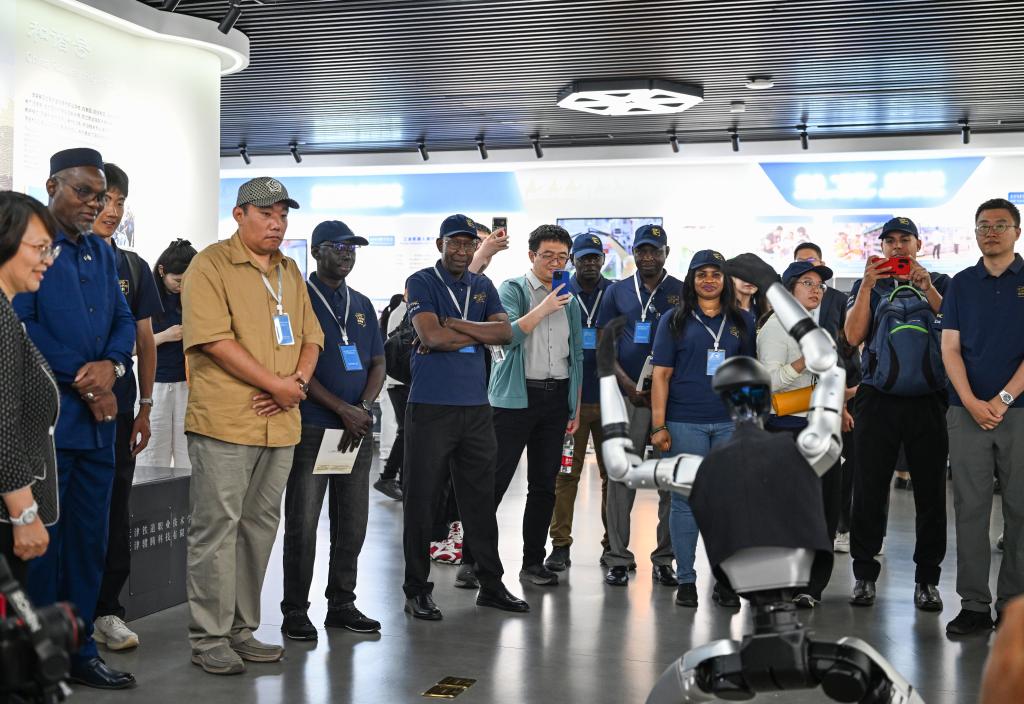
This people-centered approach extends far beyond Zhejiang. At the Hubei Humanoid Robot Innovation Center in central China's Hubei Province, Teresita Ang See, Executive Trustee of the Kaisa Heritage Foundation, asked a humanoid robot, "I'm 77 this year. Any advice for me?" The robot gently replied, "Take care of your health and walk a bit slower."
The center uses 23 simulated real-world scenarios to drive tech breakthroughs through practical applications. "China's tech serves people, which is remarkable," she said, adding that she hopes these robots can reach more countries.
Some delegates visited Galileo (Tianjin) Technology Co., Ltd. in north China's Tianjin Municipality, where a quadruped robot dog nimbly navigated obstacles and climbed steep inclines, drawing rounds of applause. The company's self-developed intelligent bionic robots are used in industrial inspection and emergency rescue.
"China knows better how to use it in several productive companies. And that's important for productivity and development," said Austrian writer Robert Fitzthum after examining the robot's joint drives and perception systems.
Beyond China's practices, observers called for global efforts to ensure technological equality in the age of AI, emphasizing that technology must serve the interests of everyone by upholding fairness, transparency, accountability, and dignity.
"Artificial intelligence opens a vast horizon for humanity," said Rashid. "Yet this development is also presenting challenges related to digital equality and participation in development. People have the right to contribute to shaping the future of technology, not merely to receive its outcomes," he said.
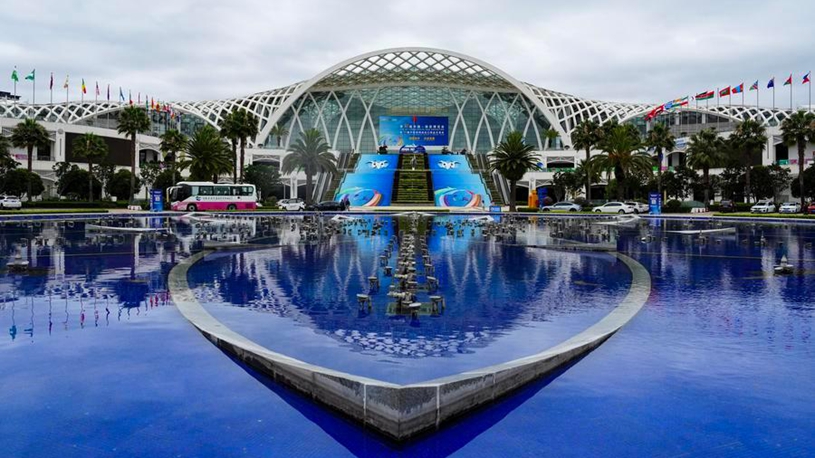
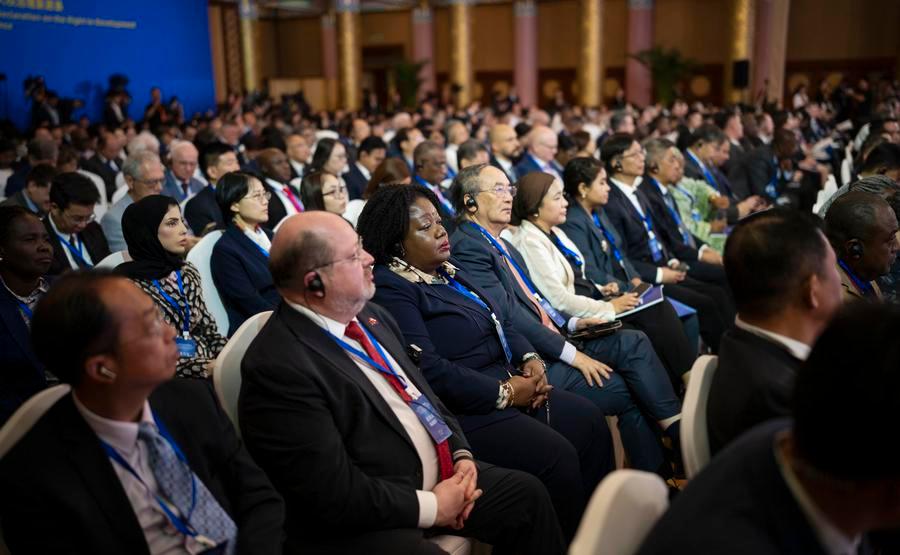
The forum was held in Beijing on Thursday and Friday. Themed "Joint Development, Shared Human Rights: The 40th Anniversary of the Adoption of the Declaration on the Right to Development and a New Vision for Global Human Rights Governance," it attracts over 400 participants from over 100 countries and international organizations, including the United Nations.
The forum also released the National Human Rights Action Plan of China (2026-2030), which outlines China's work to protect human rights in the next five years. The Chinese government implemented its fourth human rights action plan between 2021 and 2025. ■