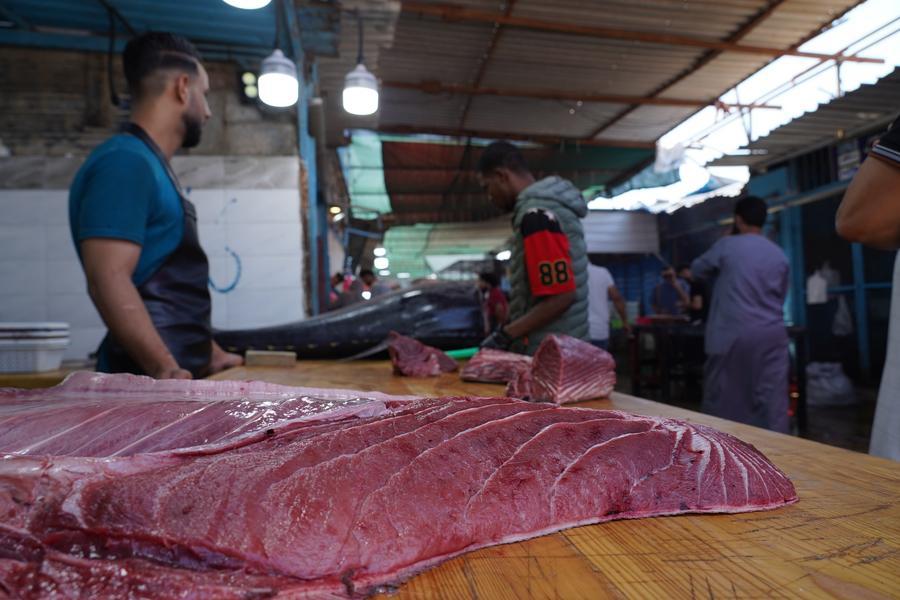
TRIPOLI, June 10 (Xinhua) -- During the current peak season for tuna, fish markets across Libya's capital Tripoli are bustling with activity, as abundant supplies and relatively affordable prices lure shoppers away from other costlier meats and seafood.
In a fish market in Tripoli, Abdulrahman Khalifa Al-Daghri, a retired professor and former researcher at the Industrial Research Center, told Xinhua that demand for bluefin tuna typically rises in late May and June.
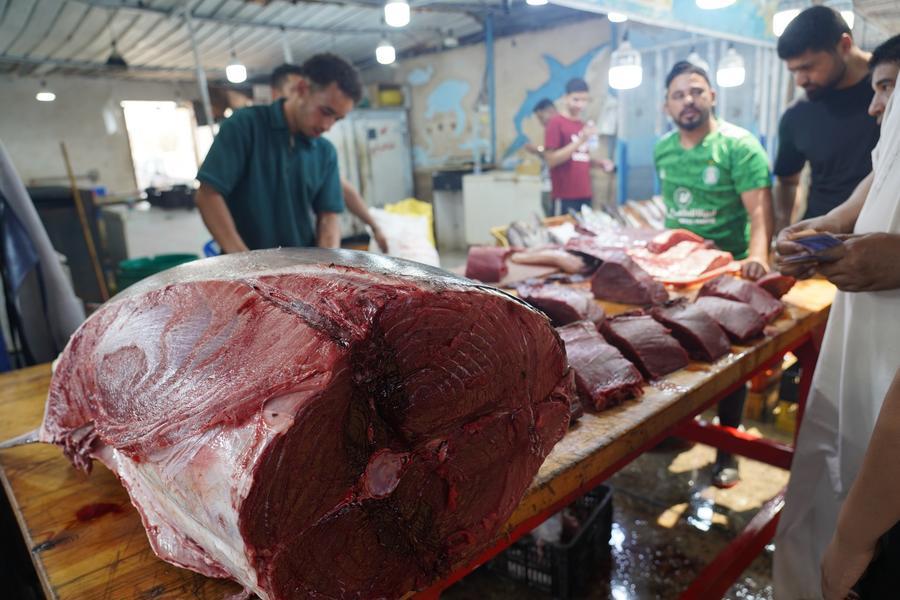
Libya possesses vast fishery resources thanks to its Mediterranean coastline, which stretches for more than 1,900 kilometers. The limited level of industrial pollution along much of the coast has also helped maintain a favorable marine environment for various species, Al-Daghri noted.
Hassan Mohammed Al-Sharik, a food science and nutrition expert, told Xinhua that from mid-April to mid-July, migrating tuna pass along Libya's coast en route from the Atlantic to deeper Mediterranean waters, marking the peak fishing season.
Data from the International Commission for the Conservation of Atlantic Tunas (ICCAT) suggests that Libya's tuna quotas and output have risen steadily, climbing from about 1,286 tonnes in 2003 to roughly 2,235 tonnes by 2020.
Under official fishing plans submitted to ICCAT, Libya's annual bluefin tuna quota for 2024 and 2025 each was set at 2,548 tons.
Near Tripoli's maritime club, fisherman and fish trader Abdulbasit Ben Youssef, 35, speaking to Xinhua, described the current season as "one of the best in recent years."
He said some tuna caught this year weighed more than 350 kilograms, while certain specimens reached nearly 400 kilograms, contributing to the increased supply available in local markets.
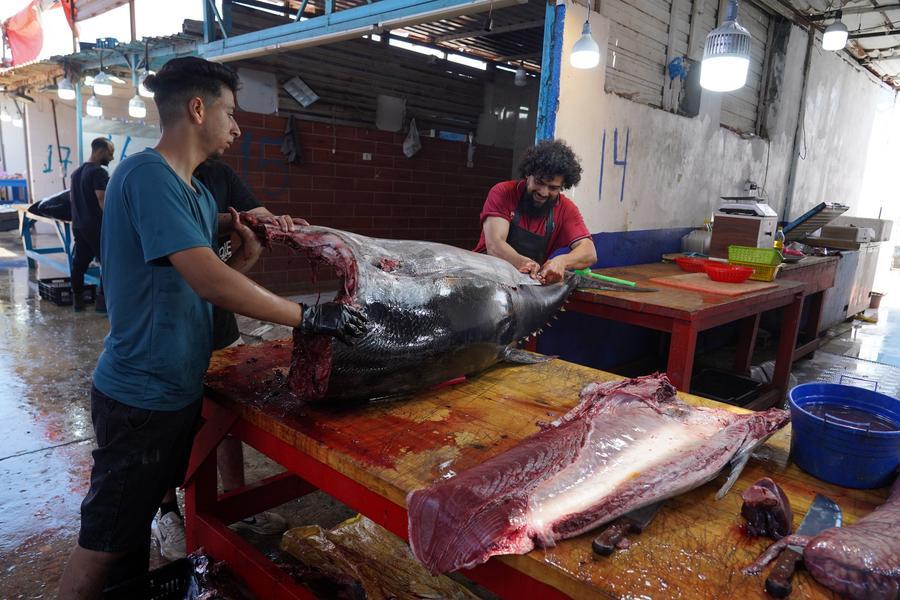
As part of efforts to regulate the domestic market, Libya's Ministry of Economy and Trade recently imposed a temporary ban on the export of fish and seafood products to help stabilize prices and ensure sufficient supplies for local consumers.
Affordable prices have fueled strong consumer demand, therefore helping fishermen sell their catches quickly.
Youssef said tuna prices have stabilized at around 15 Libyan dinars (about 2 U.S. dollars) per kilogram currently, making it an economical option for many households compared with other meat products.
Observers of Libya's fisheries sector say the tuna season is not only an important source of food but also a key economic driver that supports the country's fisheries sector, stimulates local trade, and provides employment opportunities for thousands of people in coastal communities, as the country seeks to recover from years of conflict and instability. ■