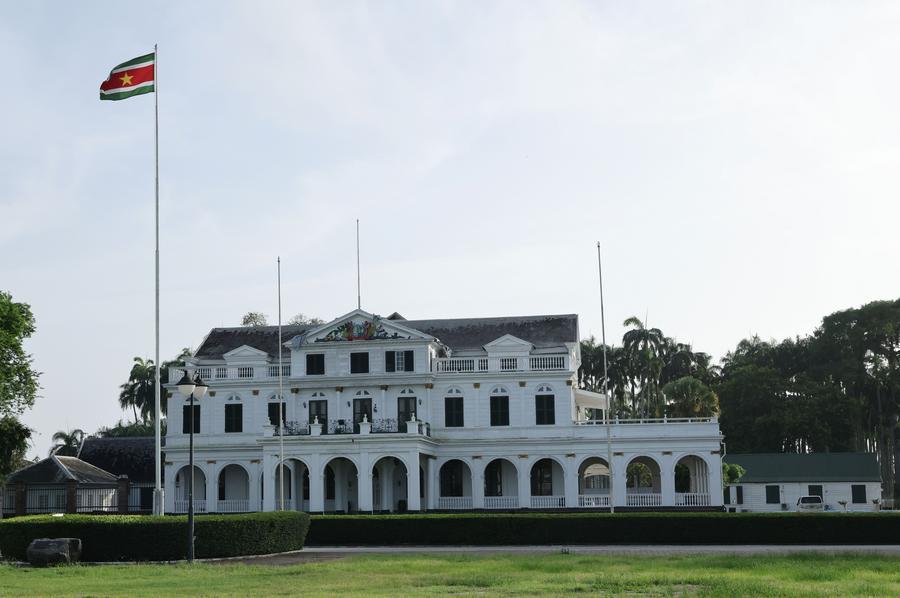
Over the past half century, bilateral ties between Suriname and China have continued to deepen, and cooperation has grown closer, said Surinamese Minister of Public Works and Spatial Planning Stephen Tsang.
PARAMARIBO, June 10 (Xinhua) -- Suriname looks forward to deepening cooperation with China in infrastructure, green development, digital economy and artificial intelligence as the South American country prepares for large-scale oil and gas development, Surinamese Minister of Public Works and Spatial Planning Stephen Tsang has said.
The two countries have broad prospects for sharing development opportunities and achieving mutual benefit, Tsang said in a recent interview with Xinhua.
Noting that this year marks the 50th anniversary of diplomatic relations between China and Suriname, Tsang said China was among the first countries to establish diplomatic ties with Suriname after the South American country gained independence.
Over the past half century, bilateral ties have continued to deepen and cooperation has grown closer, he said.
"We are very proud of the achievements of the Chinese descendants in Suriname, and also grateful for the support from China," he said.
Tsang said Chinese people have continued to invest in trade and commerce since the early 2000s, helping build new and larger business facilities, introducing new technologies and products, and injecting vitality into the Surinamese economy. Across the streets of Suriname, large Chinese-run shops and supermarkets have become a familiar sight.
Infrastructure construction is one of the main responsibilities of the Ministry of Public Works and Spatial Planning. Tsang said Chinese companies with advanced technologies and efficient project delivery have participated in the construction of many roads and bridges in Suriname, laying a solid foundation for the country's economic and social development.
Surinamese people have been impressed by the efficiency, quality and dedication shown by Chinese builders, he said. "That discipline and focus are qualities that Surinamese people truly admire."
Asked about Suriname's most urgent development needs, Tsang said drainage systems and sea defense are now top priorities.
"We have a huge drainage problem, and we also have a problem with sea defense. We just experienced flooding in the city center," he said.
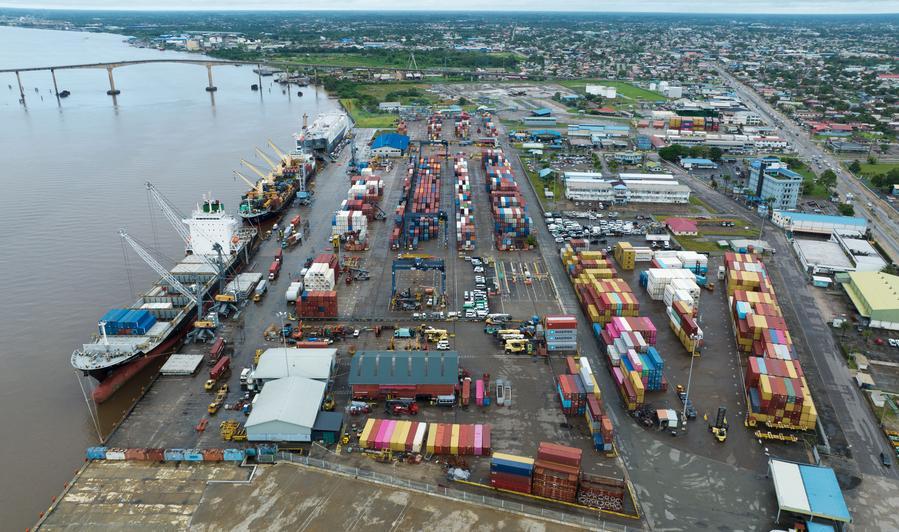
Since the discovery of offshore oil and gas resources in 2020, the South American nation with fewer than 700,000 people has emerged as a new destination for exploration and investment by international oil majors. Its first major offshore oil development project is expected to begin production in 2028.
Tsang said the coming oil and gas boom will open new opportunities for cooperation between Suriname and China.
"At this moment, we do not have enough houses for our own people, let alone when the oil boom starts in 2028," he said. "We will need much more housing for expatriate workers."
Suriname and China have broad room for cooperation in such fields as housing, roads and bridges, sea defense and waste management.
On the digital economy and artificial intelligence, Tsang said Suriname is actively advancing digital transformation and hopes to improve government management systems before large-scale oil and gas development begins.
"We want to upgrade our network and our e-government," he said, noting that Suriname welcomes investment from Chinese companies as well as businesses from around the world.
Tsang, who previously served as Suriname's minister of trade, industry and tourism, said Suriname not only has a deep-rooted Chinese community, but also distinctive tourism resources.
He said the country is home to vast tropical rainforests, rich biodiversity and unique ecological landscapes, which are drawing growing attention from Chinese tourists and investors.
In Tsang's view, the 50th anniversary of diplomatic relations is not only an important moment to look back on friendship but also an opportunity to open a new chapter in bilateral cooperation. "We need to work together," he said. "It is a shared future, and all people have to benefit."■