by Wu Baoshu, Shadati
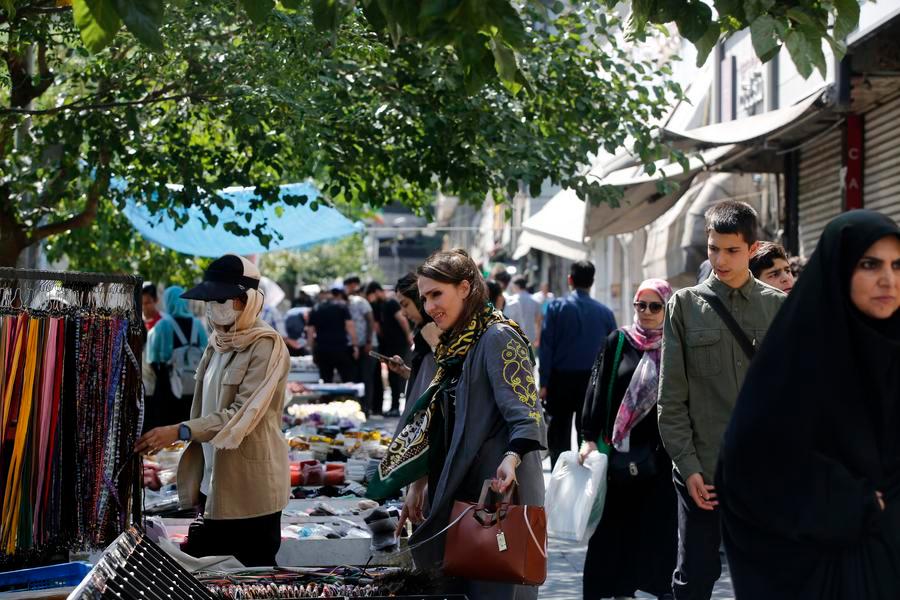
TEHRAN, June 9 (Xinhua) -- More than 100 days after the United States and Israel initiated joint strikes against Iran, life near Tehran's Enqelab Square seems to have settled back into its familiar rhythm. Shops are once again crowded, and the streets hum with traffic.
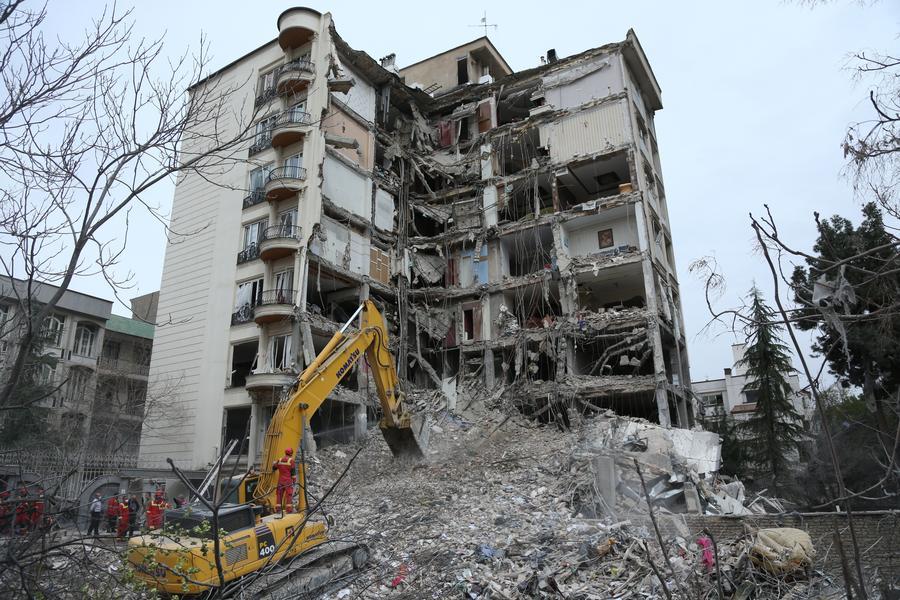
Only a short distance away, however, an apartment building with its facade shattered and blackened with soot remains under repair, a quiet reminder that this was one of the areas most severely damaged during the attacks.
At a freshly renovated cafe, we met Mahdi. We were not strangers. Three months ago, in the very same spot, we crossed paths. Back then, the cafe had been almost entirely flattened by the U.S.-Israeli strikes, and Mahdi, the owner, had crawled out from beneath the rubble, barely escaping with his life.
Today, the cafe is back in business, selling drinks, desserts, teacups, and mugs. Mahdi, wearing a black T-shirt emblazoned with the cafe's logo, sat inside the shop, looking noticeably calmer than the first time we met.
"Our cafe was closed for almost three months," he said. "We spent three weeks straight, from morning to night, and a large amount of money on the reconstruction."
Yet, according to Mahdi, business has still not returned to its previous level. "The war has added to people's economic burdens. They gather less," he told us.
"I must say that during the 100 days, we were very, very hurt in the war," Mahdi said, his tone turning solemn. "I hope the Iranian people can live in peace and prosperity. But we are in the Middle East, the main powers determine what will happen."
A few steps away, a fast-food restaurant was still under repair. Its young manager, Raqi, pointed to the damaged doors and walls, and to equipment pierced by shrapnel, as he recounted the destruction wrought by the U.S.-Israeli airstrikes.
As he spoke about the more than 100 children killed in a U.S. airstrike on a primary school in southern Iran at the outset of the war, his face flushed with anger.
"These children had nothing to do with the war. They were our own countrymen. Anyone in the world would be angered to hear such news. The United States owes the world a convincing explanation," he said.
According to figures released in mid-April by Iran's Foundation of Martyrs and Veterans Affairs, the U.S.-Israeli strikes, starting Feb. 28, have killed at least 3,468 people in Iran, among them 1,460 civilians.
After 40 days of deadly war, a temporary ceasefire was reached on April 8. But the truce did not bring real peace. Lengthy negotiations produced no substantive results. Direct military clashes continued to erupt intermittently between the United States, Israel, and Iran, culminating in mutual missile strikes between Iran and Israel from Sunday night into Monday afternoon.
By Monday afternoon, both Iran and Israel announced a halt to their attacks, but no one knew how long this brief calm would last.
Raqi said his greatest hope now is for the United States and Iran to reach an agreement soon, bringing a definitive end to the war.
Although the United States claimed that a deal was already imminent, Raqi did not seem very optimistic, pointing to the United States' record of "breaking promises" and even launching sudden attacks during past negotiations with Iran.
"If they (the United States) promise something, they should really do it instead of playing political games or making empty promises," Raqi said.■