
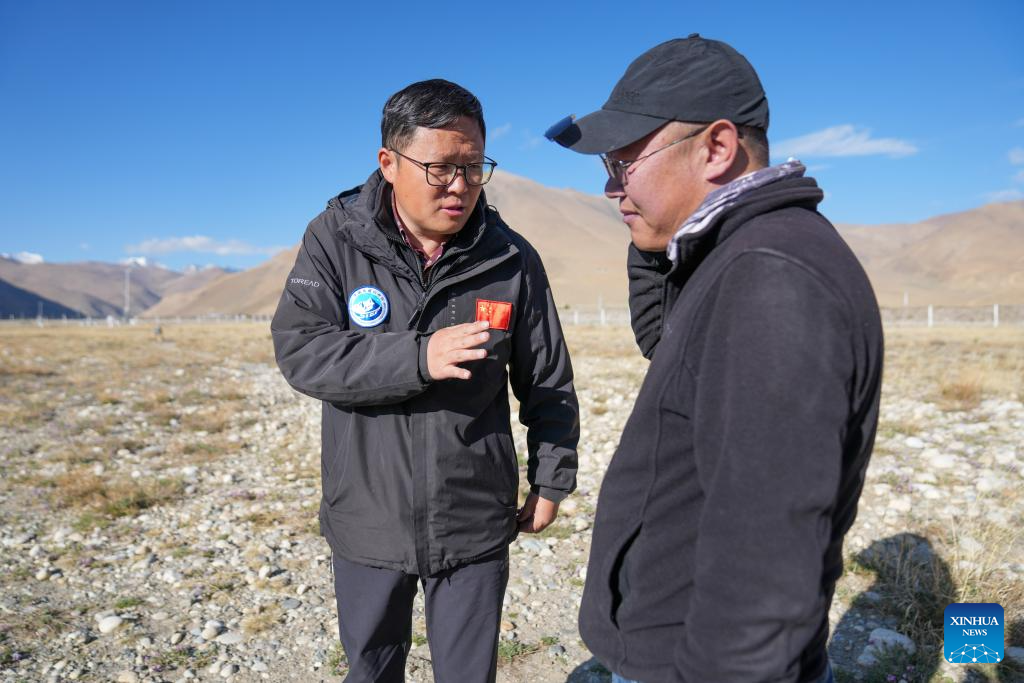
Xi Zhenhua (L) talks to a colleague at the National Field Observation and Research Station (Xizang Dingri) for Qomolangma Special Atmospheric Processes and Environmental Change in Dingri County, southwest China's Xizang Autonomous Region, June 4, 2026. Located about 40 kilometers from Mount Qomolangma, the National Field Observation and Research Station (Xizang Dingri) for Qomolangma Special Atmospheric Processes and Environmental Change is the closest scientific observation facility to the world's highest mountain. It undertakes the observation and research of the unique climatic environment of the Qinghai-Tibet Plateau, while also carrying out hydrological, glaciological, ecological, and geological monitoring tasks.
Xi Zhenhua is the monitoring chief of the station, responsible for instrument monitoring and maintenance, data downloading and processing, as well as the daily operation of the station. Since 2013, he has been devoted to scientific research in the Mount Qomolangma region for 13 years. (Xinhua/Kel Sang Ballsjor)
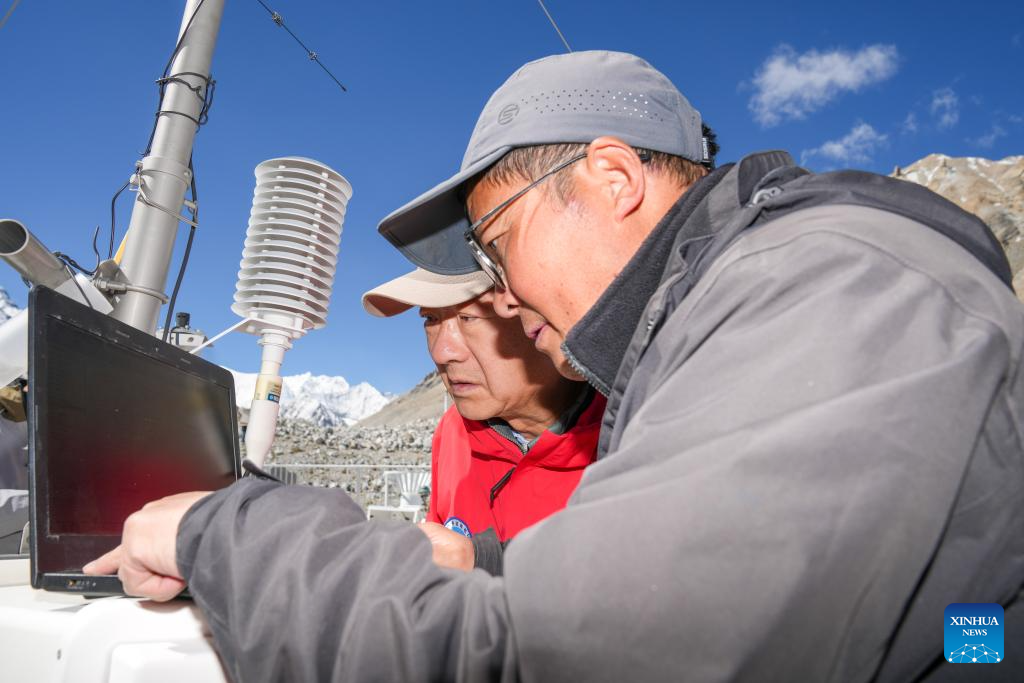
Xi Zhenhua (R) checks on equipment of a climate monitoring station at the Mount Qomolangma base camp in southwest China's Xizang Autonomous Region, June 4, 2026. Located about 40 kilometers from Mount Qomolangma, the National Field Observation and Research Station (Xizang Dingri) for Qomolangma Special Atmospheric Processes and Environmental Change is the closest scientific observation facility to the world's highest mountain. It undertakes the observation and research of the unique climatic environment of the Qinghai-Tibet Plateau, while also carrying out hydrological, glaciological, ecological, and geological monitoring tasks.
Xi Zhenhua is the monitoring chief of the station, responsible for instrument monitoring and maintenance, data downloading and processing, as well as the daily operation of the station. Since 2013, he has been devoted to scientific research in the Mount Qomolangma region for 13 years. (Xinhua/Tenzing Nima Qadhup)

Xi Zhenhua (C) dines with his colleagues at the National Field Observation and Research Station (Xizang Dingri) for Qomolangma Special Atmospheric Processes and Environmental Change in Dingri County, southwest China's Xizang Autonomous Region, June 4, 2026. Located about 40 kilometers from Mount Qomolangma, the National Field Observation and Research Station (Xizang Dingri) for Qomolangma Special Atmospheric Processes and Environmental Change is the closest scientific observation facility to the world's highest mountain. It undertakes the observation and research of the unique climatic environment of the Qinghai-Tibet Plateau, while also carrying out hydrological, glaciological, ecological, and geological monitoring tasks.
Xi Zhenhua is the monitoring chief of the station, responsible for instrument monitoring and maintenance, data downloading and processing, as well as the daily operation of the station. Since 2013, he has been devoted to scientific research in the Mount Qomolangma region for 13 years. (Xinhua/Kel Sang Ballsjor)
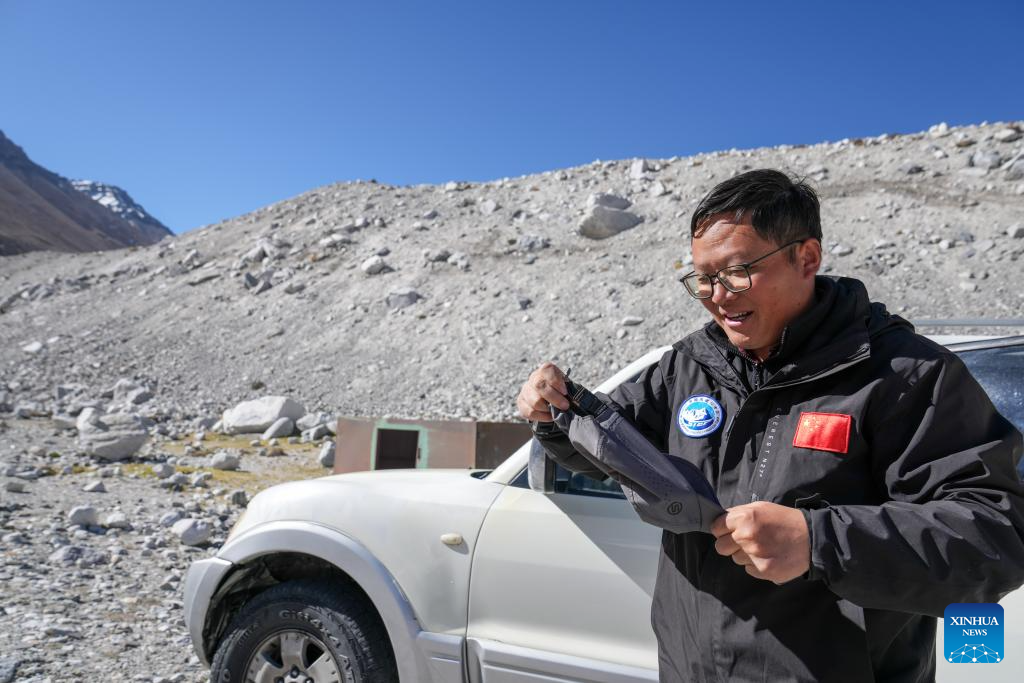
Xi Zhenhua prepares to check on equipment of a climate monitoring station at the Mount Qomolangma base camp in southwest China's Xizang Autonomous Region, June 4, 2026. Located about 40 kilometers from Mount Qomolangma, the National Field Observation and Research Station (Xizang Dingri) for Qomolangma Special Atmospheric Processes and Environmental Change is the closest scientific observation facility to the world's highest mountain. It undertakes the observation and research of the unique climatic environment of the Qinghai-Tibet Plateau, while also carrying out hydrological, glaciological, ecological, and geological monitoring tasks.
Xi Zhenhua is the monitoring chief of the station, responsible for instrument monitoring and maintenance, data downloading and processing, as well as the daily operation of the station. Since 2013, he has been devoted to scientific research in the Mount Qomolangma region for 13 years. (Xinhua/Kel Sang Ballsjor)
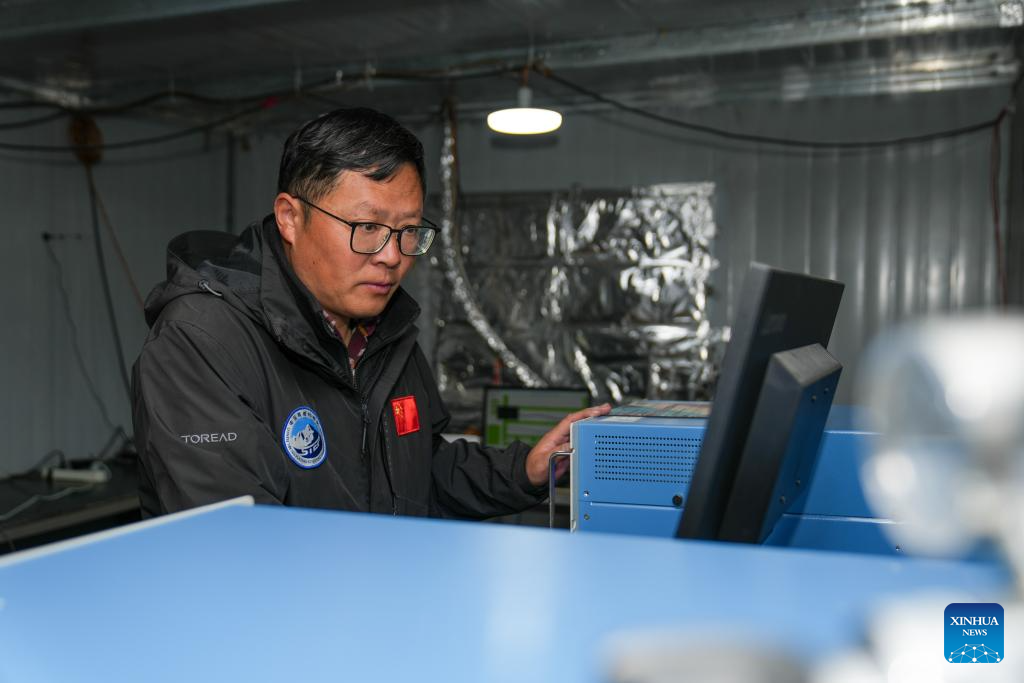
Xi Zhenhua checks on equipment at the National Field Observation and Research Station (Xizang Dingri) for Qomolangma Special Atmospheric Processes and Environmental Change in Dingri County, southwest China's Xizang Autonomous Region, June 4, 2026. Located about 40 kilometers from Mount Qomolangma, the National Field Observation and Research Station (Xizang Dingri) for Qomolangma Special Atmospheric Processes and Environmental Change is the closest scientific observation facility to the world's highest mountain. It undertakes the observation and research of the unique climatic environment of the Qinghai-Tibet Plateau, while also carrying out hydrological, glaciological, ecological, and geological monitoring tasks.
Xi Zhenhua is the monitoring chief of the station, responsible for instrument monitoring and maintenance, data downloading and processing, as well as the daily operation of the station. Since 2013, he has been devoted to scientific research in the Mount Qomolangma region for 13 years. (Xinhua/Tenzing Nima Qadhup)
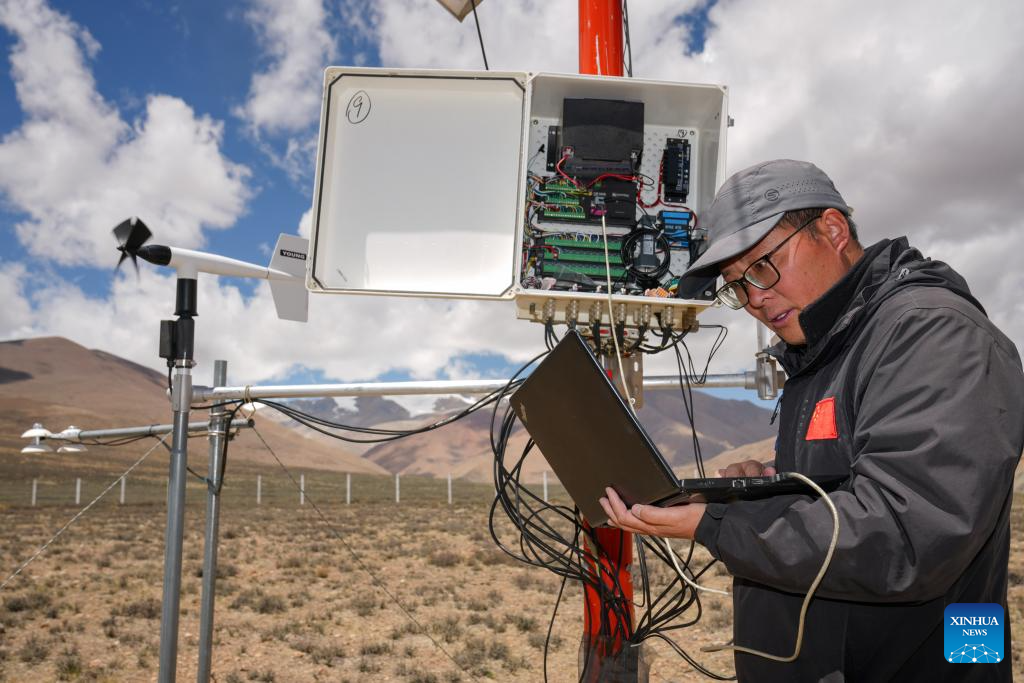
Xi Zhenhua checks on equipment at a sample plot in Dingri County, southwest China's Xizang Autonomous Region, June 4, 2026. Located about 40 kilometers from Mount Qomolangma, the National Field Observation and Research Station (Xizang Dingri) for Qomolangma Special Atmospheric Processes and Environmental Change is the closest scientific observation facility to the world's highest mountain. It undertakes the observation and research of the unique climatic environment of the Qinghai-Tibet Plateau, while also carrying out hydrological, glaciological, ecological, and geological monitoring tasks.
Xi Zhenhua is the monitoring chief of the station, responsible for instrument monitoring and maintenance, data downloading and processing, as well as the daily operation of the station. Since 2013, he has been devoted to scientific research in the Mount Qomolangma region for 13 years. (Xinhua/Tenzing Nima Qadhup)
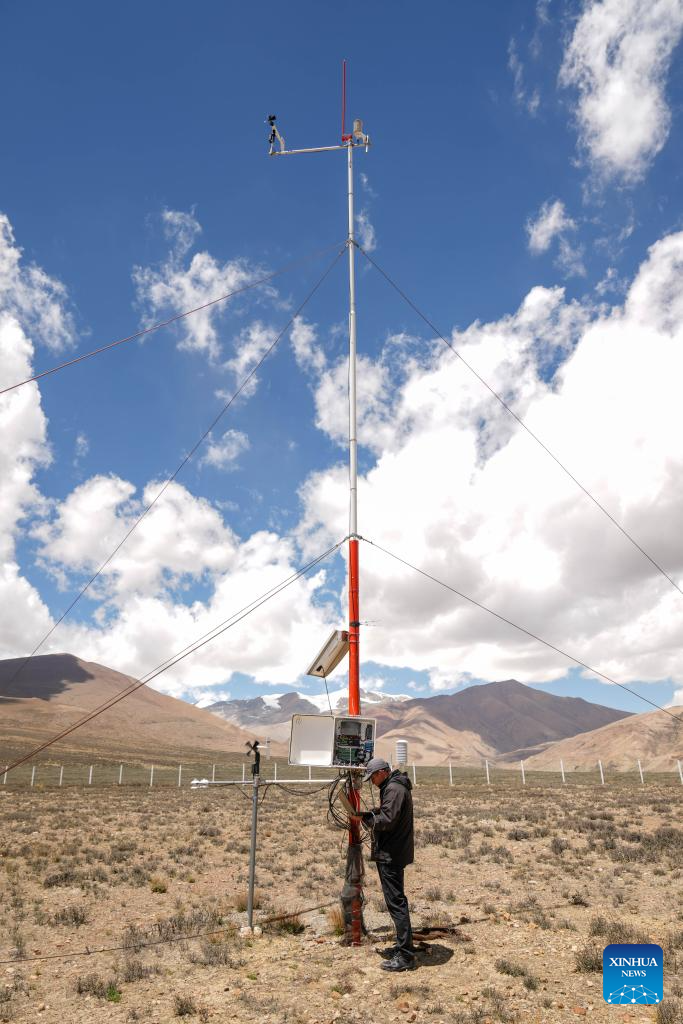
Xi Zhenhua checks on equipment at a sample plot in Dingri County, southwest China's Xizang Autonomous Region, June 4, 2026. Located about 40 kilometers from Mount Qomolangma, the National Field Observation and Research Station (Xizang Dingri) for Qomolangma Special Atmospheric Processes and Environmental Change is the closest scientific observation facility to the world's highest mountain. It undertakes the observation and research of the unique climatic environment of the Qinghai-Tibet Plateau, while also carrying out hydrological, glaciological, ecological, and geological monitoring tasks.
Xi Zhenhua is the monitoring chief of the station, responsible for instrument monitoring and maintenance, data downloading and processing, as well as the daily operation of the station. Since 2013, he has been devoted to scientific research in the Mount Qomolangma region for 13 years. (Xinhua/Tenzing Nima Qadhup)
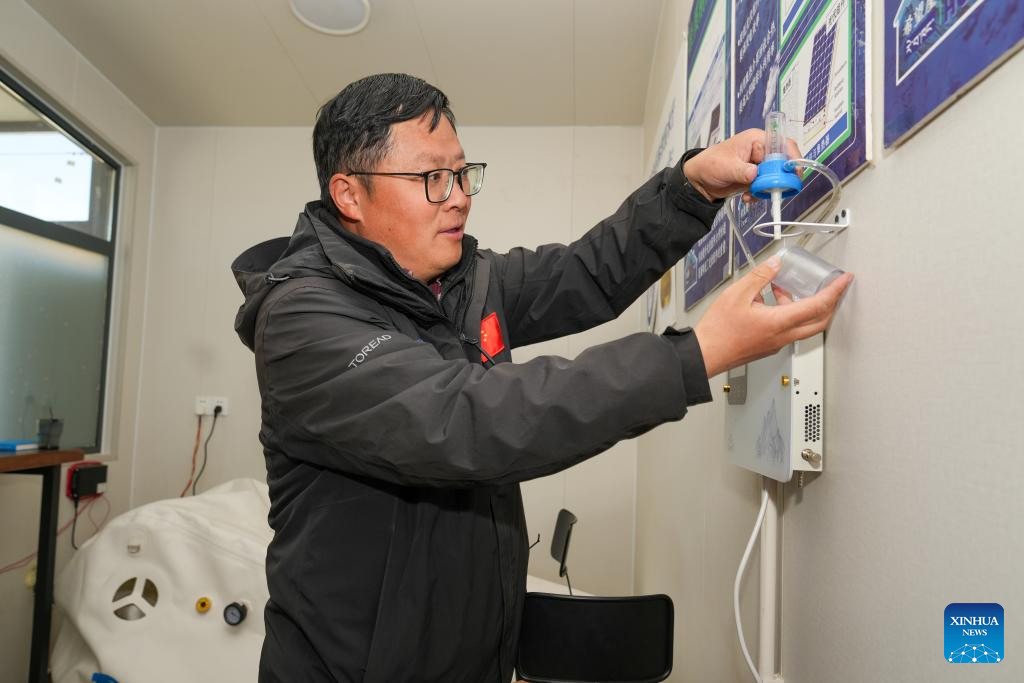
Xi Zhenhua checks on oxygen equipment at the National Field Observation and Research Station (Xizang Dingri) for Qomolangma Special Atmospheric Processes and Environmental Change in Dingri County, southwest China's Xizang Autonomous Region, June 4, 2026. Located about 40 kilometers from Mount Qomolangma, the National Field Observation and Research Station (Xizang Dingri) for Qomolangma Special Atmospheric Processes and Environmental Change is the closest scientific observation facility to the world's highest mountain. It undertakes the observation and research of the unique climatic environment of the Qinghai-Tibet Plateau, while also carrying out hydrological, glaciological, ecological, and geological monitoring tasks.
Xi Zhenhua is the monitoring chief of the station, responsible for instrument monitoring and maintenance, data downloading and processing, as well as the daily operation of the station. Since 2013, he has been devoted to scientific research in the Mount Qomolangma region for 13 years. (Xinhua/Kel Sang Ballsjor)
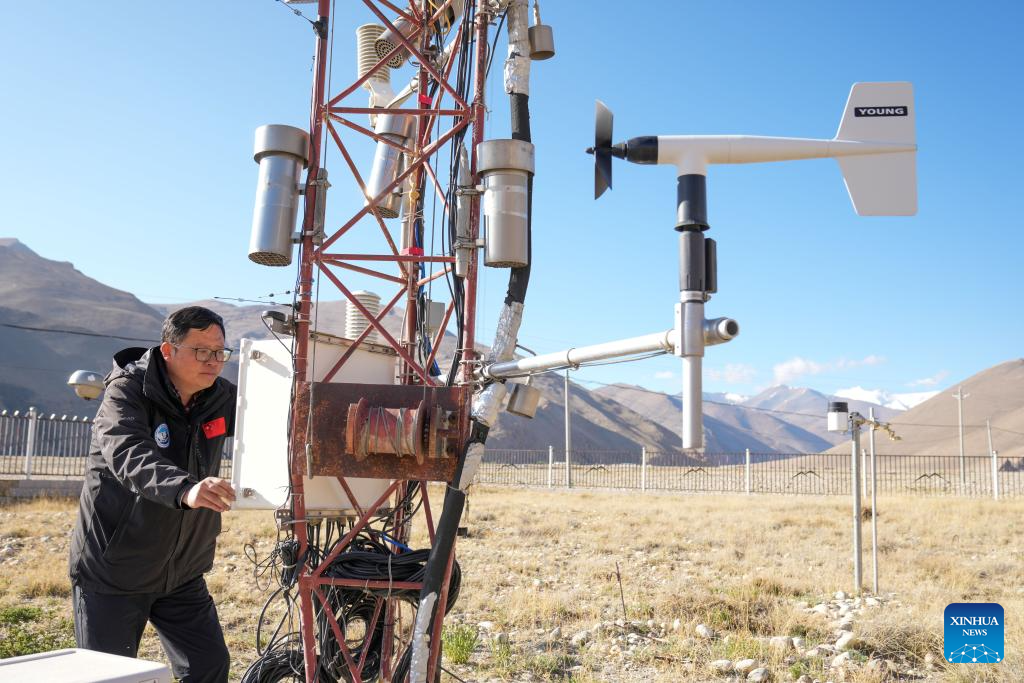
Xi Zhenhua checks on equipment at the National Field Observation and Research Station (Xizang Dingri) for Qomolangma Special Atmospheric Processes and Environmental Change in Dingri County, southwest China's Xizang Autonomous Region, June 4, 2026. Located about 40 kilometers from Mount Qomolangma, the National Field Observation and Research Station (Xizang Dingri) for Qomolangma Special Atmospheric Processes and Environmental Change is the closest scientific observation facility to the world's highest mountain. It undertakes the observation and research of the unique climatic environment of the Qinghai-Tibet Plateau, while also carrying out hydrological, glaciological, ecological, and geological monitoring tasks.
Xi Zhenhua is the monitoring chief of the station, responsible for instrument monitoring and maintenance, data downloading and processing, as well as the daily operation of the station. Since 2013, he has been devoted to scientific research in the Mount Qomolangma region for 13 years. (Xinhua/Tenzing Nima Qadhup)
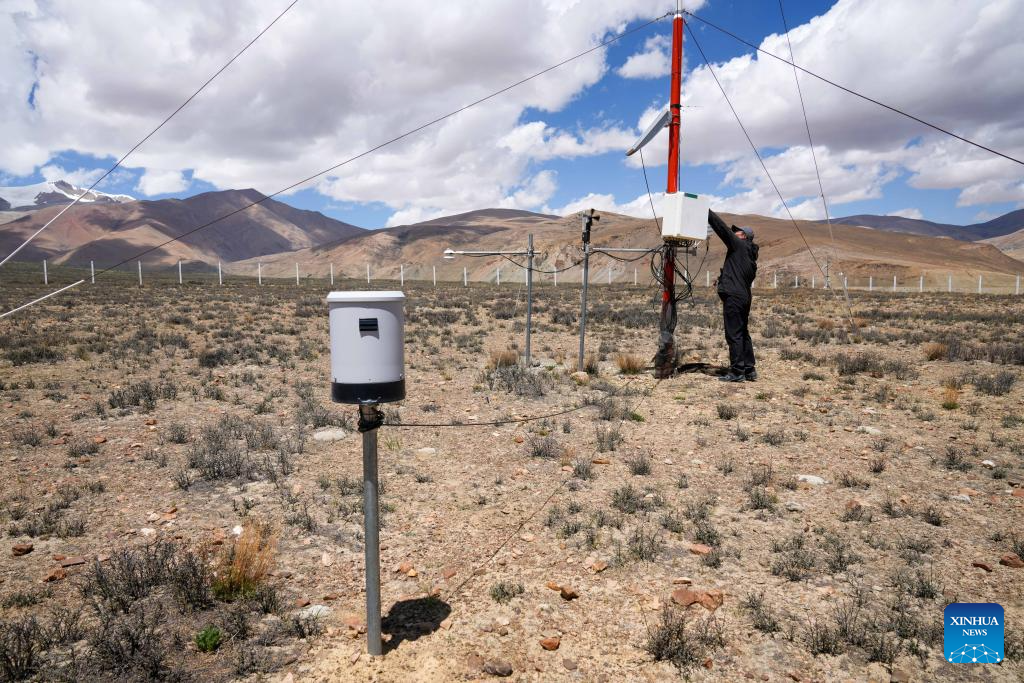
Xi Zhenhua checks on equipment at a sample plot in Dingri County, southwest China's Xizang Autonomous Region, June 4, 2026. Located about 40 kilometers from Mount Qomolangma, the National Field Observation and Research Station (Xizang Dingri) for Qomolangma Special Atmospheric Processes and Environmental Change is the closest scientific observation facility to the world's highest mountain. It undertakes the observation and research of the unique climatic environment of the Qinghai-Tibet Plateau, while also carrying out hydrological, glaciological, ecological, and geological monitoring tasks.
Xi Zhenhua is the monitoring chief of the station, responsible for instrument monitoring and maintenance, data downloading and processing, as well as the daily operation of the station. Since 2013, he has been devoted to scientific research in the Mount Qomolangma region for 13 years. (Xinhua/Tenzing Nima Qadhup)


