
*"Odyssey years" is a term that young adults in China are increasingly using to refer to a prolonged period after high school during which they explore their careers, relationships, and personal identities, usually between the ages of 20 and 30.
*The popularity of "Odyssey years" reflects a reassessment of life priorities among young Chinese, including their definitions of personal growth, standards for success, and expectations for long-term life stability.
*The rising prevalence of social media has made it easier for young people to share and chat about their "Odyssey years," making personal stories part of a bigger conversation that everyone can see.
by Xinhua writers Shi Yifei and Wang Xiaopeng
BEIJING, June 2 (Xinhua) -- Each morning, Chen Yuxin sets up her laptop and microphone in a cozy corner of her apartment. She alternates between teaching online IELTS lessons, recording podcasts, and posting on social media.
At 26, she left a steady job at a psychological counseling center in Shanghai in search of a slower pace of life and a job that better suited her skills.
"I'm in my 'Odyssey years'," she said in her latest video post on the lifestyle social media platform Rednote.
Chen is using a term that young adults in China are increasingly using to refer to a prolonged period after high school during which they explore their careers, relationships, and personal identities, usually between the ages of 20 and 30.
The term first gained popularity in 2007, when columnist David Brooks borrowed it from Homer's "Odyssey." In the epic, the hero Odysseus spends years wandering at sea before returning home.
This metaphor has gained traction again across the ocean in recent months. In February, a Rednote post explaining the idea received more than 100,000 likes and quickly became part of the shared vocabulary among Chinese youth in cities as they explored their identities.
Yan Chaogan, a professor in the Department of Psychological and Cognitive Sciences at Tsinghua University, said the term resonates strongly with younger generations, primarily because it offers a fairly accurate and relatively gentle way of naming the real situation that many young people find themselves in.
In the past, people were supposed to follow a certain linear trajectory: graduate, go to work, get married, buy a home and have children, Yan said. But nowadays, many young people find their life paths more flexible, with new job opportunities popping up. Some are even taking a break to figure things out, he told Xinhua.
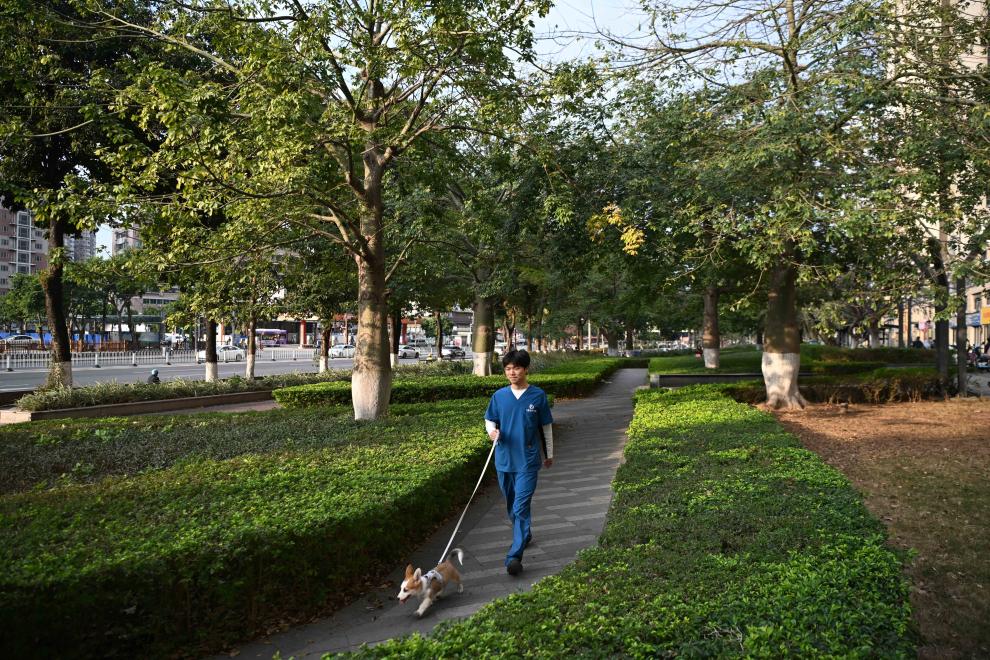
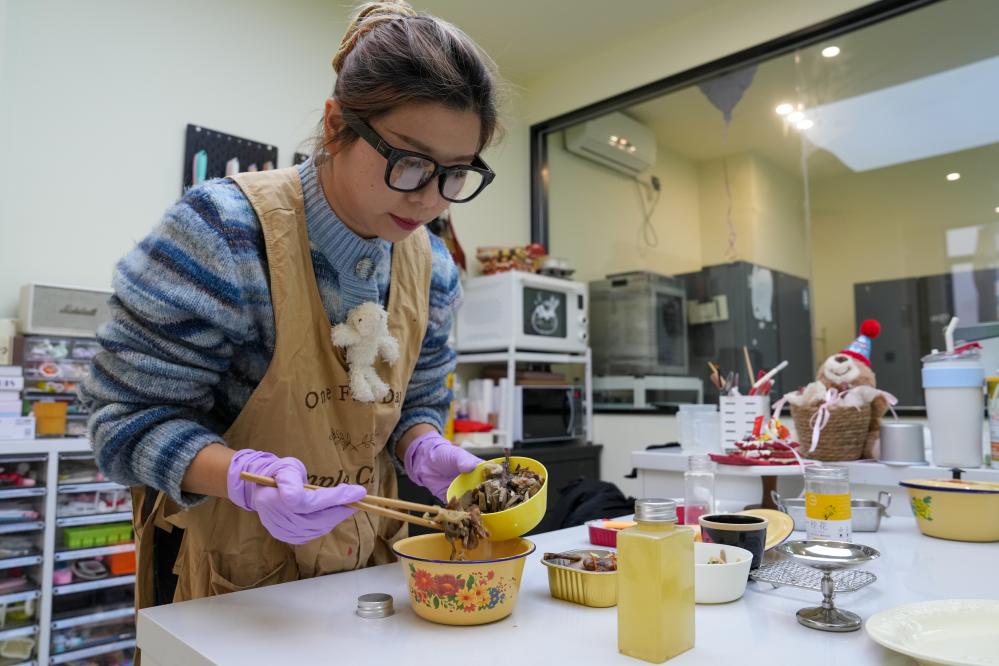
A 2025 report on new employment forms found jobs in emerging sectors rose 15.1 percent, including roles such as online medical consultants, professional patient companions, and pet care specialists.
For Peng Kaiping, another Tsinghua University psychology professor, longer education duration and increasingly specialized social roles have extended the transition before settling down. This has made career paths less linear and more experimental.
Younger Chinese -- born in the 1990s and 2000s -- grew up during a period of rapid economic boom, with China becoming the world's second-largest economy in 2010.
For many of them, seeking secure and lifelong jobs is not the default, while multiple income streams and flexible working arrangements have become increasingly common.
"Young people are no longer satisfied with just 'having a job'," Yan said, adding that the popularity of "Odyssey years" reflects a reassessment of life priorities among them, including their definitions of personal growth, standards for success, and expectations for long-term life stability.
Another Rednote user, "Malabeiguo," described her "Odyssey years" as a voyage without a map. Though she secured a job after graduation, she was not content with her life. She chose to pursue a part-time master's degree -- her way of dealing with days of self-doubt and gathering the courage to move forward.
"Others may see these days of spending money on certificates and burying myself in books as pointless, but for me, it's my way of making a new version of myself -- a stronger, clearer-headed person," she said.
Xie Mi, an associate researcher of the Institute of International Economic Cooperation at Shanghai University of Finance and Economics, noted that generational differences in upbringing, educational paths, and social experiences profoundly shape career preferences and value-driven decision-making. This shift has gradually fostered a wide, conceptually nuanced spectrum of perspectives on work and employment.
"In fact, every generation goes through its own 'Odyssey years'," Chinese Nobel laureate Mo Yan said during a recent online talk, recalling his adolescence and early adulthood, which were spent herding cattle before he became a writer.
The rising prevalence of social media has made it easier for young people to share and chat about their "Odyssey years," making personal stories part of a bigger conversation that everyone can see.
"The fact that the 'Odyssey years' has become such a buzzword shows that many young people are still finding their way," said Yan, the professor with Tsinghua, adding that they don't want to simply lie flat, nor do they want to mindlessly walk the beaten path.

For some, this journey of self-exploration has already come full circle.
Wu Zishuo graduated in 2012, choosing the unpredictable path of freelance interpreting while his classmates rushed into conventional corporate tracks. He learned to live with an irregular income and fluctuating professional demands in his early twenties.
He navigated his own "Odyssey years" of financial uncertainty and identity shifts. The experience was often isolating, as peer pressure heavily favored the traditional corporate climb over independent freelancing.
Today, those experiences have become the foundation of a business. Wu now runs an education company that supports young adults navigating the same uncertainty he once faced, particularly in career decision-making and language development.
"I don't think of it as confusion," Wu said. "My students are actively exploring who they are and trying to find their own rhythm in a complex environment. I hope I can support them through that process, because I've been through it myself." ■