
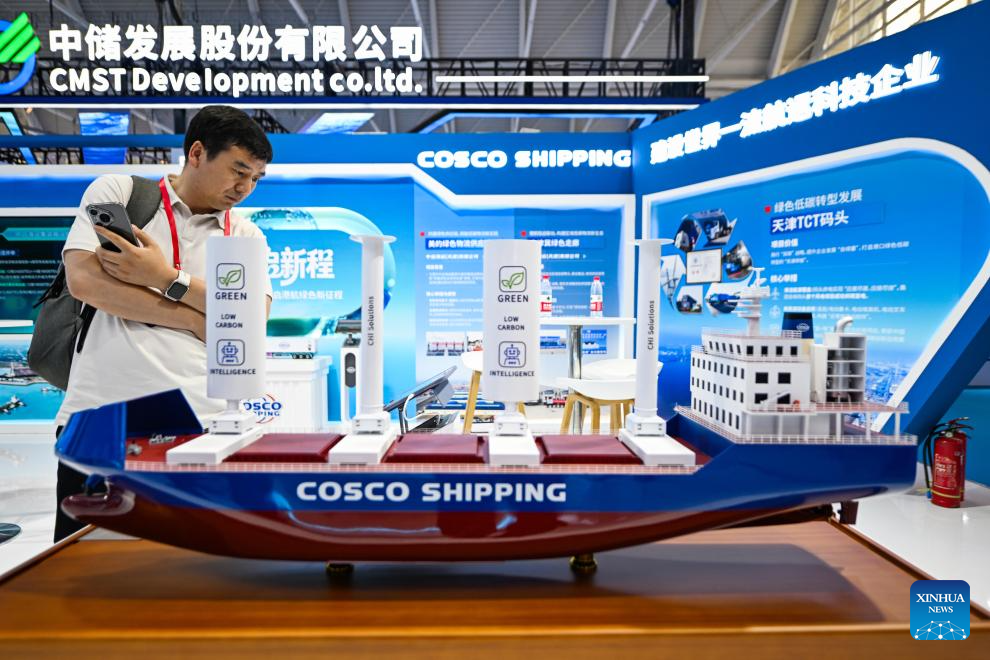
A visitor views a model of green transformation solution for ships at the booth of China COSCO Shipping Corporation Limited during the 4th Tianjin International Shipping Industry Expo in north China's Tianjin, June 3, 2026. The 4th Tianjin International Shipping Industry Expo (TISIE) opened in north China's Tianjin Municipality on Tuesday, showcasing growing AI opportunities in the shipping industry. Themed shipping to the world and navigating towards the future with AI leading new opportunities for the development of ports and shipping, the four-day expo covered fields such as green shipping, maritime equipment, logistics services and more. (Xinhua/Zhao Zishuo)
TIANJIN, June 2 (Xinhua) -- The 4th Tianjin International Shipping Industry Expo (TISIE) opened in north China's Tianjin Municipality on Tuesday, showcasing growing AI opportunities in the shipping industry.
Themed shipping to the world and navigating towards the future with AI leading new opportunities for the development of ports and shipping, the four-day expo covered fields such as green shipping, maritime equipment, logistics services and more.
The TISIE has been held annually in Tianjin since 2023 to promote global shipping cooperation, industry investment and trade exchange.
Xu Kai, chief information officer of Shanghai International Shipping Institute, said that China has built the world's largest network of automated container terminals, with notable breakthroughs in unmanned shore cranes, intelligent guided vehicles and automated yards.
"Terminal equipment should not only operate efficiently but also perform regional dynamic optimization based on real-time fluctuations in vessel arrivals, sudden weather changes and instantaneous cargo flow surges," Xu said. "This requires AI to evolve from executing commands to autonomous reasoning, and from single-machine intelligence to group collaboration."
Waqas Samad, CEO of Lloyd's List Intelligence, said that with the world's largest fleet, and as the world's biggest shipbuilder and producer of shipping containers, China plays a key role in today's shipping landscape. But more importantly, China represents something significant about the future of shipping, not just scale and infrastructure, but the combination of connectivity, technology and intelligence.
"AI will reshape our industry in practical and powerful ways," said Thomas Sim, President of the International Federation of Freight Forwarders Associations.
He noted that AI should empower freight forwarders, not replace their professional judgment; enhance human capability, not remove accountability; and strengthen the role of freight forwarders as trusted logistics architects, not reduce them to platform users.
Feng Boming, vice president of China Merchants Group Limited, said that AI was evolving from a conversational assistant that supports decision-making and improves efficiency to an action-oriented intelligent agent capable of autonomously understanding intentions, invoking tools and executing specific tasks.
"However, greater autonomy also entails greater security responsibilities," Feng said. "We must clearly recognize that behind AI's empowerment of thousands of industries, various new types of security risks and governance challenges continue to emerge, posing entirely new challenges to the orderly development of the industry and the safe operation of the sector." ■
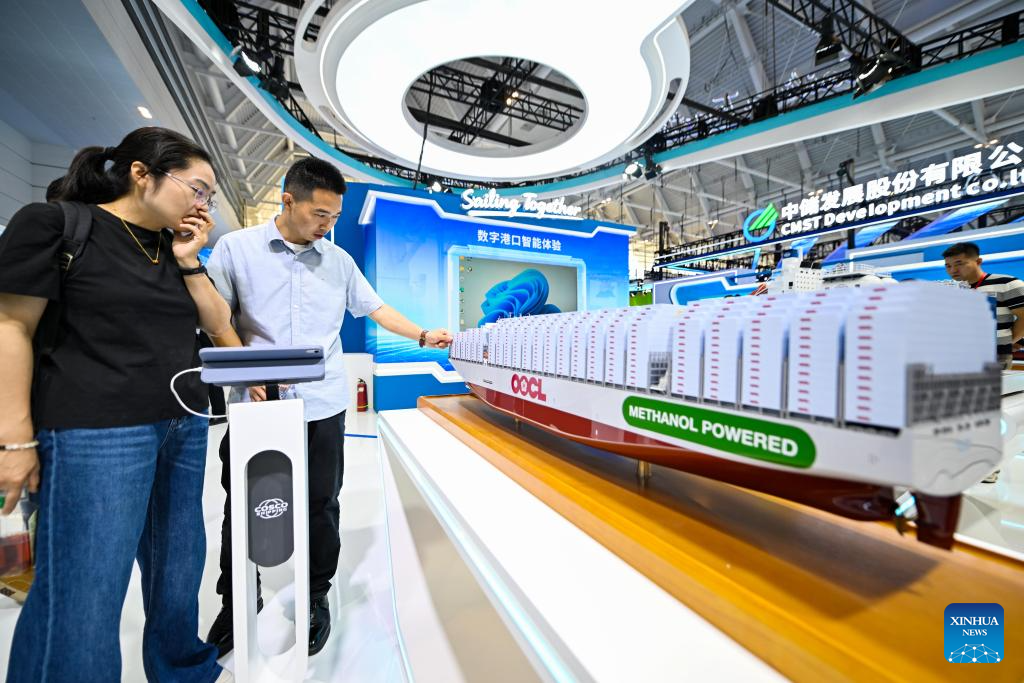
Visitors view a model of a methanol dual-fuel container ship at the booth of China COSCO Shipping Corporation Limited during the 4th Tianjin International Shipping Industry Expo in north China's Tianjin, June 3, 2026. The 4th Tianjin International Shipping Industry Expo (TISIE) opened in north China's Tianjin Municipality on Tuesday, showcasing growing AI opportunities in the shipping industry.
Themed shipping to the world and navigating towards the future with AI leading new opportunities for the development of ports and shipping, the four-day expo covered fields such as green shipping, maritime equipment, logistics services and more. (Xinhua/Zhao Zishuo)
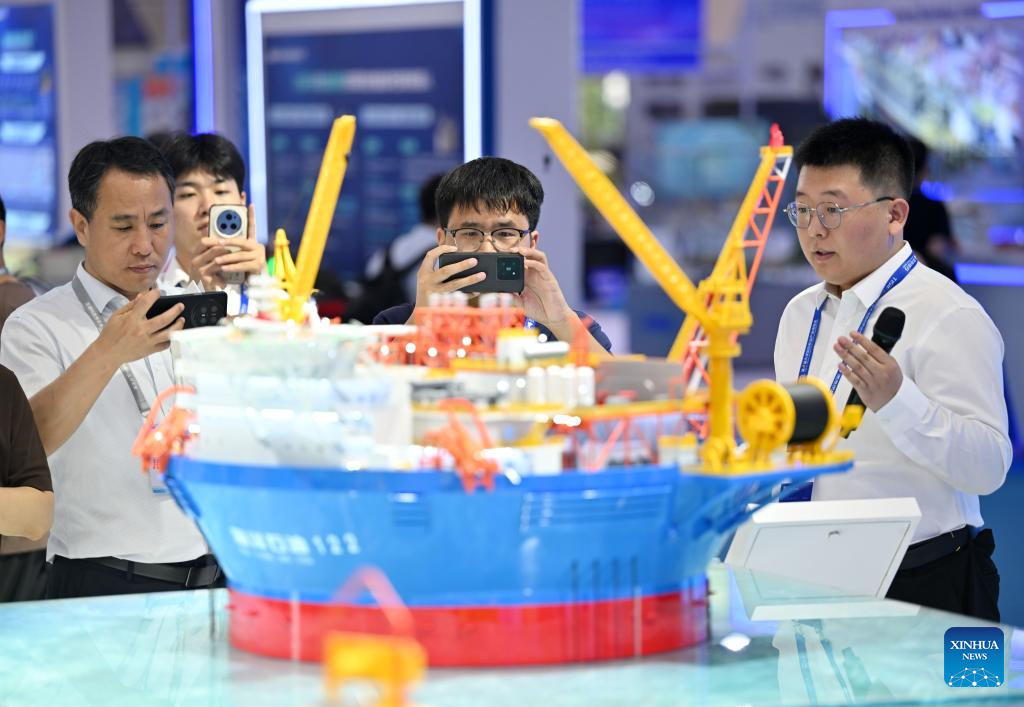
Visitors view a model of Haikui No. 1, Asia's first cylindrical floating, production, storage and offloading (FPSO) facility, at the booth of Offshore Oil Engineering Co., Ltd. during the 4th Tianjin International Shipping Industry Expo in north China's Tianjin, June 3, 2026. The 4th Tianjin International Shipping Industry Expo (TISIE) opened in north China's Tianjin Municipality on Tuesday, showcasing growing AI opportunities in the shipping industry.
Themed shipping to the world and navigating towards the future with AI leading new opportunities for the development of ports and shipping, the four-day expo covered fields such as green shipping, maritime equipment, logistics services and more. (Xinhua/Zhao Zishuo)
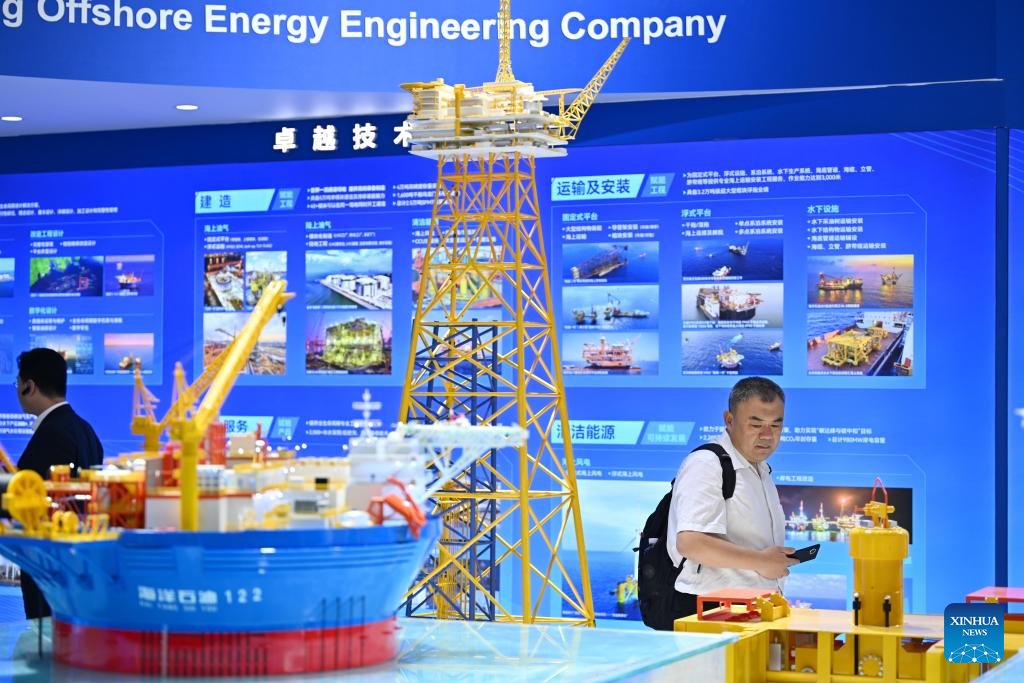
A visitor views exhibits at the booth of Offshore Oil Engineering Co., Ltd. during the 4th Tianjin International Shipping Industry Expo in north China's Tianjin, June 3, 2026. The 4th Tianjin International Shipping Industry Expo (TISIE) opened in north China's Tianjin Municipality on Tuesday, showcasing growing AI opportunities in the shipping industry.
Themed shipping to the world and navigating towards the future with AI leading new opportunities for the development of ports and shipping, the four-day expo covered fields such as green shipping, maritime equipment, logistics services and more. (Xinhua/Zhao Zishuo)
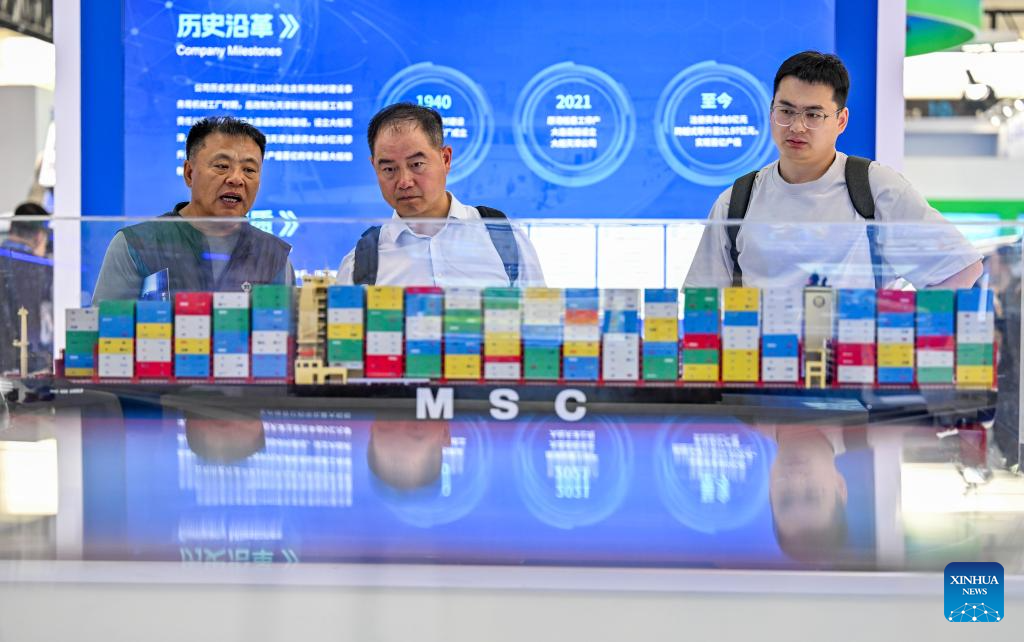
Visitors view a model of a liquefied natural gas (LNG) dual-fuel container ship at the 4th Tianjin International Shipping Industry Expo in north China's Tianjin, June 3, 2026. The 4th Tianjin International Shipping Industry Expo (TISIE) opened in north China's Tianjin Municipality on Tuesday, showcasing growing AI opportunities in the shipping industry.
Themed shipping to the world and navigating towards the future with AI leading new opportunities for the development of ports and shipping, the four-day expo covered fields such as green shipping, maritime equipment, logistics services and more. (Xinhua/Zhao Zishuo)


