
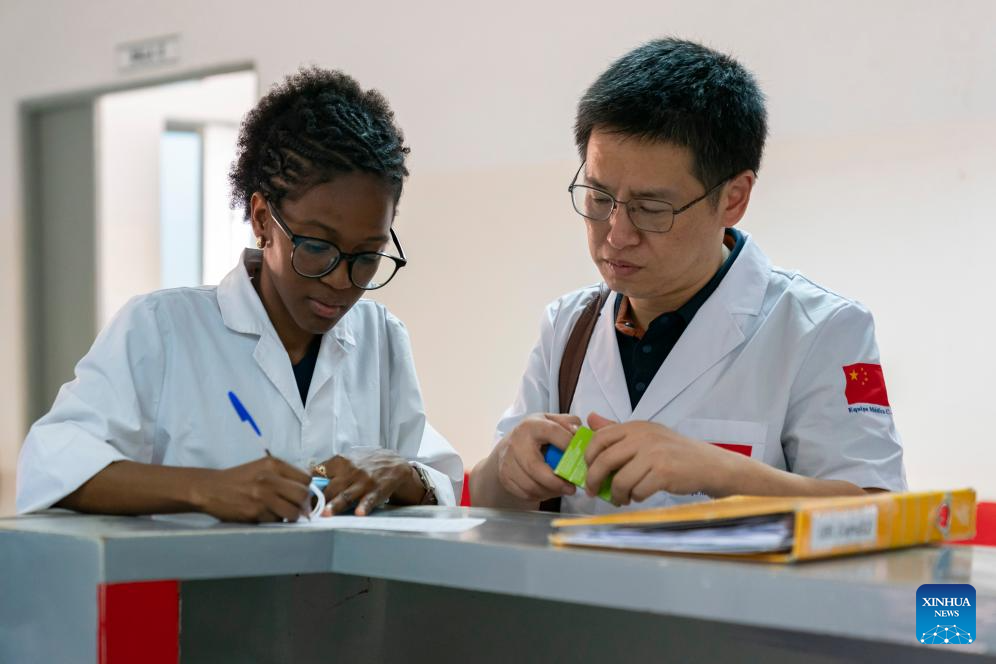
Cabo Verdean doctor Marbel Leal (L) works alongside a Chinese doctor at Dr. Agostinho Neto Hospital in Praia, Cabo Verde, on May 12, 2026. (Xinhua/Xie Jianfei)
PRAIA, June 1 (Xinhua) -- Cabo Verde is a small island country scattered across the Atlantic, where the sea has long linked people to distant shores.
For many Cabo Verdeans, China was once such a distant place -- across continents, oceans and languages. This year marks the 50th anniversary of diplomatic relations between China and Cabo Verde. Half a century later, the distance is no longer measured only on maps. It is being shortened in hospital corridors, pediatric wards and Chinese-language classrooms.
At Dr. Agostinho Neto Hospital (HAN), the central hospital in Praia, Cabo Verdean doctor Marbel Leal works alongside Chinese doctors.
Leal once studied Chinese and clinical medicine in China. In 2025, she returned to Cabo Verde and joined HAN, where she has worked in departments including surgery, emergency medicine, intensive care and neurosurgery.
One of her colleagues is Chen Feng, head of the 22nd Chinese medical team to Cabo Verde and a critical care specialist. While one traveled thousands of miles from China to heal, the other returned from China to serve her homeland. Standing in the same hospital, they now care for the same patients.
Since 1984, China has sent 22 medical teams to Cabo Verde. At HAN, Chinese doctors are no longer strangers. Leal said language and local working practices can be challenging for Chinese doctors when they first arrive, and her knowledge of Chinese often helps smooth communication.
"They are willing to adapt, and they are doing a good job," Leal said.
Chen said Chinese medical teams not only provide clinical services, but also attach importance to training local medical personnel.
The intensive care unit at HAN, built with Chinese assistance and launched in 2024, features eight beds fully equipped with ventilators, cardiac monitors, and other vital life-support technology.
"It is Cabo Verde's first ICU," Chen said, emphasizing that the facility marks a leap forward for local critical care.
For three consecutive Chinese medical teams to Cabo Verde, the team leaders have been ICU specialists, a move aimed at helping the country gradually improve its critical care capacity.
Chinese doctors come in batches and leave when their missions end. But what remains is more than medical records and equipment. Local doctors like Leal, who can communicate in Chinese and bring medical knowledge learned in China back to Cabo Verdean wards, have become another kind of medical team -- one that cannot be taken away.
China's health cooperation with Cabo Verde also reaches beyond the capital.
On Sao Vicente Island, in the northern part of the archipelago, a new building at Dr. Baptista de Sousa Hospital in Mindelo has changed the daily experience of doctors, children and parents.
The maternity building, built with Chinese assistance and undertaken by China Railway 14th Bureau Group Corporation Limited, was completed and handed over to the Cabo Verdean side in July 2025.
As an important regional medical institution, Dr. Baptista de Sousa Hospital serves not only residents of Sao Vicente, but also patients from several other islands in northern Cabo Verde.
"This is not just a new building," said Victor Manuel Moreira da Costa, the hospital's board chairman. He said it means more comfortable, safer and higher-quality medical services for local patients.
The pediatric emergency and inpatient wards are already in use, while preparations are underway to move maternity services into the building. Da Costa said the hospital will proceed with the move on the basis of patient safety.
For pediatrician Zuleica Fernandes, the changes are seen first in the wards.
She said that in the old space, some rooms could hold up to six beds. In the new pediatric ward, "rooms generally have three beds, with more space, better lighting and ventilation, and a lower risk of infection".
For Vera Lucia, a mother staying with her child in the ward, the new building has brought comfort in small but important ways.
"In the old ward, it was so crowded that it was hard even to find a place to sit," she said. "Now there is more space and a better environment. I can stay with my child and even take a hot shower. I feel much more at ease here."
In classrooms, another form of connection is taking root.
At the Confucius Institute of the University of Cabo Verde, local teacher Marta Luisa Freire Neves, known by her Chinese name Wei Mengxia, demonstrates Chinese tones to students.
She first encountered Chinese as a high school student in 2017.
"At that time, I could not understand Chinese at all, but I wanted to know what China was really like," she said.
She later went to Macao, China, to study Chinese systematically, and continued her studies in international Chinese language education. In 2023, she went to Beijing Language and Culture University for a master's degree.
Now back in Cabo Verde, she teaches Chinese at the Confucius Institute.
"I came back because I wanted to teach my students everything I had learned," she said. "It is not only about language and culture, but also about my experience of studying, living and growing in China."
Kong Qingqing, a Chinese teacher at the institute, said the rise of local teachers like Neves shows that Chinese-language education has taken root in Cabo Verde.
Established in December 2015, the Confucius Institute of the University of Cabo Verde has registered more than 11,000 learners. Its courses and training programs now cover the university and 13 secondary schools.
Kong said the institute has continued to improve its teaching network and tiered teaching system, helping Chinese move from an interest-based subject to formal courses and integrate into Cabo Verde's national education system.
Chinese Ambassador to Cabo Verde Zhang Yang said the Confucius Institute has become an important platform for Cabo Verdeans to learn about the Chinese language and culture.
University of Cabo Verde Rector Astrigilda Pires Rocha Silveira said educational cooperation is one of the most far-reaching areas of China-Cabo Verde cooperation over the past five decades.
She said the university's new campus, built with Chinese assistance, has improved infrastructure and created new conditions for the modernization and internationalization of higher education in Cabo Verde.
This enduring partnership has reverberated at the highest levels of leadership. In a recent interview with Xinhua, Cabo Verdean President Jose Maria Neves said China has "always been present" at crucial moments in Cabo Verde's development.
Cooperation with China has had a positive impact in areas such as education and training, health care, agriculture, water resources development and infrastructure construction, Neves said, noting that Chinese doctors and technical experts have long worked in Cabo Verde under cooperation programs.
Cabo Verde is not large, but it has always looked beyond the horizon. Across hospitals and classrooms, stories that once seemed to come from far away are now unfolding in daily life. Across oceans, the distance has quietly narrowed. ■
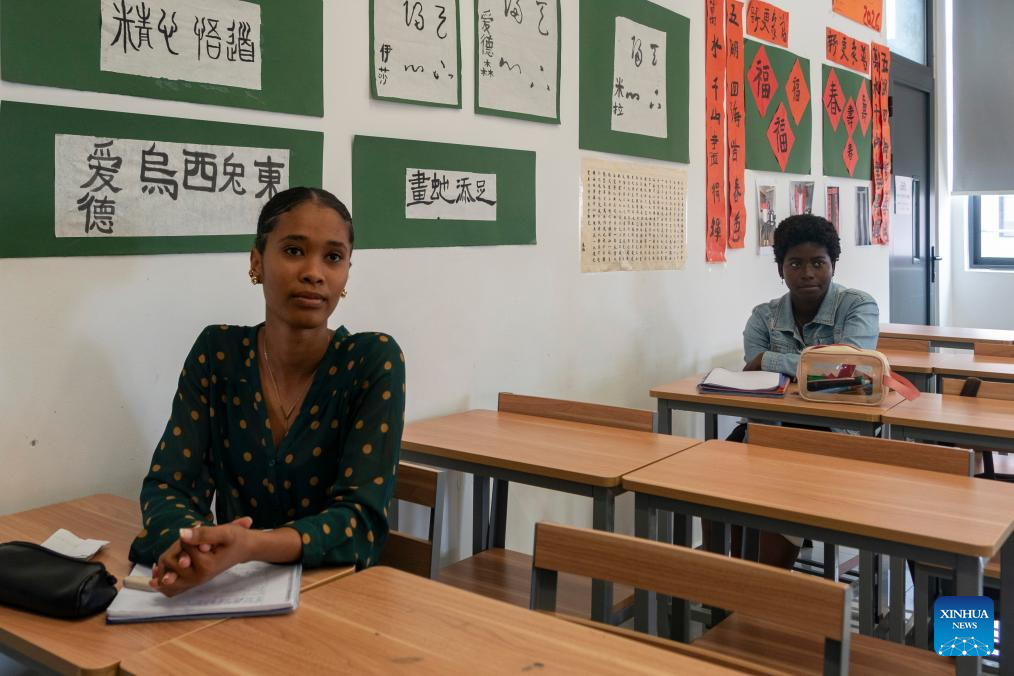
Students attend a class at the Confucius Institute of the University of Cabo Verde in Praia, Cabo Verde, on May 14, 2026. (Xinhua/Xie Jianfei)
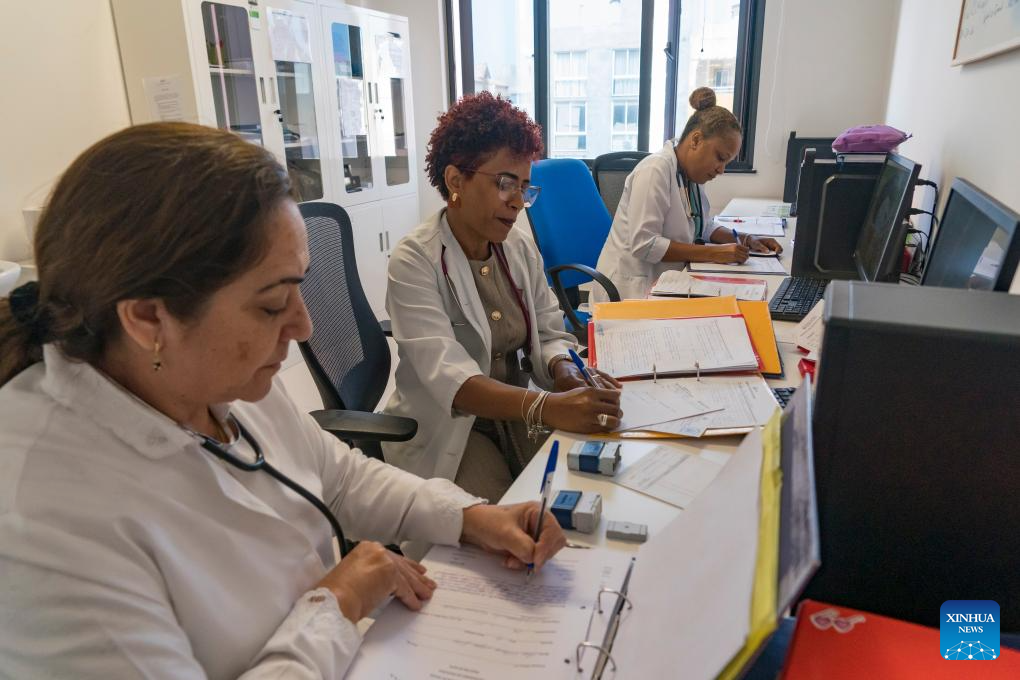
Doctors work at a maternity building built with Chinese assistance at Dr. Baptista de Sousa Hospital in Mindelo on Sao Vicente Island, Cabo Verde, May 13, 2026. (Xinhua/Xie Jianfei)
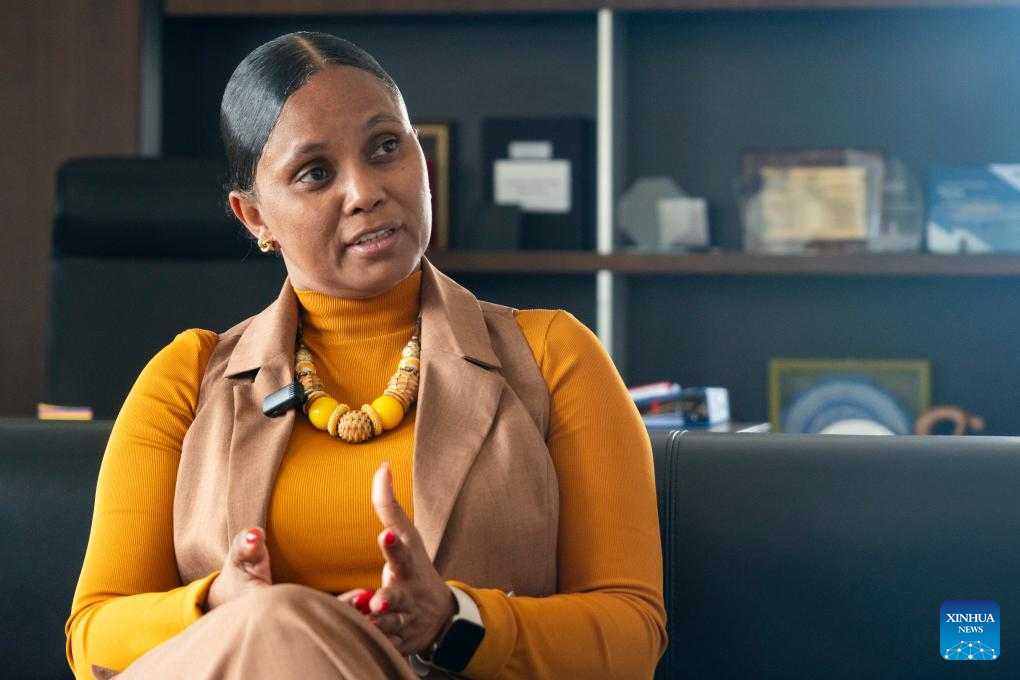
University of Cabo Verde Rector Astrigilda Pires Rocha Silveira receives an interview with Xinhua in Praia, Cabo Verde, on May 14, 2026. (Xinhua/Xie Jianfei)
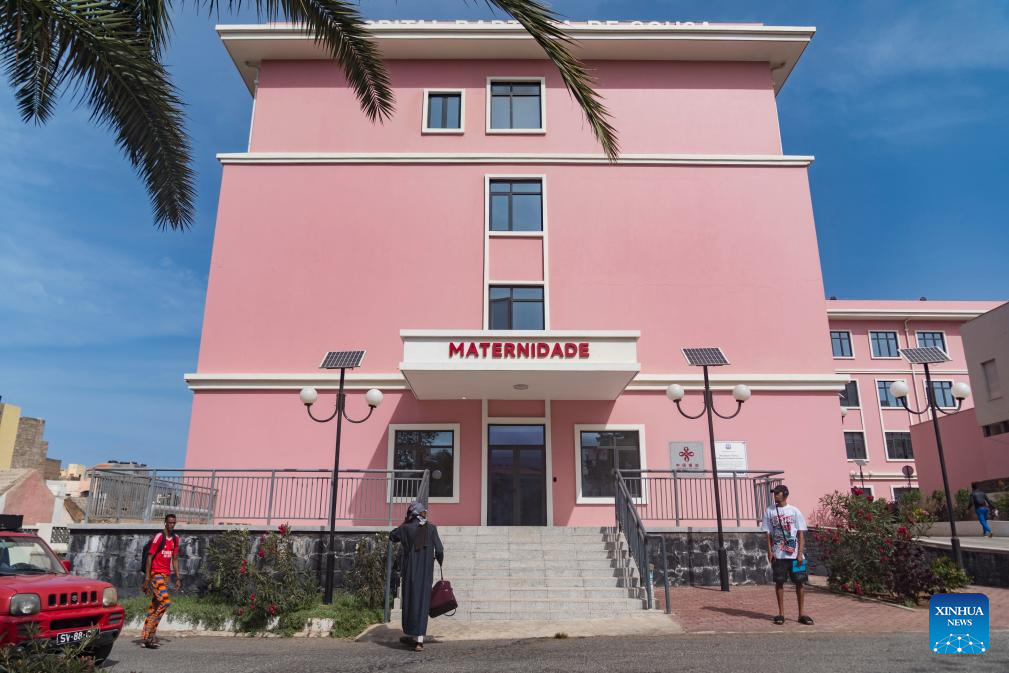
The maternity building built with Chinese assistance is pictured at Dr. Baptista de Sousa Hospital in Mindelo on Sao Vicente Island, Cabo Verde, May 13, 2026. (Xinhua/Xie Jianfei)
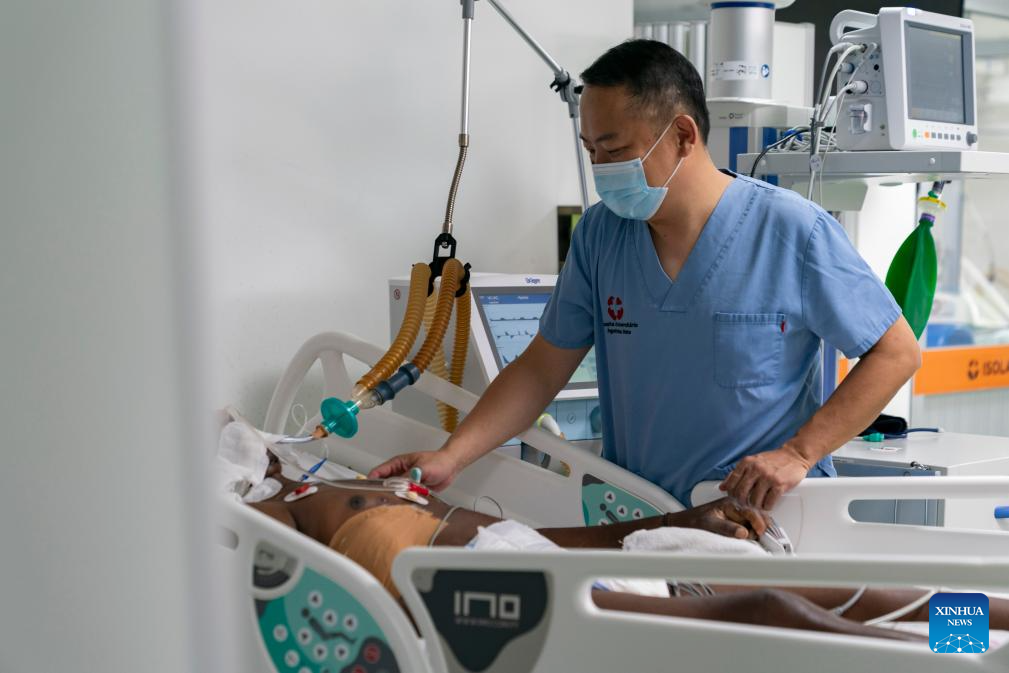
Chen Feng, head of the 22nd Chinese medical team to Cabo Verde and a critical care specialist, treats a patient at an intensive care unit of Dr. Agostinho Neto Hospital in Praia, Cabo Verde, on May 12, 2026. (Xinhua/Xie Jianfei)
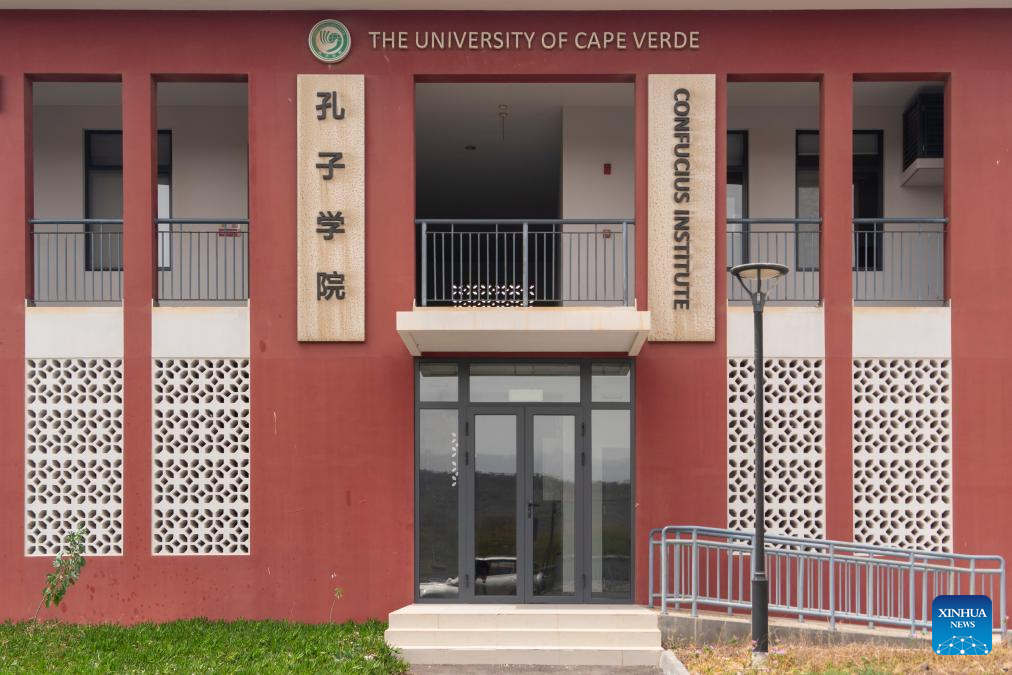
The Confucius Institute of the University of Cabo Verde is pictured in Praia, Cabo Verde, on May 14, 2026. (Xinhua/Xie Jianfei)


