
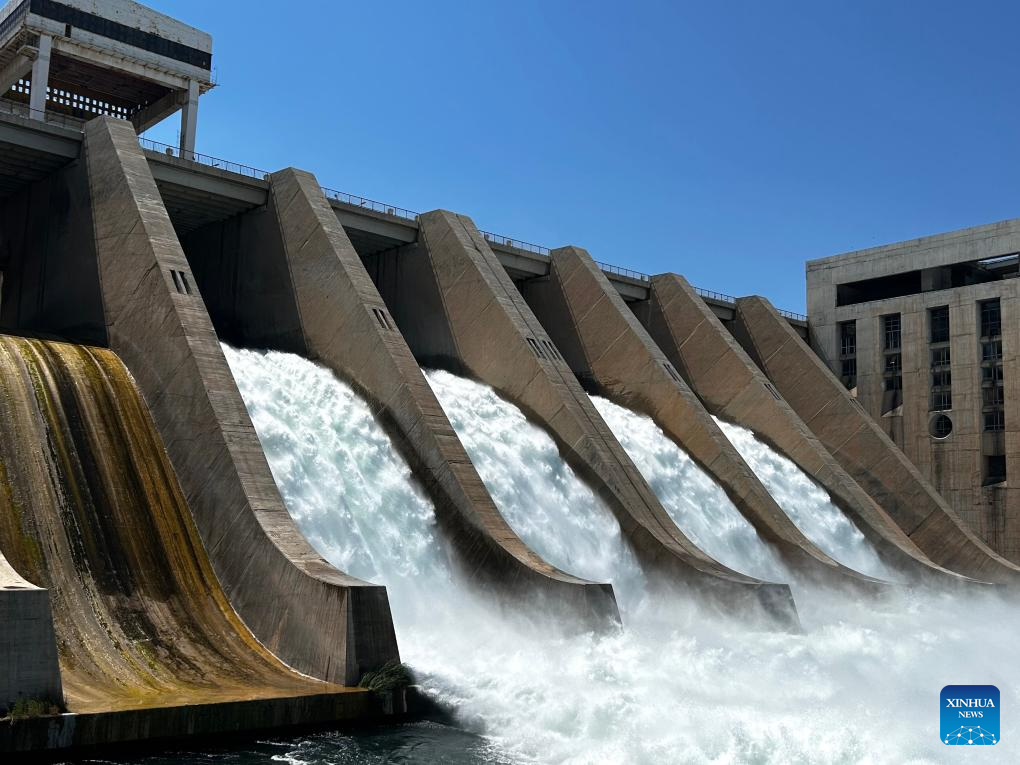
Water is discharged through a spillway gate at the Euphrates Dam in Raqqa province, Syria, May 28, 2026.(Str/Xinhua)
By Hummam Sheikh Ali
RAQQA, Syria, May 30 (Xinhua) -- For years, residents along the Euphrates River in northern and eastern Syria feared warplanes, shelling, and collapsing bridges. Now, many fear the river itself.
The unusually high water levels in the Euphrates are threatening homes, farmland, and fragile infrastructure across parts of Raqqa and Deir al-Zour provinces. Families have been forced to flee low-lying areas as authorities race to contain flooding.
Near Raqqa, roads disappeared beneath muddy water, temporary crossings became impassable, and families along the riverbanks scrambled to move children, livestock, and belongings to higher ground.
The flooding followed a decision by Syrian authorities to open additional spillway gates at the Euphrates Dam after warnings of a surge of water arriving from upstream.
Officials said inflows reached nearly 2,000 cubic meters per second, the highest level recorded in more than 15 years.
Inside emergency operations rooms at the dam, engineers and technicians worked around the clock, monitoring water levels and adjusting discharge rates to prevent sudden flooding downstream.
Haitham Bakour, director general of the Euphrates Dam Establishment, told Xinhua that Turkish authorities had warned Syrian officials days earlier that a rare flood wave would continue for several days.
"We declared a full state of emergency and increased monitoring operations," Bakour said. "We absorbed part of the incoming water by raising storage to maximum levels while increasing water discharge through the dams."
Authorities increased discharges gradually to avoid what Bakour described as a dangerous "shock" to communities along the riverbanks.
Beyond the technical challenge of protecting the dam system, officials were also concerned about the humanitarian consequences.
Years of war and management negligence left widespread encroachments along the river's natural course, including unauthorized buildings, makeshift cafes, irrigation projects, and temporary bridges, Bakour said. Many of the structures were erected after wartime destruction, narrowing sections of the river and increasing flood risks.
Without advance warnings, residents could have become trapped by rising water, making rescue operations far more difficult, he said.
In the al-Sawafi area on the outskirts of Raqqa, one of the first locations affected, residents watched roads and farmland gradually disappear underwater.
Standing aboard a wooden boat moving through flooded streets, Raqqa resident Abdul Hay al-Tayyah pointed toward submerged homes and fields.
"This was once a public road where cars used to pass," he said. "Today, neither cars nor motorcycles can pass. Only boats can move here."
"The water flooded the farms and entered the homes. Whoever had children carried them and fled. Whoever had sheep or cattle took them and left."
Elsewhere, near Raqqa's old bridge, residents piled up dirt barriers using basic tools and limited resources in an effort to prevent polluted floodwater from reaching homes and electrical infrastructure.
Yasser Khalaf, a resident in his 60s, said floodwaters mixed with sewage and waste had spread dangerously close to neighborhoods where more than 100 families still live.
"These waters are polluted and filled with waste," he said. "If the water reaches the underground power lines, it could cause a disaster."
The flooding came during Eid al-Adha, when families would normally gather to celebrate. Instead, many spent the holiday monitoring water levels and preparing for possible evacuation.
Emergency and Disaster Minister Raed al-Saleh said about 5,000 dunams (1,235 acres) of agricultural land in Deir al-Zour province had been submerged, affecting approximately 2,400 families. No deaths had been reported as of Saturday.
For communities already strained by years of war, displacement and economic hardship, the swelling Euphrates has become another reminder of how fragile life remains along Syria's battered riverbanks. ■
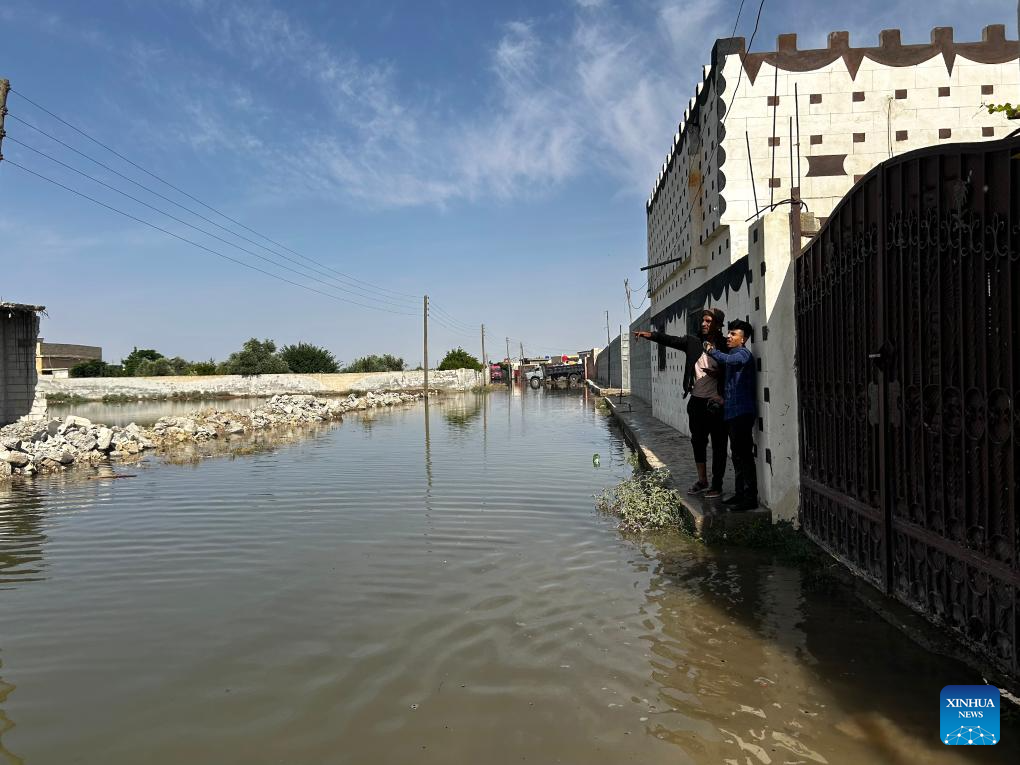
People are seen beside floodwaters covering low-lying land near informal settlements along the Euphrates River in Raqqa province, Syria, May 28, 2026. (Str/Xinhua)
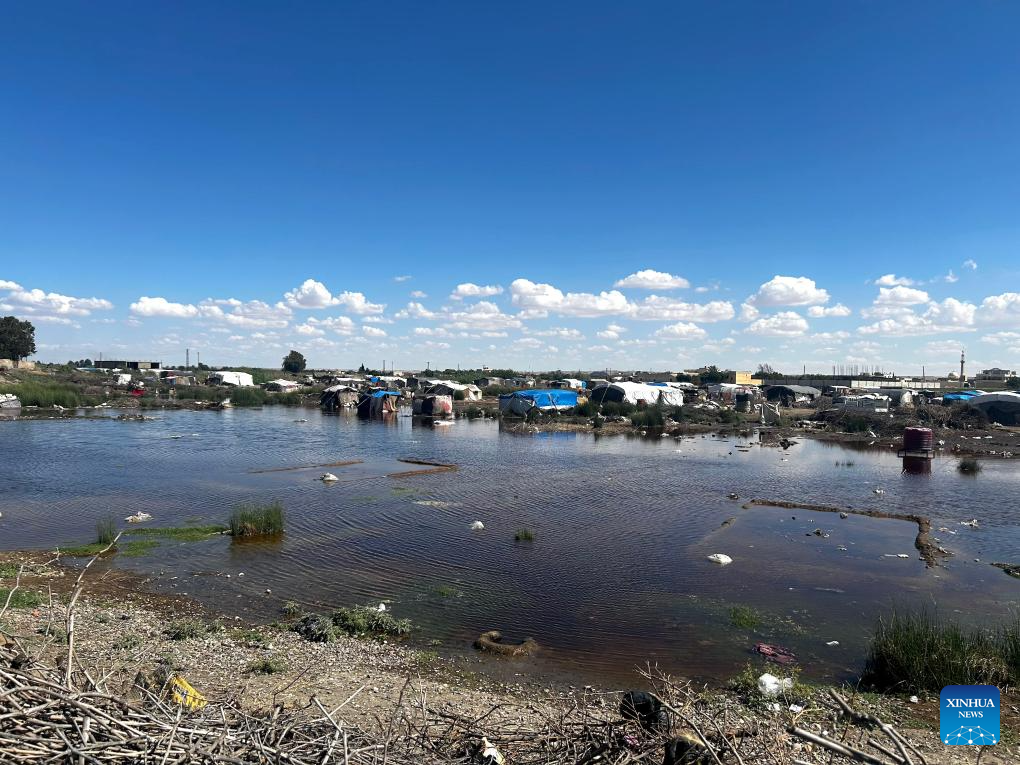
Floodwaters surround tents and temporary shelters near the Euphrates River in Raqqa province, Syria, May 28, 2026. (Str/Xinhua)


