
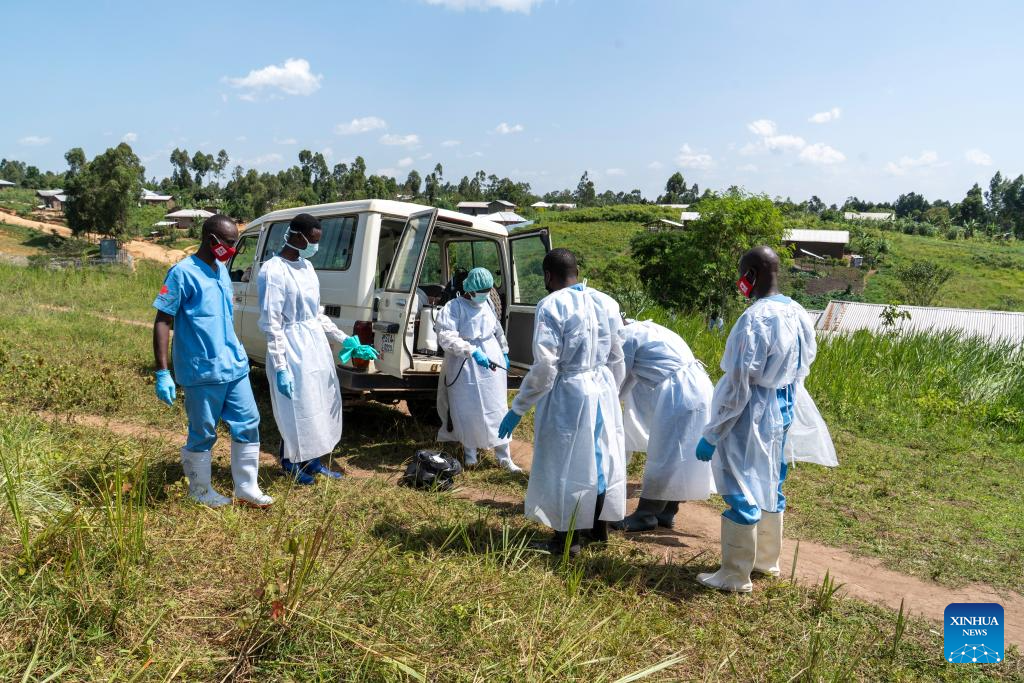
Medical workers prepare to transfer the body of an Ebola victim in Bunia, the capital of Ituri Province in the Democratic Republic of the Congo, May 25, 2026. (Xinhua)
BUNIA, DR Congo, May 29 (Xinhua) -- In Bunia, the capital of Ituri Province in the Democratic Republic of the Congo (DRC), fear of Ebola is reflected on shop shelves.
Small bottles of hand sanitizer, easy to carry in a pocket, have largely run out in parts of the city, which is the epicenter of the ongoing Ebola outbreak. "It has become too expensive. How do you expect people here to afford it? It is a huge problem in trying to stop the outbreak from spreading," said Justin, a local resident trying to buy a new bottle of hand sanitizer.
A 500-ml bottle that once sold for about five U.S. dollars is now going for around 10 dollars, according to local residents and traders. Some expect prices to rise further.
The latest outbreak, which has seen more than 1,000 suspected cases reported and is caused by the Bundibugyo strain of the Ebola virus, has pushed public health precautions deep into daily life in Ituri, a province already struggling with years of armed violence, displacement, and fragile public services.
The disease is no longer an emergency confined to treatment centers. It is now present in school courtyards, crowded classrooms, hospital wards, airport checkpoints, and roadside shops where traders handle cash from strangers.
At EPE Bunia, a primary school in the city, headmaster Gaston Katshuva starts each day by setting up hand-washing facilities before pupils enter class. "Then I ask the pupils how they can protect themselves from this disease, through awareness of Ebola, its history, symptoms, and prevention," Katshuva said.
The routine appears simple, but maintaining it is not. Schools need water, soap, and disinfectant every day. Some lack proper hand-washing facilities. Others struggle to secure supplies. In a city where sanitizer is disappearing from shelves and prices are rising, prevention itself has become a logistical and financial burden.
Inside classrooms, the limits are even clearer.
"We are overcrowded here. There is no way to keep distance or follow basic prevention measures," said Loise Francine, a teacher in Bunia. She said some classes have more than 50 pupils, many of them coming from different families and neighborhoods.
Teachers cannot know where each child has been, whom they have visited, or whether they may have come into contact with someone infected.
At a press briefing in Bunia on Thursday night, Health Minister Samuel-Roger Kamba said the government would not close schools.
"We have not closed schools and we are not going to close schools," Kamba said, adding that about five pupils had died since the outbreak began. He noted that the figures were still being verified as part of the wider toll.
For many residents, disinfectant has become a small form of control in a crisis where much else feels uncertain.
In Mongbwalu, a mining town in Ituri and one of the hardest-hit areas, the outbreak has placed hospitals and communities under acute pressure. Even the exchange of money now carries anxiety.
Michael Karazi, who sells phone credit, said he disinfects his hands repeatedly because he handles cash from many customers. "I do not know where the money a client gives me comes from," he said. "It may come from someone infected with Ebola."
More than two weeks after the government declared the outbreak, the situation has become a contest over trust, according to local officials.
At Thursday's briefing, Ituri Provincial Governor Johnny Luboya said misinformation remains one of the most difficult challenges in the response. He said rumors had contributed to incidents at treatment facilities, forcing authorities to work not only with police and security forces but also with community leaders, local radio stations, and influential figures to counter what he called an "infodemic."
At the general referral hospital in Mongbwalu, which has been converted into an Ebola treatment center, Dr. Richard Lokodi said new patients were still arriving and samples were being sent to Bunia for testing. However, the response suffered a major setback after unidentified individuals set fire to a tent last week.
The incident caused panic among medical staff and led to the escape of 18 suspected patients who had been under isolation, according to Lokodi.
"It is still a major risk," he said, adding that efforts were needed to trace the missing patients and strengthen security.
The risk to health workers has become one of the most painful markers of the outbreak. Kamba said three doctors and a total of six health workers have died since the beginning of the outbreak.
However, as the government intensifies efforts, more protective equipment is being sent to frontline staff, Lokodi added. ■
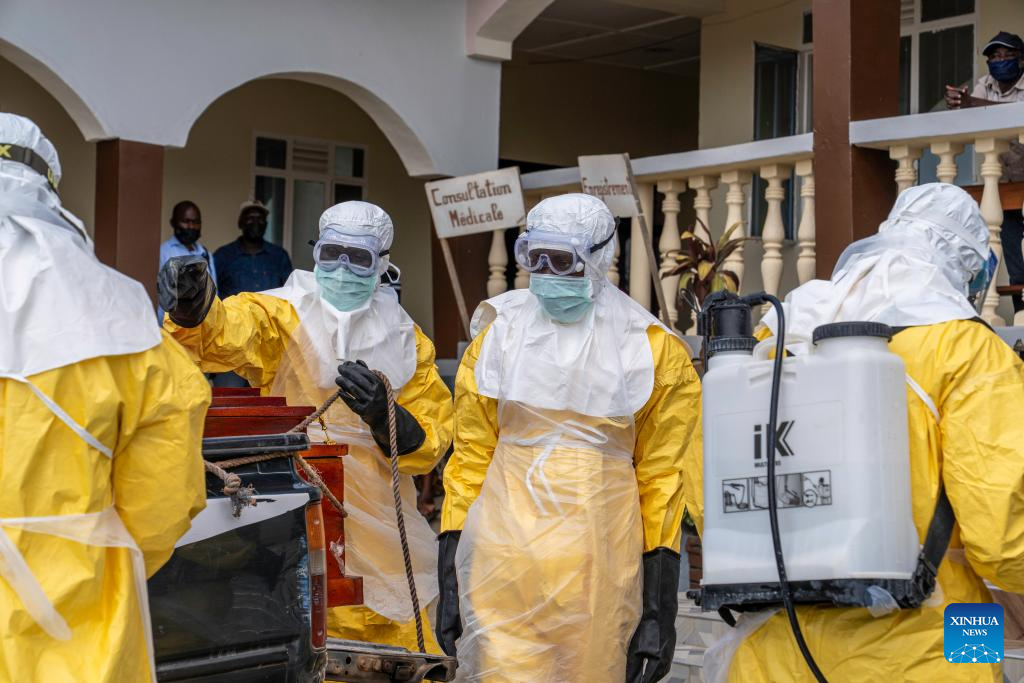
Medical workers in protective suits conduct disinfection work in Bunia, the capital of Ituri Province in the Democratic Republic of the Congo, May 25, 2026. TO GO WITH "Feature: In eastern DR Congo, Ebola outbreak tests response amid rising fear, fragile trust" (Xinhua)
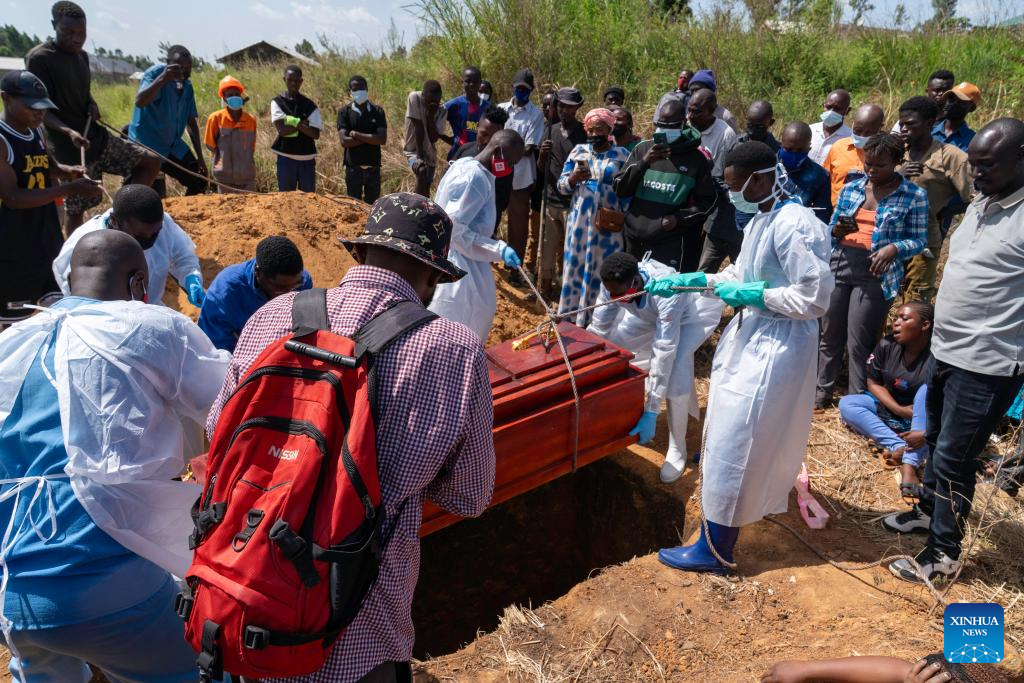
Medical workers bury the body of an Ebola victim in Bunia, the capital of Ituri Province in the Democratic Republic of the Congo, May 25, 2026. TO GO WITH "Feature: In eastern DR Congo, Ebola outbreak tests response amid rising fear, fragile trust" (Xinhua)
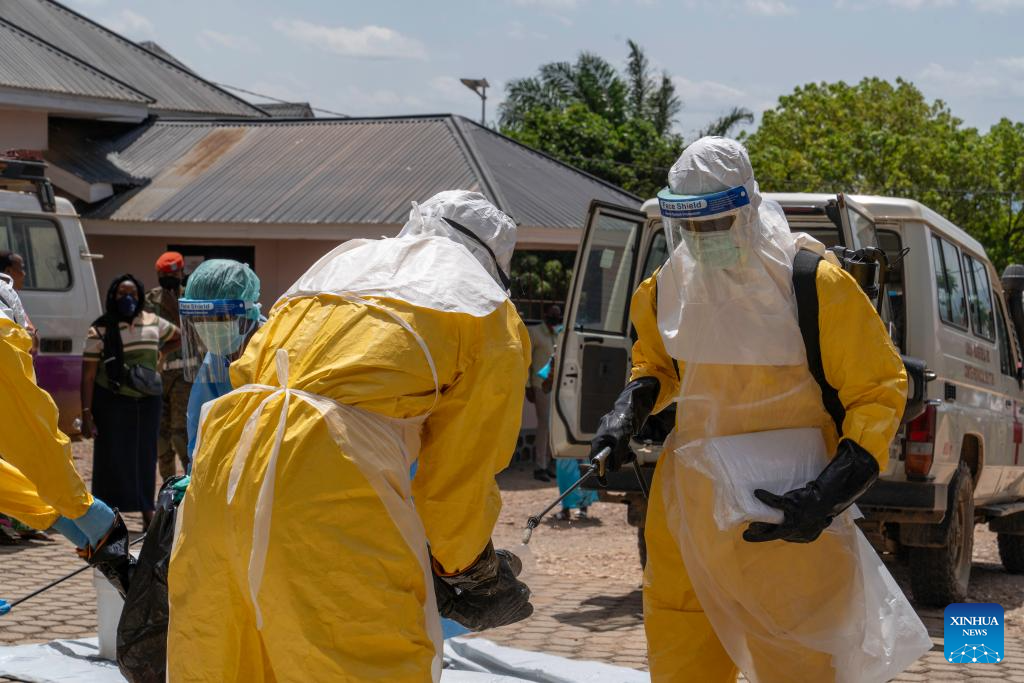
Medical workers in protective suits conduct disinfection work in Bunia, the capital of Ituri Province in the Democratic Republic of the Congo, May 25, 2026. TO GO WITH "Feature: In eastern DR Congo, Ebola outbreak tests response amid rising fear, fragile trust" (Xinhua)
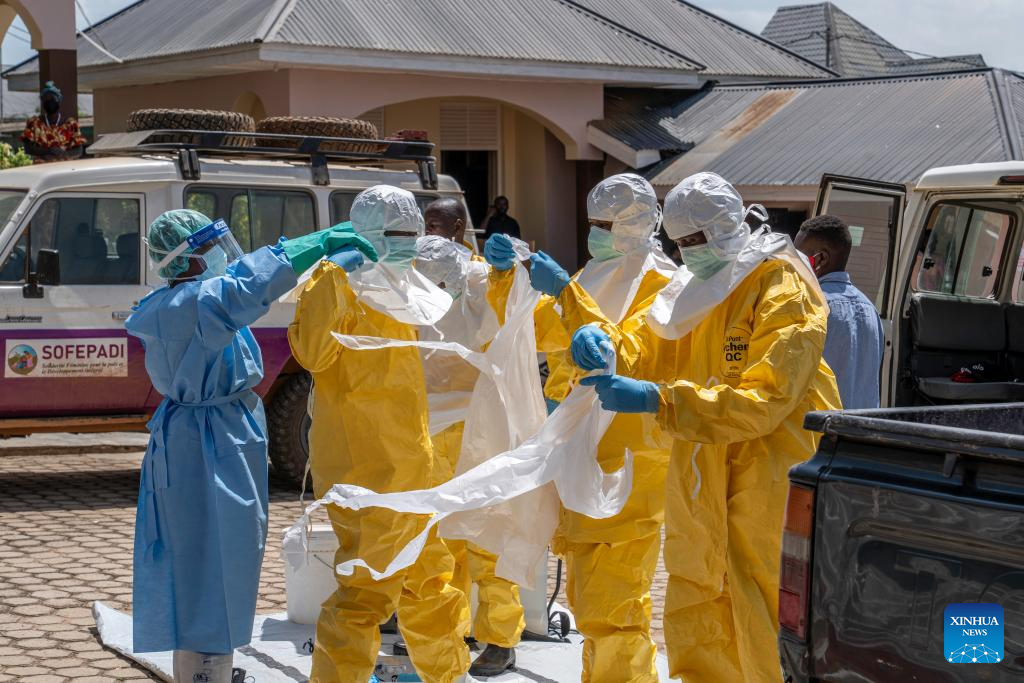
Medical workers put on protective suits in Bunia, the capital of Ituri Province in the Democratic Republic of the Congo, May 25, 2026. TO GO WITH "Feature: In eastern DR Congo, Ebola outbreak tests response amid rising fear, fragile trust" (Xinhua)
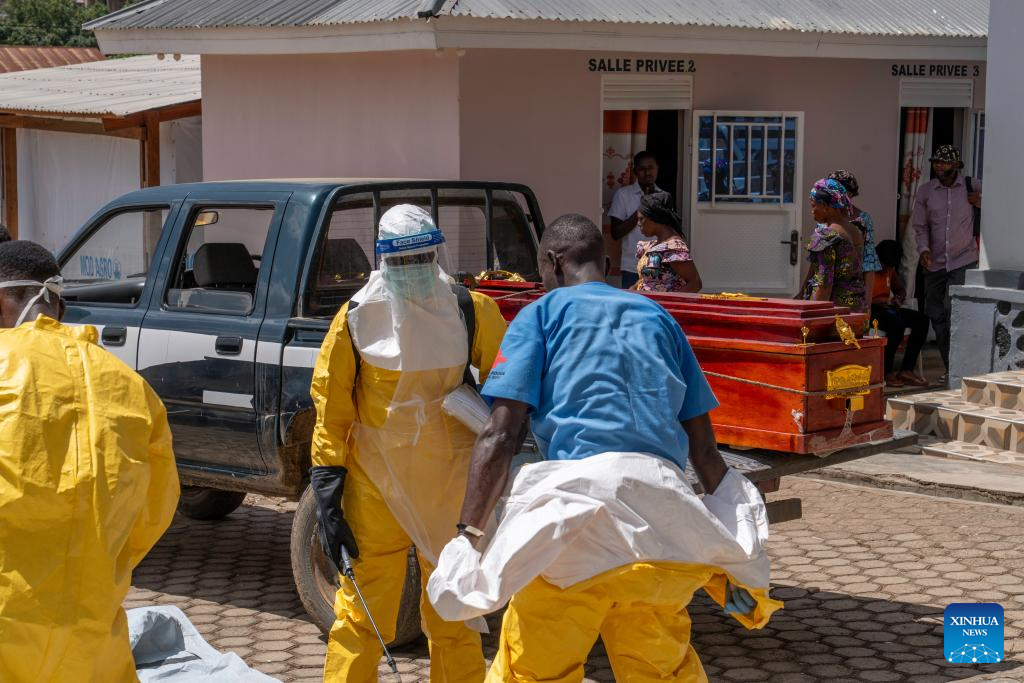
A medical worker puts on protective suits in Bunia, the capital of Ituri Province in the Democratic Republic of the Congo, May 25, 2026. TO GO WITH "Feature: In eastern DR Congo, Ebola outbreak tests response amid rising fear, fragile trust" (Xinhua)


