
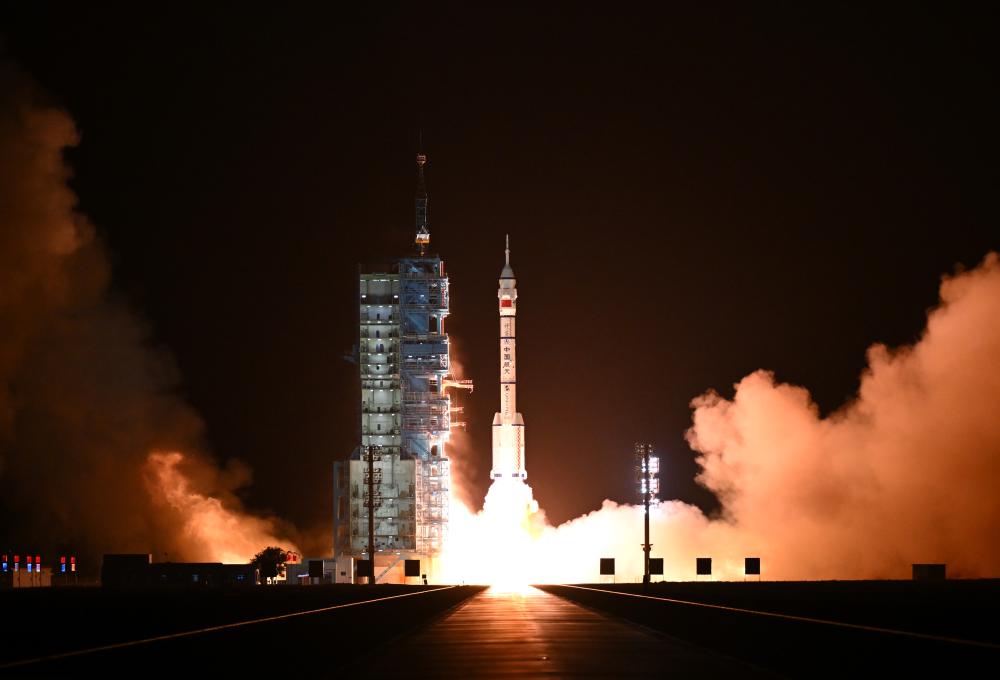
The Shenzhou-23 crewed spaceship, atop a Long March-2F carrier rocket, blasts off from the Jiuquan Satellite Launch Center in northwest China, May 24, 2026. China launched the Shenzhou-23 crewed spaceship on Sunday, which will send three astronauts to its orbiting Tiangong space station. (Xinhua/Lian Zhen)
by Xinhua writers Zhang Dan, Liu Xin and Quan Xiaoshu
JIUQUAN, May 24 (Xinhua) -- China on Sunday successfully launched the Shenzhou-23 crewed spaceship, which will send three astronauts to its orbiting Tiangong space station for new tests on long-duration stay and frontier scientific experiments.
The spaceship, atop a Long March-2F carrier rocket, blasted off at 11:08 p.m. (Beijing Time) from the Jiuquan Satellite Launch Center in northwest China, according to the China Manned Space Agency (CMSA).
About 10 minutes after the launch, the spaceship separated from the rocket and entered its designated orbit, the CMSA said, adding that the astronauts are in good condition.
The CMSA announced that the launch of the Shenzhou-23 crewed spaceship was "a complete success."
The spaceship will then perform a fast, automated rendezvous and docking with the space station complex, and the Shenzhou-23 crew will conduct an in-orbit handover with the Shenzhou-21 crew aboard Tiangong.
The Tiangong space station has entered the docking orbit, with good working conditions for docking and astronaut entry, the CMSA said.
So far, China has sent 30 astronauts into space. Sunday's mission marks the 644th flight of the Long March carrier rocket series.
The Shenzhou-23 crew consists of mission commander Zhu Yangzhu, Zhang Zhiyuan, and Li Jiaying (Lai Ka-ying in Cantonese). The three astronauts are, respectively, a flight engineer, a spacecraft pilot, and a payload specialist.
Zhu once participated in the Shenzhou-16 space mission. Zhang and Li come from the third and fourth batches of astronauts, respectively, and this is their first spaceflight mission. Before being selected, Zhang was an air force pilot while Li worked in the Hong Kong Police Force.
Li has made history as the first astronaut from China's Hong Kong Special Administrative Region to travel to space. She is also the country's fourth female astronaut to reach space, following Liu Yang, Wang Yaping and Wang Haoze.
Lin Xinying, a student from Pui Kiu Middle School in Hong Kong who watched the send-off ceremony and launch on site, said that in the past, her understanding of aerospace technology had been limited to what she saw in science fiction movies.
"However, the opportunity to witness the launch of Shenzhou-23 has provided me with a valuable chance to truly learn about our country's space program," she said.
Another student, Lee Cheuk Hei Trevis, said that the event serves as tremendous encouragement to both Hong Kong society and its young people. "Being able to witness history in person has ignited my imagination about space exploration."
NEW IN-ORBIT STAY RECORD
The astronauts from the Shenzhou-23 crew are set to carry out a one-year in-orbit stay experiment, according to CMSA spokesperson Zhang Jingbo.
According to Zhang, the longest single mission duration by a Chinese astronaut crew so far will be held by the Shenzhou-21 crew, now awaiting rotation. They have already spent 204 days in orbit by Sunday.
"Assigning an astronaut to a one-year in-orbit stay is not simply doubling the duration of two six-month missions," Zhang said.
The mission places significantly higher demands on the astronauts' physical and mental well-being, among other aspects, according to Bian Qiang, an expert at the Astronaut Center of China.
"To meet these challenges, we have reinforced the astronauts' physical fitness and reserves of various physiological functions, while intensifying training in psychological resilience and crew compatibility," Bian said.
During the year-long residency, China will implement its first space-based human-body research program to collect crucial data on astronauts exposed to long-duration spaceflight, Zhang noted.
The extended mission will explore human adaptability and performance limits, aiming to establish a multi-system, multi-omics atlas of the human body in space.
The mission will also test health support capabilities for astronauts on long-duration missions and upgrade in-orbit medical and protective systems, Zhang said. It will also provide opportunities for long-term continuous research on scientific projects and related technology verification.
CUTTING-EDGE SPACE SCIENCE
The Shenzhou-23 crew will conduct more than 100 new science and application projects, focusing on frontier fields such as space life science, materials science, microgravity fluid physics, aerospace medicine, and new space technologies, Zhang of CMSA said.
In the field of space life sciences, the mission will use zebrafish and mouse embryos, as well as stem cell-derived "artificial embryos," to establish a space embryonic research system spanning lower vertebrates to higher mammals, he said.
Rice seeds that have never been sent in space will be cultivated aboard the space station to produce offspring in orbit, said Cang Huaixing, a researcher at the Technology and Engineering Center for Space Utilization under the Chinese Academy of Sciences.
"For the first time, two consecutive generations of rice will be grown in orbit, aiming to clarify how long-term space microgravity affects the genetic stability of rice," Cang said.
Experiments will also be conducted to examine how biological phase separation influences lipid metabolism under microgravity conditions, seeking to understand the molecular mechanisms by which microgravity affects hepatocyte lipid metabolism. This could offer potential targets for early intervention and prevention of related fatty liver diseases during long-duration space missions.
Meanwhile, three types of experimental samples -- nanozymes, actinomycetes, and plant seeds -- will be installed on an extravehicular exposure device for a five-month in-orbit radiation biology experiment, Cang said.
"These samples will be used to study life-origin catalysts, microbial adaptive evolution, and higher plant genetic variations, systematically revealing the deep-layer effects of space radiation on biological samples," he said.
In space material science, their research will focus on producing advanced materials, including high-performance rare-earth permanent magnets and lightweight high-entropy alloys, and studying how to regulate their performance, according to Zhang.
Dynamic in-orbit experiments on perovskite solar cells will be conducted for the first time aboard China's space station to obtain data on conversion-efficiency degradation under real-world extreme space conditions, Cang said.
These experiments will help investigate the evolution of performance and failure mechanisms of perovskite materials and devices under extreme environments.
The research will provide key technological reserves for future low-orbit satellites, deep-space exploration, lunar bases, and energy systems for in situ space manufacturing, Cang said.
The crew will also conduct extravehicular activities (EVAs), handle cargo transfers, and install and retrieve external facilities. Aside from operational tasks, they will also engage in science education. ■
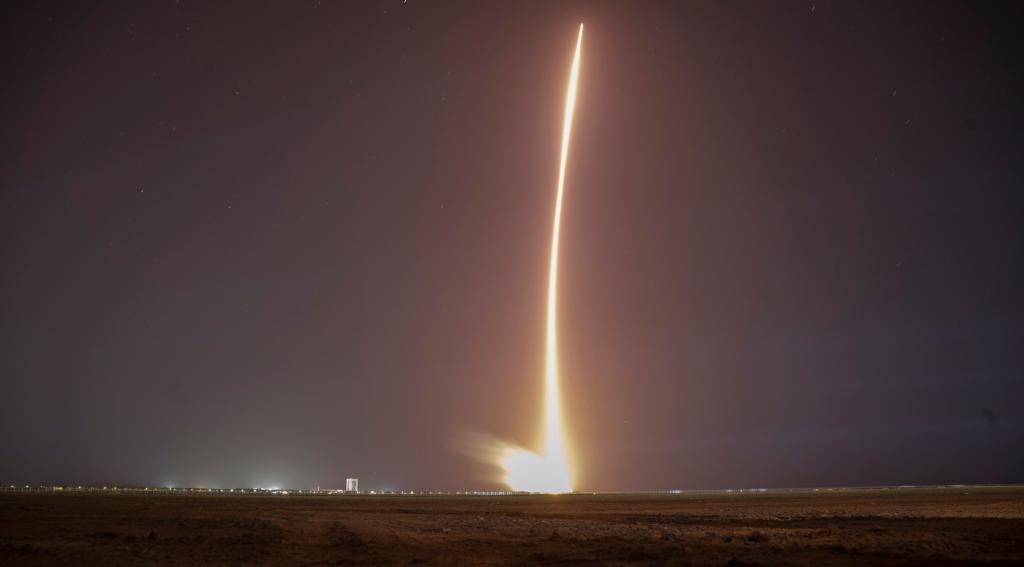
The Shenzhou-23 crewed spaceship, atop a Long March-2F carrier rocket, blasts off from the Jiuquan Satellite Launch Center in northwest China, May 24, 2026. China launched the Shenzhou-23 crewed spaceship on Sunday, which will send three astronauts to its orbiting Tiangong space station. (Xinhua/Cai Yang)
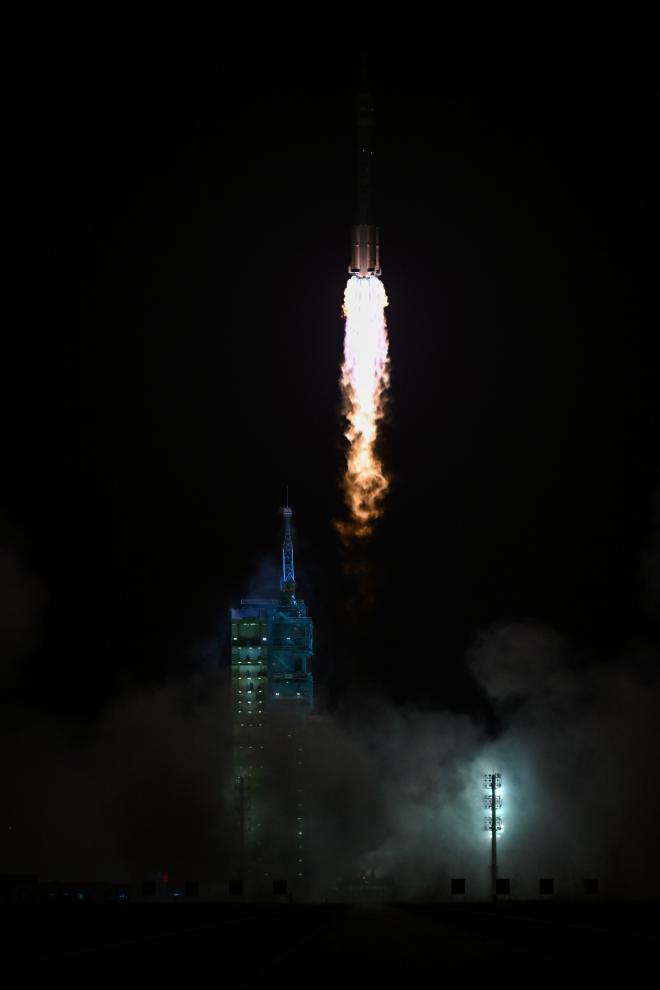
The Shenzhou-23 crewed spaceship, atop a Long March-2F carrier rocket, blasts off from the Jiuquan Satellite Launch Center in northwest China, May 24, 2026. China launched the Shenzhou-23 crewed spaceship on Sunday, which will send three astronauts to its orbiting Tiangong space station. (Xinhua/Li Zhipeng)
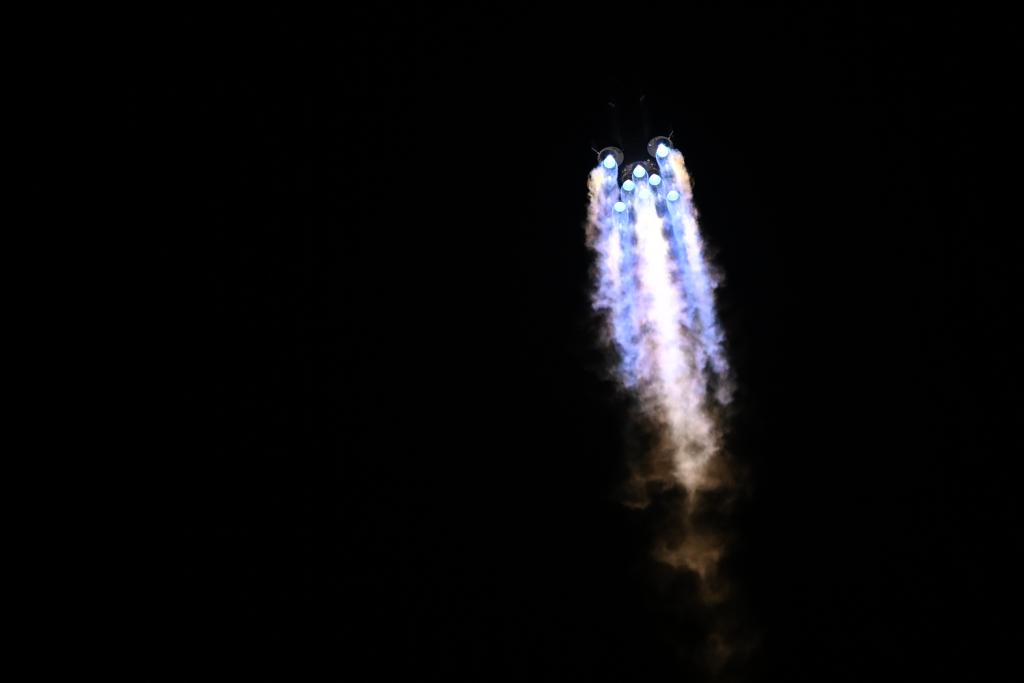
The Shenzhou-23 crewed spaceship, atop a Long March-2F carrier rocket, blasts off from the Jiuquan Satellite Launch Center in northwest China, May 24, 2026. China launched the Shenzhou-23 crewed spaceship on Sunday, which will send three astronauts to its orbiting Tiangong space station. (Xinhua/Lian Zhen)
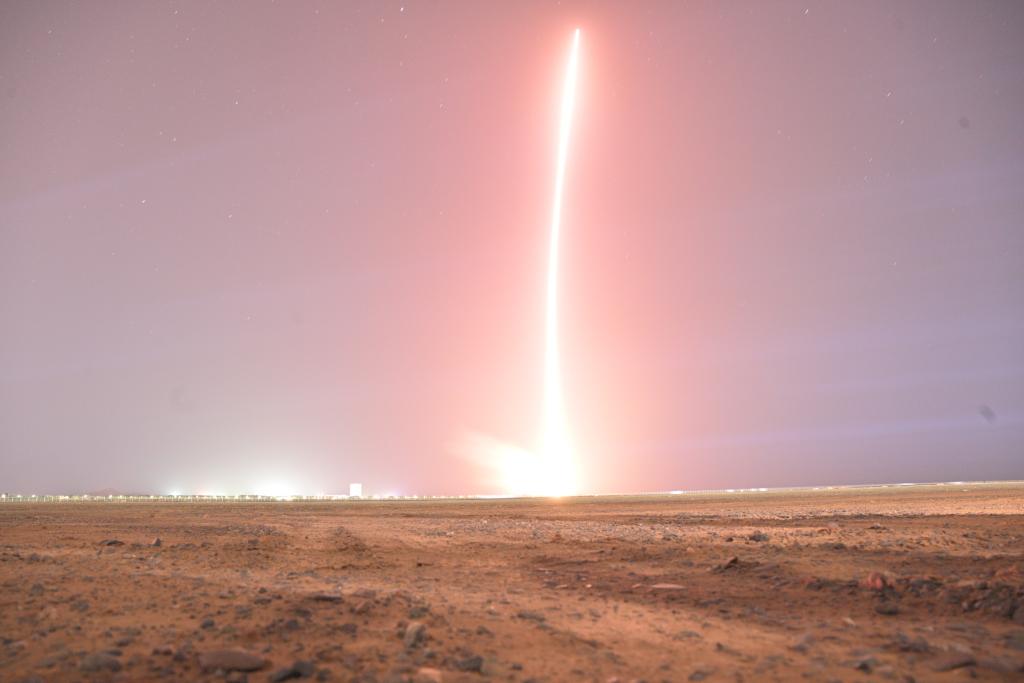
The Shenzhou-23 crewed spaceship, atop a Long March-2F carrier rocket, blasts off from the Jiuquan Satellite Launch Center in northwest China, May 24, 2026. China launched the Shenzhou-23 crewed spaceship on Sunday, which will send three astronauts to its orbiting Tiangong space station. (Xinhua/Cai Yang)
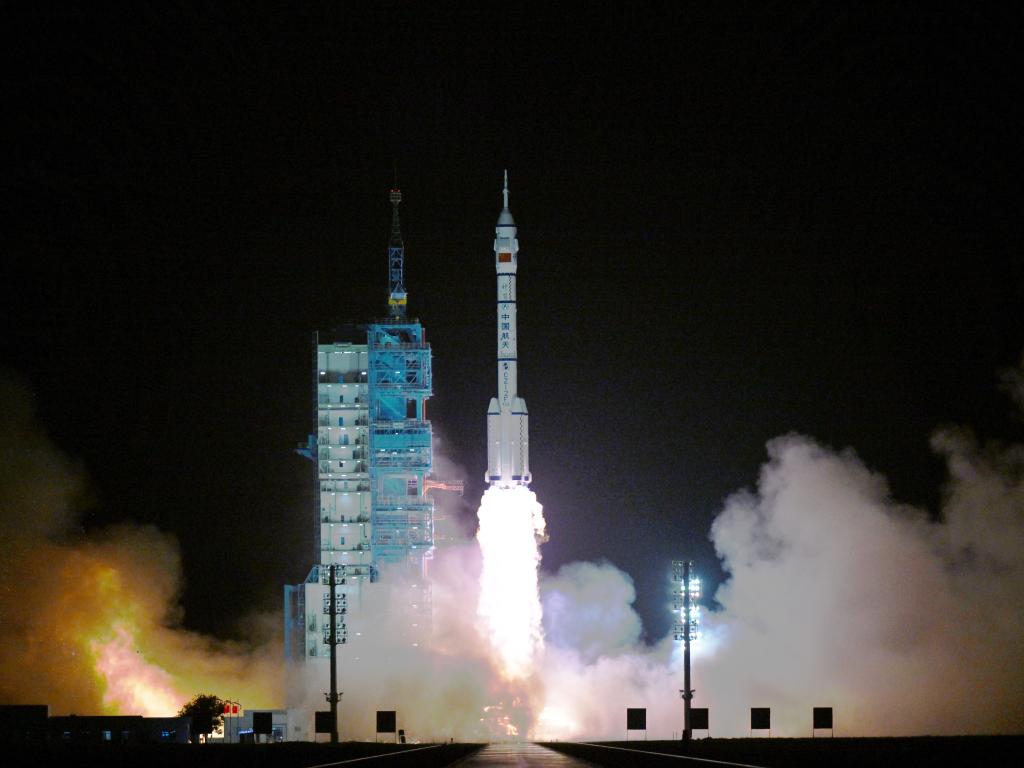
The Shenzhou-23 crewed spaceship, atop a Long March-2F carrier rocket, blasts off from the Jiuquan Satellite Launch Center in northwest China, May 24, 2026. China launched the Shenzhou-23 crewed spaceship on Sunday, which will send three astronauts to its orbiting Tiangong space station. (Xinhua/Lian Zhen)
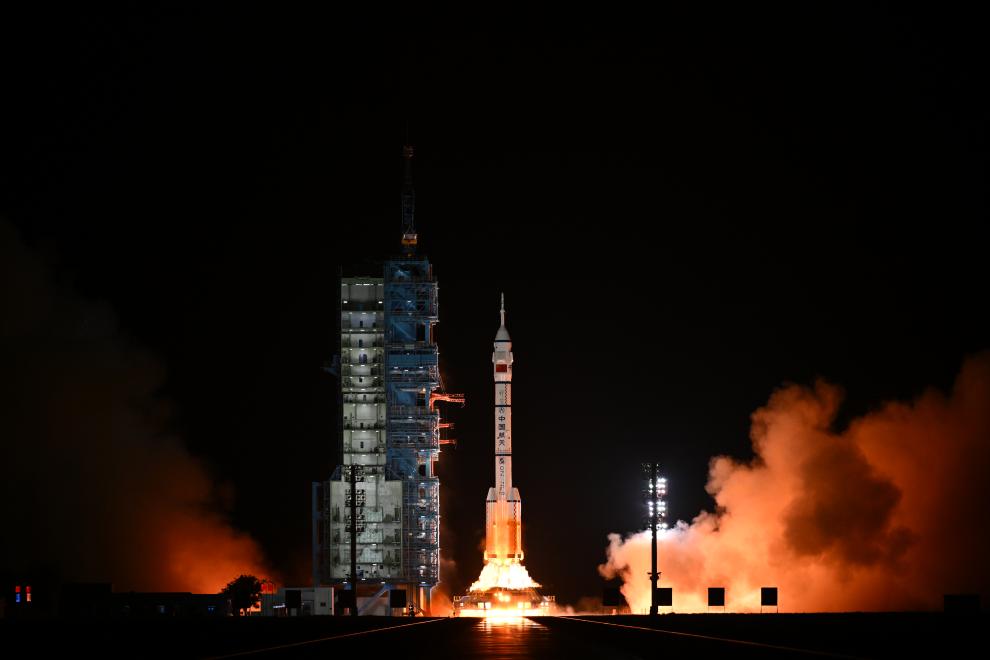
The Shenzhou-23 crewed spaceship, atop a Long March-2F carrier rocket, blasts off from the Jiuquan Satellite Launch Center in northwest China, May 24, 2026. China launched the Shenzhou-23 crewed spaceship on Sunday, which will send three astronauts to its orbiting Tiangong space station. (Xinhua/Lian Zhen)
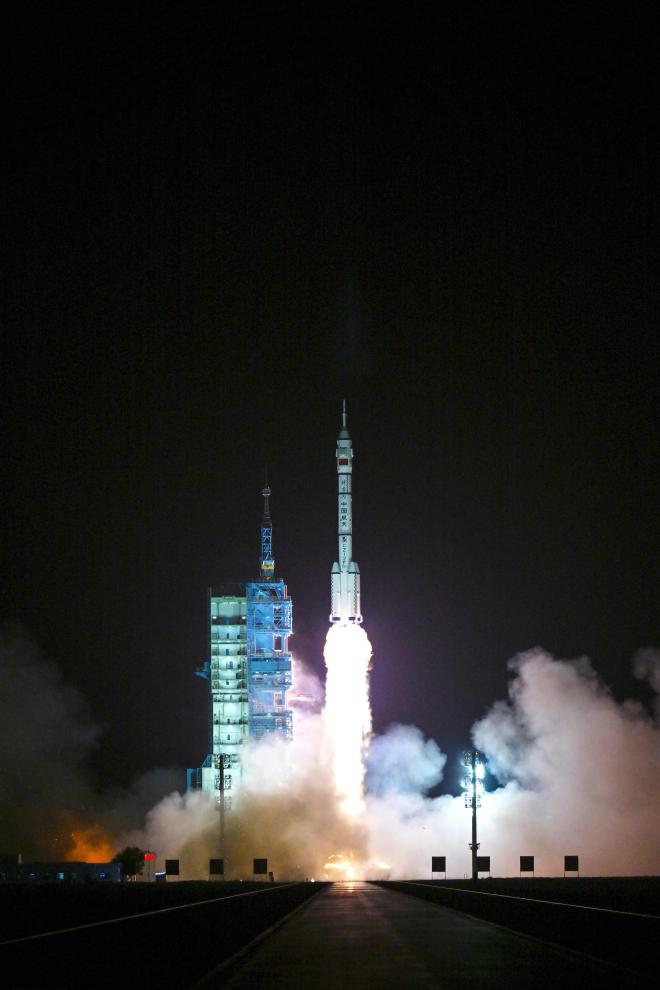
The Shenzhou-23 crewed spaceship, atop a Long March-2F carrier rocket, blasts off from the Jiuquan Satellite Launch Center in northwest China, May 24, 2026. China launched the Shenzhou-23 crewed spaceship on Sunday, which will send three astronauts to its orbiting Tiangong space station. (Xinhua/Li Zhipeng)


