
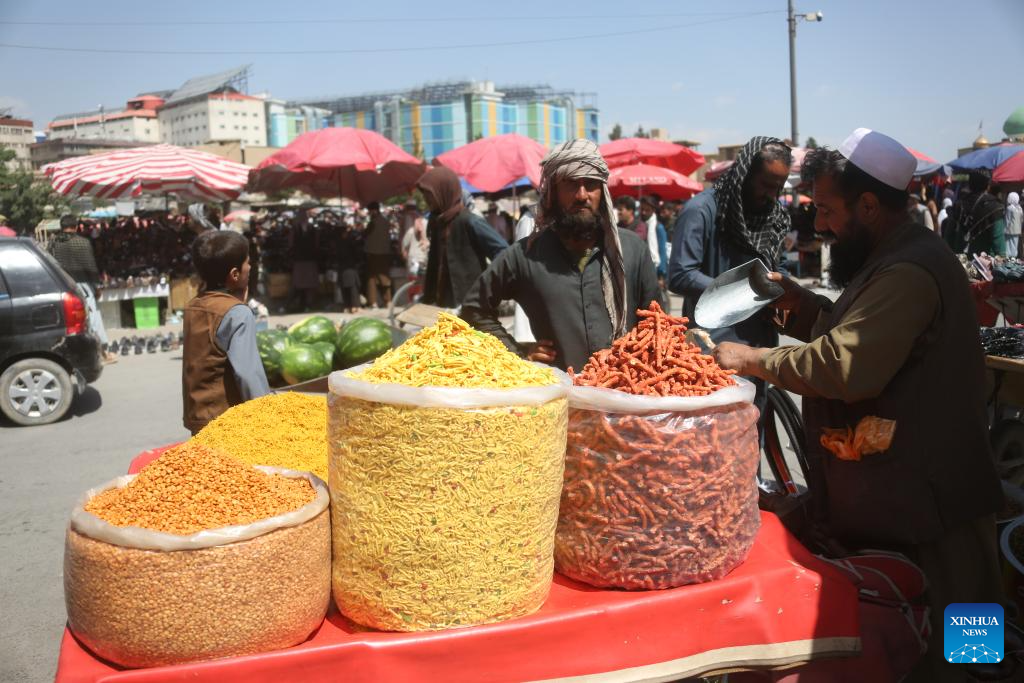
People buy snacks for Eid al-Adha in Kabul, Afghanistan, on May 24, 2026. (Photo by Saifurahman Safi/Xinhua)
KABUL, May 24 (Xinhua) -- While Muslims worldwide prepare to mark Eid al-Adha by sacrificing animals and sharing meat with families in need, Afghans are once again observing the sacred festival under the heavy shadow of profound economic hardship.
Eid al-Adha falls on Wednesday, May 27, in Afghanistan amid widespread poverty, soaring unemployment, international sanctions, and the continued freezing of Afghan central bank assets by the United States.
These factors have severely crippled the economy and eroded the purchasing power of ordinary citizens, turning what should be a time of joy and generosity into another stark reminder of daily struggle.
At Kabul's bustling livestock market on the western edge of the city, desperate families search for animals for the festival. Yet for many, the dream slips away as prices climb beyond reach.
"Compared to previous years, the price of livestock has increased. Previously, 7 kg of meat was sold for 2,800 to 3,000 afghanis (44.8 to 48 U.S. dollars), but now 7 kg is sold for more than 4,000 afghanis (over 64 dollars)," said Haji Mohammad Zahir, a 67-year-old elder who supports a family of nine.
"People have become powerless; in previous years, 50 out of every 100 people could afford to buy livestock, but this year, only 20 out of every 100 people can afford to buy livestock for the traditional Eid sacrifice," Zahir added.
Veteran livestock seller Faridullah Nasiri echoed the despair. People come to buy cattle or sheep, but the prices are too high and their pockets are empty, so they leave without buying anything.
He expressed deep disappointment over the weak demand, noting that the number of customers had fallen far below his expectations. "The economic situation of people this year is very bad, and livestock prices have risen sharply," Nasiri told Xinhua.
"Last year, we sold a 210 kg calf for 80,000 afghanis (1,282 dollars), but this year the same calf is being sold for 100,000 afghanis (about 1,600 dollars). This year, people are likely to sacrifice much less. Prices are very high and people simply don't have the ability to purchase."
Shopkeeper Niyazullah, another Kabul resident, painted a broader picture of stagnation: "Business has slowed significantly compared to previous years. People's economic situation has weakened relative to the past." "The government can activate industrial factories so that people can find work," he urged.
The World Food Program recently warned that ongoing economic difficulties, widespread joblessness, and climate-related disruptions continue to devastate livelihoods nationwide, with more than 13 million Afghans, nearly one-third of the population, now facing serious food insecurity.
Years of economic collapse, exacerbated by mass unemployment and the freezing of Afghanistan's central bank reserves in the United States, have left millions unable to meet even basic needs.
This Eid al-Adha lays bare not only the resilience of the Afghan people but also the urgent need for economic relief, job creation, and resolution of the frozen assets issue that continues to starve the economy of vital resources, deepening the suffering of millions who simply want the chance to provide for their families. ■
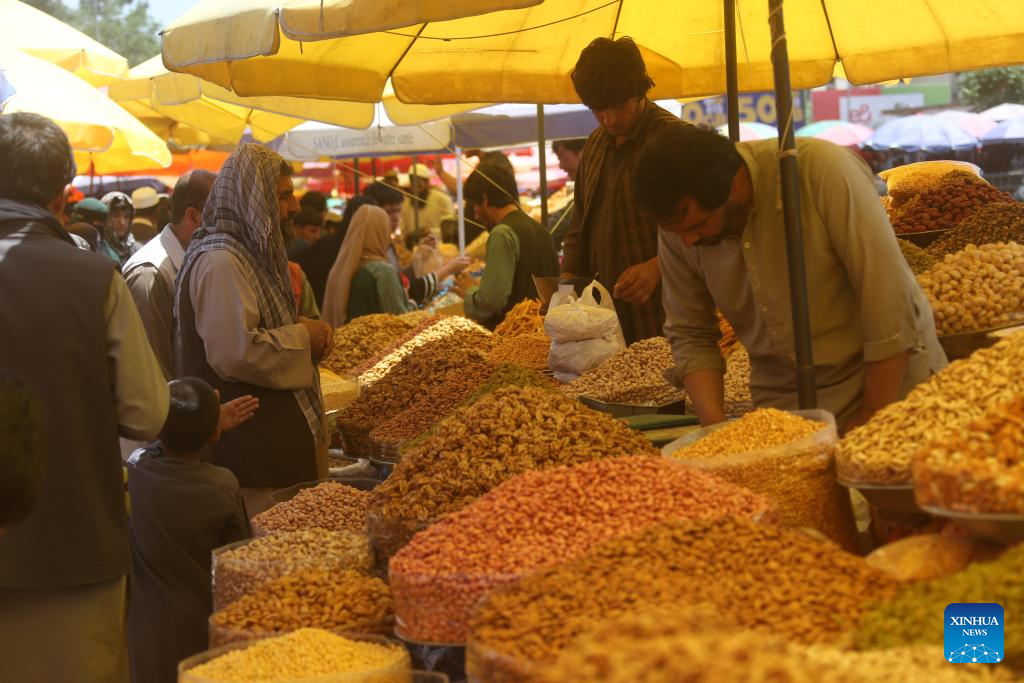
People buy nuts for Eid al-Adha in Kabul, Afghanistan, on May 24, 2026. (Photo by Saifurahman Safi/Xinhua)


