
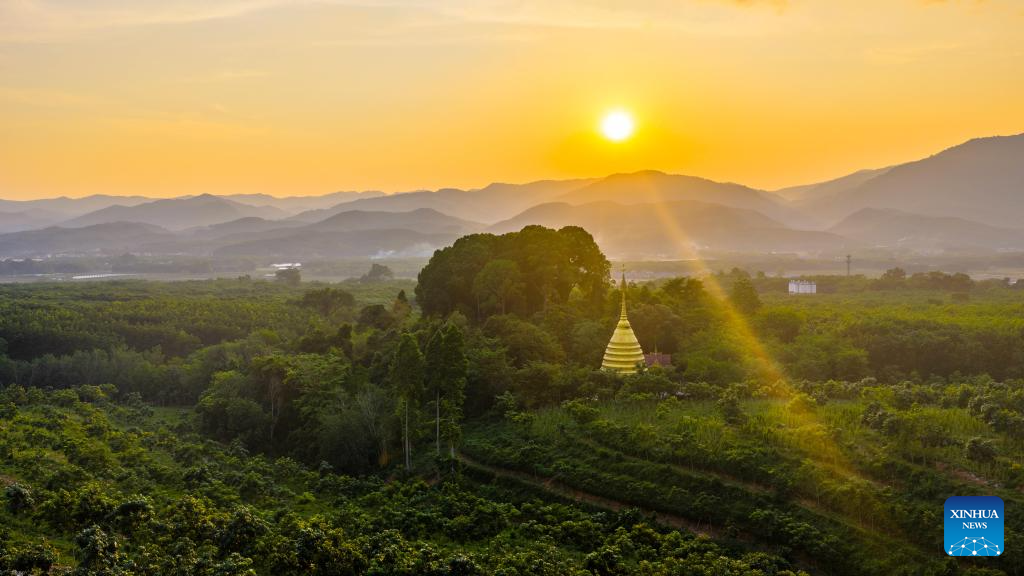
A drone photo taken on May 20, 2026 shows a sunset landscape, with a cluster of dipterocarp trees bearing a resemblance to an elephant, in Mengla County, Xishuangbanna Dai Autonomous Prefecture, southwest China's Yunnan Province. Xishuangbanna National Nature Reserve, first established in 1958, is located within the Xishuangbanna Dai Autonomous Prefecture, and is home to the largest and most intact tropical rainforest ecosystem in China.
Up to now, a total of 838 wild animal species have been recorded in the reserve, including 40 species under first-class national protection and 143 species under second-class national protection. 116 key state-protected plant species have also been documented, among which 6 are under first-class national protection and 110 under second-class national protection. Rare wild fauna and flora including Asian elephants and Parashorea chinensis thrive here, collectively forming the rich and unique living landscape of the tropical rainforest.
For many years, local authorities have continued to consolidate the ecological protection barrier, reinforce the protection, restoration and monitoring of the rainforest ecosystem, and devote great efforts to protecting all types of rare wild species.
Statistics show that the forest coverage rate of the reserve has risen from 88.9 percent in 1983 to 97 percent at present, and the wild Asian elephant population has increased from about 170 in the 1980s to more than 300 now. (Xinhua/Hu Chao)
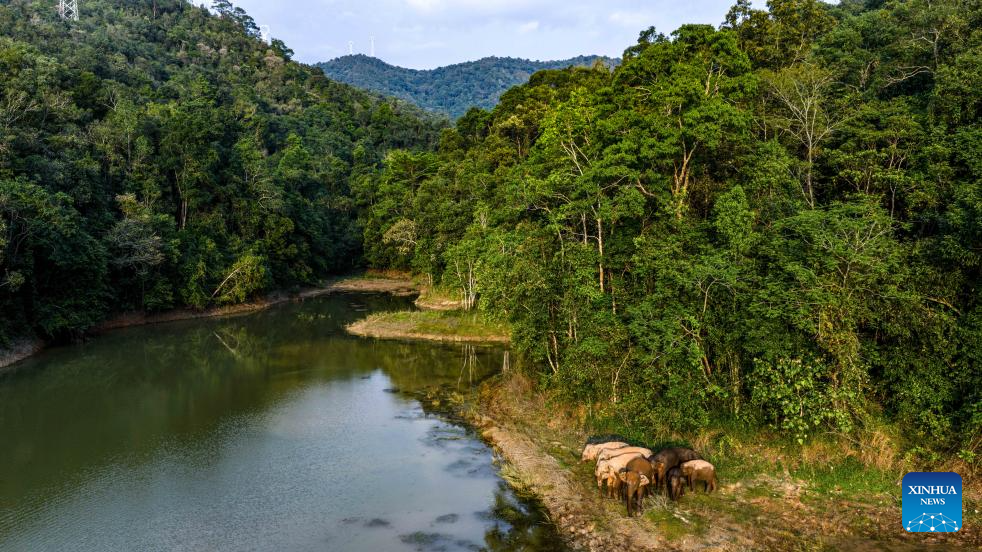
A drone photo taken on May 19, 2026 shows a herd of wild Asian elephants in Dadugang Township of Jinghong City, Xishuangbanna Dai Autonomous Prefecture, southwest China's Yunnan Province. Xishuangbanna National Nature Reserve, first established in 1958, is located within the Xishuangbanna Dai Autonomous Prefecture, and is home to the largest and most intact tropical rainforest ecosystem in China.
Up to now, a total of 838 wild animal species have been recorded in the reserve, including 40 species under first-class national protection and 143 species under second-class national protection. 116 key state-protected plant species have also been documented, among which 6 are under first-class national protection and 110 under second-class national protection. Rare wild fauna and flora including Asian elephants and Parashorea chinensis thrive here, collectively forming the rich and unique living landscape of the tropical rainforest.
For many years, local authorities have continued to consolidate the ecological protection barrier, reinforce the protection, restoration and monitoring of the rainforest ecosystem, and devote great efforts to protecting all types of rare wild species.
Statistics show that the forest coverage rate of the reserve has risen from 88.9 percent in 1983 to 97 percent at present, and the wild Asian elephant population has increased from about 170 in the 1980s to more than 300 now. (Xinhua/Hu Chao)
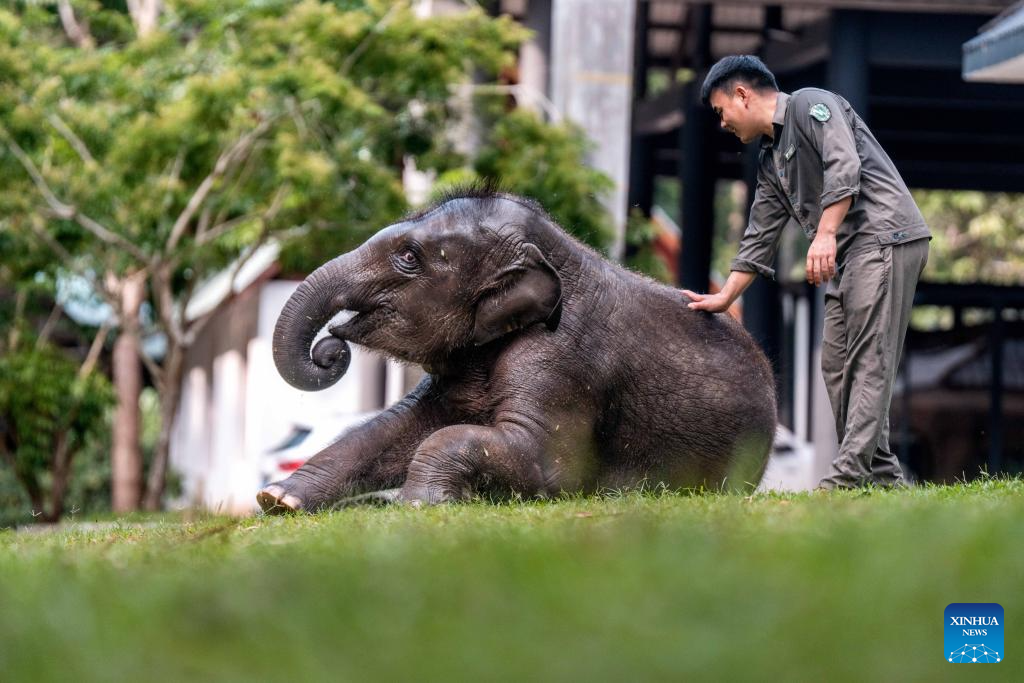
Breeder Bao Hong plays with a young elephant at the Xishuangbanna Asian Elephant Rescue and Breeding Center in Xishuangbanna Dai Autonomous Prefecture, southwest China's Yunnan Province, May 19, 2026. Xishuangbanna National Nature Reserve, first established in 1958, is located within the Xishuangbanna Dai Autonomous Prefecture, and is home to the largest and most intact tropical rainforest ecosystem in China.
Up to now, a total of 838 wild animal species have been recorded in the reserve, including 40 species under first-class national protection and 143 species under second-class national protection. 116 key state-protected plant species have also been documented, among which 6 are under first-class national protection and 110 under second-class national protection. Rare wild fauna and flora including Asian elephants and Parashorea chinensis thrive here, collectively forming the rich and unique living landscape of the tropical rainforest.
For many years, local authorities have continued to consolidate the ecological protection barrier, reinforce the protection, restoration and monitoring of the rainforest ecosystem, and devote great efforts to protecting all types of rare wild species.
Statistics show that the forest coverage rate of the reserve has risen from 88.9 percent in 1983 to 97 percent at present, and the wild Asian elephant population has increased from about 170 in the 1980s to more than 300 now. (Xinhua/Hu Chao)
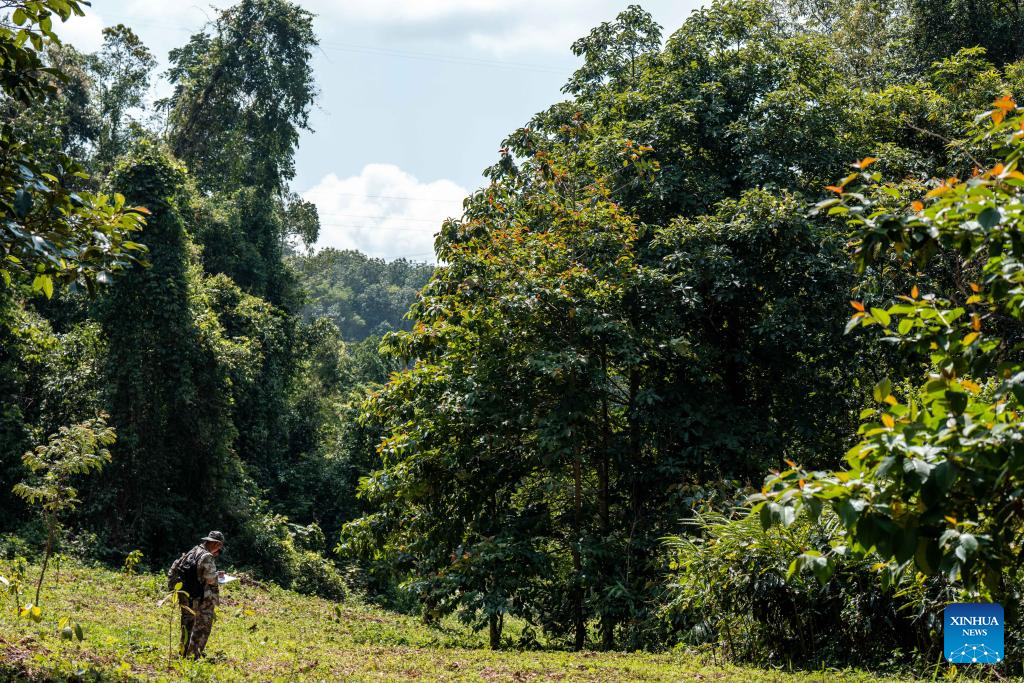
Rangers from the Mengyang area of Xishuangbanna National Nature Reserve record the growth status of a Yunnan tupelo (Nyssa yunnanensis), a plant under first-class national protection, at the species' wild reintroduction base in Xishuangbanna Dai Autonomous Prefecture, southwest China's Yunnan Province, May 19, 2026. Xishuangbanna National Nature Reserve, first established in 1958, is located within the Xishuangbanna Dai Autonomous Prefecture, and is home to the largest and most intact tropical rainforest ecosystem in China.
Up to now, a total of 838 wild animal species have been recorded in the reserve, including 40 species under first-class national protection and 143 species under second-class national protection. 116 key state-protected plant species have also been documented, among which 6 are under first-class national protection and 110 under second-class national protection. Rare wild fauna and flora including Asian elephants and Parashorea chinensis thrive here, collectively forming the rich and unique living landscape of the tropical rainforest.
For many years, local authorities have continued to consolidate the ecological protection barrier, reinforce the protection, restoration and monitoring of the rainforest ecosystem, and devote great efforts to protecting all types of rare wild species.
Statistics show that the forest coverage rate of the reserve has risen from 88.9 percent in 1983 to 97 percent at present, and the wild Asian elephant population has increased from about 170 in the 1980s to more than 300 now. (Xinhua/Hu Chao)
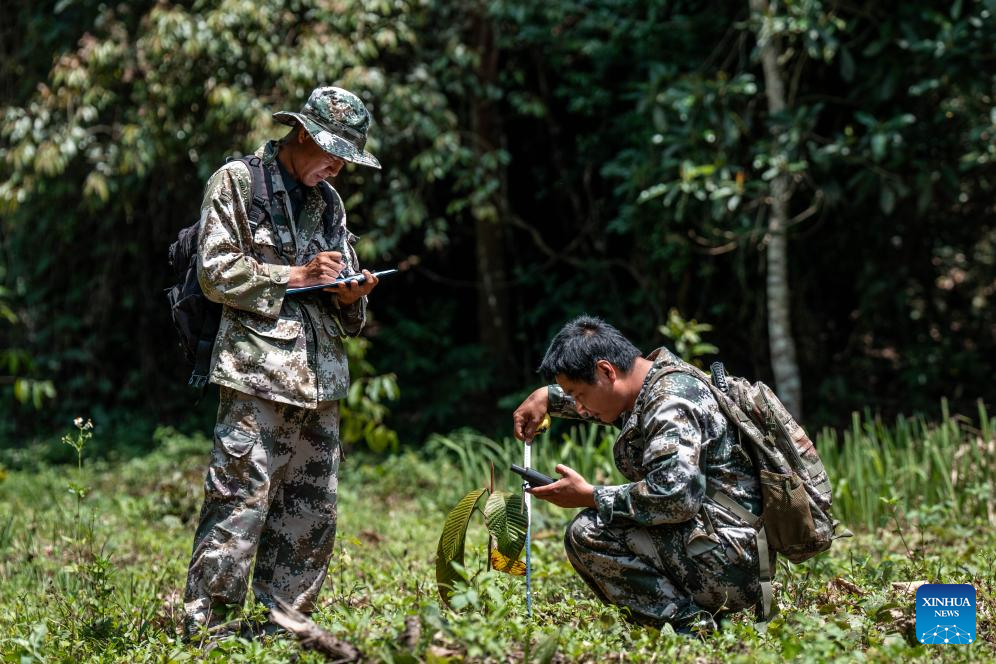
Rangers from the Mengyang area of Xishuangbanna National Nature Reserve record the growth status of a tonkin dipterocarp (Dipterocarpus tonkinensis), a plant under first-class national protection that has been reintroduced to the wild, in Xishuangbanna Dai Autonomous Prefecture, southwest China's Yunnan Province, May 19, 2026. Xishuangbanna National Nature Reserve, first established in 1958, is located within the Xishuangbanna Dai Autonomous Prefecture, and is home to the largest and most intact tropical rainforest ecosystem in China.
Up to now, a total of 838 wild animal species have been recorded in the reserve, including 40 species under first-class national protection and 143 species under second-class national protection. 116 key state-protected plant species have also been documented, among which 6 are under first-class national protection and 110 under second-class national protection. Rare wild fauna and flora including Asian elephants and Parashorea chinensis thrive here, collectively forming the rich and unique living landscape of the tropical rainforest.
For many years, local authorities have continued to consolidate the ecological protection barrier, reinforce the protection, restoration and monitoring of the rainforest ecosystem, and devote great efforts to protecting all types of rare wild species.
Statistics show that the forest coverage rate of the reserve has risen from 88.9 percent in 1983 to 97 percent at present, and the wild Asian elephant population has increased from about 170 in the 1980s to more than 300 now. (Xinhua/Hu Chao)
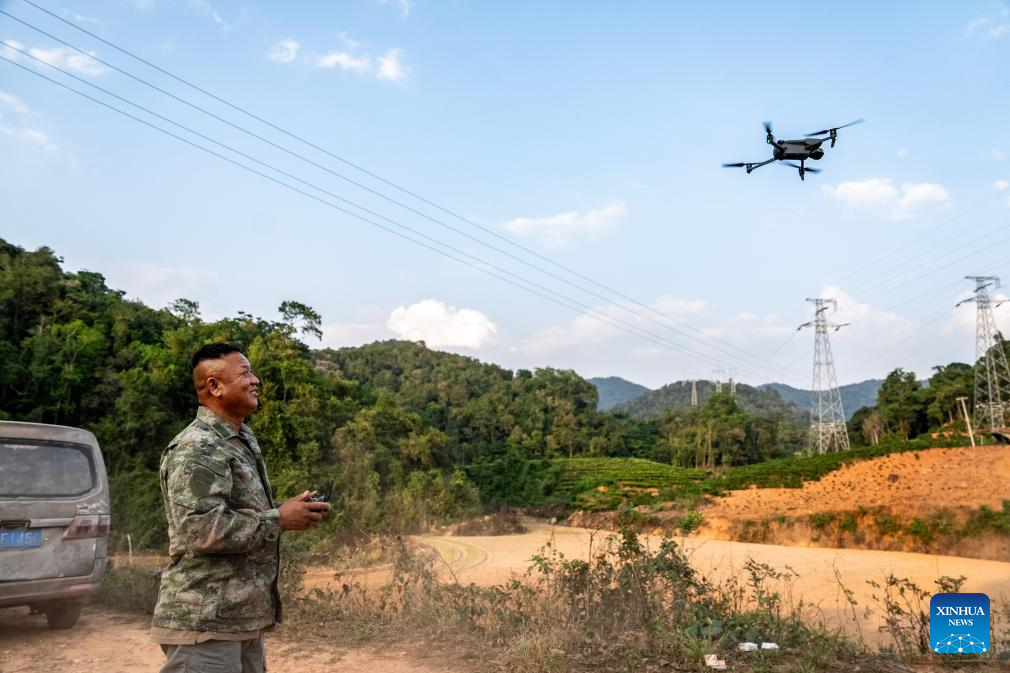
Pu Yongbing, an Asian elephant monitor, operates a drone to monitor wild Asian elephant herds in Dadugang Township of Jinghong City, Xishuangbanna Dai Autonomous Prefecture, southwest China's Yunnan Province, May 19, 2026. Xishuangbanna National Nature Reserve, first established in 1958, is located within the Xishuangbanna Dai Autonomous Prefecture, and is home to the largest and most intact tropical rainforest ecosystem in China.
Up to now, a total of 838 wild animal species have been recorded in the reserve, including 40 species under first-class national protection and 143 species under second-class national protection. 116 key state-protected plant species have also been documented, among which 6 are under first-class national protection and 110 under second-class national protection. Rare wild fauna and flora including Asian elephants and Parashorea chinensis thrive here, collectively forming the rich and unique living landscape of the tropical rainforest.
For many years, local authorities have continued to consolidate the ecological protection barrier, reinforce the protection, restoration and monitoring of the rainforest ecosystem, and devote great efforts to protecting all types of rare wild species.
Statistics show that the forest coverage rate of the reserve has risen from 88.9 percent in 1983 to 97 percent at present, and the wild Asian elephant population has increased from about 170 in the 1980s to more than 300 now. (Xinhua/Hu Chao)
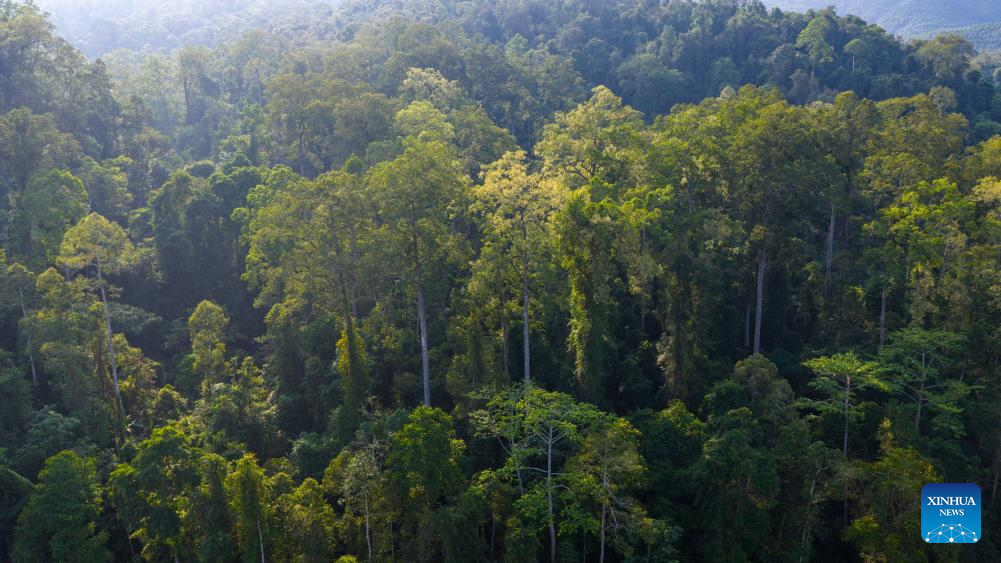
A drone photo taken on May 20, 2026 shows Parashorea chinensis at the Xishuangbanna National Nature Reserve in Xishuangbanna Dai Autonomous Prefecture, southwest China's Yunnan Province. Xishuangbanna National Nature Reserve, first established in 1958, is located within the Xishuangbanna Dai Autonomous Prefecture, and is home to the largest and most intact tropical rainforest ecosystem in China.
Up to now, a total of 838 wild animal species have been recorded in the reserve, including 40 species under first-class national protection and 143 species under second-class national protection. 116 key state-protected plant species have also been documented, among which 6 are under first-class national protection and 110 under second-class national protection. Rare wild fauna and flora including Asian elephants and Parashorea chinensis thrive here, collectively forming the rich and unique living landscape of the tropical rainforest.
For many years, local authorities have continued to consolidate the ecological protection barrier, reinforce the protection, restoration and monitoring of the rainforest ecosystem, and devote great efforts to protecting all types of rare wild species.
Statistics show that the forest coverage rate of the reserve has risen from 88.9 percent in 1983 to 97 percent at present, and the wild Asian elephant population has increased from about 170 in the 1980s to more than 300 now. (Xinhua/Hu Chao)
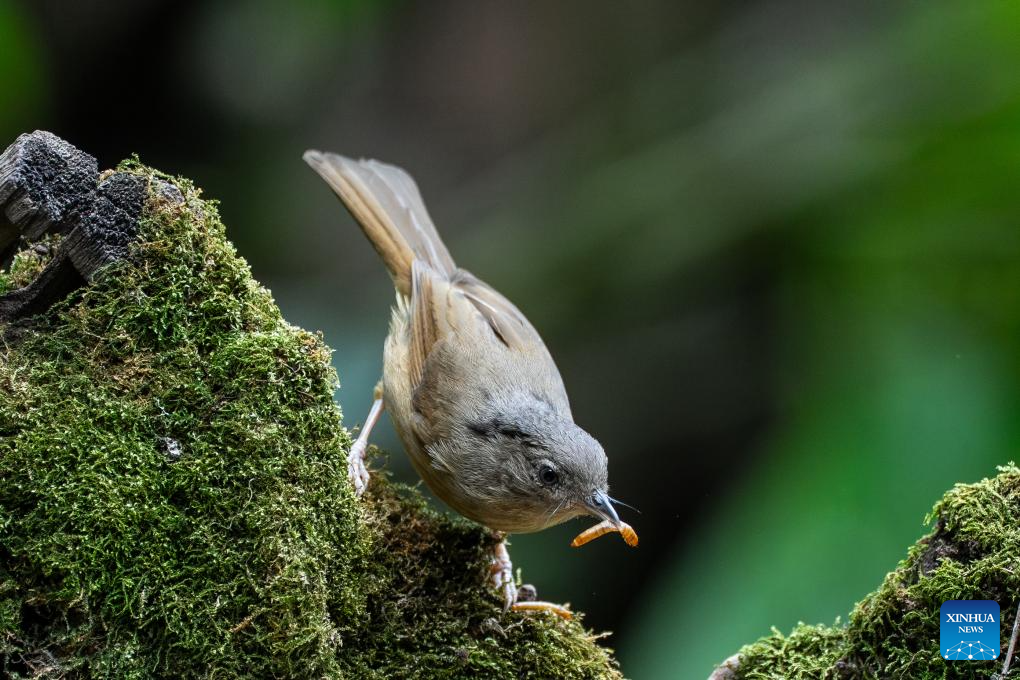
This photo taken on May 20, 2026 shows a brown-cheeked fulvetta (Alcippe poioicephala) in Mengla County, Xishuangbanna Dai Autonomous Prefecture, southwest China's Yunnan Province. Xishuangbanna National Nature Reserve, first established in 1958, is located within the Xishuangbanna Dai Autonomous Prefecture, and is home to the largest and most intact tropical rainforest ecosystem in China.
Up to now, a total of 838 wild animal species have been recorded in the reserve, including 40 species under first-class national protection and 143 species under second-class national protection. 116 key state-protected plant species have also been documented, among which 6 are under first-class national protection and 110 under second-class national protection. Rare wild fauna and flora including Asian elephants and Parashorea chinensis thrive here, collectively forming the rich and unique living landscape of the tropical rainforest.
For many years, local authorities have continued to consolidate the ecological protection barrier, reinforce the protection, restoration and monitoring of the rainforest ecosystem, and devote great efforts to protecting all types of rare wild species.
Statistics show that the forest coverage rate of the reserve has risen from 88.9 percent in 1983 to 97 percent at present, and the wild Asian elephant population has increased from about 170 in the 1980s to more than 300 now. (Xinhua/Hu Chao)
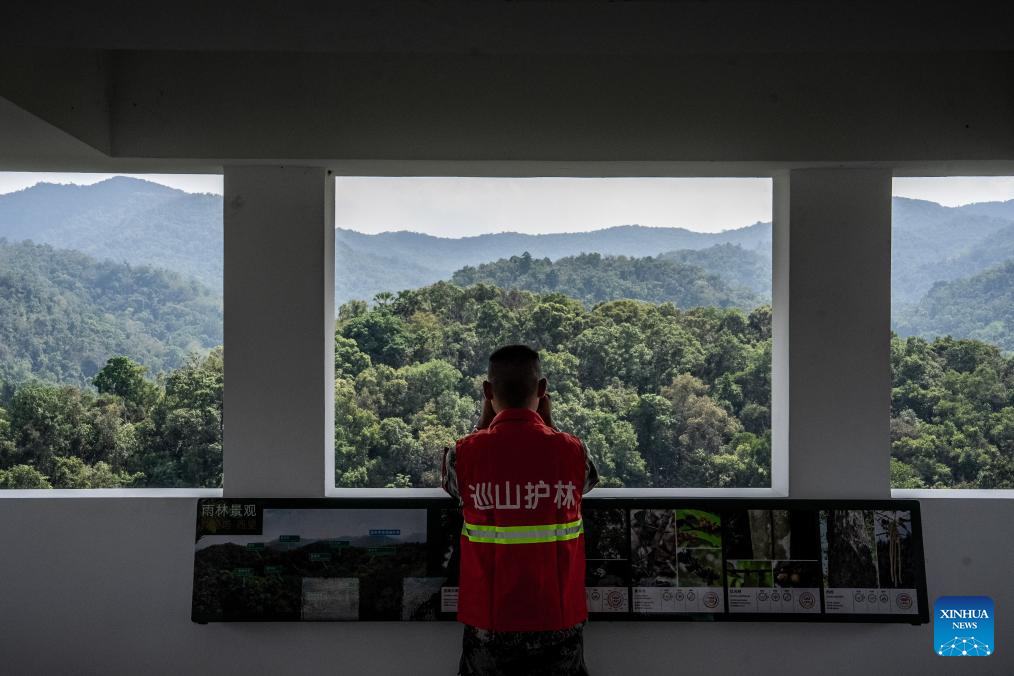
A ranger from the Mengyang area of Xishuangbanna National Nature Reserve is on lookout duty at an observation tower in Xishuangbanna Dai Autonomous Prefecture, southwest China's Yunnan Province, May 19, 2026. Xishuangbanna National Nature Reserve, first established in 1958, is located within the Xishuangbanna Dai Autonomous Prefecture, and is home to the largest and most intact tropical rainforest ecosystem in China.
Up to now, a total of 838 wild animal species have been recorded in the reserve, including 40 species under first-class national protection and 143 species under second-class national protection. 116 key state-protected plant species have also been documented, among which 6 are under first-class national protection and 110 under second-class national protection. Rare wild fauna and flora including Asian elephants and Parashorea chinensis thrive here, collectively forming the rich and unique living landscape of the tropical rainforest.
For many years, local authorities have continued to consolidate the ecological protection barrier, reinforce the protection, restoration and monitoring of the rainforest ecosystem, and devote great efforts to protecting all types of rare wild species.
Statistics show that the forest coverage rate of the reserve has risen from 88.9 percent in 1983 to 97 percent at present, and the wild Asian elephant population has increased from about 170 in the 1980s to more than 300 now. (Xinhua/Hu Chao)
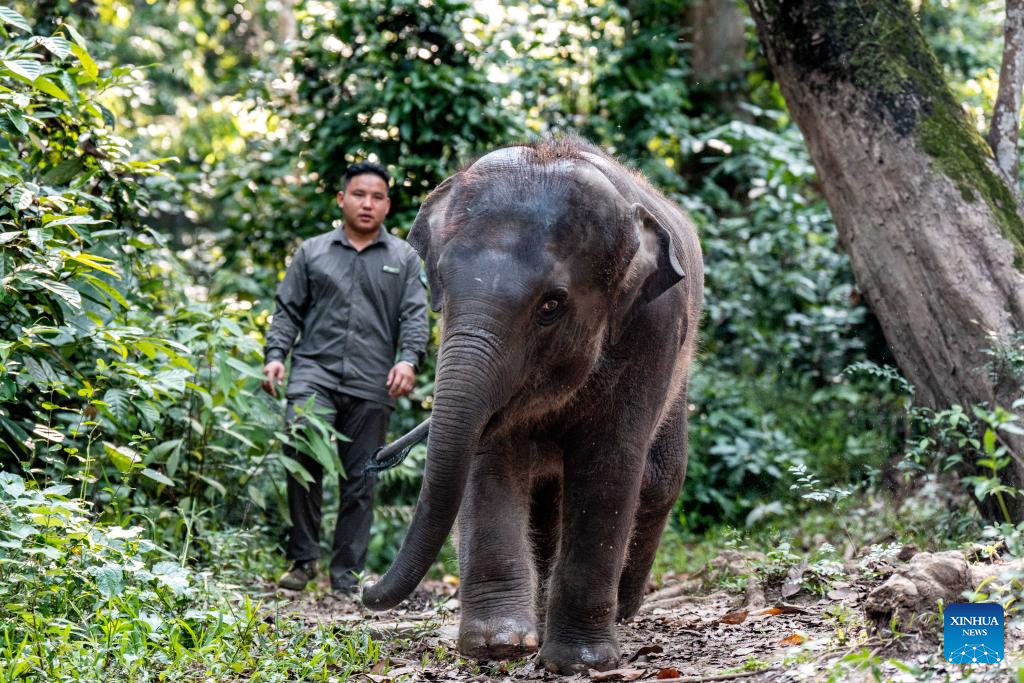
Breeder Wang Shiwen guides a young elephant in wildness training at the Xishuangbanna Asian Elephant Rescue and Breeding Center in Xishuangbanna Dai Autonomous Prefecture, southwest China's Yunnan Province, May 19, 2026. Xishuangbanna National Nature Reserve, first established in 1958, is located within the Xishuangbanna Dai Autonomous Prefecture, and is home to the largest and most intact tropical rainforest ecosystem in China.
Up to now, a total of 838 wild animal species have been recorded in the reserve, including 40 species under first-class national protection and 143 species under second-class national protection. 116 key state-protected plant species have also been documented, among which 6 are under first-class national protection and 110 under second-class national protection. Rare wild fauna and flora including Asian elephants and Parashorea chinensis thrive here, collectively forming the rich and unique living landscape of the tropical rainforest.
For many years, local authorities have continued to consolidate the ecological protection barrier, reinforce the protection, restoration and monitoring of the rainforest ecosystem, and devote great efforts to protecting all types of rare wild species.
Statistics show that the forest coverage rate of the reserve has risen from 88.9 percent in 1983 to 97 percent at present, and the wild Asian elephant population has increased from about 170 in the 1980s to more than 300 now. (Xinhua/Hu Chao)
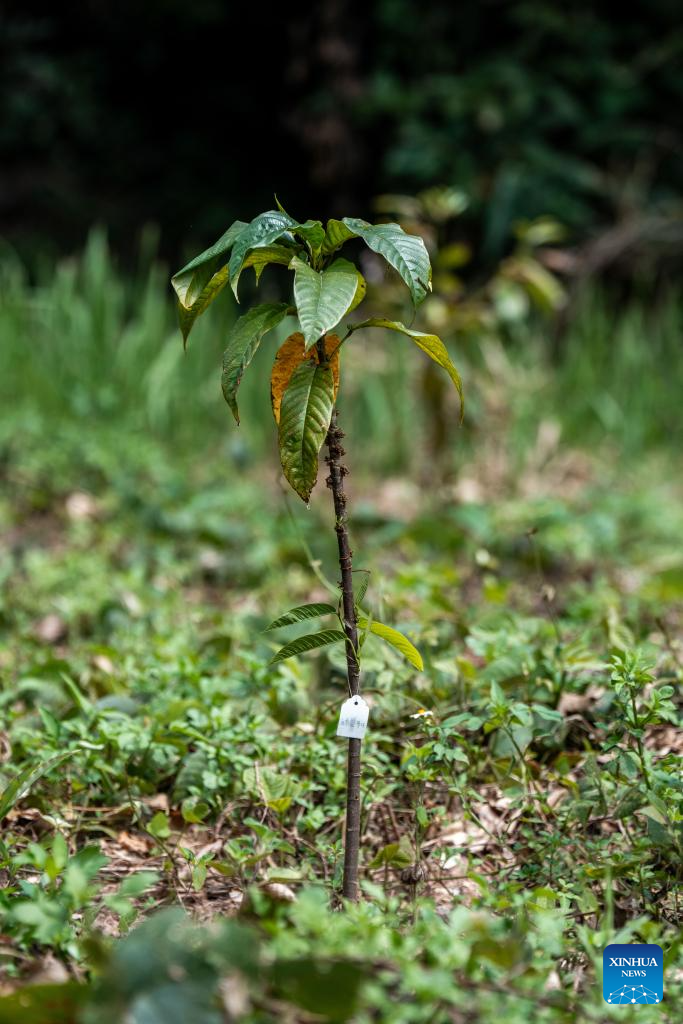
This photo taken on May 19, 2026 shows a Yunnan shorea (Shorea assamica Dyer), a plant under first-class national protection, reintroduced to the wild at Xishuangbanna National Nature Reserve in Xishuangbanna Dai Autonomous Prefecture, southwest China's Yunnan Province. Xishuangbanna National Nature Reserve, first established in 1958, is located within the Xishuangbanna Dai Autonomous Prefecture, and is home to the largest and most intact tropical rainforest ecosystem in China.
Up to now, a total of 838 wild animal species have been recorded in the reserve, including 40 species under first-class national protection and 143 species under second-class national protection. 116 key state-protected plant species have also been documented, among which 6 are under first-class national protection and 110 under second-class national protection. Rare wild fauna and flora including Asian elephants and Parashorea chinensis thrive here, collectively forming the rich and unique living landscape of the tropical rainforest.
For many years, local authorities have continued to consolidate the ecological protection barrier, reinforce the protection, restoration and monitoring of the rainforest ecosystem, and devote great efforts to protecting all types of rare wild species.
Statistics show that the forest coverage rate of the reserve has risen from 88.9 percent in 1983 to 97 percent at present, and the wild Asian elephant population has increased from about 170 in the 1980s to more than 300 now. (Xinhua/Hu Chao)
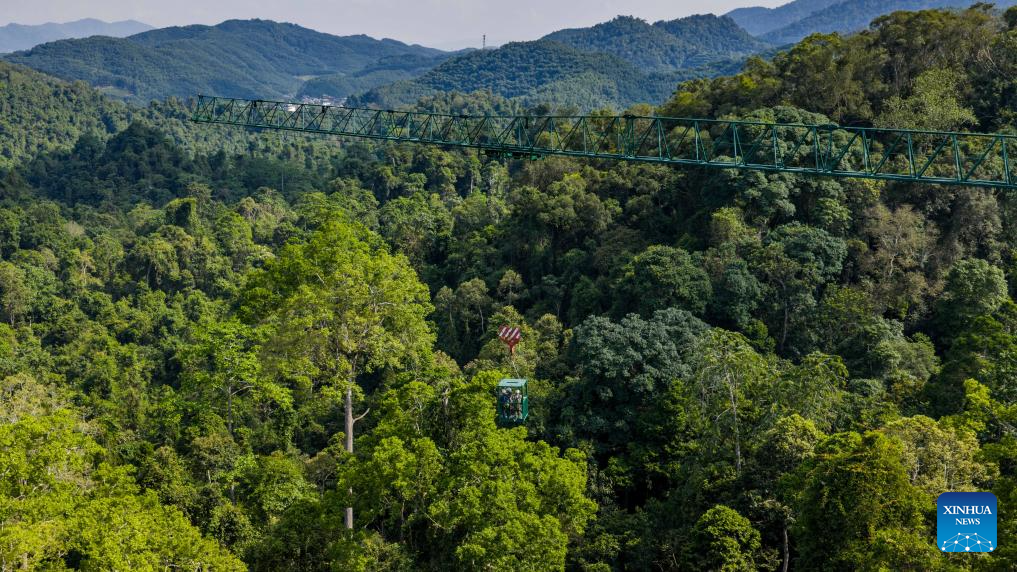
A drone photo taken on May 20, 2026 shows staff members of Bubeng management and protection station under Xishuangbanna National Nature Reserve taking a canopy crane to monitor Parashorea chinensis in Xishuangbanna Dai Autonomous Prefecture, southwest China's Yunnan Province. Xishuangbanna National Nature Reserve, first established in 1958, is located within the Xishuangbanna Dai Autonomous Prefecture, and is home to the largest and most intact tropical rainforest ecosystem in China.
Up to now, a total of 838 wild animal species have been recorded in the reserve, including 40 species under first-class national protection and 143 species under second-class national protection. 116 key state-protected plant species have also been documented, among which 6 are under first-class national protection and 110 under second-class national protection. Rare wild fauna and flora including Asian elephants and Parashorea chinensis thrive here, collectively forming the rich and unique living landscape of the tropical rainforest.
For many years, local authorities have continued to consolidate the ecological protection barrier, reinforce the protection, restoration and monitoring of the rainforest ecosystem, and devote great efforts to protecting all types of rare wild species.
Statistics show that the forest coverage rate of the reserve has risen from 88.9 percent in 1983 to 97 percent at present, and the wild Asian elephant population has increased from about 170 in the 1980s to more than 300 now. (Xinhua/Hu Chao)
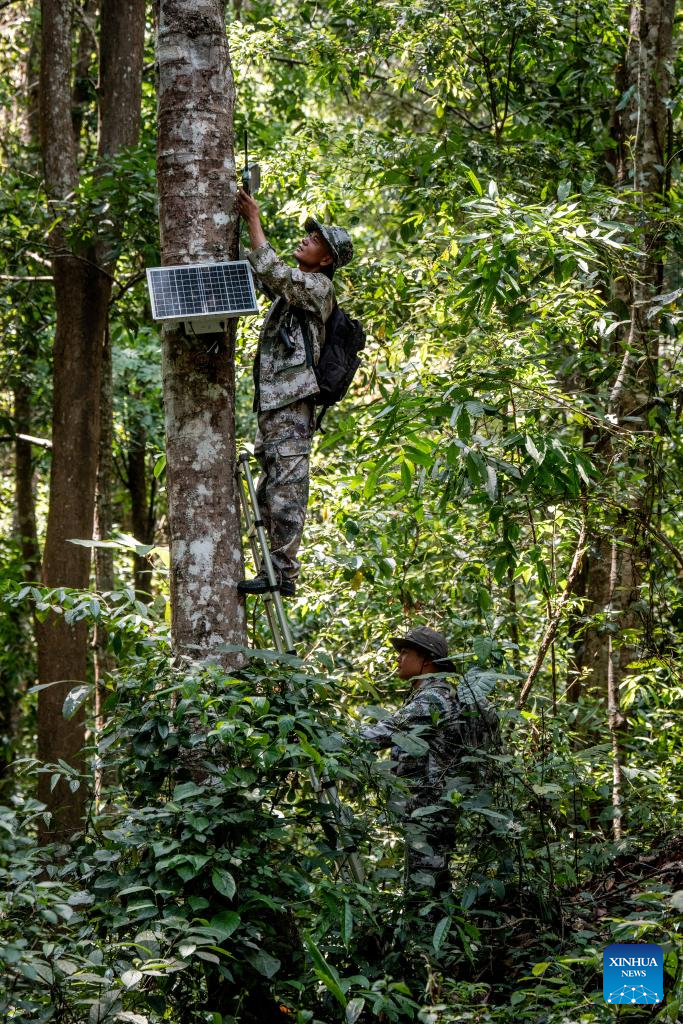
Rangers from the Mengyang area of Xishuangbanna National Nature Reserve check the monitoring status of infrared cameras in Xishuangbanna Dai Autonomous Prefecture, southwest China's Yunnan Province, May 19, 2026. Xishuangbanna National Nature Reserve, first established in 1958, is located within the Xishuangbanna Dai Autonomous Prefecture, and is home to the largest and most intact tropical rainforest ecosystem in China.
Up to now, a total of 838 wild animal species have been recorded in the reserve, including 40 species under first-class national protection and 143 species under second-class national protection. 116 key state-protected plant species have also been documented, among which 6 are under first-class national protection and 110 under second-class national protection. Rare wild fauna and flora including Asian elephants and Parashorea chinensis thrive here, collectively forming the rich and unique living landscape of the tropical rainforest.
For many years, local authorities have continued to consolidate the ecological protection barrier, reinforce the protection, restoration and monitoring of the rainforest ecosystem, and devote great efforts to protecting all types of rare wild species.
Statistics show that the forest coverage rate of the reserve has risen from 88.9 percent in 1983 to 97 percent at present, and the wild Asian elephant population has increased from about 170 in the 1980s to more than 300 now. (Xinhua/Hu Chao)
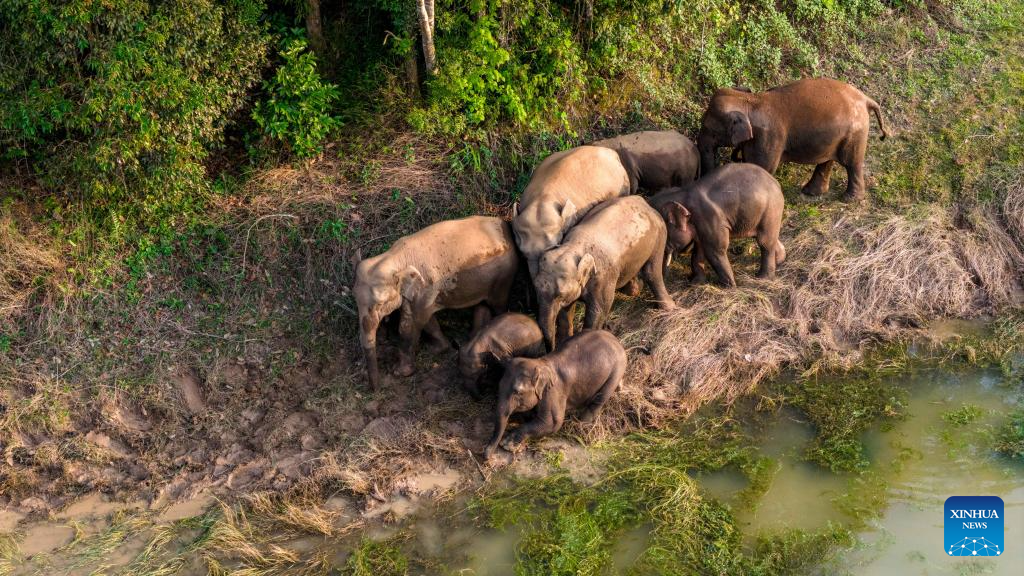
A drone photo taken on May 19, 2026 shows a herd of wild Asian elephants in Dadugang Township of Jinghong City, Xishuangbanna Dai Autonomous Prefecture, southwest China's Yunnan Province. Xishuangbanna National Nature Reserve, first established in 1958, is located within the Xishuangbanna Dai Autonomous Prefecture, and is home to the largest and most intact tropical rainforest ecosystem in China.
Up to now, a total of 838 wild animal species have been recorded in the reserve, including 40 species under first-class national protection and 143 species under second-class national protection. 116 key state-protected plant species have also been documented, among which 6 are under first-class national protection and 110 under second-class national protection. Rare wild fauna and flora including Asian elephants and Parashorea chinensis thrive here, collectively forming the rich and unique living landscape of the tropical rainforest.
For many years, local authorities have continued to consolidate the ecological protection barrier, reinforce the protection, restoration and monitoring of the rainforest ecosystem, and devote great efforts to protecting all types of rare wild species.
Statistics show that the forest coverage rate of the reserve has risen from 88.9 percent in 1983 to 97 percent at present, and the wild Asian elephant population has increased from about 170 in the 1980s to more than 300 now. (Xinhua/Hu Chao)

Senior engineer Xi Huipeng checks the growth status of hard-leaved orchids (Cymbidium mannii), a plant under second-class national protection, at the breeding center of Xishuangbanna Tropical Botanical Garden under the Chinese Academy of Sciences in Xishuangbanna Dai Autonomous Prefecture, southwest China's Yunnan Province, May 20, 2026. Xishuangbanna National Nature Reserve, first established in 1958, is located within the Xishuangbanna Dai Autonomous Prefecture, and is home to the largest and most intact tropical rainforest ecosystem in China.
Up to now, a total of 838 wild animal species have been recorded in the reserve, including 40 species under first-class national protection and 143 species under second-class national protection. 116 key state-protected plant species have also been documented, among which 6 are under first-class national protection and 110 under second-class national protection. Rare wild fauna and flora including Asian elephants and Parashorea chinensis thrive here, collectively forming the rich and unique living landscape of the tropical rainforest.
For many years, local authorities have continued to consolidate the ecological protection barrier, reinforce the protection, restoration and monitoring of the rainforest ecosystem, and devote great efforts to protecting all types of rare wild species.
Statistics show that the forest coverage rate of the reserve has risen from 88.9 percent in 1983 to 97 percent at present, and the wild Asian elephant population has increased from about 170 in the 1980s to more than 300 now. (Xinhua/Hu Chao)
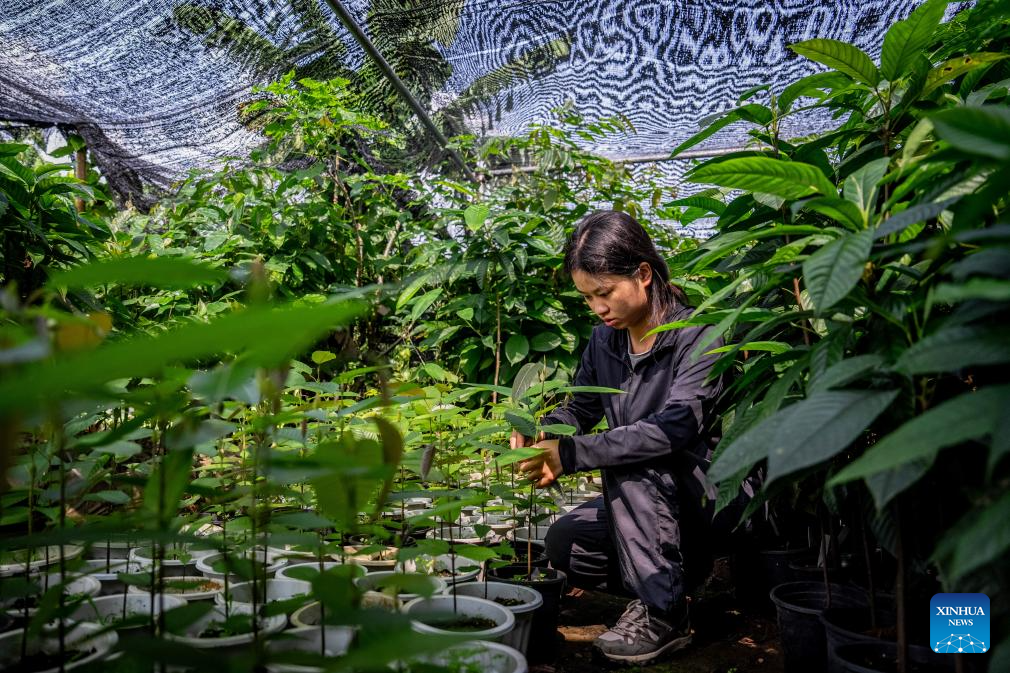
A staff member takes a sample of a seedling of Parashorea chinensis at the breeding center of Xishuangbanna Tropical Botanical Garden under the Chinese Academy of Sciences in Xishuangbanna Dai Autonomous Prefecture, southwest China's Yunnan Province, May 20, 2026. Xishuangbanna National Nature Reserve, first established in 1958, is located within the Xishuangbanna Dai Autonomous Prefecture, and is home to the largest and most intact tropical rainforest ecosystem in China.
Up to now, a total of 838 wild animal species have been recorded in the reserve, including 40 species under first-class national protection and 143 species under second-class national protection. 116 key state-protected plant species have also been documented, among which 6 are under first-class national protection and 110 under second-class national protection. Rare wild fauna and flora including Asian elephants and Parashorea chinensis thrive here, collectively forming the rich and unique living landscape of the tropical rainforest.
For many years, local authorities have continued to consolidate the ecological protection barrier, reinforce the protection, restoration and monitoring of the rainforest ecosystem, and devote great efforts to protecting all types of rare wild species.
Statistics show that the forest coverage rate of the reserve has risen from 88.9 percent in 1983 to 97 percent at present, and the wild Asian elephant population has increased from about 170 in the 1980s to more than 300 now. (Xinhua/Hu Chao)

Rangers from the Mengyang area of Xishuangbanna National Nature Reserve record the growth status of a spicer's paphiopedilum (Paphiopedilum spicerianum), a plant under first-class national protection that has been reintroduced to the wild, in Xishuangbanna Dai Autonomous Prefecture, southwest China's Yunnan Province, May 19, 2026. Xishuangbanna National Nature Reserve, first established in 1958, is located within the Xishuangbanna Dai Autonomous Prefecture, and is home to the largest and most intact tropical rainforest ecosystem in China.
Up to now, a total of 838 wild animal species have been recorded in the reserve, including 40 species under first-class national protection and 143 species under second-class national protection. 116 key state-protected plant species have also been documented, among which 6 are under first-class national protection and 110 under second-class national protection. Rare wild fauna and flora including Asian elephants and Parashorea chinensis thrive here, collectively forming the rich and unique living landscape of the tropical rainforest.
For many years, local authorities have continued to consolidate the ecological protection barrier, reinforce the protection, restoration and monitoring of the rainforest ecosystem, and devote great efforts to protecting all types of rare wild species.
Statistics show that the forest coverage rate of the reserve has risen from 88.9 percent in 1983 to 97 percent at present, and the wild Asian elephant population has increased from about 170 in the 1980s to more than 300 now. (Xinhua/Hu Chao)
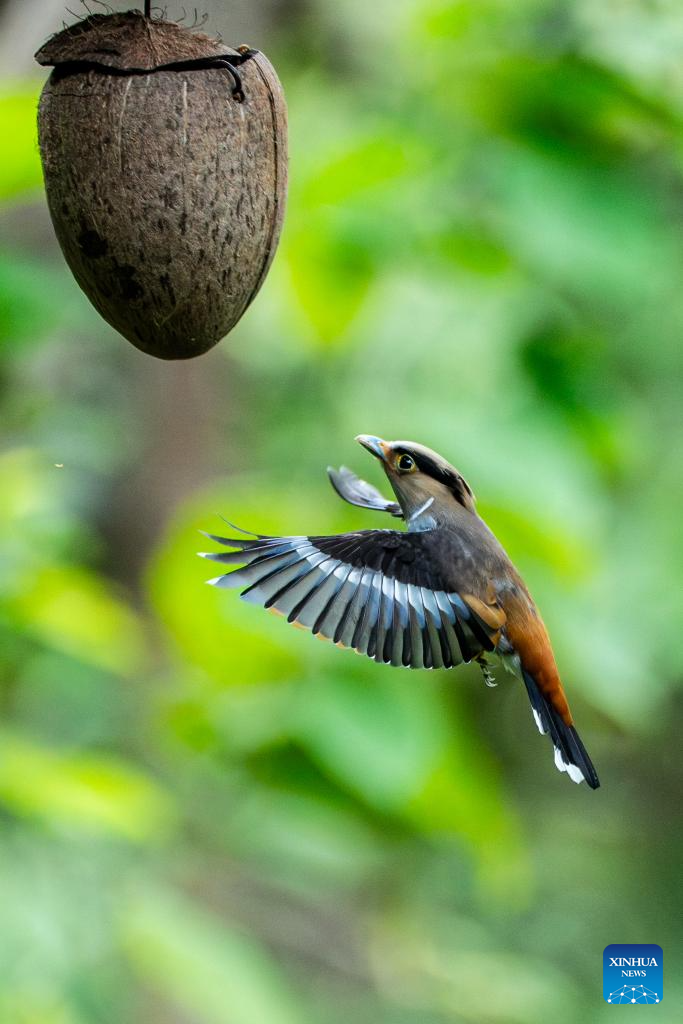
This photo taken on May 20, 2026 shows a silver-breasted broadbill (Serilophus lunatus), a species under second-class national protection, in Mengla County, Xishuangbanna Dai Autonomous Prefecture, southwest China's Yunnan Province. Xishuangbanna National Nature Reserve, first established in 1958, is located within the Xishuangbanna Dai Autonomous Prefecture, and is home to the largest and most intact tropical rainforest ecosystem in China.
Up to now, a total of 838 wild animal species have been recorded in the reserve, including 40 species under first-class national protection and 143 species under second-class national protection. 116 key state-protected plant species have also been documented, among which 6 are under first-class national protection and 110 under second-class national protection. Rare wild fauna and flora including Asian elephants and Parashorea chinensis thrive here, collectively forming the rich and unique living landscape of the tropical rainforest.
For many years, local authorities have continued to consolidate the ecological protection barrier, reinforce the protection, restoration and monitoring of the rainforest ecosystem, and devote great efforts to protecting all types of rare wild species.
Statistics show that the forest coverage rate of the reserve has risen from 88.9 percent in 1983 to 97 percent at present, and the wild Asian elephant population has increased from about 170 in the 1980s to more than 300 now. (Xinhua/Hu Chao)
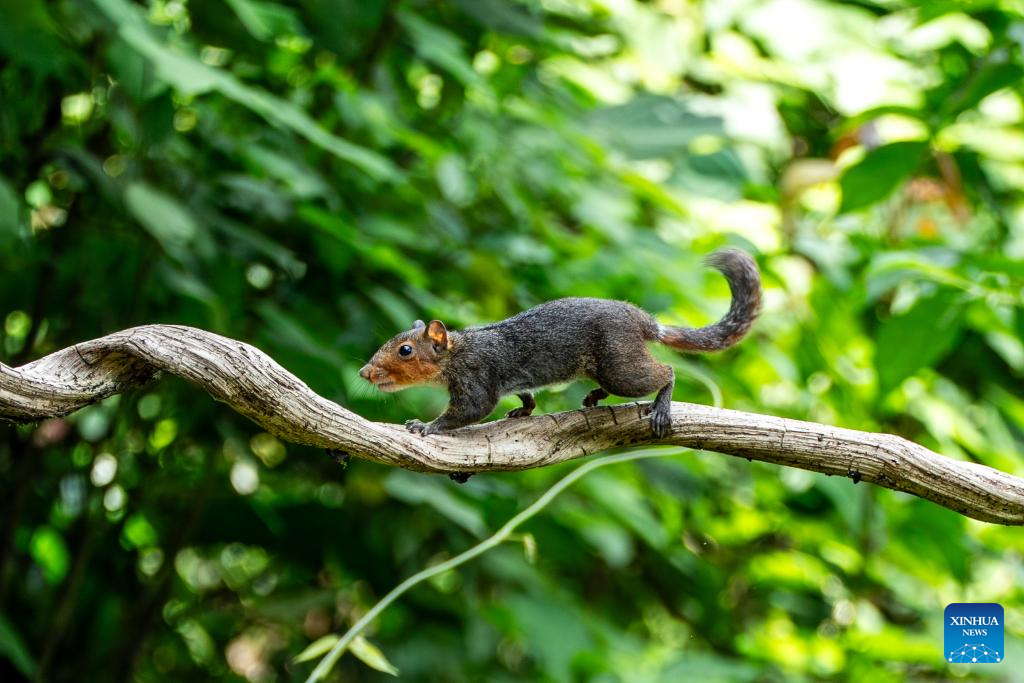
This photo taken on May 20, 2026 shows a red-cheeked long-snouted squirrel (Dremomys rufigenis) in Mengla County, Xishuangbanna Dai Autonomous Prefecture, southwest China's Yunnan Province. Xishuangbanna National Nature Reserve, first established in 1958, is located within the Xishuangbanna Dai Autonomous Prefecture, and is home to the largest and most intact tropical rainforest ecosystem in China.
Up to now, a total of 838 wild animal species have been recorded in the reserve, including 40 species under first-class national protection and 143 species under second-class national protection. 116 key state-protected plant species have also been documented, among which 6 are under first-class national protection and 110 under second-class national protection. Rare wild fauna and flora including Asian elephants and Parashorea chinensis thrive here, collectively forming the rich and unique living landscape of the tropical rainforest.
For many years, local authorities have continued to consolidate the ecological protection barrier, reinforce the protection, restoration and monitoring of the rainforest ecosystem, and devote great efforts to protecting all types of rare wild species.
Statistics show that the forest coverage rate of the reserve has risen from 88.9 percent in 1983 to 97 percent at present, and the wild Asian elephant population has increased from about 170 in the 1980s to more than 300 now. (Xinhua/Hu Chao)


