
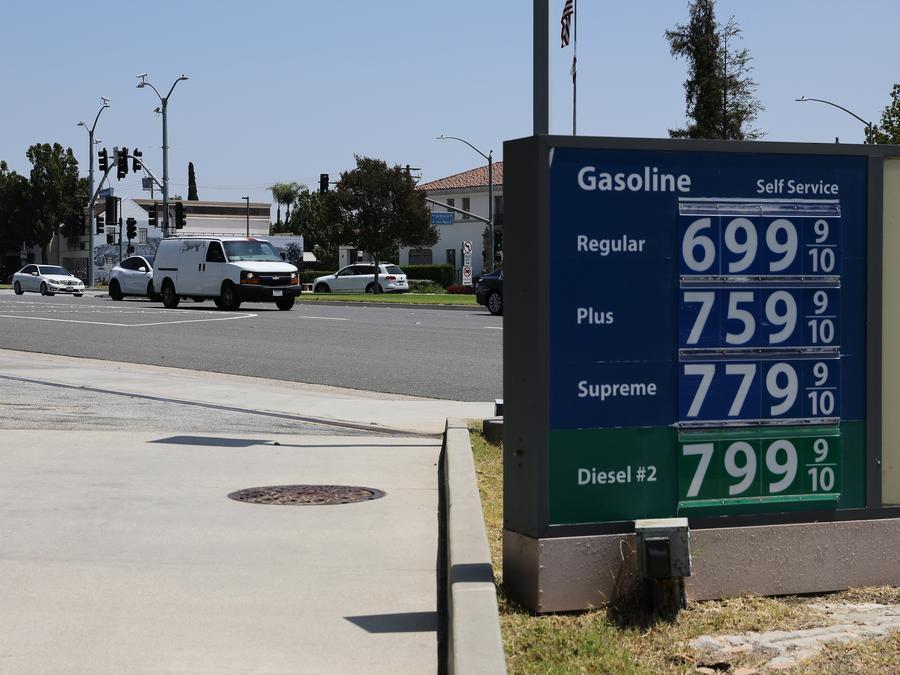
The surging prices have affected those with low and middle incomes, especially in rural areas, an expert told Xinhua. "Many of these people don't have a big cushion in their budget. They also have few options for reducing the amount of gas they consume in the short-term."
WASHINGTON, May 22 (Xinhua) -- Millions of Americans are facing financial strain due to a dramatic surge in gasoline prices driven by the ongoing war with Iran.
The national average for a gallon of gas has reached 4.555 U.S. dollars on Wednesday -- a whopping 50 percent rise since the Iran conflict started in February, according to data released by the American Automobile Association (AAA).
Gary Hufbauer, a nonresident senior fellow at the Peterson Institute for International Economics, told Xinhua: "High gas prices disproportionately hurt low-income people in the middle states -- in other words, people other than (those living on) the East and West Coasts of America."
While lower-income households have sharply reduced their gas consumption by about 7 percent, they are still spending 12 percent more on fuel due to the price hikes, according to research from the Federal Reserve Bank of New York.
"I expect the high prices to last most of 2026. I don't see a resolution of the Iran war," Hufbauer said.
Many economists expressed similar sentiments.
Dean Baker, co-founder of the Center for Economic and Policy Research, told Xinhua that the surging prices have affected those with low and middle incomes, especially in rural areas. "Many of these people don't have a big cushion in their budget. They also have few options for reducing the amount of gas they consume in the short-term."
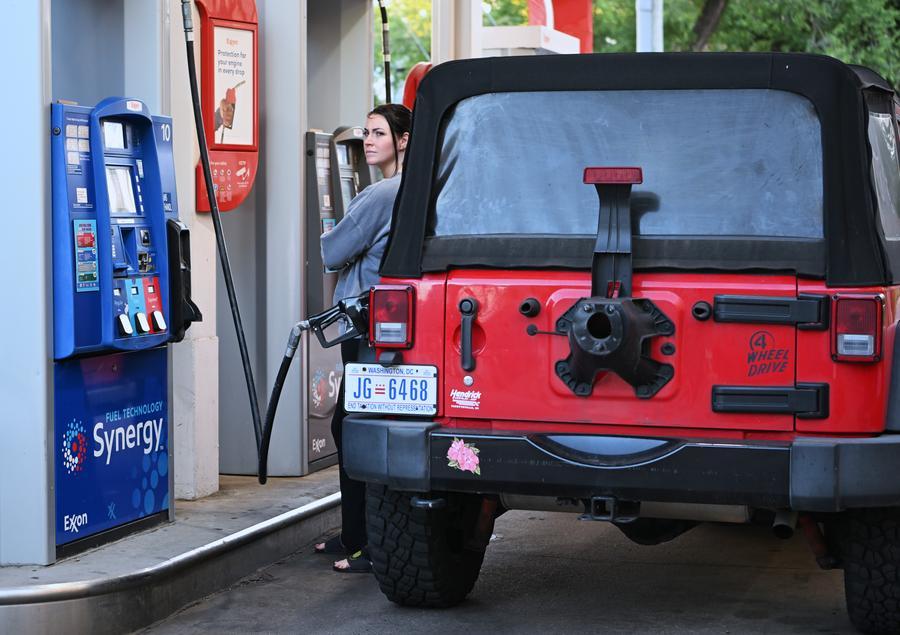
Families are cutting back on essential and discretionary spending, including groceries, medical care and travel. Commuters with long drives are trading in SUVs for hybrids and avoiding non-essential trips. Middle-class consumers are beginning to delay major purchases like vehicles and appliances, according to media.
Mark Raymond, 41, a software engineer outside of Washington D.C., told Xinhua he was "surprised to see" his local gas station raise the per-transaction fuel limit to 150 dollars.
"That started a few weeks ago," he said, adding that he's never seen this before.
Other ordinary Americans have expressed concern about surging gas prices.
Cathleen Rodgers, 68, a retiree outside Washington, D.C., said she expects it will "take a long time" for gas prices to return to normal after the Iran war ends, given the damage to global energy infrastructure.
Some states' per-gallon costs have climbed higher than others. California's gas hit an average of 6.145 dollars per gallon on Wednesday. Other high-cost states include Hawaii and Washington State, where average gas prices reached an average of 5.648 and 5.789 dollars per gallon on Wednesday, respectively, according to the AAA.
In a nation where a massive chunk of the population relies on private motor vehicles as the sole means of transportation, Americans are particularly sensitive to elevated gas prices.
Brookings Institution Senior Fellow Darrell West told Xinhua: "Americans are very sensitive to gas prices since everyone can see them since they are posted publicly at every gas station."
"People drive a lot and the big increase since the war started has hurt people's standard of living. This is harming Republican prospects in November," West said.■