
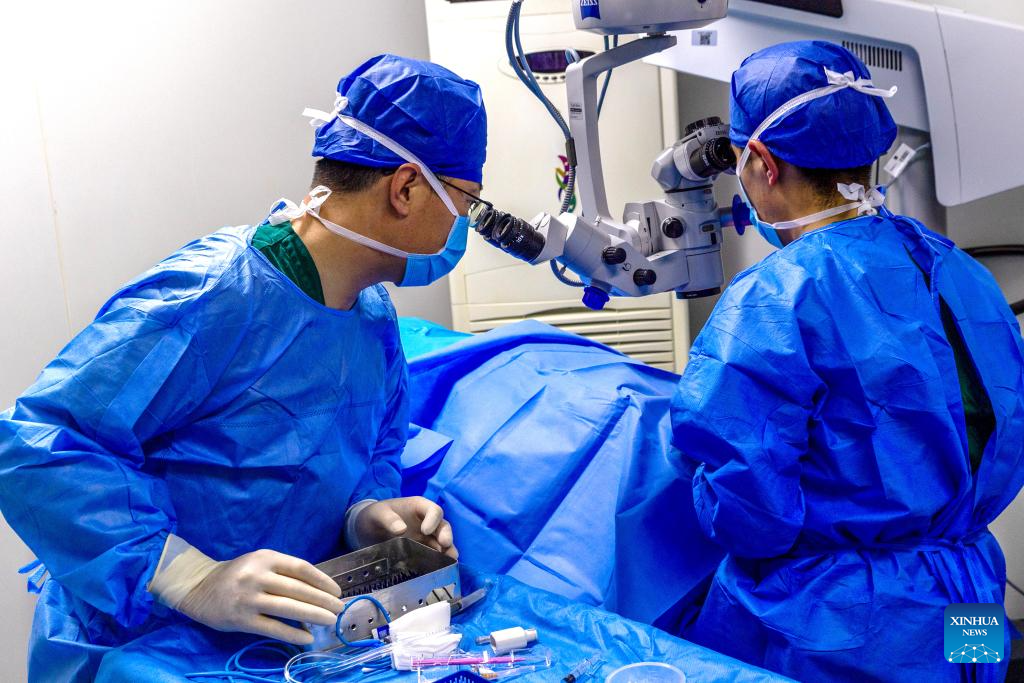
Zhang Jingshang (L), a doctor from Beijing Tongren Hospital, guides a local doctor on a cataract surgery at Lhasa People's Hospital in Lhasa, southwest China's Xizang Autonomous Region, on May 21, 2026. At Lhasa People's Hospital, medical specialists and doctors from across China work side by side with local doctors in operating rooms and clinics. They perform cataract surgeries, conduct case studies and provide traditional Chinese medicine treatment for patients.
From 2015 through the end of 2025, 11 groups comprising 2,417 medical specialists were dispatched to Xizang as part of China's medical assistance program to the plateau. Through mentoring agreements signed between supporting and recipient hospitals, a mentorship-based work mechanism has been fully implemented, allowing specialists to pass on skills and experience.
By the end of 2025, medical experts from supporting hospitals across the country had helped mentor 2,039 medical teams and train 5,416 local healthcare workers in Xizang, which greatly helped the improvement of local medical treatment level. (Xinhua/Jiang Fan)
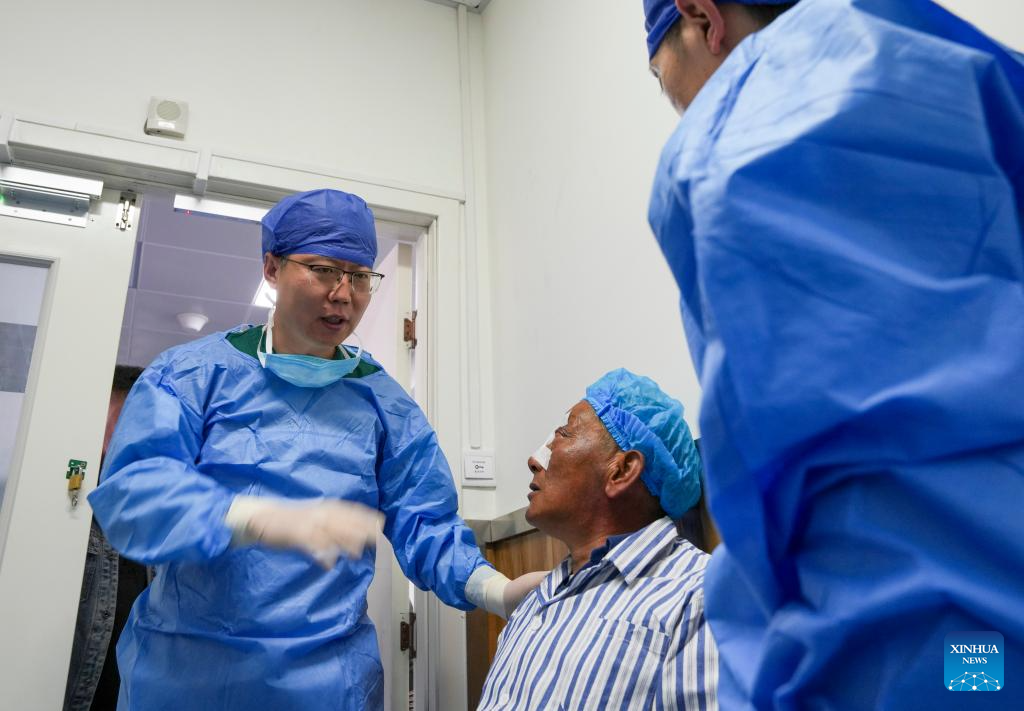
Zhang Jingshang (L), a doctor from Beijing Tongren Hospital, explains precautions to a patient who just received a cataract surgery at Lhasa People's Hospital in Lhasa, southwest China's Xizang Autonomous Region, on May 21, 2026. At Lhasa People's Hospital, medical specialists and doctors from across China work side by side with local doctors in operating rooms and clinics. They perform cataract surgeries, conduct case studies and provide traditional Chinese medicine treatment for patients.
From 2015 through the end of 2025, 11 groups comprising 2,417 medical specialists were dispatched to Xizang as part of China's medical assistance program to the plateau. Through mentoring agreements signed between supporting and recipient hospitals, a mentorship-based work mechanism has been fully implemented, allowing specialists to pass on skills and experience.
By the end of 2025, medical experts from supporting hospitals across the country had helped mentor 2,039 medical teams and train 5,416 local healthcare workers in Xizang, which greatly helped the improvement of local medical treatment level. (Xinhua/Jigme Dorje)
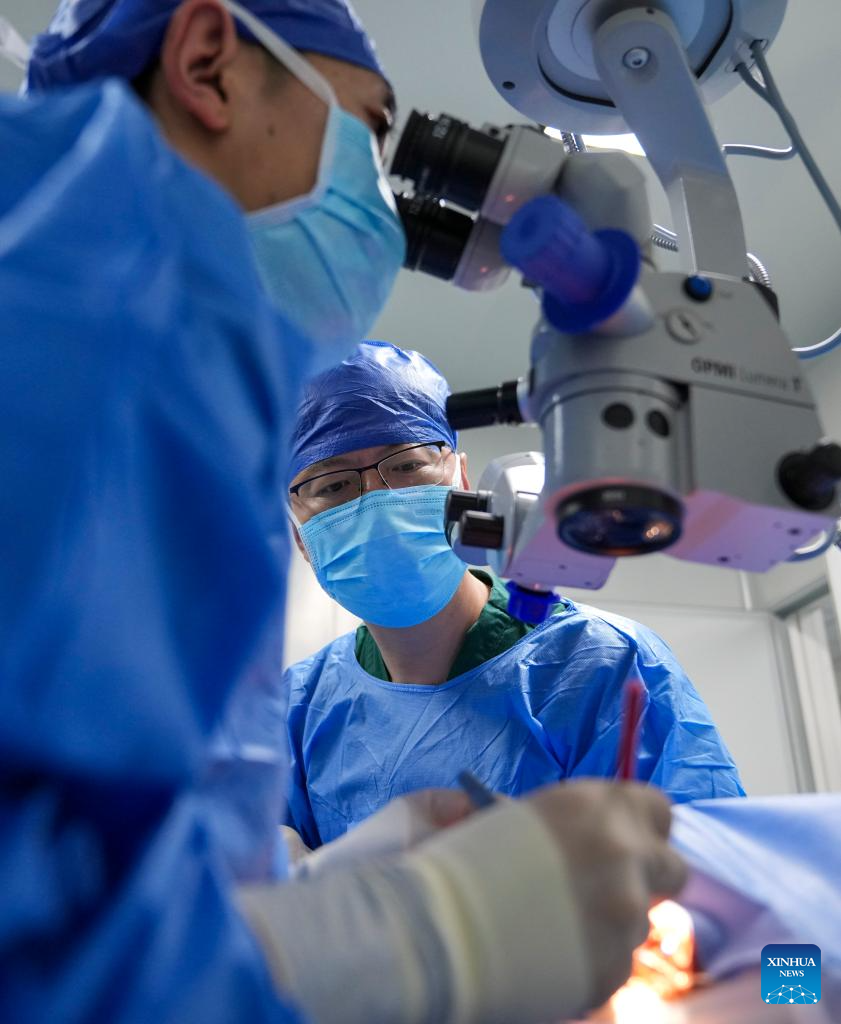
Zhang Jingshang (R), a doctor from Beijing Tongren Hospital, coordinates with a local doctor on a cataract surgery at Lhasa People's Hospital in Lhasa, southwest China's Xizang Autonomous Region, on May 21, 2026. At Lhasa People's Hospital, medical specialists and doctors from across China work side by side with local doctors in operating rooms and clinics. They perform cataract surgeries, conduct case studies and provide traditional Chinese medicine treatment for patients.
From 2015 through the end of 2025, 11 groups comprising 2,417 medical specialists were dispatched to Xizang as part of China's medical assistance program to the plateau. Through mentoring agreements signed between supporting and recipient hospitals, a mentorship-based work mechanism has been fully implemented, allowing specialists to pass on skills and experience.
By the end of 2025, medical experts from supporting hospitals across the country had helped mentor 2,039 medical teams and train 5,416 local healthcare workers in Xizang, which greatly helped the improvement of local medical treatment level. (Xinhua/Jigme Dorje)
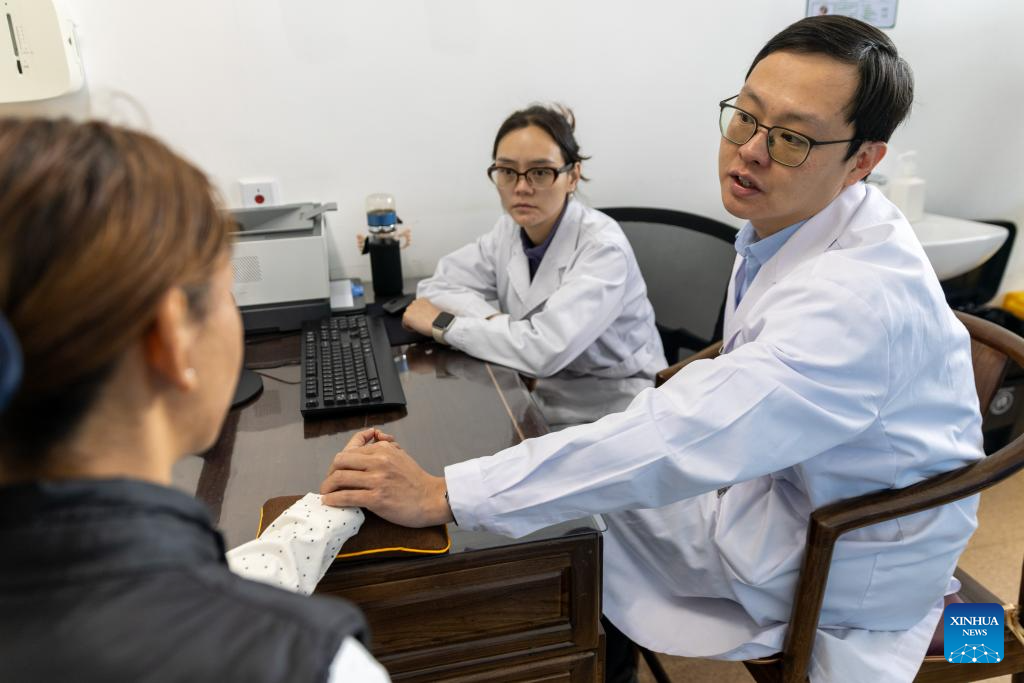
Li Xiang (R), a doctor from Beijing Hospital of Traditional Chinese Medicine, treats a patient with a local doctor at Lhasa People's Hospital in Lhasa, southwest China's Xizang Autonomous Region, on May 21, 2026. At Lhasa People's Hospital, medical specialists and doctors from across China work side by side with local doctors in operating rooms and clinics. They perform cataract surgeries, conduct case studies and provide traditional Chinese medicine treatment for patients.
From 2015 through the end of 2025, 11 groups comprising 2,417 medical specialists were dispatched to Xizang as part of China's medical assistance program to the plateau. Through mentoring agreements signed between supporting and recipient hospitals, a mentorship-based work mechanism has been fully implemented, allowing specialists to pass on skills and experience.
By the end of 2025, medical experts from supporting hospitals across the country had helped mentor 2,039 medical teams and train 5,416 local healthcare workers in Xizang, which greatly helped the improvement of local medical treatment level. (Xinhua/Jiang Fan)
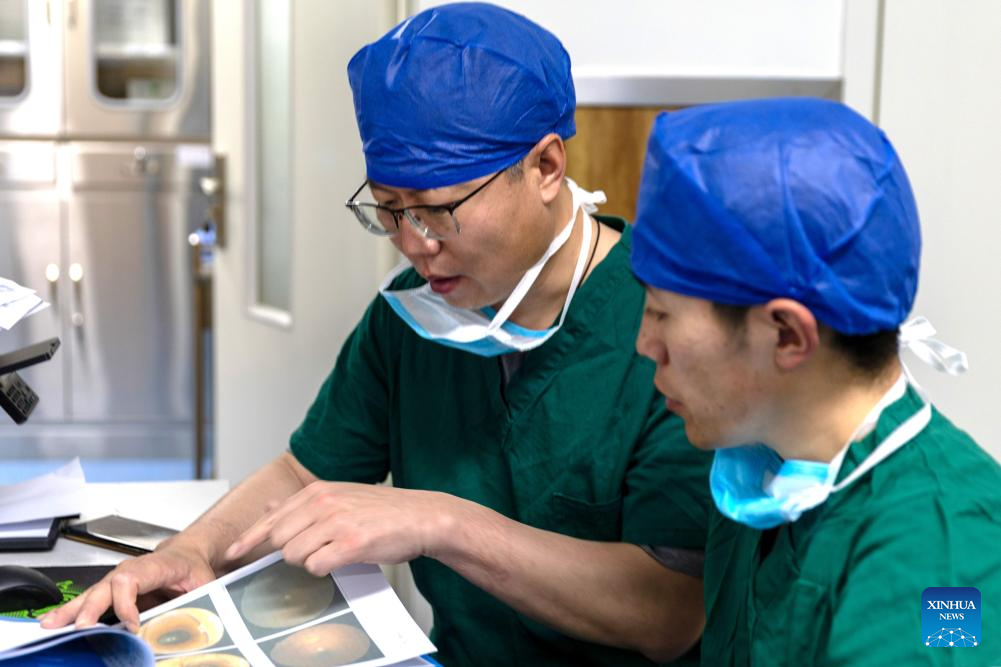
Zhang Jingshang (L), a doctor from Beijing Tongren Hospital, discusses a case with a local doctor at Lhasa People's Hospital in Lhasa, southwest China's Xizang Autonomous Region, on May 21, 2026. At Lhasa People's Hospital, medical specialists and doctors from across China work side by side with local doctors in operating rooms and clinics. They perform cataract surgeries, conduct case studies and provide traditional Chinese medicine treatment for patients.
From 2015 through the end of 2025, 11 groups comprising 2,417 medical specialists were dispatched to Xizang as part of China's medical assistance program to the plateau. Through mentoring agreements signed between supporting and recipient hospitals, a mentorship-based work mechanism has been fully implemented, allowing specialists to pass on skills and experience.
By the end of 2025, medical experts from supporting hospitals across the country had helped mentor 2,039 medical teams and train 5,416 local healthcare workers in Xizang, which greatly helped the improvement of local medical treatment level. (Xinhua/Jiang Fan)
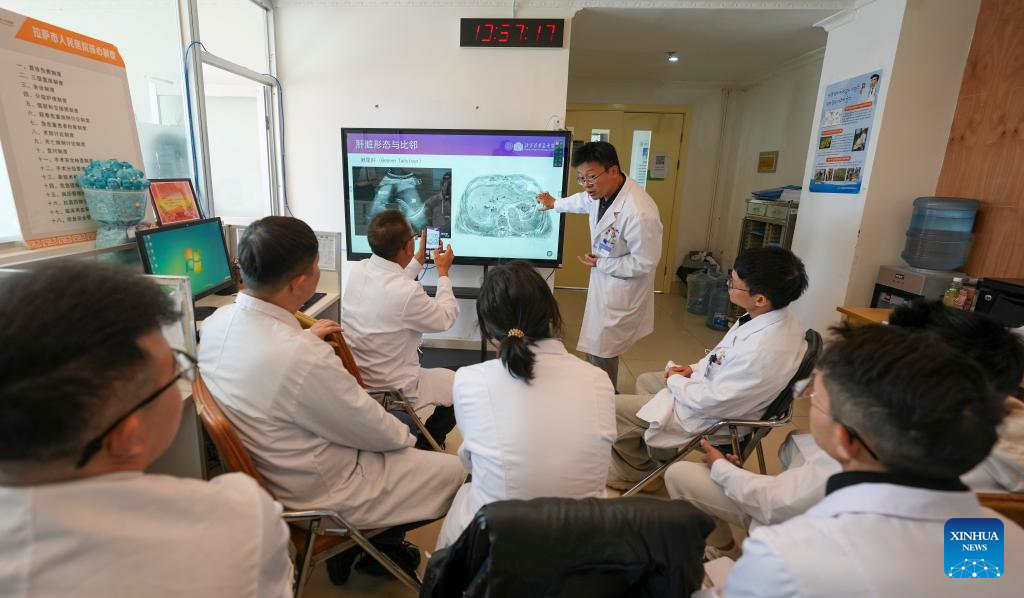
Yu Lihan (back), a doctor from Beijing Tsinghua Changgung Hospital, discusses a case with local doctors at Lhasa People's Hospital in Lhasa, southwest China's Xizang Autonomous Region, on May 21, 2026. At Lhasa People's Hospital, medical specialists and doctors from across China work side by side with local doctors in operating rooms and clinics. They perform cataract surgeries, conduct case studies and provide traditional Chinese medicine treatment for patients.
From 2015 through the end of 2025, 11 groups comprising 2,417 medical specialists were dispatched to Xizang as part of China's medical assistance program to the plateau. Through mentoring agreements signed between supporting and recipient hospitals, a mentorship-based work mechanism has been fully implemented, allowing specialists to pass on skills and experience.
By the end of 2025, medical experts from supporting hospitals across the country had helped mentor 2,039 medical teams and train 5,416 local healthcare workers in Xizang, which greatly helped the improvement of local medical treatment level. (Xinhua/Jigme Dorje)


