

Performers are seen near the Nam Co Lake in southwest China's Xizang Autonomous Region, May 19, 2026. (Xinhua/Zhou Yulong)
LHASA, May 19 (Xinhua) -- The much-anticipated opening ceremony of Nam Co Lake was held Tuesday in southwest China's Xizang Autonomous Region, offering tourists a rare combination of stunning plateau landscapes, time-honored Tibetan folk customs, and upgraded travel services.
During the ceremony, two giant welcoming rock sculptures, modeled after the iconic "praying hands rock" formation on Nam Co's Tashi peninsula, slowly moved toward each other and joined as one.
This Tuesday also marks the 2026 China Tourism Day.
Perched 4,718 meters above sea level, Nam Co means "Heavenly Lake" in the Xizang language. "The lake sits so high that it seems floating in the sky; that is how it got its name," said local villager Gonkya Dorje.
Every May, as the lake thaws after long freezing in winter, the unique natural spectacle known locally as "lake opening" signals the start of the lake's most popular tourist season.
"I traveled all the way from Lhasa (the regional capital) specially to witness this grand scene. I could not be luckier," said Zhao Yu, a tourist from neighboring Sichuan Province, who wore traditional Tibetan costumes to take photos at the scenic spot. "The hotel I am staying at is fitted with diffuse oxygen supply systems. The accommodation experience is far more comfortable than I expected."
Wang Chaoyu, director of Damxung County's culture and tourism bureau, noted that improved transportation, oxygen supply facilities and diverse accommodation options have drawn more visitors to Nam Co, allowing them to immerse themselves in unique local folk cultures.
Official data show that during the week-long May Day holiday, Nam Co scenic area generated 1.4 million yuan (around 204,750 U.S. dollars) in revenue from ticket sales and sightseeing bus fares, up 44.8 percent year on year.
The thriving popularity of Nam Co as a top tourist destination did not come easily.
Dawa Dorje, another local villager, recalled that in earlier years, local herders used to lack strong ecological awareness. They stuck to the traditional nomadic lifestyle of moving with water and grass, and built temporary shelters at random during migration, leaving the lake area in a messy state. Coupled with inadequate tourism infrastructure and supporting services, the area's premium natural scenery failed to translate into development advantages for a long time.
In 2018, the Nam Co scenic area launched a "relocation for lake restoration" campaign, in coordination with local authorities, to relocate 107 merchants, 31 herder households, and 45 temporary stalls from the ecological core zone to a designated area in Nam Co Township with improved infrastructure.
The scenic area also introduced a unified electric sightseeing bus shuttle service and banned private cars from entering the core lake area to minimize grassland damage from exhaust emissions.
In recent years, local authorities have fully tapped local folk cultural resources to cultivate new business forms such as lakeside homestays, Tibetan-style travel photography, and characteristic catering, extending the cultural tourism industry chain to benefit local residents, allowing herders to benefit from the tourism sector without leaving their hometowns.
According to Dorje, deputy director of the Nam Co scenic area property management center, the scenic area operator signed a 10-year cooperation deal with local authorities in 2025, under which annual dividends are paid to local villagers.
In 2025 alone, 9.5 million yuan in dividends and service income from providing yak and horse-riding services to tourists was distributed, raising the per capita annual cash income of local residents by more than 3,000 yuan.
"We used to exhaust the lake's resources to make a living, but now we know protecting the lake is protecting our happy life," said Dawa Dorje.
The vibrant tourism growth of Nam Co is a vivid epitome of the booming cultural tourism sector across Xizang.
Data from the regional department of culture and tourism shows that in the first quarter of 2026, Xizang received 6.19 million domestic and international tourists, up more than 30 percent year on year. The region's 211 A-level scenic spots saw a 33.78 percent increase in tourist arrivals, highway passenger turnover rose 12.3 percent, and civil aviation passenger throughput reached 1.93 million, up 15.2 percent year on year.
Cultural tourism is flourishing all over Xizang, which welcomes guests worldwide with richer, more comfortable and open travel services. Along the Sichuan-Xizang Highway, Ra'og Co in Basu County has also become a popular tourist hit.
Bian Jiang, a 44-year-old chef from Beijing, chose to tour Xizang by motorcycle for the first time. He spent five days riding from Chengdu, capital city of Sichuan Province, to the shore of Ra'og Co, constantly stopping to capture the magnificent scenery.
"Motorcycling and cooking share one thing in common -- both demand full concentration," he said. "The Tibetan owner of the homestay I stayed at made steamed buns stuffed with wild vegetables for me, and children on the roadside greeted me with Tashi Delek (good luck in Tibetan). I traveled alone yet never felt lonely."
The Ra'og international self-driving and RV camp, a major service stop for self-driving travelers along the highway, was put into operation in 2018 with a total investment of around 150 million yuan. The camp covers an area of nearly 200 mu (13.33 hectares), integrating sightseeing accommodation, Tibetan-style catering, vehicle supply, camping and leisure, with facilities including star-view and lake-view rooms and RV parking spaces.
As a key tourism-driven livelihood improvement project, the camp has offered stable jobs and income growth for dozens of local households once living in poverty.
"High altitude is no longer a travel barrier. RV tours make plateau journeys more comfortable and free," said Losang Melam, the camp's project director. He noted that the number of RV self-driving tourists has risen sharply since spring, especially young family travelers. As of May 1, the camp had hosted 8,000 overnight visitors. ■
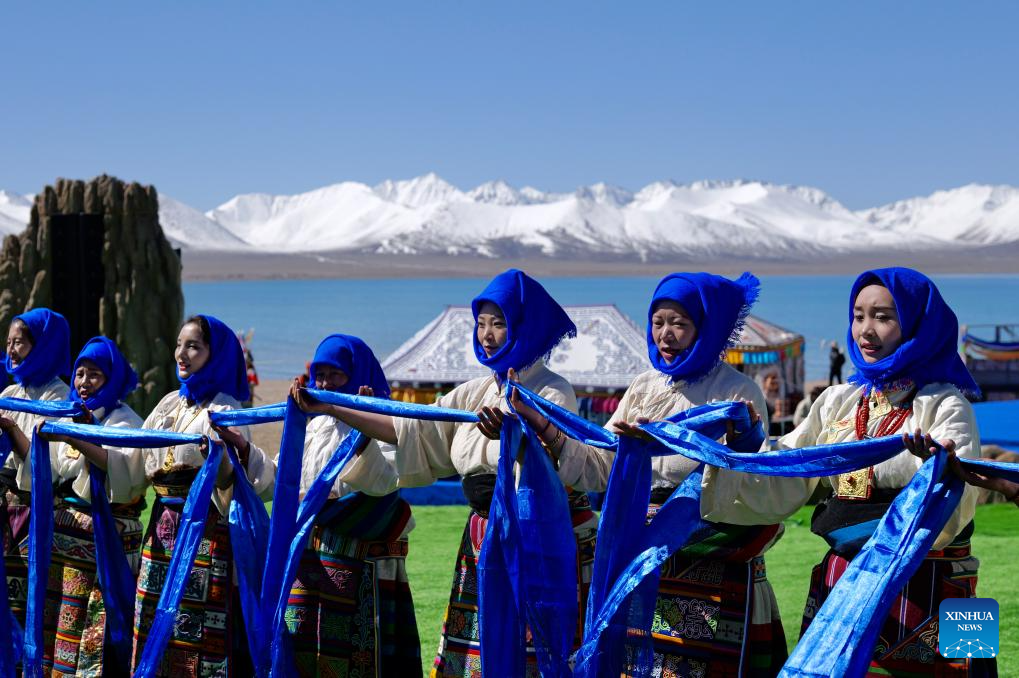
Performers are seen during an opening ceremony of Nam Co Lake in southwest China's Xizang Autonomous Region, May 19, 2026. (Xinhua/Zhou Yulong)
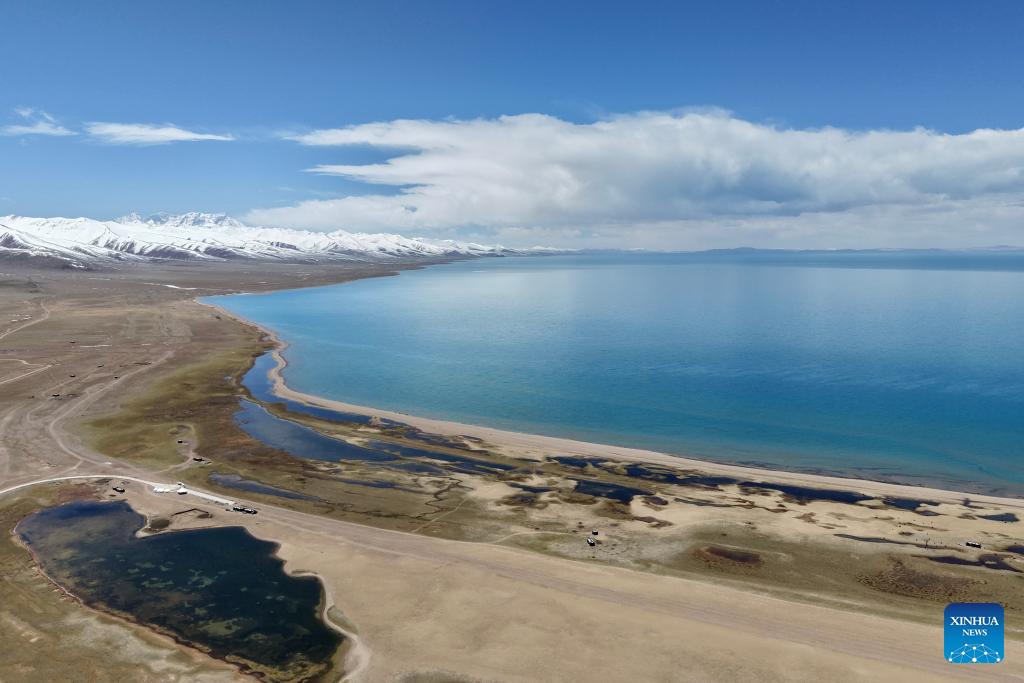
An aerial drone photo taken on May 19, 2026 shows a view of Nam Co Lake in southwest China's Xizang Autonomous Region. (Xinhua/Zhou Yulong)
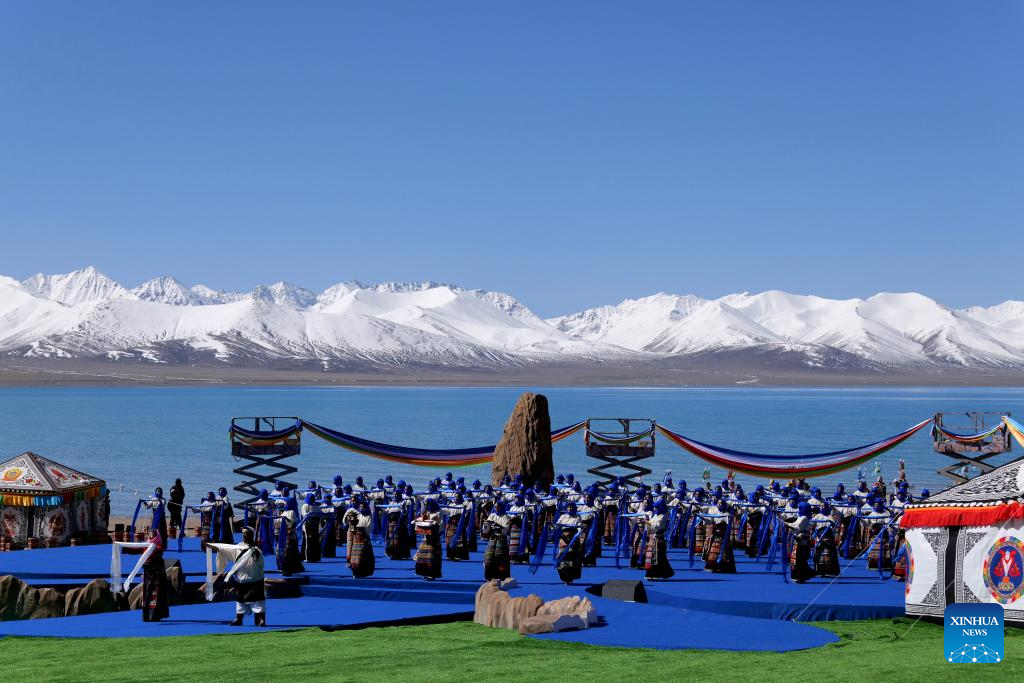
Performers are seen during an opening ceremony of Nam Co Lake in southwest China's Xizang Autonomous Region, May 19, 2026. (Xinhua/Zhou Yulong)
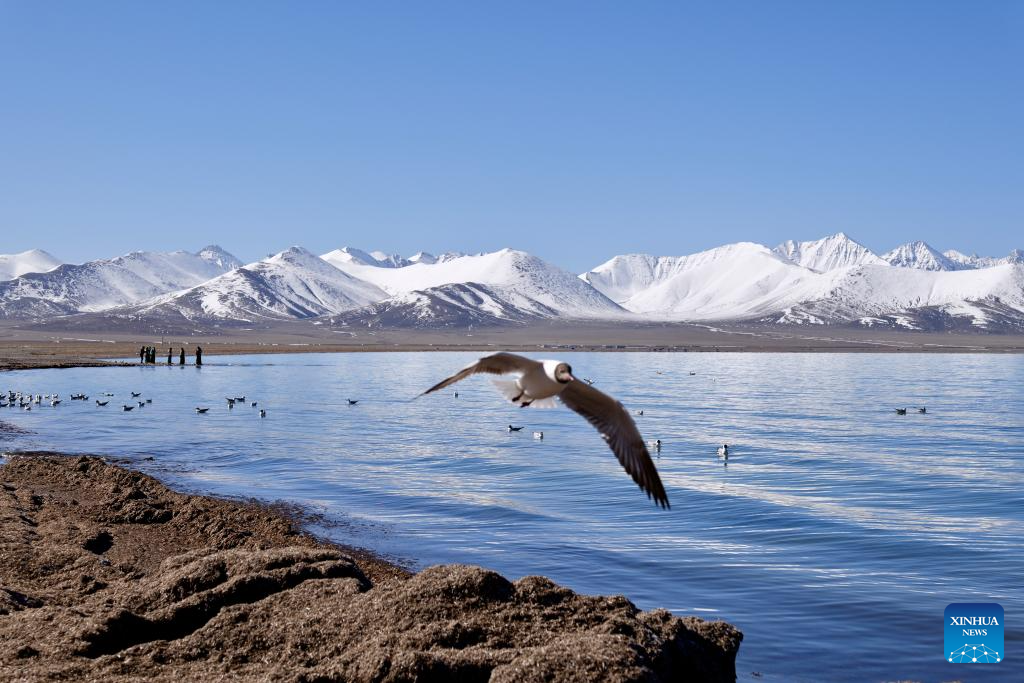
A bird flies over the Nam Co Lake in southwest China's Xizang Autonomous Region, May 19, 2026. (Xinhua/Zhou Yulong)
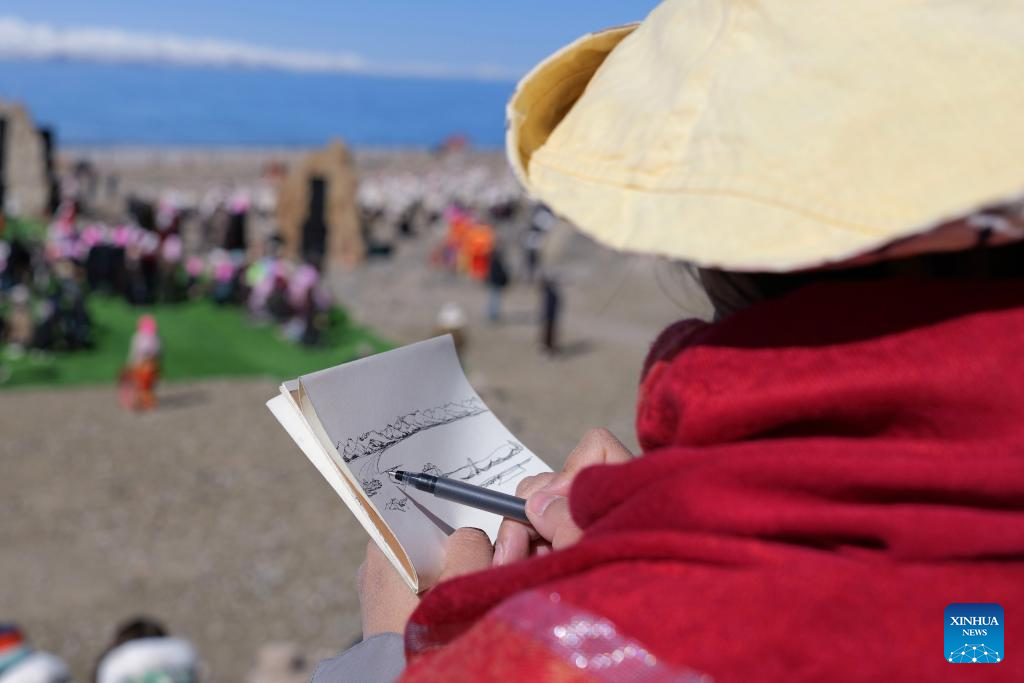
A tourist draws a sketch during an opening ceremony of Nam Co Lake in southwest China's Xizang Autonomous Region, May 19, 2026. (Xinhua/Zhou Yulong)

Performers are seen during an opening ceremony of Nam Co Lake in southwest China's Xizang Autonomous Region, May 19, 2026. (Xinhua/Zhou Yulong)
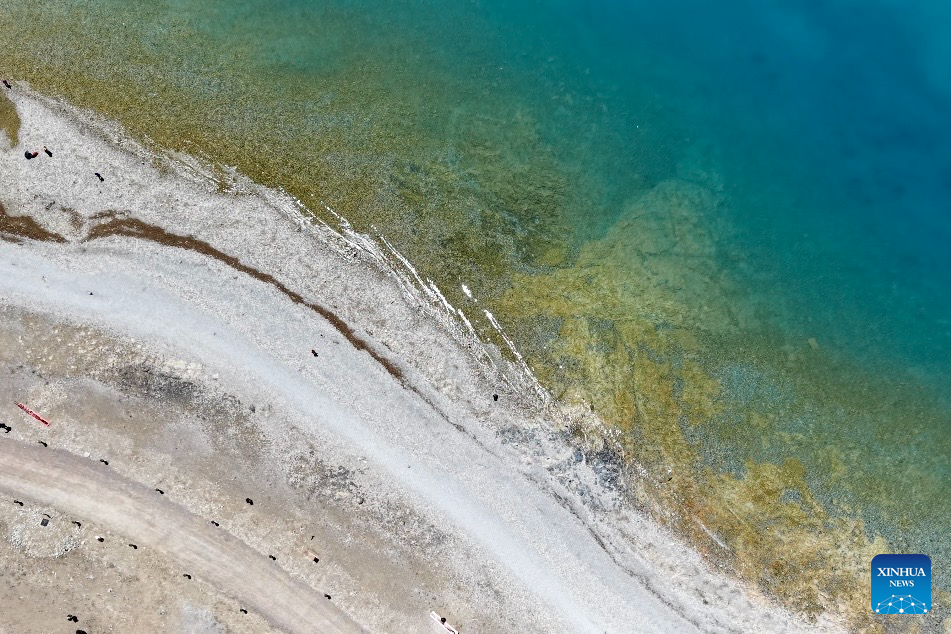
An aerial drone photo taken on May 19, 2026 shows a view of Nam Co Lake in southwest China's Xizang Autonomous Region. (Xinhua/Zhou Yulong)


