URUMQI, May 19 (Xinhua) -- A new kind of hubs are emerging in the landscape of energy-rich northwest China. Instead of oil derricks, these centers are filled with rows of server racks.
Inside a 200-square-meter room at the Tianshan Smart Valley Advanced Computing Cluster in the city of Hami, Xinjiang Uygur Autonomous Region, hundreds of servers hum day and night. In just over a year, the likes of telecom giants, cloud computing service providers and tech firms have moved into this lesser-known city.
"Since March, we have had companies visiting almost every day for talks," said Paruq Yehya, head of a local digital development bureau. "Three clients are vying for one server company's computing power."
This frenzy reflects a shift: China's energy-rich northwest is riding the artificial intelligence (AI) boom to become a cost-effective computing hub.
NEW DRAW CARDS
AI's soaring electricity demand has made Xinjiang and neighboring provinces such as Gansu attractive destinations for AI firms.
With abundant solar and wind reserves, Xinjiang offers green power at roughly one-third the price of coastal industrial electricity. Operating costs for a computing company in Hami are more than 40 percent lower than in the east of China. In Gansu's Qingyang city, one of the northwestern region's flagship computing hubs, a branch of telecom giant China Mobile has revealed that monthly savings can reach four million yuan (about 585,000 U.S. dollars).
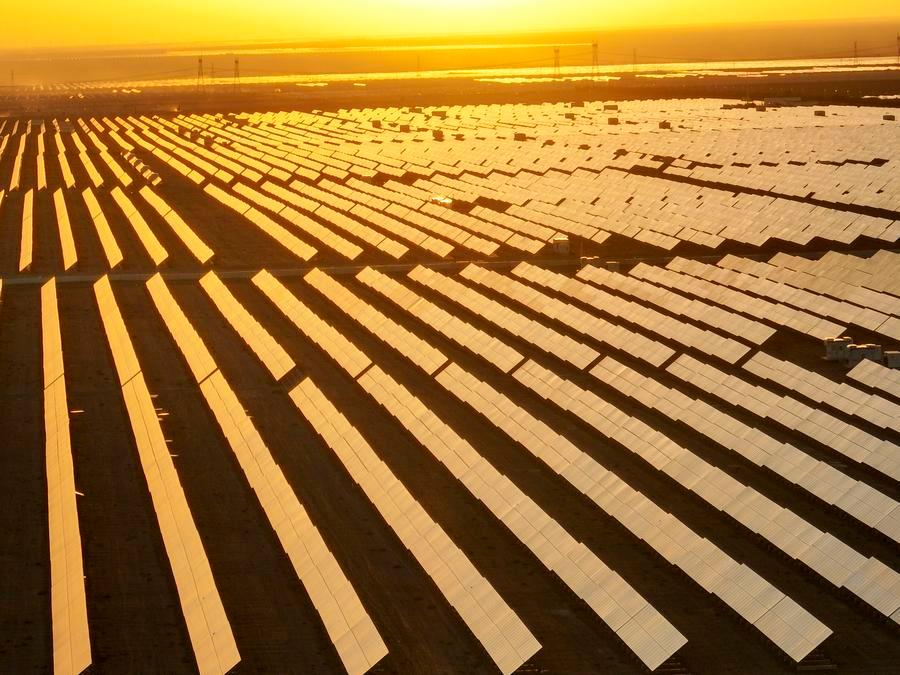
The region's cooler climate and cheaper land add to the appeal, lowering air-conditioning and operational costs below those of first-tier eastern cities.
For these computing centers, the core mission is to convert green power into computing power, via AI training and reasoning, resulting in tokens, the smallest unit of information processing in AI models.
"Just as oil is the lifeblood of industry, tokens are the most fundamental fuel for AI development," said Tang Shuheng, head of the Xinjiang International Integrated Supercomputing Center.
Major AI models based in eastern cities process reasoning requests on servers located in the northwest. Some of these requests serve overseas business in North America, Europe and Asia-Pacific. The clients of these AI model providers pay for token consumption, and the resulting revenue covers electricity, wages and equipment costs. In this way, token flows contribute directly to local economy.
In Qingyang alone, more than 500 AI-related firms had been set up by 2025, generating 1.28 billion U.S. dollars in revenue and creating job opportunities, local authorities said.
National policy is accelerating the shift. A national strategy to relocate data processing from China's crowded coastal cities to its energy-rich western interior has gained momentum. In 2026, the concept of "computing power and electricity synergy" made its debut in China's central government work report, and earlier this month, several departments released an action plan, setting a 2030 goal to significantly improve clean energy supply security for AI computing facilities and AI application in the energy sector.
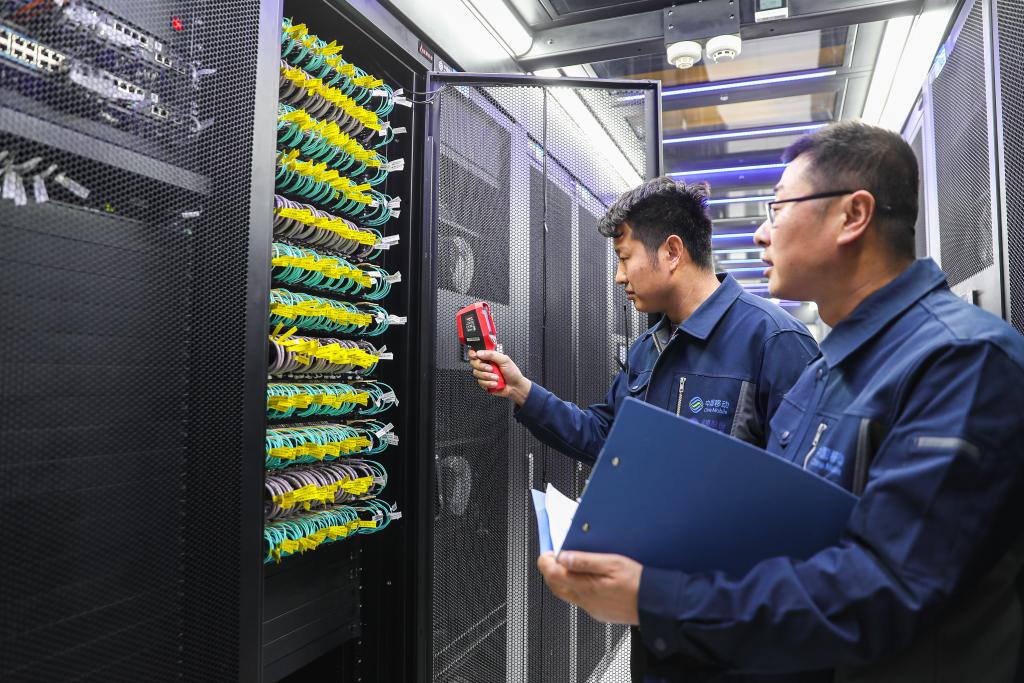
Besides low cost, reliability and speed also matter. Upgraded networks have cut latency from Qingyang to Beijing or Shanghai to under 15 milliseconds, "about one-10th of the time it takes for a person to blink," said Yao Zhiping, an expert at a local data tech firm.
The northwest is also a testing ground for domestic chips. Huawei and other homegrown AI chips are now deployed at scale. At a computing center in Qingyang, a massive Enflame cluster successfully handled a peak-season surge of billions of image requests for photo-editing app Meitu's AI virtual try-on during the 2026 Chinese New Year holiday in February.
DIGITAL SILK ROAD
More than China's energy backyard, the northwest has become an AI hub, with its computing power being exported westward.
Many Central Asian countries lack large-scale computing facilities but face urgent data processing demand in sectors such as satellite remote sensing, agriculture and energy infrastructure inspection. The computing power center in Xinjiang will function as a "digital post station" -- satellite data arrives via dedicated links and reaches customers in tailor-made services after being processed by AI models.
Tang, the Xinjiang computing center's head, said the facility will enable high-precision monitoring of the China-Kazakhstan oil pipelines and cut the warning time to 15 minutes should pipeline deformation, even tiny, occurs. Meanwhile, a satellite-linked AI crop farming system, supported by the Xinjiang center, is expected to help boost wheat yields and cut fertilizer use in Kazakhstan.
"Our goal is to move tech cooperation from one-sided output to a model where both sides benefit and win together," Tang added. The center has already signed agreements with partners from Kazakhstan and other countries to set up joint labs, providing image interpretation and data analysis to empower local industries.
CHALLENGES REMAIN
However, not all workloads can move west. Web access, e-commerce and online gaming, which demand extremely low latency, have to stay in the east.
From Hami to Chongqing in China's southwest, network latency is about 50 milliseconds, exceeding the 30-millisecond threshold for real-time uses like autonomous driving and telemedicine. In addition, information infrastructure in Hami still lags behind coastal regions, while talent is scarce.
"Right now it is something like machines 'waiting for' people," Paruq Yehya said, adding that equipment has arrived, but staff with expertise in tech, operations and the market are not in place. Rapid construction of large-scale computing centers also strains local equipment supply chains and logistics.
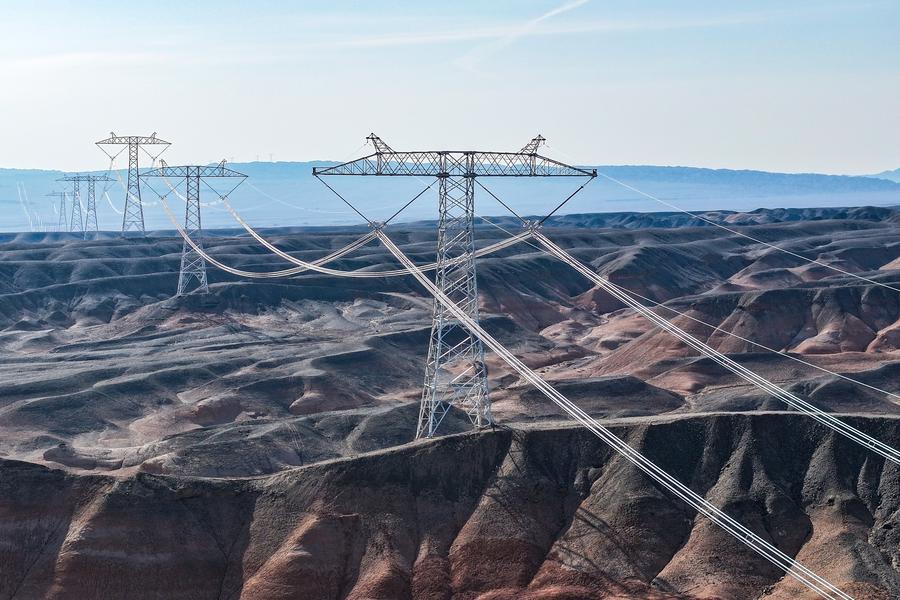
Still, the future looks promising. A Morgan Stanley report earlier this year predicted that data centers in China's far-flung regions will contribute 2.4 gigawatts of new orders in 2026, further increasing to 3.3 gigawatts in 2027, accounting for about 70 percent of new orders.
Power shortages are now a headache for computing hubs worldwide. In Virginia, the United States, dense data center concentration raises residential electricity bills greatly. While in Ireland, data centers have consumed 22 percent of national power.
China, which ranks second globally in computing power scale, is pursuing a more sustainable path featuring cheap green power and domestic chips. These advantages grow more pronounced as business insiders say the future AI race will favor greater scale, lower costs, and greener computing supply. The country's northwestern region is set to play a pivotal role.
Many cities that once served as oases on the ancient Silk Road, like Kashgar in Xinjiang, have followed the path of Hami and Qingyang, developing themselves into AI computing hubs.
They have become a microcosm of China's broader push, namely high-quality development driven not by raw materials, but by data and intelligence. ■